
The Rare Pioneers of the Classic Era
In the early days, the pipeline for women in prog was incredibly narrow. If you were a woman making a mark in the late 60s or 70s, you weren't just playing music; you were an anomaly. A few names stand out as the foundational pillars. Kate Bush redefined the conceptual possibilities of the genre, blending art pop with progressive structures. Then there was Annie Haslam of Renaissance, whose crystalline, operatic vocals became a benchmark for the symphonic side of prog. Sonja Kristina from Curved Air brought a fierce, theatrical energy to the stage. These women were the outliers. While they achieved greatness, they didn't necessarily open the doors for others immediately. The industry at the time wasn't looking for female instrumentalists or songwriters in the prog space; they were looking for a specific "sound" that the gatekeepers believed only men could produce. This created a cycle where young women didn't see themselves in the music, so they didn't join the bands, and the labels continued to believe there was no market for them.The Invisible Walls and Industry Gatekeeping
It wasn't just a lack of interest; it was systemic exclusion. Take the story of Mother Superior. They were an all-female progressive rock group that had the chops and the local following to make it. But when they tried to get a record deal? Total shutdown. Labels refused to sign them, citing "marketing reasons." In plain English, the industry didn't know how to sell a woman-led prog band to a male-dominated audience. This kind of chauvinism led many talented women to disband or switch genres. The condescension was pervasive. If a woman played a complex keyboard solo or wrote a conceptual suite, she was often treated as a curiosity rather than a peer. This gatekeeping ensured that the "classic" era of prog remained an almost exclusively male playground, leaving a massive gap in the genre's creative history.The Modern Shift: A New Era of Inclusion
Fast forward to today, and the vibe is completely different. We are seeing a surge of female musicians taking center stage, not just as supporting vocalists, but as band leaders and primary composers. The "guys only" image is fading. Former Touchstone vocalist Kim Seviour noted that the genre has worked hard to modernize its image, making it feel like a welcoming community rather than a closed circle. Modern prog is now defined by a level of diversity that would have shocked the musicians of the 70s. We have artists like Anneke van Giersbergen, who has been a powerhouse in the scene for years, and Aleena Gibson, who brings an earthy yet angelic quality to Kaipa.| Artist | Role | Notable Project/Band | Style/Attribute |
|---|---|---|---|
| Annie Haslam | Vocalist | Renaissance | Symphonic/Operatic |
| Courtney Swain | Vocalist | Bent Knee | Experimental/Modern |
| Leslie Hunt | Vocalist | District 97 | Technical/High Energy |
| Hiromi | Keyboardist | Solo/Various | Virtuoso/Jazz-Fusion |
| Zeena Parkins | Harpist | News From Babel | Avant-garde/Experimental |
Beyond the Mic: Instrumentalists and Concept Artists
While vocalists are often the most visible, women are crushing it in the instrumental and conceptual side of prog too. Progressive rock is all about virtuosity, and that's where artists like Hiromi come in. Her keyboard work is a masterclass in technical precision and emotional depth, proving that the "keyboard wizard" trope isn't just for men. Then you have the avant-garde contributions. Zeena Parkins has integrated the harp into progressive and experimental textures, collaborating with everyone from Björk to various prog outfits. In the realm of brass, Sax Ruins shows that the aggressive, complex sounds of instrumental prog are open to female interpretation. Even the structure of bands is changing. Look at Belarus's Five-Storey Ensemble. They are a chamber prog group where women make up about 50% of the membership. This isn't just "tokenism"; it's a fundamental shift in how these ensembles are built and how the music is composed.Why the Change is Actually Happening
So, why did it take so long, and why is it happening now? It comes down to visibility. When you have no role models, you don't even know a path exists. But as more women like Courtney Swain or Leslie Hunt hit the stage, they create a "demonstration effect." A young girl with a synth or a guitar sees them and realizes, "Oh, I can actually do this." Digital communities have also played a huge role. Platforms like YouTube and dedicated prog blogs have started celebrating these artists. Whether it's a "Top 100 Women In Prog" list or an analysis of how female frontwomen are rejuvenating the genre, the narrative is shifting. The music is no longer seen as a rigid tradition to be protected by a few men, but as a living, breathing art form that benefits from new perspectives.The Impact on the Genre's Future
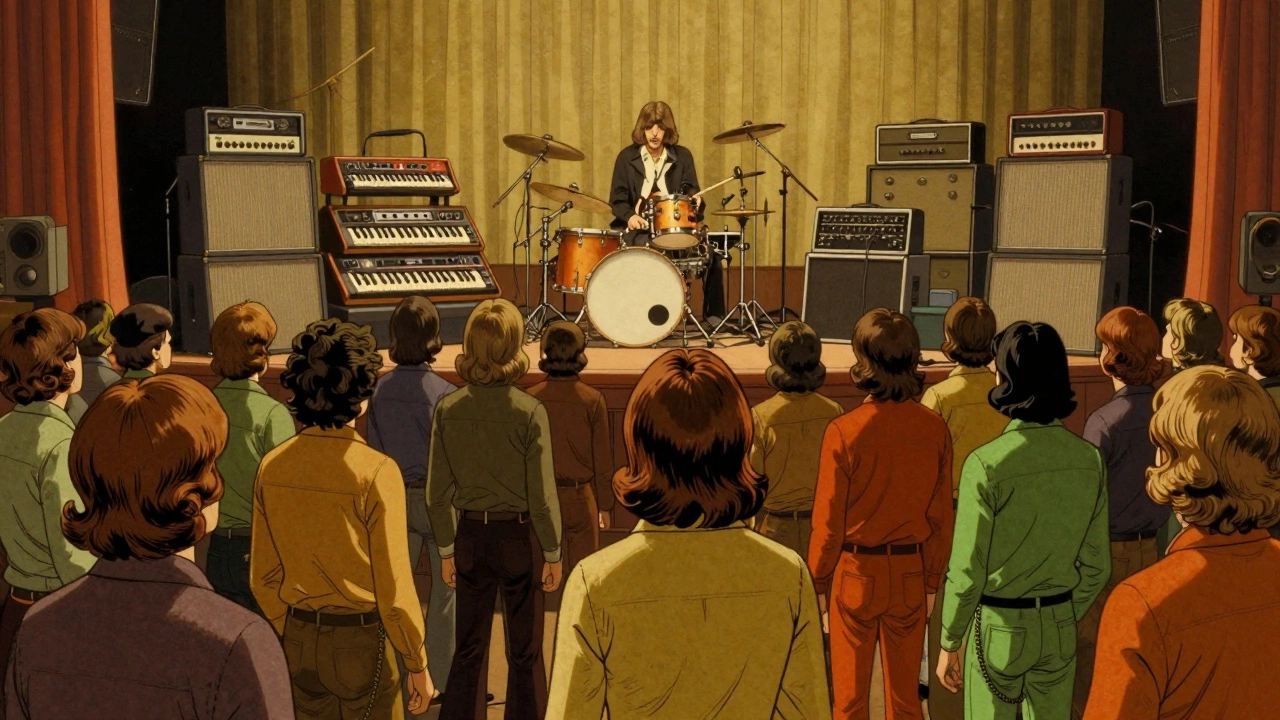
When you bring more voices and perspectives into progressive rock, the music itself evolves. Female artists aren't just "filling slots"; they are bringing different tonal qualities, lyrical themes, and conceptual approaches. This prevents the genre from becoming a museum piece-a stale imitation of 1974. By breaking the old gatekeeping habits, prog rock is actually saving itself. The infusion of new talent from across the gender spectrum means more experimentation and more daring compositions. We're moving away from the era where audiences looked like a board meeting and toward a scene that actually reflects the creativity of the real world.Who were the first women to make an impact in progressive rock?
The most recognized early pioneers were Kate Bush, Annie Haslam of Renaissance, and Sonja Kristina of Curved Air. They provided the first visible examples of women succeeding in a genre that was overwhelmingly male-dominated during the 60s and 70s.
Were there any all-female prog bands in the early days?
Yes, groups like Mother Superior were active and musically skilled. However, they faced immense difficulty securing record deals due to industry chauvinism and "marketing concerns," which often led to such bands disbanding prematurely.
Are there women playing instruments other than vocals in prog?
Absolutely. Women contribute across the board, from virtuoso keyboardists like Hiromi and harpists like Zeena Parkins to saxophonists and members of chamber prog groups like the Five-Storey Ensemble.
How has the audience for prog rock changed over time?
In the 1970s, audiences were almost exclusively male. Today, there is a significantly larger and more diverse female presence in the crowd, reflecting a broader cultural shift toward inclusivity within the progressive music community.
Which modern bands feature prominent female musicians?
Many modern bands include female talent, such as Bent Knee (Courtney Swain), District 97 (Leslie Hunt), and Dreadnought (Kelly Schilling and Lauren Vieira), among others.


