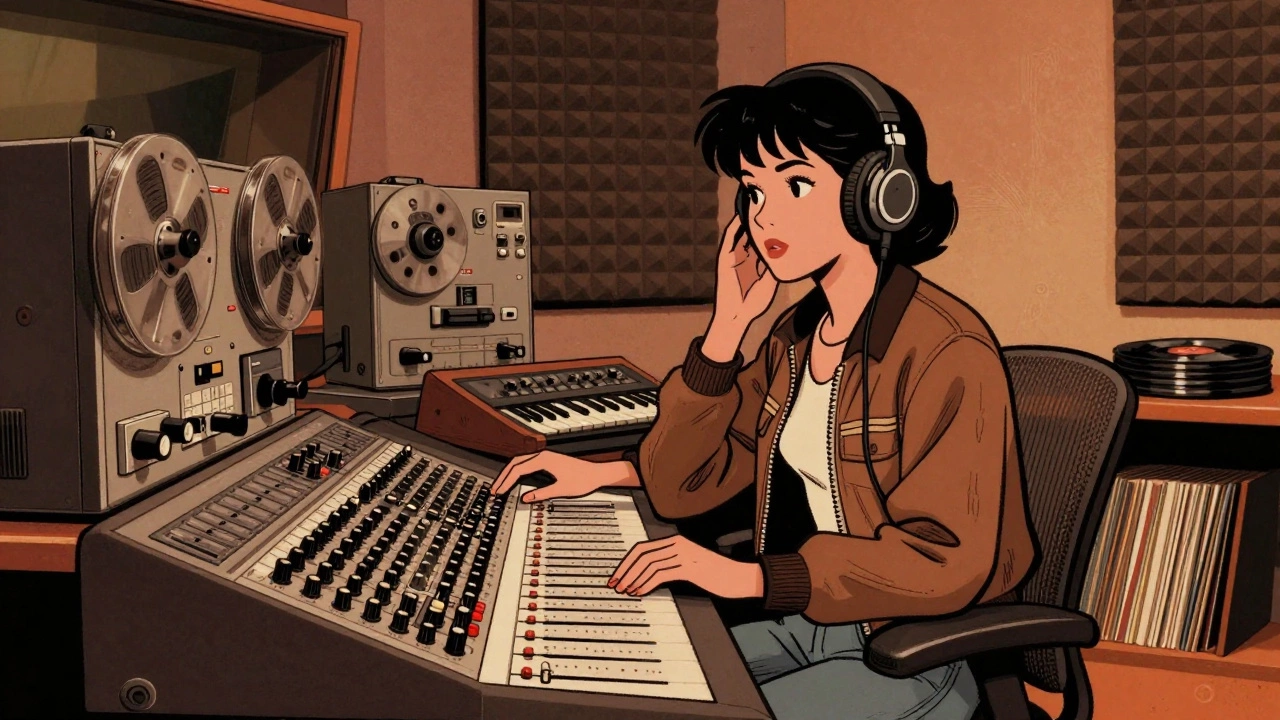

When we think of the 1990s electronic music boom, names like The Chemical Brothers, Daft Punk, or Aphex Twin usually pop up first. But if you look closer at the liner notes, club bookings, and studio credits from that decade, a different story emerges. Women were not just fronting these tracks with their voices; they were behind the decks, programming the beats, and running the labels. Yet, for years, history has largely overlooked them. This isn’t just about adding names to a list. It’s about understanding how women shaped the sound of electronica-from the gritty clubs of Detroit to the trip-hop lounges of Bristol-while navigating an industry that often assumed technical roles belonged only to men.
The 1990s were the golden age of Electronica, a broad marketing term for electronic dance music that peaked in popularity between 1993 and 1999. As genres like techno, house, jungle, and trip-hop exploded globally, women stepped into every role available. They were Producers crafting complex soundscapes, DJs curating nights that defined cities, and Vocalists bringing emotional depth to mechanical rhythms. Despite comprising less than 10% of credited producers according to later audits by organizations like Female:Pressure, their impact was foundational.
The Architects of Sound: Female Producers
In the world of production, where access to studios and gear was heavily gendered, women had to fight harder to be seen as creators rather than just performers. One of the most visible figures is Björk Guðmundsdóttir, an Icelandic artist who revolutionized pop-electronic fusion in the 1990s. Her albums Debut (1993), Post (1995), and Homogenic (1997) are benchmarks for integrating experimental electronics with songwriting. While she worked with male collaborators like Nellee Hooper and Mark Bell, Björk consistently emphasized her role in programming and arranging. She challenged the narrative that minimized her technical input, noting in interviews that male producers were often assumed to be the authors of sounds she initiated.
Beyond the mainstream spotlight, underground producers were laying the groundwork. In Detroit, Kelli Hand, K-Hand, known as the 'First Lady of Detroit Techno' began DJing in the late 1980s and released records on Warp and Tresor. In 1995, she founded Acacia Records to maintain artistic control. Her minimal, groove-driven tracks bridged house and techno, becoming fixtures in Berlin clubs like Tresor. Similarly, in the UK, DJ Rap, a pioneering figure in drum and bass and jungle music started releasing hardcore and jungle tracks like 'Divine Rhythm' in 1992. She founded Proper Talent in 1994, providing a platform for herself and other artists in a genre dominated by male figures like Goldie.
Other notable producers included Mira Calix, an IDM artist who released early EPs on Warp Records in the mid-1990s and Andrea Parker, known for dark, bass-heavy electro releases on Mo'Wax. These women proved that technical expertise was not exclusive to men, even when industry marketing for equipment like Roland TB-303s targeted almost exclusively male audiences.
Behind the Decks: The Rise of Female DJs
DJing was another area where women broke through despite significant barriers. Access to record shops, club residencies, and festival line-ups was often restricted by informal networks that excluded women. Yet, several DJs became iconic figures.
In the house music scene, Smokin Jo, the first woman to win DJ Magazine's 'DJ of the Year' award around 1992 held a residency at Space Ibiza in 1993. Her sets were known for their energy and technical precision, challenging the notion that women couldn't handle high-pressure club environments. In Chicago, Honey Dijon, a deep house DJ who began her career in the 1990s and DJ Heather, active in Chicago clubs like Red Dog helped define the soulful side of house music.
In Europe, Susanne Kirchmayr, Electric Indigo, a Viennese DJ who became a staff member at Berlin's Hard Wax record shop played a crucial role in the techno scene. She not only DJed but also founded the female:pressure network in 1998, a mailing list and database designed to connect women in electronic music worldwide. By 2013, this network had over 1,000 members and produced reports highlighting the lack of gender parity in festivals.
In the drum and bass scene, the duo Kemistry & Storm, residents at London's Metalheadz nights from 1995 to 1997 curated some of the most influential mixes of the decade. Their 1997 mix CD on !K7 documented the cutting-edge side of the genre, selecting tracks by Photek and Source Direct. Goldie himself credited Kemistry with introducing him to breakbeat hardcore, a connection that directly led to the formation of Metalheadz.

Voice and Vision: Vocalists in Trip-Hop and Beyond
While producers and DJs worked behind the scenes, vocalists brought electronica to the charts. In the trip-hop genre, which emerged from Bristol in the early 1990s, women were central to the aesthetic. Beth Gibbons, the vocalist of Portishead provided the haunting, cinematic voice that defined the genre. Portishead's album Dummy (1994) reached No. 2 in the UK and won the Mercury Prize in 1995. Critics like Simon Reynolds noted that Gibbons' lyrics and melodies were essential to the noir mood that became archetypal for trip-hop.
Tracey Thorn, of Everything But The Girl and Skye Edwards, of Morcheeba also played key roles. Thorn and Ben Watt invited US producer Todd Terry to remix 'Missing', transforming a folk ballad into a 120+ BPM club anthem that reached No. 2 on the US Billboard Hot 100 in 1996. This collaboration showed how female songwriters could leverage electronic production to reach global audiences.
In the broader electronic landscape, vocalists like Shara Nelson, featured on Massive Attack's 'Blue Lines' and Robin S., known for the hit 'Show Me Love' embodied the practice of women as featured singers. However, this often reinforced a gendered division of labor where women were associated with voices and bodies, while men controlled the technology. Scholars like Tara Rodgers have highlighted this imbalance, noting that even when women contributed to songwriting and arrangement, they were rarely credited as producers.
Barriers and Breakthroughs
The journey for women in 1990s electronica was not easy. Structural barriers included lack of access to studios, condescension in record shops, and assumptions that women did not understand synthesis or mixing. Marketing for music technology targeted men, creating a culture that discouraged girls from identifying with technical tinkering. Despite this, women found ways to learn and create. K-Hand described teaching herself drum machines and working at Buy-Rite Music in Detroit. Electric Indigo helped newcomers navigate booking agents and distribution.
Networks like female:pressure and informal mentoring laid the groundwork for future generations. By the late 1990s, affordable home computers with audio software like Cubase VST and FruityLoops lowered barriers to entry. However, socialization remained a challenge. Projects like EQ50's archival work continue to uncover lesser-known figures, such as DJ Crystl, an alias for Niki Price, who released influential atmospheric jungle tracks and Dazee, co-founder of the Bristol label Ruffneck Ting. These efforts help redress the historical erasure of women's contributions.
| Name | Role | Genre/Scene | Key Contribution |
|---|---|---|---|
| Björk | Vocalist/Producer | Experimental Pop/Electronica | Integrated electronic production with pop songwriting on albums like Homogenic |
| K-Hand | DJ/Producer/Label Owner | Detroit Techno | Founded Acacia Records; pioneered minimal techno production |
| DJ Rap | DJ/Producer | Jungle/Drum and Bass | Released early jungle tracks; founded Proper Talent label |
| Kemistry & Storm | DJs | Drum and Bass | Curated seminal Metalheadz mixes; influenced genre direction |
| Beth Gibbons | Vocalist/Songwriter | Trip-Hop | Defined the noir aesthetic of Portishead's Dummy |
| Electric Indigo | DJ/Activist | Berlin Techno | Founded female:pressure network to support women in electronic music |
Legacy and Future Research
The legacy of women in 1990s electronica is one of resilience and creativity. They shaped the sound, scenes, and aesthetics of the decade while operating in an industry that often underestimated them. Today, scholars and activists continue to document their contributions, ensuring that future generations recognize their pivotal role. For historians and journalists, consulting primary sources like vinyl label credits and contemporaneous interviews is essential. Online databases sometimes omit detailed production credits or misattribute roles, especially when aliases were used.
As we reflect on this era, it becomes clear that women were not just participants but architects of the electronic music revolution. Their work continues to inspire new generations of producers, DJs, and vocalists, proving that talent knows no gender boundaries.
Who were the most influential female producers in 1990s electronica?
Key figures include Björk, who integrated experimental electronics with pop songwriting; K-Hand, a pioneer of Detroit techno who founded Acacia Records; and DJ Rap, who released early jungle and drum and bass tracks. Other notable producers include Mira Calix and Andrea Parker, who contributed to the IDM and electro scenes.
How did women contribute to the trip-hop genre in the 1990s?
Women like Beth Gibbons of Portishead, Tracey Thorn of Everything But The Girl, and Skye Edwards of Morcheeba provided distinctive vocal and songwriting identities. Their work helped define the noir, cinematic mood of trip-hop, with albums like Portishead's Dummy achieving critical and commercial success.
What challenges did female DJs face in the 1990s electronic music scene?
Female DJs faced barriers such as lack of access to studios and gear, condescension in record shops, and assumptions that they did not understand technical aspects of music production. They were often the only women on multi-DJ bills, and their contributions were sometimes overlooked or attributed to male colleagues.
Why is it important to study women's roles in 1990s electronica?
Studying women's roles reveals a more complete history of electronic music, highlighting their contributions as producers, DJs, and vocalists. It challenges the narrative that technical roles were exclusively male and provides inspiration for current and future generations of women in music.
What initiatives have been created to document women in electronic music?
Initiatives like female:pressure, founded in 1998 by Electric Indigo, and EQ50's archival work aim to document and promote women in electronic music. These projects provide databases, reports, and features that highlight the contributions of women producers and DJs, helping to redress historical imbalances.