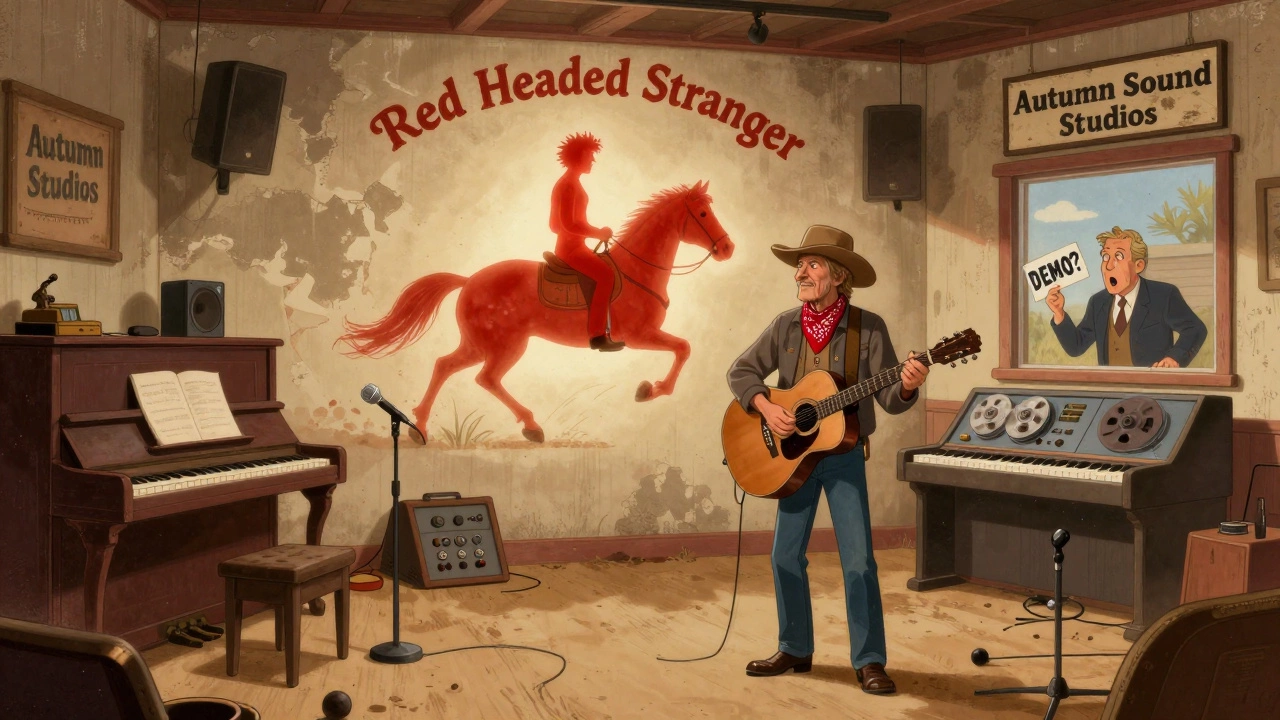

Willie Nelson didn’t just make country music-he rebuilt it. In the 1970s, when Nashville was churning out polished, string-laden pop-country hits, Nelson walked away from the system and recorded an album so raw, so strange, that even his own label thought it was a demo. That album, Red Headed Stranger, didn’t just become a hit-it became a blueprint for how artists could take control of their own sound, their own story, and their own future.
The Nashville Machine vs. the Texas Backroads
By the early 1970s, country music was stuck. Record labels in Nashville had turned songs into assembly-line products. Studio musicians played the same licks. Background singers crooned the same harmonies. Producers squeezed emotion out of tracks to make them fit radio formats. Artists had little say. If you wanted to record, you showed up at the studio, followed the script, and hoped for a hit. Willie Nelson had been playing by those rules for over a decade. He wrote songs for others-"Crazy" for Patsy Cline, "Hello Walls" for Faron Young-but when he tried to record his own music, he was told his voice was too nasal, his phrasing too loose, his style too unpolished. He was told to sound more like Roy Acuff, not like himself. So he left. In 1972, after his second marriage fell apart and his house burned down, Nelson moved back to Texas. Not to Nashville. Not to Los Angeles. To Austin. And then to the small town of Garland, just outside Dallas. There, in a studio that had only been open for three months, he found something rare: freedom.Red Headed Stranger: The Album That Broke the System
Columbia Records gave Nelson a $60,000 advance for his next album. That was his last chance. He could make another commercial record-or he could make something real. He chose real. Red Headed Stranger wasn’t recorded with a full band. It was made with just Nelson, his guitar, a piano, and a few other musicians who showed up that day. The album told a simple story: a preacher kills his unfaithful wife and her lover, rides away, and finds peace in the end. No overdubs. No reverb. No backup singers. Just Nelson’s voice, a single note on a pedal steel, and silence between the notes. One track, "Blue Eyes Crying in the Rain," lasted just over three minutes. Another, "I’m a One-Woman Man," was a 25-second whisper. Columbia executives listened and thought it was unfinished. "This isn’t an album," one producer said. "It’s a demo." But fans didn’t care. They heard honesty. They heard pain. They heard a man telling a story without hiding behind studio tricks. The album went to number one on the country charts. It sold over a million copies. And suddenly, every young songwriter in Texas had a new question: What if we just did it our way?Outlaw Country Wasn’t Just a Genre-It Was a Movement
Nelson didn’t do this alone. Waylon Jennings was in the same boat. He’d been told to stop singing like a rebel and start singing like a robot. He fired his producer. He walked out of the studio. He recorded Honky Tonk Heroes in his own way, with his own band, and it became a landmark too. Together with Merle Haggard, Johnny Cash, and Kris Kristofferson, they formed what became known as the Outlaw movement. They weren’t criminals. They were craftsmen who refused to be packaged. They wrote their own songs. Played their own instruments. Chose their own producers. Recorded in garages, barns, and tiny Texas studios. This wasn’t rebellion for the sake of it. It was survival. These artists knew that if they didn’t take control, their music would vanish into the machine. Nelson once said, "I don’t care if it’s country, rock, or jazz. If it’s true, it’s good."Stardust and the Power of Crossing Lines
In 1978, Nelson did something no one expected. He released Stardust, an album of American pop standards-songs by Gershwin, Irving Berlin, Hoagy Carmichael. It had no fiddles. No pedal steel. Just Nelson, a piano, and a rhythm section. Country radio refused to play it. Critics called it a gimmick. But the public didn’t care. Stardust stayed on the country charts for ten years. It crossed over to pop, jazz, and adult contemporary audiences. It proved that Nelson wasn’t just a country singer-he was a storyteller who could make any song his own. He didn’t need genre labels. He needed truth.
The Highwaymen: When Legends Became a Band
In 1985, Nelson, Jennings, Cash, and Kristofferson formed The Highwaymen. They didn’t need a record label’s permission. They didn’t need to chase radio hits. They recorded together because they wanted to. The result? Three albums full of songs about outlaws, drifters, and men who’d seen too much. Their music wasn’t about fame. It was about legacy. The Highwaymen didn’t just make music. They made a statement: You don’t need a system to be great. You just need to be yourself.More Than Music: The Outlaw as Activist
Nelson’s rebellion didn’t stop at the studio. In 1985, he co-founded Farm Aid with Neil Young and John Mellencamp. The goal? To save family farms from being crushed by corporate agribusiness. He didn’t just play benefit concerts-he showed up on tractors, talked to farmers, and kept the event going year after year. Over $60 million has been raised. In 2015, he launched Willie’s Reserve, a cannabis brand built on sustainability and dignity. He didn’t just sell weed-he sold the idea that farmers should be able to grow what they believe in. His tour bus? Runs on biodiesel made from used vegetable oil. He’s a black belt in martial arts-not for show, but because discipline matters, even when you’re free-spirited.The Real Legacy: You Don’t Need Permission
Today, every indie artist who records in their garage, every rapper who drops an album without a label, every singer-songwriter who says "no" to a producer’s notes-they’re all standing on the shoulders of Willie Nelson’s rebellion. The Nashville Sound didn’t disappear. But it lost its monopoly. Outlaw country didn’t stay underground. It became the new standard. And the proof? You can hear it everywhere. In the raw vocals of Chris Stapleton. In the storytelling of Sturgill Simpson. In the DIY albums of Kacey Musgraves and Tyler Childers. Nelson’s greatest gift wasn’t a hit song. It was the idea that you don’t need approval to be great. You just need courage.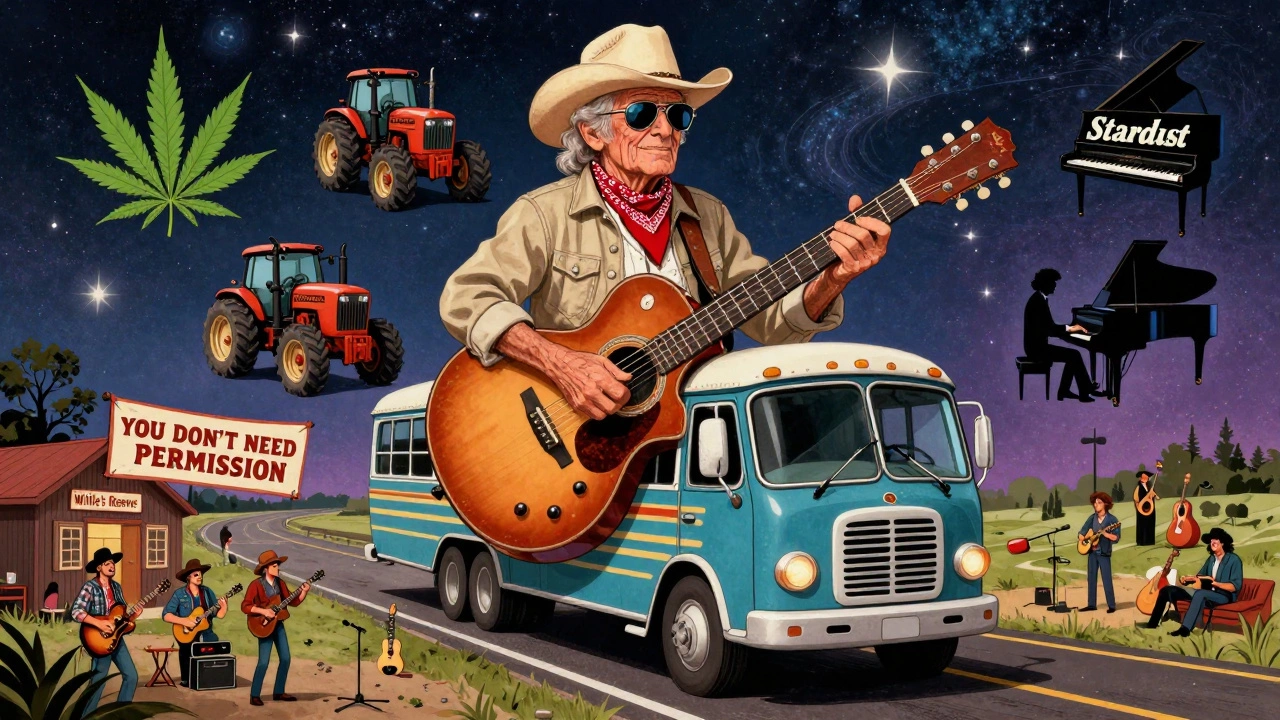
Garland, Texas: The Forgotten Birthplace
Most people think outlaw country was born in Austin. It wasn’t. It was born in Garland, Texas, in a tiny studio with a 24-track console that had just been installed. The studio’s owner gave Nelson a free day. He used it to change music forever. Today, Garland is starting to claim its history. Local historians are planning events to mark the 50th anniversary of Red Headed Stranger. They want people to know: the revolution didn’t start on a stage in Austin. It started in a quiet studio, with a man who refused to play by the rules.Why This Still Matters
In 2026, with algorithms deciding what music gets heard and labels demanding TikTok-ready hooks, Nelson’s story is more relevant than ever. You don’t need a hit on streaming platforms to be meaningful. You don’t need to sound like everyone else to be heard. Willie Nelson didn’t become a legend because he followed the rules. He became one because he broke them-and then proved the rules were wrong.What made Willie Nelson’s music different from other country artists in the 1970s?
Willie Nelson rejected the polished, heavily produced "Nashville Sound" that dominated country music at the time. Instead, he embraced minimalism-using sparse arrangements, live takes, and his own distinctive phrasing. His 1975 album Red Headed Stranger featured long instrumental pauses, no background vocals, and raw storytelling, which contrasted sharply with the slick, studio-crafted hits of the era. This approach gave his music emotional depth and authenticity that listeners connected with deeply.
How did "Red Headed Stranger" change the music industry?
Red Headed Stranger proved that a stripped-down, concept-driven album could top the charts without radio-friendly production. Columbia Records initially thought it was a demo, not a finished product. But its commercial success-selling over a million copies and reaching number one-showed labels that artists didn’t need studio polish to sell records. It opened the door for singer-songwriters to retain creative control, leading to a wave of independent releases in country and beyond.
Why is Willie Nelson considered the face of outlaw country?
While Waylon Jennings, Merle Haggard, and Johnny Cash were key figures, Nelson became the movement’s most visible symbol because of his unique blend of poetic songwriting, countercultural image, and relentless independence. He didn’t just resist Nashville-he left it. His long hair, bandanas, and refusal to conform to industry norms made him a cultural icon. Plus, his success with Red Headed Stranger and Stardust gave him unmatched credibility as both an artist and a businessman who operated outside the system.
Did the outlaw country movement stay separate from mainstream music?
No. Ironically, outlaw country became mainstream. What began as a rebellion against Nashville’s commercialism eventually shaped the sound of modern country. Artists like Chris Stapleton, Eric Church, and Miranda Lambert owe their raw, authentic styles to the outlaw movement. Even today, "outlaw" is used as a marketing term-even though its original meaning was about rejecting labels and control. The movement’s legacy isn’t that it stayed separate-it’s that it changed the entire system from within.
How did Willie Nelson influence artists outside of country music?
Nelson collaborated with artists across genres-recording with Ray Charles on Stardust, performing with Bob Dylan, and blending jazz, gospel, and folk into his work. His 1978 album Stardust, which featured pop standards, crossed over to audiences who’d never listened to country. He showed that music doesn’t need genre boundaries. This openness inspired musicians from rock to hip-hop to prioritize authenticity over categorization. His influence can be heard in artists like Jason Isbell, Hozier, and even Tupac Shakur, who carried forward the outlaw ethos of speaking truth through art.
What role did Texas play in the outlaw country movement?
Texas, especially Austin and Garland, became the creative heart of outlaw country because it offered freedom from Nashville’s control. Austin’s live music scene gave artists space to experiment, while Garland’s Autumn Sound Studios-where Red Headed Stranger was recorded-provided the technical tools without the pressure of a big-label studio. Texas musicians had a culture of independence, rooted in rural life and resistance to outside authority. This environment allowed Nelson and others to develop a sound that was distinctly Texan: honest, unhurried, and deeply personal.
Is Willie Nelson still active in music and activism today?
Yes. Even in his 90s, Nelson continues to tour, record, and advocate. He releases new music regularly, often blending country with jazz and folk influences. His cannabis brand, Willie’s Reserve, supports sustainable farming and legalization efforts. He still performs at Farm Aid and speaks out on environmental issues, including biodiesel fuel use. His activism and music remain deeply intertwined, proving that his outlaw spirit never faded-it only grew stronger.
Next Steps: What to Explore Next
If you’re inspired by Willie Nelson’s story, dive deeper into:- Waylon Jennings’ Honky Tonk Heroes-the album that matched Red Headed Stranger in raw power
- The Highwaymen’s full discography, especially their 1985 debut
- Johnny Cash’s American Recordings series, produced by Rick Rubin
- The history of Autumn Sound Studios in Garland, Texas
- How Farm Aid evolved from a one-time concert to a lasting movement


