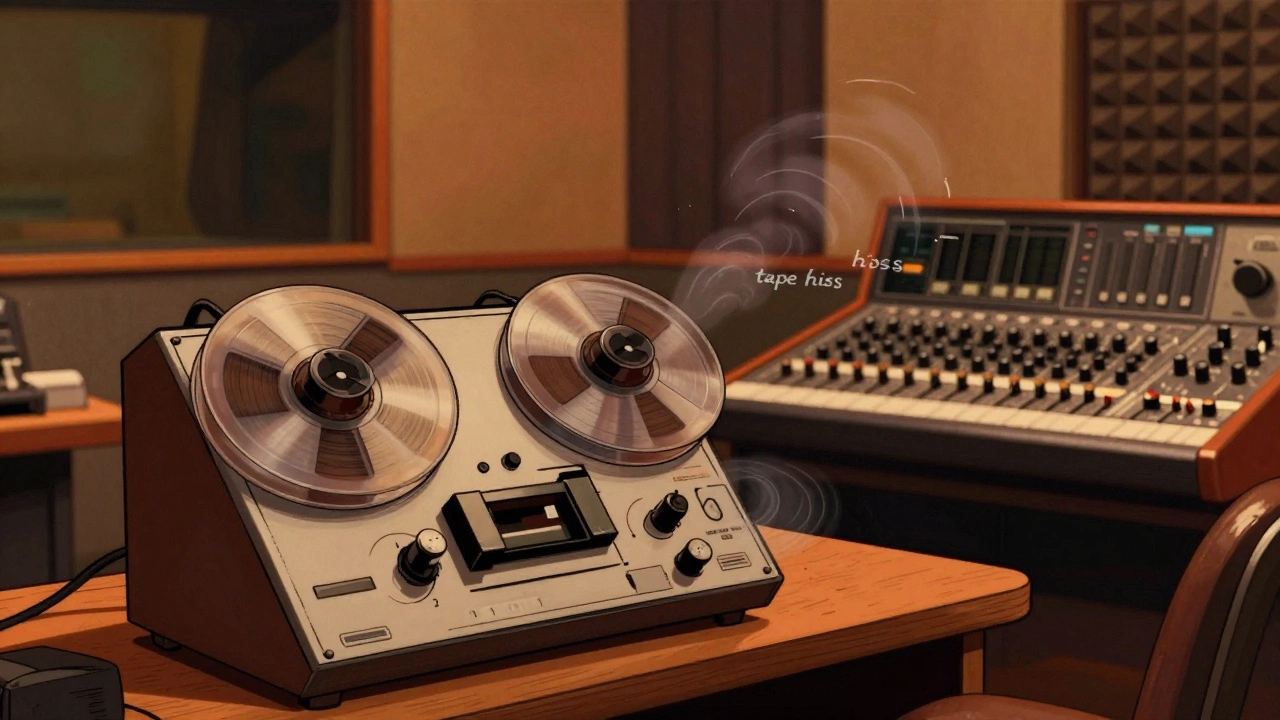

Put on a record by James Taylor or Joni Mitchell from the mid-1970s. Close your eyes. Before the guitar strums or the voice kicks in, you hear it: a soft, steady whisper filling the silence. It’s not dead air. It’s tape hiss. For decades, engineers fought this noise as a technical defect. Today, we chase it. That background static is no longer just an accident of physics; it is the sonic signature of intimacy, honesty, and the specific warmth that defines the golden age of the singer-songwriter.
We are living in an era where digital recordings are perfectly clean. They have infinite dynamic range and zero noise floor. Yet, many listeners find them cold. We crave the imperfections of the past. This article explores why that specific analog noise became so valuable, how 1970s studios managed it, and why modern producers spend thousands of dollars to fake it.
The Physics of the Noise Floor
To understand why tape hiss matters, you first have to understand what it actually is. It isn’t part of the music. It’s not a microphone picking up room tone. It comes from the tape itself.
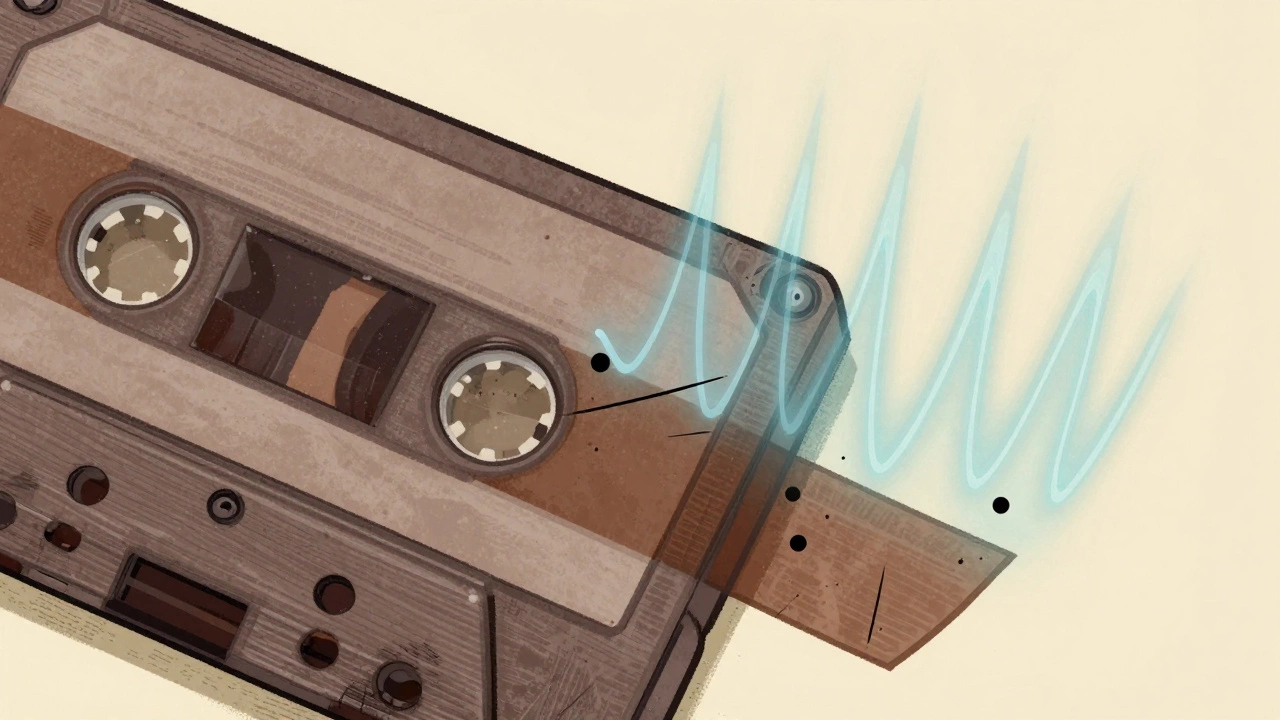
Analog magnetic tape consists of a plastic strip coated with tiny iron oxide particles. When you record sound, these particles align to create a magnetic field that represents the audio signal. But here’s the catch: even when the tape is completely blank, those particles don’t sit perfectly still. They vibrate randomly. This random alignment creates a low-level electrical signal that sounds like white noise-specifically, a broadband hiss that is louder in the high frequencies.
Recording engineer Paul White explained this mechanism in a 1992 article for *Recording Musician*, noting that you are literally hearing the physical imperfections of the medium. The hiss is always there. It is the "floor" upon which the music sits. In the 1970s, before digital noise reduction systems became standard, this floor was unavoidable. Every reel-to-reel machine running at 15 or 30 inches per second (ips) had its own unique noise profile, determined by the brand of tape, the age of the heads, and the tension of the reels.
Driving Tape Hot: The 1970s Engineering Trick
If hiss was a problem, why do 1970s acoustic records sound so warm and full? Because engineers didn’t try to eliminate the hiss entirely; they managed it through volume. This technique is known as "driving tape hot."
In the mid-1970s, commercial studios recording folk and soft rock would push the input levels close to the maximum limit of the tape. Why? To maximize the signal-to-noise ratio. If the musical signal is loud, the relative volume of the background hiss drops. It becomes less noticeable.
But pushing the tape hard did more than just hide the noise. It triggered natural compression and saturation. As the magnetic particles reached their limit, they couldn’t align any further, causing the peaks of the sound to flatten slightly. This created third-harmonic distortion-a smooth, pleasing thickening of the sound. It made acoustic guitars sound rounder and vocals sound closer, as if the singer were standing right next to you.
This approach required careful planning. Engineers couldn’t just boost the treble later in the mixing stage because that would also boost the hiss. Instead, they shaped the tone before hitting the tape. They scooped out the muddy low-mids and carefully boosted highs during recording, knowing that the tape would soften those sharp edges naturally. This workflow forced a deliberate, thoughtful approach to sound design that is often missing in today’s "fix it in post" digital culture.
| Feature | Analog Tape (1970s) | Digital Recording (Modern) |
|---|---|---|
| Noise Floor | Audible tape hiss (broadband) | Near-silent (-120dB or lower) |
| Dynamic Range | Limited (~60-70dB) | Vast (>120dB) |
| Distortion | Smooth harmonic saturation | Harsh clipping (if overloaded) |
| Workflow Impact | Commit to tones early | Edit everything later |
| Aesthetic Perception | Warm, intimate, authentic | Clean, precise, sometimes sterile |
Hiss as a Marker of Authenticity
There is a psychological shift happening in how we listen to old records. In the 1970s, consumers bought hi-fi equipment to get rid of noise. Today, we buy vinyl and use plugins to bring it back. Why?
Academic research, such as the 2018 Cambridge Popular Music article "Listening for the Hiss," suggests that noise has been reframed as a sign of honesty. In a world saturated with auto-tuned vocals and quantized drums, tape hiss signals that something real happened. It implies a human presence in the room. It suggests that the artist wasn’t hiding behind layers of digital perfection.
This concept ties into what scholars call "technostalgia." We associate the grainy sound of tape with a time when music felt more personal. Think of the singer-songwriter boom of the 1970s. Artists like Carole King, Cat Stevens, and Jackson Browne recorded mostly acoustic instruments in quiet rooms. The lack of heavy production meant the tape hiss was more audible. Over time, our brains linked that specific noise texture with emotional vulnerability and intimacy.
The hiss acts as a sonic metaphor for memory. Just as old photographs have grain and faded colors, old recordings have hiss. It reminds us that the moment is gone, preserved only in imperfect magnetic patterns. This "stubborn materiality," as described in a 2016 Sound Studies Blog essay, makes the noise feel tangible. It grounds the music in physical reality.
The Lo-Fi Legacy and Modern Emulation
You don’t have to look far to see the influence of 1970s tape aesthetics today. The entire lo-fi hip-hop genre, which dominates streaming platforms, is built on the emulation of analog imperfections. Producers sample jazz records from the 1970s, deliberately preserving the crackle and hiss, and layer them over slow beats. They aren’t trying to make it sound bad; they are trying to make it sound cozy.
Even mainstream pop producers now use tools to fake this sound. Software plugins from companies like Babyaud.io and others offer "tape saturation" and "vinyl crackle" effects. These tools allow engineers to add a simulated noise floor to a pristine digital mix. The goal is to roll off the harsh high frequencies and add a subtle hum that mimics the warmth of a vintage reel-to-reel machine.
However, faking it is tricky. As discussed in online audio engineering communities, simply slapping a noise loop over a track often sounds artificial. To get it right, you have to understand how the original engineers worked. You need to balance the noise so it fills the silences but doesn’t drown out the detail. You need to emulate the way tape compresses transients-the initial attack of a snare drum or a plucked string-so the sound feels rounded rather than sharp.

Why the 1970s Peak Matters
Many audiophiles and engineers consider the mid-to-late 1970s the peak of recording quality. This wasn’t because the technology was perfect; it was because the limitations forced creativity. Engineers had to make decisions about EQ and levels before the song was even finished. They couldn’t rely on undo buttons.
This constraint led to a cohesive sound. Albums from this era often share a similar tonal balance: warm lows, present mids, and softened highs. The tape hiss was the glue that held it all together, providing a consistent texture across different songs and instruments. It unified the album as a single physical object, rather than a collection of isolated digital files.
As we move further into the digital age, that unity is harder to achieve. Files are too clean. They lack the shared character of a single tape machine. This is why remasters of 1970s albums often face criticism. When engineers remove the hiss to make the record sound "clearer," they often strip away the very thing that gave the music its soul. Listeners notice. They miss the warmth. They miss the hiss.
Conclusion: Embracing the Imperfection
Tape hiss is more than just noise. It is a historical artifact, a technical challenge, and an aesthetic choice. In the context of 1970s acoustic records, it serves as a reminder of the human effort involved in creating music. It connects us to the artists who sat in front of microphones, aware that every take was permanent, every mistake captured in magnetic dust.
Whether you are a collector digging through crates for original pressings or a producer tweaking plugins in your home studio, understanding the role of tape hiss changes how you listen. It invites you to appreciate the texture of the sound, not just the notes. It encourages you to value authenticity over precision. In a world of endless digital possibilities, sometimes the most beautiful thing you can hear is the sound of the medium itself.
What causes tape hiss in analog recordings?
Tape hiss is caused by the random alignment of magnetic particles (iron oxide) on the tape surface. Even when no music is playing, these particles generate a low-level electrical signal that manifests as a broadband noise, particularly noticeable in the high frequencies.
Why do 1970s records sound warmer than modern digital recordings?
The warmth comes from several factors: natural tape compression, harmonic distortion from driving the tape "hot," and the rolling off of extreme high frequencies. Additionally, the audible tape hiss provides a textured background that digital silence lacks, creating a sense of intimacy and cohesion.
How did 1970s engineers reduce the impact of tape hiss?
Engineers maximized the signal-to-noise ratio by recording at higher volumes (driving tape hot). They also carefully shaped the equalization (EQ) before recording, avoiding boosting high frequencies which would amplify the hiss. Post-recording boosts were minimized to keep the noise floor low.
Is tape hiss considered a defect or a feature today?
Today, tape hiss is largely viewed as an aesthetic feature rather than a defect. It is associated with authenticity, nostalgia, and warmth. Many modern producers intentionally add simulated tape hiss to digital tracks to evoke the character of vintage analog recordings.
Can you accurately replicate 1970s tape sound using software?
Software plugins can closely approximate the sound of tape, including saturation, compression, and noise floors. However, achieving a truly authentic result requires careful balancing. Simply adding noise samples often sounds artificial; effective emulation involves modeling the complex interaction between the tape speed, bias, and magnetic particle behavior.


