
When you think of the 1980s, you probably picture neon grids, synth-wave colors, and high-saturation pop. But some of the most enduring images from that decade are starkly monochrome. Black-and-white music videos from the 1980s were not a result of budget cuts or technical failure. They were a deliberate artistic rebellion against the rising tide of color television.
The launch of MTV in 1981 changed everything. Suddenly, music wasn't just something you heard; it was something you watched. In this new visual arena, artists had to fight for attention. While many chased bright colors and flashy effects, others chose the raw power of grayscale. This choice created a visual language that still influences filmmakers and directors today.
The Strategic Power of Monochrome
In an era where color technology was becoming cheap and accessible, choosing black-and-white was a statement. It signaled seriousness. It suggested that the artist cared more about the image’s emotional weight than its commercial sparkle. As cinematographer Lee Milby notes, creating authentic vintage aesthetics requires "specificity and concept." The black-and-white look wasn’t accidental; it was a tool for cohesion.
Consider the difference between a colorful pop video and a gritty rock performance shot in grayscale. The color distracts with detail-the shade of a jacket, the hue of a background wall. Black-and-white strips those away. It forces the viewer to focus on light, shadow, texture, and expression. For bands like The Cure or Siouxsie and the Banshees, this aesthetic matched their moody, introspective lyrics. It gave them a visual identity that stood out in a crowded market.
This approach also helped bridge the gap between archival footage and new content. Directors often mixed old clips with new shoots. By grading the new footage in black-and-white, they created a seamless visual timeline. This technique isn’t just a trick of the past; modern creators still use it to blend eras without jarring transitions.
Cinematic Prestige: Beyond the Pop Chart
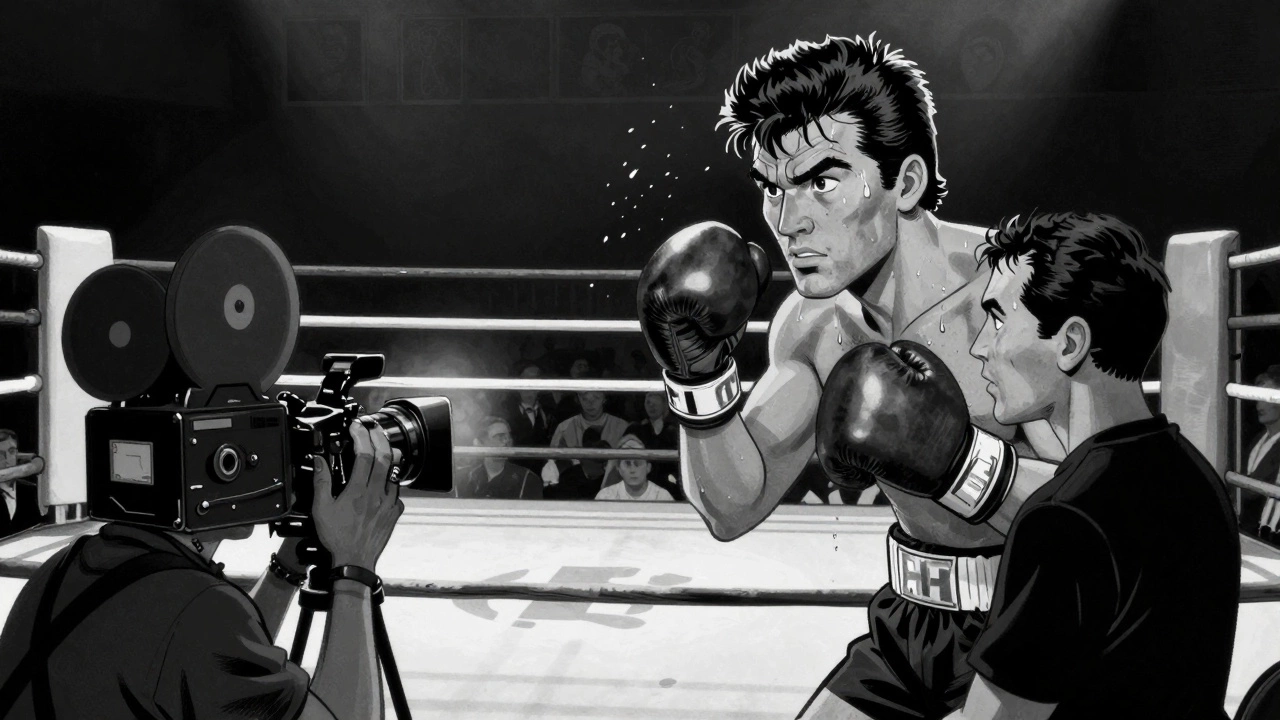
The influence of black-and-white wasn’t limited to music videos. Mainstream cinema embraced the format as a mark of prestige. The British Film Institute (BFI) highlights Raging Bull (1980), directed by Martin Scorsese, as one of the definitive black-and-white films of the decade. Shooting a boxing drama in monochrome wasn’t necessary for realism. It was a choice to emphasize the brutality, the sweat, and the psychological intensity of the protagonist.
Scorsese’s decision proved that major studio productions could thrive without color. It elevated black-and-white from a "budget" option to an "artistic" one. This crossover between film and music video culture meant that musicians began hiring directors who understood cinematic grammar. The result was a generation of music videos that looked like short films, using shadow and contrast to tell complex stories.
This prestige factor allowed artists to distance themselves from the "sex and youth" marketing that dominated much of the 1980s media landscape. If your goal was to sell a lifestyle, you used color. If your goal was to convey depth, pain, or intellectualism, you often chose black-and-white.
Visual Identity in a Saturated Market
Alt Press describes the 1980s as the "big bang of music videos." It was a cosmic explosion of creativity, but also of noise. With so many visuals competing for screen time, differentiation became key. Artists used visual art to define themselves within the music business. Some chose spectacle; others chose subtlety.
Black-and-white served as a counter-strategy. In a world of increasing visual saturation, monochrome offered clarity. It cut through the clutter. Think of Michael Jackson's early work or the stark imagery of Depeche Mode. Their use of grayscale didn't make their videos less eye-catching; it made them more memorable. It created a brand identity that was instantly recognizable.
This strategy works because it engages the brain differently. Color processing is immediate and emotional. Grayscale processing is analytical and structural. Viewers spend more time examining the composition of a black-and-white image. This increased engagement can lead to stronger recall, which is exactly what artists needed in the pre-internet era of MTV rotation.
The Legacy: From Retrowave to Modern Cinema
Fast forward to today, and the 1980s black-and-white aesthetic is having a massive revival. Contemporary filmmakers explicitly draw inspiration from this period. Films like Drive, Mandy, and even the TV series Stranger Things reference the visual language of the 1980s. While these shows often use color, they borrow the lighting techniques, the contrast ratios, and the moody atmosphere pioneered by black-and-white creators.
The term "Retrowave" has emerged to describe this trend. It’s not just about copying looks; it’s about capturing the feeling. The Getty Images library holds nearly 900 stock clips tagged with "eighties black and white," showing how much demand there is for this specific visual texture. Creators aren’t just looking for old footage; they’re looking for the *authenticity* of that era’s choices.
Modern digital tools allow us to simulate black-and-white easily, but the challenge remains the same as it was in 1985: specificity. You can’t just flip a switch. You have to understand why the original creators chose monochrome. Was it to hide imperfections? To highlight facial expressions? To create a sense of timelessness? Understanding these intentions is what separates a good retro filter from a great artistic homage.
Technical Choices That Shaped the Look
To truly appreciate these videos, you have to look at the technical side. In the 1980s, shooting on film was expensive. Black-and-white film stocks had different sensitivities than color stocks. They often handled low-light situations better, allowing for darker, moodier scenes without excessive grain. This technical advantage was leveraged by directors to create atmospheric tension.
Additionally, the editing process was physical. Splicing black-and-white tape required precision. The lack of color information meant that editors focused heavily on timing and movement. This resulted in tighter, more rhythmic edits that complemented the music. When you watch these videos now, you notice the flow. It feels organic, not chopped up by digital markers.
Today, we can replicate this look with software, but we lose the tactile nature of the process. The "mistakes" in 1980s black-and-white videos-light leaks, slight overexposure-add character. Modern perfection can sometimes feel sterile. The best contemporary homages embrace these imperfections, understanding that the charm lies in the human touch behind the camera.
| Feature | Color Spectacle | Black-and-White Minimalism |
|---|---|---|
| Primary Goal | Immediate attraction, commercial appeal | Emotional depth, artistic distinction |
| Viewer Focus | Costumes, sets, special effects | Lighting, shadows, facial expressions |
| Technical Advantage | Vibrancy, variety | Better low-light performance, timeless quality |
| Legacy Impact | Defined pop culture icons | Influenced cinematic prestige and indie film |
Conclusion: Why It Endures
The endurance of 1980s black-and-white videos proves that true style transcends trends. While the neon lights of the decade have faded into nostalgia, the stark contrasts of monochrome remain powerful. They remind us that visual storytelling is about more than just decoration. It’s about connection.
Whether you’re a filmmaker looking to evoke a specific mood or a fan appreciating the history of MTV, understanding these aesthetic choices adds depth to your viewing experience. The next time you see a black-and-white scene in a modern movie, remember: it’s likely paying homage to the bold decisions made by artists four decades ago who chose substance over saturation.
Why did some 1980s music videos choose black-and-white over color?
Artists chose black-and-white to differentiate themselves in a crowded market. It conveyed artistic seriousness, emotional depth, and sophistication, standing in contrast to the commercial, eye-catching color trends of the time.
How does black-and-white cinematography affect viewer perception?
Black-and-white removes the distraction of color, forcing viewers to focus on lighting, texture, composition, and facial expressions. This leads to increased engagement and stronger emotional resonance.
What role did MTV play in the popularity of black-and-white videos?
MTV's launch in 1981 created a new visual medium for music. Artists had to compete for attention, leading to diverse aesthetic strategies. Black-and-white became a key tool for establishing unique visual identities.
Are modern films influenced by 1980s black-and-white aesthetics?
Yes. Films like 'Drive' and 'Mandy,' as well as shows like 'Stranger Things,' draw inspiration from the lighting, contrast, and moody atmosphere pioneered by 1980s black-and-white creators.
Was black-and-white cheaper to produce in the 1980s?
While black-and-white film could be less expensive, its primary use in iconic videos was artistic, not financial. Major productions like 'Raging Bull' chose it for prestige and emotional impact, not cost savings.