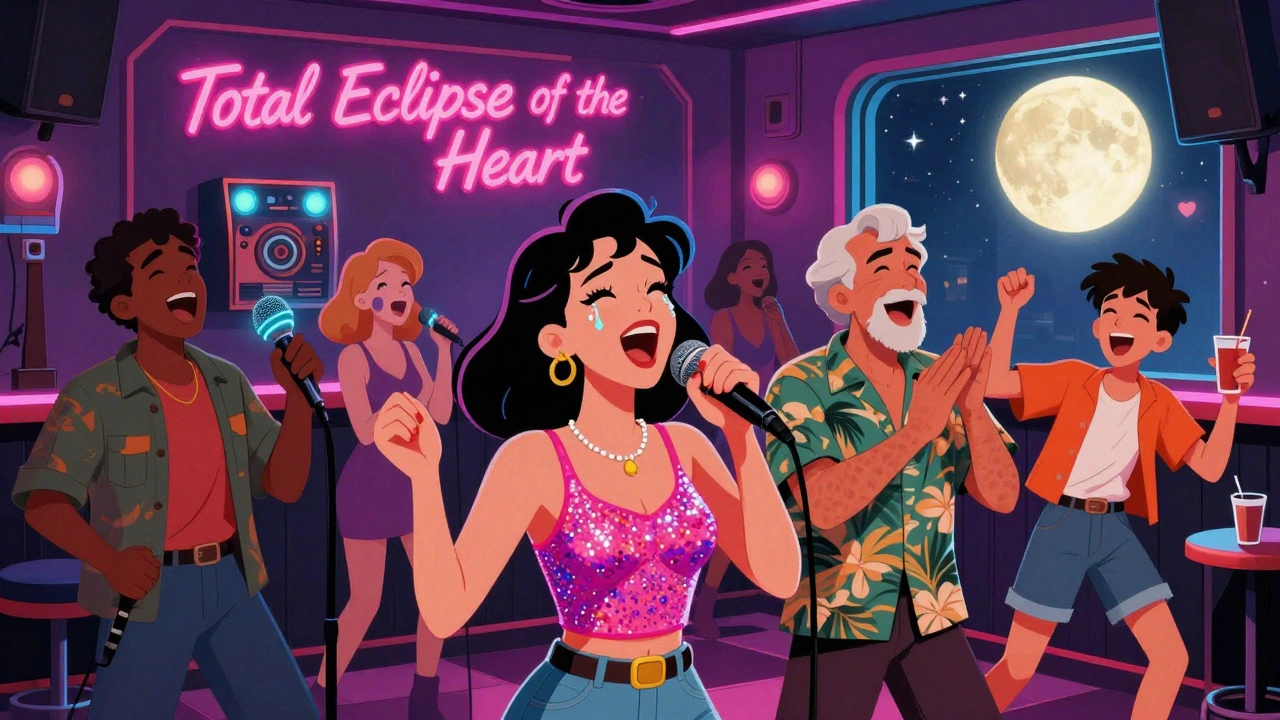

Walk into any karaoke bar on a Friday night and you’ll hear the same thing over and over: the opening piano chords of "Total Eclipse of the Heart". Then, someone takes the mic, takes a breath, and lets loose like they’re singing to a stadium of 50,000 people. No one laughs. Everyone cheers. Why? Because these songs aren’t just old hits-they’re emotional anchors.
It’s 2026. Streaming services have millions of songs. TikTok throws new viral tracks at you every week. But when it comes time to sing, people still reach for the same 1980s power ballads. Not because they’re stuck in the past, but because these songs do something no modern hit can: they turn a quiet room into a shared moment of raw, unfiltered feeling.
They Were Built for Singing Along
Most pop songs today are made for scrolling, not singing. They’re short, chopped up, layered with auto-tune, and designed to grab attention in 15 seconds. 1980s power ballads? They were built to last. They start slow, build slowly, and explode into a chorus that feels like it was written for your voice, even if you can’t hit the high notes.
Take "I Wanna Dance with Somebody" by Whitney Houston. Released in 1987, it hit #1 and went eight-times platinum. But more than that-it became a karaoke ritual. Why? Because the chorus is simple, repetitive, and full of space for you to belt it out. You don’t need to be a trained singer. You just need to want to feel alive for three minutes.
Same goes for "Love Is a Battlefield" by Pat Benatar. It’s not just a song-it’s a performance. The lyrics are dramatic. The rhythm is steady. And that bridge? It’s a challenge. People don’t sing it to be perfect. They sing it to prove they can try.
The Vocal Drama Is Irresistible
Modern pop singers rarely go for the big, soaring note. It’s risky. It’s messy. It’s not polished. But in the 1980s, vocal drama wasn’t a flaw-it was the whole point. You didn’t just sing a ballad. You survived it.
"Sweet Child O' Mine" by Guns N' Roses isn’t a rock song. It’s a vocal marathon. Axl Rose’s high note at the end? It’s not just hard-it’s legendary. And that’s why people pick it. Not because they can sing it. Because they want to try. Even if they crack. Even if they turn red. Even if they get a standing ovation for failing.
Same with "Don't Stop Believin'" by Journey. The piano intro. The build. The final chorus where the whole bar joins in. It’s not about accuracy. It’s about participation. It’s about feeling like part of something bigger, even if you’re just wearing a Hawaiian shirt and holding a plastic cup of soda.
Lyrics That Feel Like Your Life
Think about the words. "I will never let you go". "I want to dance with somebody who loves me". "I’m a woman, hear me roar". These aren’t vague pop phrases. They’re declarations. They’re cries. They’re promises.
Modern songs talk about heartbreak in metaphors. 1980s ballads just say it plain: "I need you, I love you, I can’t live without you." There’s no irony. No sarcasm. Just emotion, turned up to eleven.
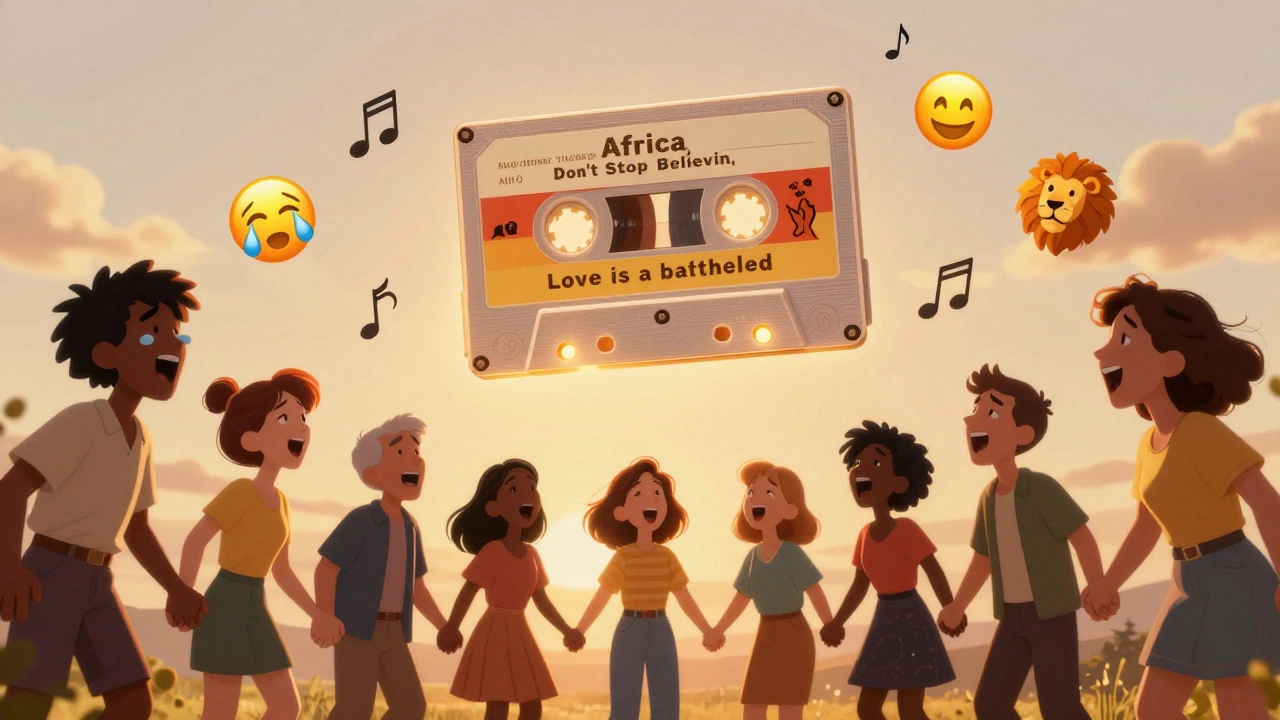
That’s why a 22-year-old who just got dumped will sing "Total Eclipse of the Heart" by Bonnie Tyler like it’s their last breath. That’s why a 55-year-old dad will belt out "Africa" by Toto with tears in his eyes. The lyrics don’t just describe feelings-they let you live them.
And here’s the kicker: these songs don’t age. They don’t feel dated. They feel timeless. Billboard called "867-5309 (Jenny)" by Tommy Tutone "the right combination of dated and timeless." That’s the secret. The production is cheesy. The drum machine is obvious. But the feeling? Still real.
It’s Not About the Music-It’s About the Moment
Karaoke isn’t a talent show. It’s therapy. It’s connection. It’s the one night a week where you stop being an employee, a parent, a partner, and just become someone who sings like nobody’s watching-even though everyone is.
1980s power ballads are the perfect soundtrack for that. They give you permission to be loud. To be emotional. To be a little ridiculous. And they don’t judge you when you miss a note.
There’s no algorithm that recommends these songs. No influencer telling you to sing them. They’re passed down like family stories. A friend says, "You gotta try this one." You do. You choke. You laugh. Someone else jumps in. And suddenly, you’re not alone.
The Numbers Don’t Lie
You don’t need a survey to know these songs still rule. Look at the data:
- "Total Eclipse of the Heart" saw a 3,500% spike in Spotify plays during the 2017 solar eclipse. People didn’t just remember it-they needed to hear it.
- "I Wanna Dance with Somebody" has over 1.2 billion streams on Spotify as of 2025.
- "Africa" is consistently ranked as the #1 most-sung karaoke song in the U.S. by industry trackers.
- Virgin Radio’s Top 100 80s Power Ballads playlist has over 4 million followers.
These aren’t nostalgia hits. They’re living, breathing, crowd-chanting anthems. And they’re not going anywhere.
Why Not Modern Songs?
Could a 2024 song become a karaoke staple? Maybe. But it’s harder now. Today’s hits are too short. Too processed. Too focused on trends. They don’t give you space to breathe, to stretch your voice, to let go.
1980s ballads were made in studios with real instruments, real amps, and real emotion. No auto-tune. No quantized beats. Just a singer, a piano, a guitar, and a drum machine that somehow made you feel like the world was ending-and you were the only one who could fix it.
That’s why, 40 years later, you still hear them. Not because we’re stuck in the past. But because we still need the same thing we always did: to feel heard. To feel seen. To sing like no one’s watching-even when they are.
Why do people still sing 1980s power ballads instead of newer songs?
Because 1980s power ballads were designed for emotional release, not just entertainment. They have long builds, big choruses, and lyrics that feel personal. Modern songs are often too short, too polished, or too vague to give singers that same cathartic experience. People don’t just want to sing-they want to feel something.
Are 1980s power ballads popular with younger generations?
Absolutely. Many Gen Z and Gen Alpha karaoke singers didn’t grow up with these songs, but they’ve inherited them through family, movies, TikTok, and viral moments. Songs like "Africa" and "Total Eclipse of the Heart" have become cultural touchstones, passed down like legends. They’re not old-they’re iconic.
Do you have to be a good singer to enjoy singing these songs?
No. In fact, some of the most memorable karaoke moments come from people who can’t hit the high notes. The power of these songs isn’t in perfection-it’s in effort. The rawness, the cracks in the voice, the laughter afterward-that’s what makes them special. Everyone cheers, not because you sang well, but because you dared to try.
Why are these songs still on karaoke playlists today?
Karaoke systems don’t update automatically. They rely on what people request. And for decades, 1980s power ballads have been the most requested. Venues keep them because they get crowds singing, dancing, and bonding. They’re reliable. They work. And they always will.
Is there a psychological reason these songs stick around?
Yes. These songs tap into what psychologists call "emotional resonance." The combination of soaring melodies, dramatic lyrics, and slow builds creates a release valve for stress, joy, grief, or longing. Singing them isn’t just fun-it’s therapeutic. That’s why they’re still used in therapy sessions, weddings, and funerals-they help people feel things they can’t say out loud.


