
There is a specific feeling that hits you when the opening chords of "Take On Me" or the drum fill in "Sweet Child O' Mine" kick in. It isn't just recognition; it's a physical reaction. For millions of people, 1980s music is the dominant popular sound from 1980 to 1989, characterized by synthesizers, drum machines, and the rise of music video culture. But here is the strange part: many of the people streaming these songs today weren't even born yet. Why does music from four decades ago still dominate playlists, movie soundtracks, and TikTok trends? The answer isn't just about being old-fashioned. It’s about a perfect storm of technology, psychology, and visual storytelling that created a sonic fingerprint unlike any other decade.
The Sound of Transition: Analog Meets Digital
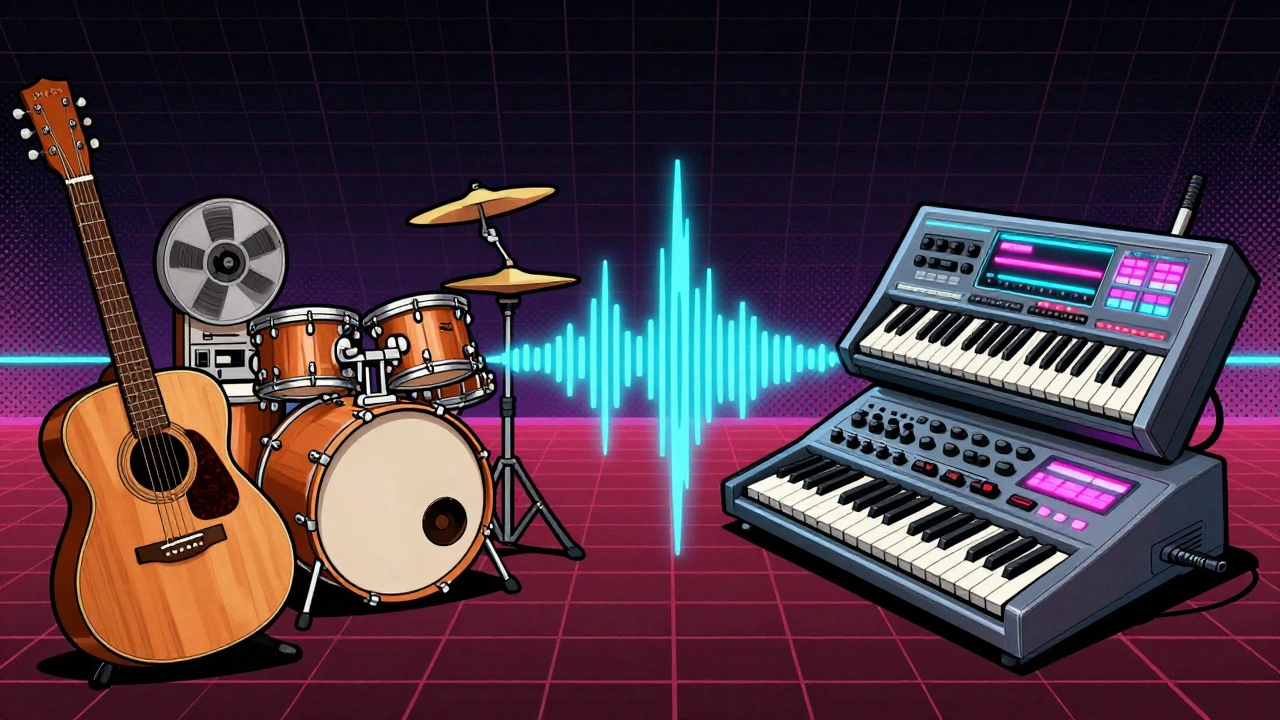
To understand why this music sticks, you have to look at how it was made. The 1980s were a bridge between two worlds. On one side, you had the warmth of analog instruments-real drums, electric guitars, and live bass lines. On the other, you had the cold, precise crunch of early digital technology. This hybrid approach gave the music a unique texture that feels both organic and futuristic.
Producers started using tools like the Roland TR-808 is a legendary drum machine known for its deep bass kicks and crisp snares. and the Yamaha DX7 is a pioneering FM synthesizer that defined the bright, bell-like tones of 80s pop. These weren't just background noise. They became the lead voices. Think about the gated reverb on the snare drum in Phil Collins' "In the Air Tonight." That massive, explosive sound wasn't an accident; it was a technical innovation that gave every track a cinematic scale. Modern producers try to replicate this because it provides an instant sense of drama and space that clean, hyper-compressed modern pop often lacks.
| Technology | Function | Iconic Example |
|---|---|---|
| Synthesizers | Created melodic leads and atmospheric pads | Depeche Mode, Madonna |
| Drum Machines | Provided precise, punchy rhythms | A-ha, New Order |
| Gated Reverb | Added huge, stadium-sized depth to drums | Phil Collins, Peter Gabriel |
| Compact Disc (CD) | Improved audio clarity and durability | Thriller, Born in the USA |
The Visual Revolution: MTV and the Pop Star Persona
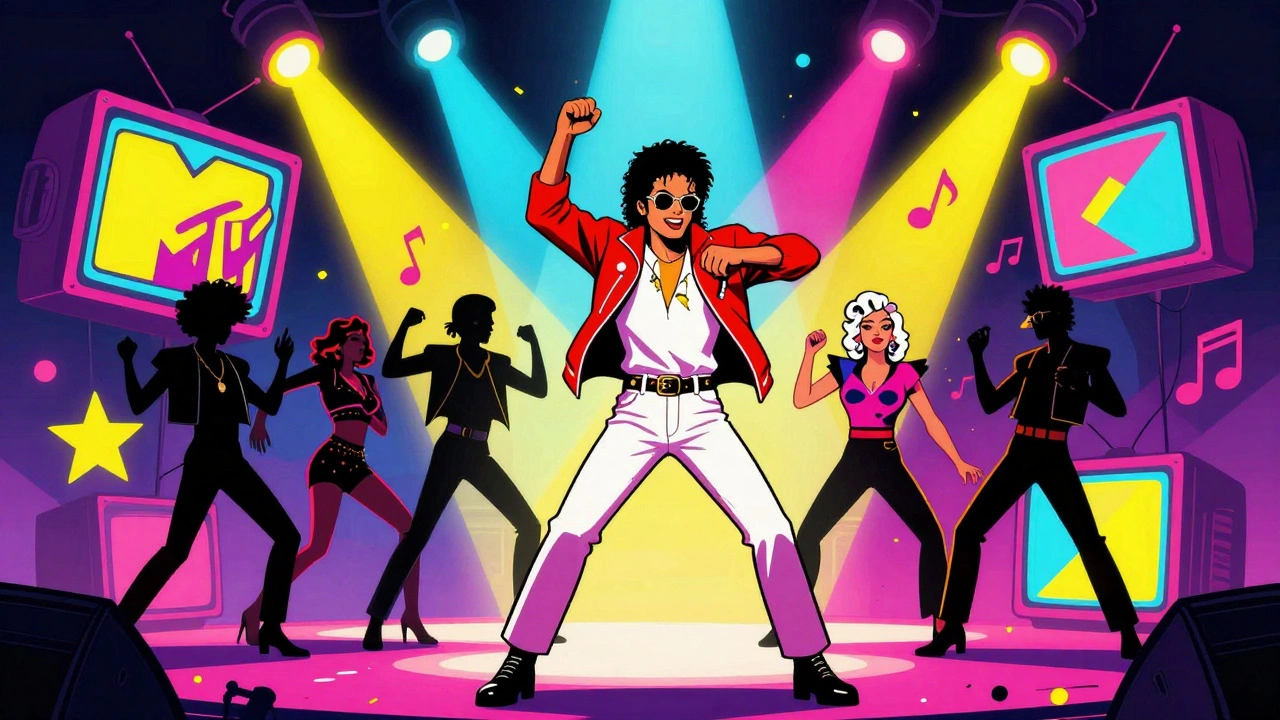
You cannot talk about 1980s music without talking about eyes. Before the launch of MTV is a cable television channel launched in 1981 that revolutionized music promotion through video clips. in 1981, you bought an album because you heard a song on the radio. After MTV, you bought an album because you saw who the artist was. This shifted the industry from an auditory medium to a multimedia experience.
Artists like Michael Jackson is a global superstar whose 1982 album Thriller set new standards for music videos and performance., Madonna is an icon who used fashion and provocative imagery to redefine female pop stardom., and Prince is a genre-blending artist known for his flamboyant style and musical virtuosity. didn't just sing; they performed narratives. The music video for "Thriller" wasn't just a clip; it was a short film with special effects, choreography, and a plot. This visual hook makes the music memorable in a way that audio-only tracks struggle to achieve. When you hear the song, your brain instantly recalls the image-the zombie dance, the red jacket, the neon lights. This dual encoding (sound + sight) makes the memory much stronger and harder to forget.
The Psychology of Nostalgia: The Reminiscence Bump
If you are over 40, you might think you love 80s music because it's objectively better. But science suggests something else is happening. Psychologists call it the "reminiscence bump." Research shows that humans form their strongest emotional connections to music during adolescence, roughly between ages 12 and 22. During this time, your brain is wiring itself for identity formation. The music you hear becomes the soundtrack to your first loves, your first heartbreaks, and your first steps into independence.
fMRI scans indicate that hearing music from this period activates the brain's reward centers more intensely than music from other life stages. For the generation that grew up in the 80s, these songs trigger a powerful dose of nostalgia. They feel like home. But what about younger listeners? For them, the appeal is different. It's about "retro escapism." In a world dominated by digital noise and algorithmic feeds, the bold, confident, and often optimistic production of 80s pop offers a comforting break. It sounds unapologetic and fun, which contrasts sharply with the sometimes darker or more minimalist trends in contemporary music.
Genre Diversity: A Melting Pot of Styles
One reason 1980s music remains relevant is that it wasn't just one thing. If you turned on the radio back then, you could hear almost anything. The decade hosted commercially successful scenes in pop, rock, R&B, metal, country, and early hip-hop. This diversity means there is an 80s track for every mood today.
- Synth-Pop: Bands like Depeche Mode and The Cure brought melancholic, electronic sounds to the mainstream.
- Glam Metal: Groups like Mötley Crüe and Guns N' Roses delivered high-energy, guitar-driven anthems.
- R&B and Soul: Artists like Whitney Houston and Lionel Richie polished vocal performances into global hits.
- Hip-Hop: Run-D.M.C. and Beastie Boys moved rap from underground parties to MTV and mainstream charts.
This cross-pollination allowed artists to experiment freely. Rock bands started using synthesizers. Pop stars incorporated funk breaks. This genre-blending experimentation creates a rich listening experience that doesn't feel monotonous. Unlike some modern genres that can feel homogeneous due to shared production templates, 80s music has a wide dynamic range. You can go from the aggressive thrash of Metallica to the smooth quiet storm of Sade in the same hour, and both sound distinctly "of their time."">
Enduring Influence: How 80s Music Shapes Today's Hits
The 1980s didn't just disappear; they evolved. Many of the production techniques pioneered in that decade are now standard in modern EDM, pop, and hip-hop. Producers today use virtual instruments modeled after the classic synths and drum machines of the 80s. When you hear a track labeled "synthwave" or "retro-pop," it is directly borrowing from the 80s playbook.
Furthermore, the business model established in the 80s laid the groundwork for today's celebrity culture. The idea of the artist as a brand-selling not just music but fashion, tours, and lifestyle-was perfected in the 80s. This multi-platform approach means that 80s icons remain visible. Their faces are still on billboards, their clothes are referenced in fashion magazines, and their songs are licensed for movies and commercials. This constant visibility keeps the music fresh in the public consciousness. It’s not just history; it’s current cultural currency.
So, why does 1980s music remain so iconic? Because it captured a moment where technology met creativity in a way that hasn't been replicated since. It combined catchy songwriting with groundbreaking visuals and a psychological hook that never fades. Whether you're riding the nostalgia wave or discovering it for the first time, the music offers a timeless blend of energy, emotion, and style that continues to resonate.
Why do 80s songs sound so big and spacious?
The spacious sound comes from production techniques like gated reverb on drums and heavy use of delay on vocals and guitars. Producers wanted to create a "stadium" feel, making even intimate ballads sound epic. This contrast between tight, punchy rhythms and wide, echoing melodies gives the music its signature grandeur.
Is 80s music only popular with older generations?
No. While older listeners connect through nostalgia, younger generations discover 80s music through social media trends, movie soundtracks, and retro-inspired fashion. The upbeat, melodic nature of the music appeals broadly, and its visual aesthetic fits well with modern digital content creation.
What role did MTV play in the success of 80s music?
MTV transformed music from an audio-only experience into a visual one. Artists who embraced the medium, like Michael Jackson and Madonna, gained global fame faster than ever before. Music videos became essential marketing tools, creating iconic images that reinforced the songs in listeners' minds.
How did synthesizers change 80s music?
Synthesizers allowed musicians to create entirely new sounds that traditional instruments couldn't produce. They enabled the rise of synth-pop and electronic dance music, providing bright, shimmering textures that defined the decade's sonic landscape. Instruments like the Yamaha DX7 became ubiquitous in hit records.
Why is 80s music frequently used in movies and ads?
80s music is instantly recognizable and evokes strong emotions quickly. Its clear melodies and energetic rhythms make it ideal for setting a tone in trailers, commercials, and films. Additionally, it taps into nostalgia, helping brands and filmmakers connect emotionally with audiences across different age groups.


