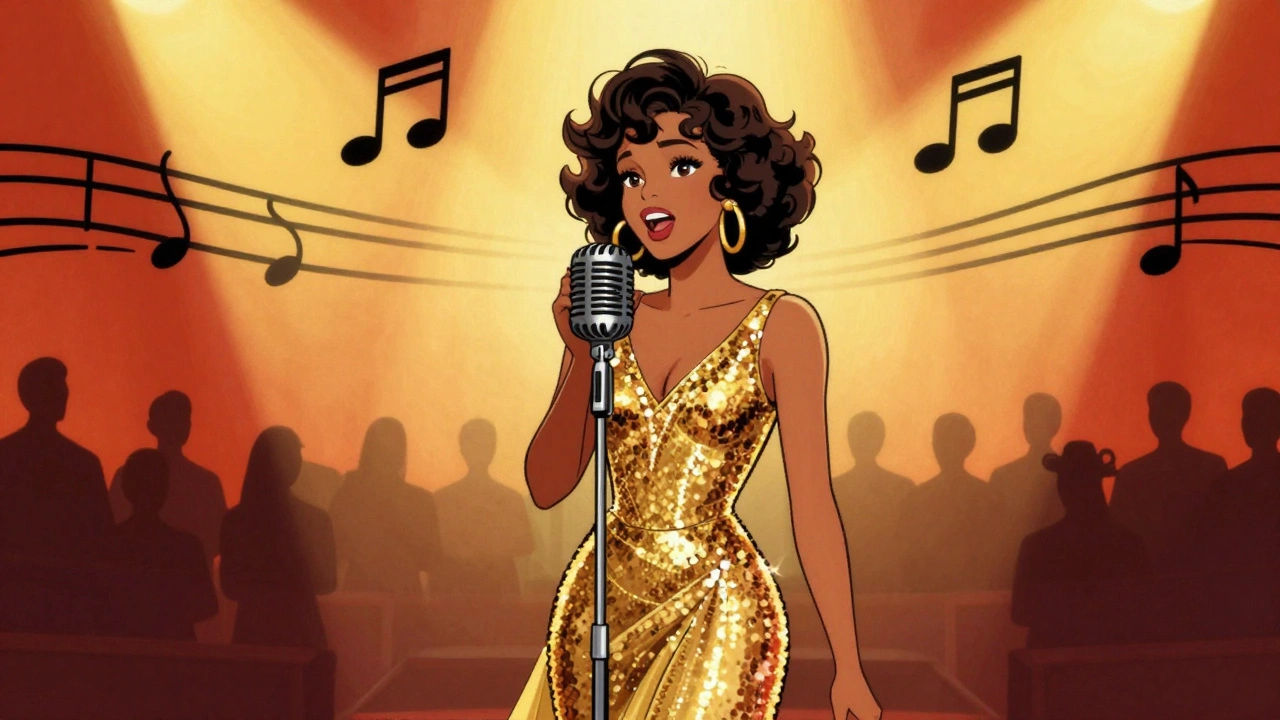

There is a specific sound that defines the late 1980s. It’s not just the synthesizers or the drum machines; it’s a voice that could start soft as a whisper and explode into a powerful, crystal-clear belt without missing a beat. That voice belongs to Whitney Houston. When you hear her debut album from 1985, you aren’t just hearing a pop star; you are hearing a technical marvel that changed how the music industry viewed female vocalists. Her ability to blend gospel roots with mainstream pop created a standard of "vocal perfection" that singers still try to replicate today.
The Gospel Roots of a Pop Icon
To understand why Houston’s voice sounded so different in the 1980s, you have to look at where she started. She wasn’t born into pop stardom; she was raised in the choir loft. Growing up in New Jersey, Houston sang in the New Hope Baptist Church in Newark. This environment was crucial. In gospel music, the voice is an instrument of expression, often using techniques like call-and-response, dynamic swells, and improvisatory runs known as melisma.
Her mother, Cissy Houston, and cousin Dionne Warwick were already established figures in soul and pop, but Whitney absorbed the raw power of church singing. When Clive Davis signed her to Arista Records in the early 1980s, he didn’t try to change her style. Instead, he curated songs that allowed her to use those gospel tools in a pop context. The result was a unique hybrid: the emotional intensity of R&B combined with the polished clarity of adult contemporary radio. This bridge between genres is what made her accessible to a global audience while keeping her technically impressive for critics.
Technical Mastery: More Than Just High Notes
People often talk about Whitney Houston’s five-octave range, but range alone doesn’t make a great singer. What made her voice "perfect" in the eyes of experts was her control. Modern vocal coaches who study her work point to three main pillars of her technique:
- Diaphragmatic Breathing: Houston used strict breath support to sustain long phrases. On ballads like Greatest Love of All, she holds notes for seconds without audible gasps or wavering pitch. This requires immense physical control of the diaphragm.
- Register Management: She moved seamlessly between chest voice (the lower, speaking register) and head voice (the higher, lighter register). Most singers have a noticeable "break" or crack when switching between these. Houston smoothed this out using a "mixed voice," allowing her to climb scales without changing tone color abruptly.
- Vowel Shaping: Teachers emphasize that she kept her mouth and throat open on vowels. This maximized resonance, giving her high notes a ringing, clear quality rather than a strained, thin sound.
On upbeat tracks like How Will I Know, she paired this openness with crisp consonant articulation. You can hear every word clearly even when she is singing fast. This combination of legato flow (smooth connections between notes) and percussive diction is rare and difficult to master.
| Technique | Function | Example Song |
|---|---|---|
| Melisma | Emotional intensification through rhythmic ornamentation | Saving All My Love for You |
| Mixed Voice Belt | Powerful high notes without strain | I Wanna Dance with Somebody |
| Dynamic Swell | Building tension within a single note | Greatest Love of All |
| Crisp Consonants | Rhythmic clarity in fast tempos | How Will I Know |
The MTV Era and Live Performance Standards
The 1980s were the dawn of the MTV era. Suddenly, looking good wasn’t enough; stars had to perform live on television with minimal backing tracks. Whitney Houston set a new benchmark for this. While many pop artists lip-synced or relied heavily on studio effects, Houston delivered live vocals that matched her studio recordings almost perfectly.
Her performance of I Wanna Dance with Somebody (Who Loves Me) became iconic not just because of the choreography, but because she hit every high note with precision under bright lights and intense movement. This proved that her technique was robust, not fragile. It forced other pop stars to raise their game. If Whitney could sing that well live, the expectation for everyone else shifted upward. She codified the idea that a pop star must be a formidable vocalist first and foremost.
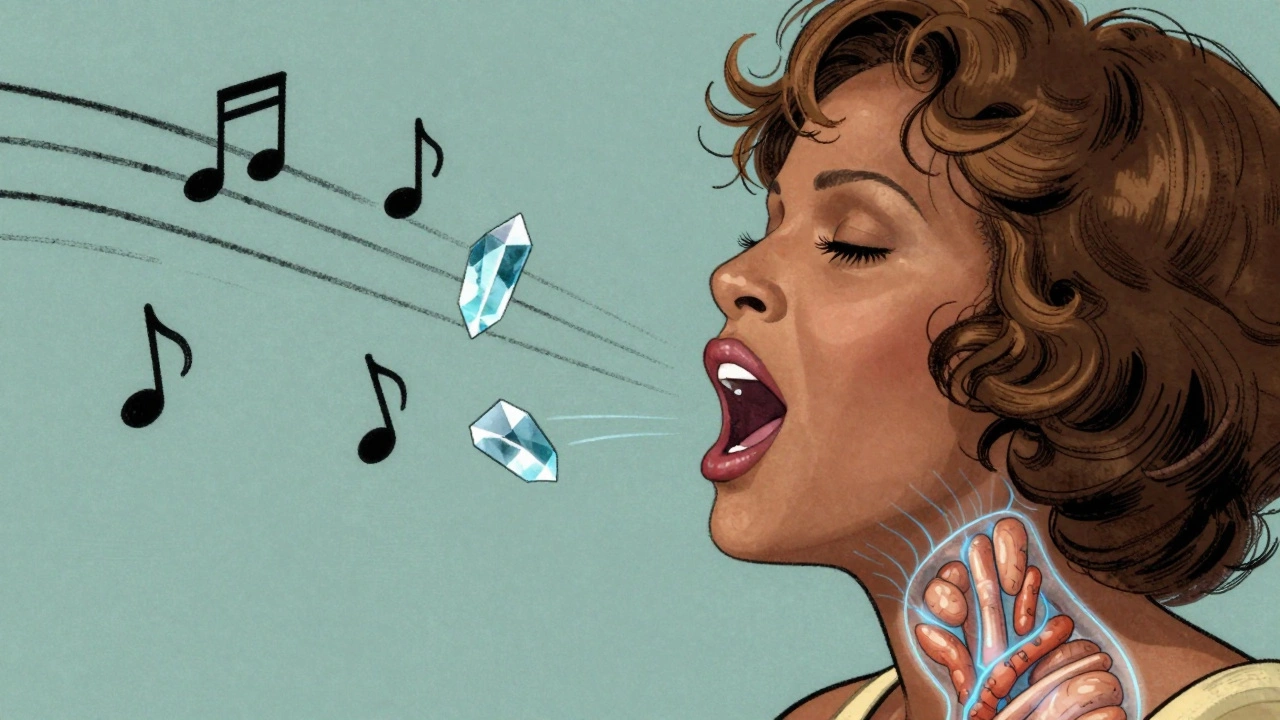
Melisma: The Signature Ornament
If there is one technique associated more with Whitney Houston than any other, it is melisma-singing multiple notes on a single syllable. While gospel singers had used this for decades, Houston brought it to the top of the Billboard Hot 100 in a way that inspired millions of imitators.
Listen to Saving All My Love for You. In the verses, she sings relatively straight lines. But as the song builds, she adds more runs. By the final chorus, the density of the melisma increases, mirroring the emotional climax of the track. This wasn’t random decoration; it was structural. She used vocal gymnastics to show progression. Later artists in the 1990s and 2000s, particularly in R&B, adopted this style, making Houston’s 1980s approach the template for modern pop-R&B balladry.
The Debate: Perfection vs. Vocal Health
Not all experts agree that her technique was flawless from a health perspective. Some vocal pedagogues argue that Houston’s signature belts were produced with a "heavy" chest-dominant setup carried too high in her range. While this created a thrilling, powerful sound, it may have contributed to vocal wear over time.
This is a critical distinction. Her 1980s voice was pristine, but the method behind it was aggressive. Biographical accounts note that lifestyle factors, including smoking, combined with this intense technique, led to a decline in her vocal condition in the late 1990s and 2000s. However, even as her voice aged, her musicality remained sharp. This dual view-that she was both a model of expressive mastery and a cautionary tale about vocal strain-is part of her complex legacy. For students today, the lesson is to emulate her expression and phrasing, but to prioritize healthy breath support to avoid similar damage.

Chart Dominance and Cultural Impact
You cannot discuss Whitney Houston’s impact without mentioning the numbers. From 1985 to 1990, she achieved seven consecutive number-one singles on the Billboard Hot 100. This run included hits like How Will I Know, Greatest Love of All, and I Wanna Dance with Somebody. Each of these songs showcased a different facet of her voice: rhythmic agility, ballad power, and dance-pop energy.
Her self-titled debut album sold over 10 million copies in the US alone, becoming the best-selling debut by a female artist at the time. The follow-up, Whitney (1987), debuted at number one and further cemented her status. These sales weren’t just commercial success; they reflected a cultural consensus that her voice was exceptional. Radio programmers played her records because they knew listeners wanted that level of vocal clarity and power. She became the reference point for what a "great voice" sounded like in popular culture.
Learning from the Legend Today
Decades after her peak, Whitney Houston remains a central figure in vocal education. Online platforms and YouTube instructors build entire courses around "how to sing like Whitney Houston." They don’t just ask students to copy her sounds; they break down the mechanics. Lessons focus on exercises like the "5-1 scale" to train register transitions and vowel tuning drills to improve resonance.
For aspiring singers, Houston represents an aspirational benchmark. Her approximately five-octave range is rare, but her approach to phrasing and emotion is learnable. Teachers encourage students to analyze her song structures: notice how she starts restrained and builds to a climax. This strategic use of dynamics is a skill anyone can develop. While you may not have her exact physiology, you can adopt her discipline in breath control and articulation.
Whitney Houston’s 1980s voice was more than a collection of hits. It was a perfect storm of talent, training, and timing. She took the emotional depth of gospel, wrapped it in the polish of pop, and delivered it with a technical precision that redefined the industry. Even now, when we listen to her early albums, we hear a standard of excellence that few have ever matched.
What made Whitney Houston's voice unique in the 1980s?
Whitney Houston's voice was unique because it combined the emotional intensity and melismatic runs of gospel music with the polished clarity and power required for mainstream pop. Her ability to deliver flawless live performances during the rise of MTV set a new standard for vocal excellence in the industry.
Did Whitney Houston have a five-octave range?
Yes, Whitney Houston is widely reported to have had a vocal range of approximately five octaves. This allowed her to sing robust low notes, powerful mid-range belts, and soaring high notes with equal ease and control.
What is melisma, and how did Whitney Houston use it?
Melisma is the technique of singing multiple notes on a single syllable. Whitney Houston used melisma extensively, particularly in ballads, to build emotional intensity. She would start with simpler lines and increase the complexity of her runs as the song progressed, influencing generations of R&B and pop singers.
Why do vocal coaches study Whitney Houston's technique?
Vocal coaches study Whitney Houston because of her mastery of breath support, register management, and dynamic control. Her ability to transition smoothly between chest and head voice (mixed voice) and her precise articulation provide excellent examples for advanced vocal training.
Was Whitney Houston's technique considered healthy by experts?
While admired for its power and beauty, some vocal pedagogues argue that her high belts were produced with a heavy chest-dominant mechanism that could lead to vocal strain over time. This debate highlights the difference between artistic effectiveness and long-term vocal health.