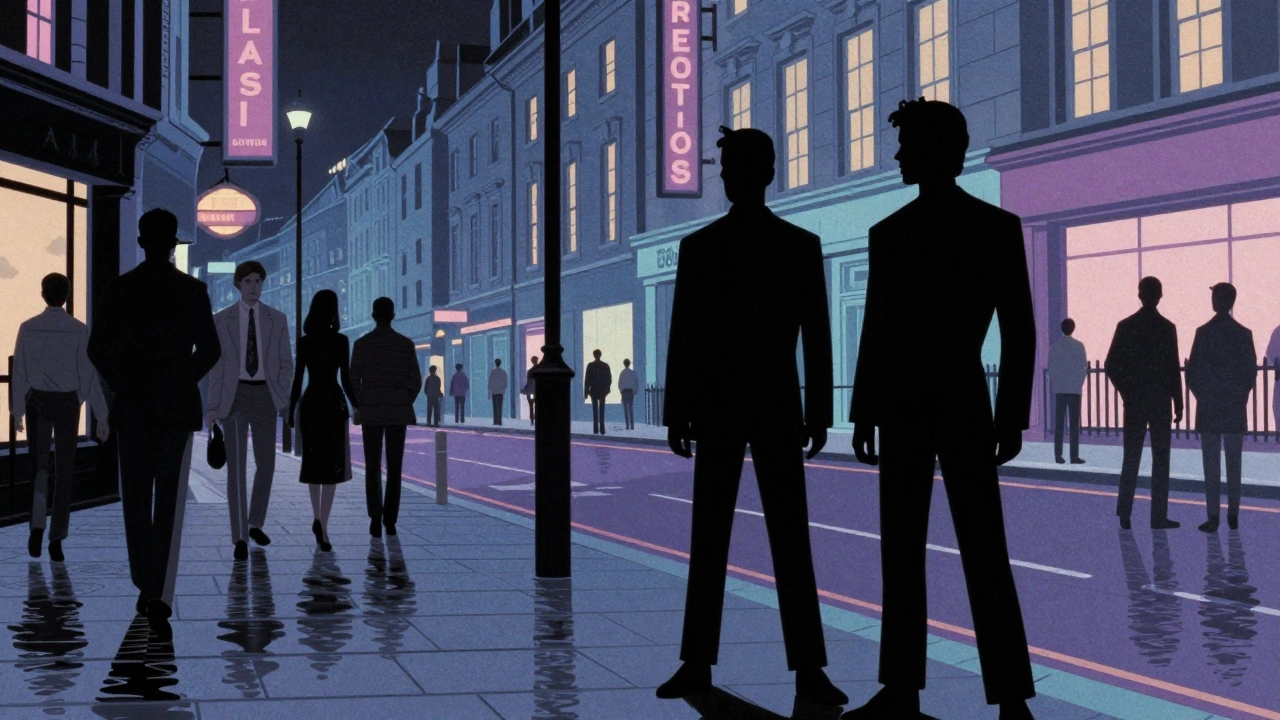

Most people think of the 1980s as a decade of neon lights, big hair, and upbeat fun. But one song from that era cuts through the glitter with a cold, cinematic chill. That song is West End Girls, a track by the English duo Pet Shop Boys. It didn't just top charts; it changed how we thought about dance music. You can hear the tension between the rich and the poor, the night and the day, all wrapped in a hypnotic electronic beat.
If you listen closely, you aren't just hearing a pop song. You are hearing a snapshot of London in the mid-1980s. It’s a city divided by class, anxiety, and ambition. This article breaks down why this specific track remains a masterpiece of electronic dance-pop and how two different producers shaped its sound.
The Two Versions: A Tale of Two Producers
Here is the twist most casual listeners miss: the version of "West End Girls" you know and love isn't the first one recorded. In fact, there are two distinct versions that show how much production matters in music.
The original recording happened in 1984. At the time, Neil Tennant (the vocalist) and Chris Lowe (the keyboardist) were working with American producer Bobby Orlando. Orlando was famous for Hi-NRG disco-a fast, sweaty, club-heavy sound. His version of "West End Girls" was rougher, faster, and louder. It worked well in underground clubs but felt too chaotic for mainstream radio.
Then came Stephen Hague. In 1985, the duo re-recorded the song with Hague, who had already produced hits for Madonna. Hague slowed the tempo down to a moderate groove. He cleaned up the mix, added richer synth strings, and gave the drums a more spacious, digital feel. This 1985 version is the one that became a global hit. It proved that electronic music could be both cool and polished.
| Feature | Bobby Orlando Version (1984) | Stephen Hague Version (1985) |
|---|---|---|
| Genre Vibe | Hi-NRG / Club Disco | Synth-Pop / Radio Pop |
| Tempo | Faster, high-energy | Mid-tempo, hypnotic |
| Sound Quality | Rough, heavy reverb | Clean, digital sheen |
| Chart Success | Club hit only | #1 in UK & US |
The Sound: Why the Bassline Works
Let’s talk about the music itself. What makes "West End Girls" stick in your head? It’s the bassline. Chris Lowe programmed a descending synthesizer pattern that repeats throughout the track. It’s simple, but it’s incredibly effective. It creates a sense of movement without rushing.
Over this bass, you have drum machines providing a steady kick and snare. But notice what’s missing: there’s no live band. No guitars, no live drums. Everything is synthetic. Yet, it doesn’t sound robotic. It sounds atmospheric. The production uses sampled sound effects and brass-style stabs to create a nocturnal mood. It feels like walking down a wet street in London at 2 AM.
The vocal delivery is also key. Neil Tennant doesn’t belt out the lyrics. He half-sings and half-raps them. This style was influenced by hip-hop tracks like Grandmaster Flash’s "The Message." By blending rap-like verses with a melodic chorus, the song bridged two worlds that rarely mixed in 1980s pop. Critics later called this early "Brit-rap," showing how ahead of its time the track was.

The Lyrics: Class, Not Crime
Many people assume "West End Girls" is about prostitution. After all, the title refers to women in London’s wealthy district, and the setting is nighttime. But Neil Tennant has repeatedly denied this interpretation. He says the song is actually about class division.
Tennant describes it as "rough boys getting a bit of posh." It’s about the attraction between working-class men from the East End and affluent women from the West End. It’s about the desire to escape your background. The opening line-"Sometimes you’re better off dead"-isn’t about suicide; it’s about the feeling of having no future and no past. It captures the economic depression Britain faced under Margaret Thatcher in the 1980s.
The lyrics also borrow from T.S. Eliot’s poem "The Waste Land." Just as Eliot described a spiritually exhausted city, Tennant paints a picture of urban alienation. Lines like "From Lake Geneva to the Finland Station" reference political history, suggesting a journey toward change or revolution. It’s a dark, complex narrative hidden inside a catchy dance track.

Global Impact and Awards
When the Stephen Hague version was released in October 1985, it didn’t take long to climb the charts. By early 1986, it was number one in the UK. Then, on May 10, 1986, it hit number one on the US Billboard Hot 100. To this day, it remains the Pet Shop Boys’ only US chart-topper.
This success wasn’t just commercial; it was critical. The song won the Brit Award for Best Single in 1987. It also won the Ivor Novello Award for Best International Hit. In 2005, the British Academy of Composers and Songwriters named it "Song of the Decade" for the years 1985-1994. More recently, in 2020, The Guardian ranked it as the greatest UK number-one single of all time.
Why does it still matter? Because it proved that British synth-pop could go global. Before "West End Girls," many labels doubted that electronic music with local references could sell in America. This song broke that barrier. It paved the way for other artists to blend social commentary with dance beats.
Legacy in the Streaming Era
Forty years later, "West End Girls" is still being heard. The label Parlophone has issued several remasters, including versions in 2001 and 2018, ensuring the audio quality holds up on modern speakers. During the COVID-19 pandemic, the duo even created a remote "lockdown version" of the song, showing its adaptability.
For new listeners, the song is an entry point into the world of 1980s electronic music. It’s short-under four minutes-but dense with detail. You can enjoy it as a simple dance track, or you can dig deeper into its themes of identity and class. Either way, it stands as a perfect example of how pop music can be both entertaining and meaningful.
Who produced the hit version of West End Girls?
The hit version released in 1985 was produced by Stephen Hague. An earlier version in 1984 was produced by Bobby Orlando, but it did not achieve mainstream success.
Is West End Girls about sex work?
No. Lead singer Neil Tennant has stated that the song is about class division and the attraction between working-class men and wealthy women, not prostitution.
Did West End Girls reach number one in the US?
Yes, it reached number one on the Billboard Hot 100 on May 10, 1986. It remains the Pet Shop Boys' only US chart-topper.
What instruments are used in West End Girls?
The track is entirely electronic. It features synthesized bass, drum machines, synth pads, and sampled sound effects. There are no live instruments.
Why is West End Girls considered important in music history?
It successfully blended synth-pop with hip-hop influences and social commentary, proving that electronic dance music could be both commercially successful and artistically deep.


