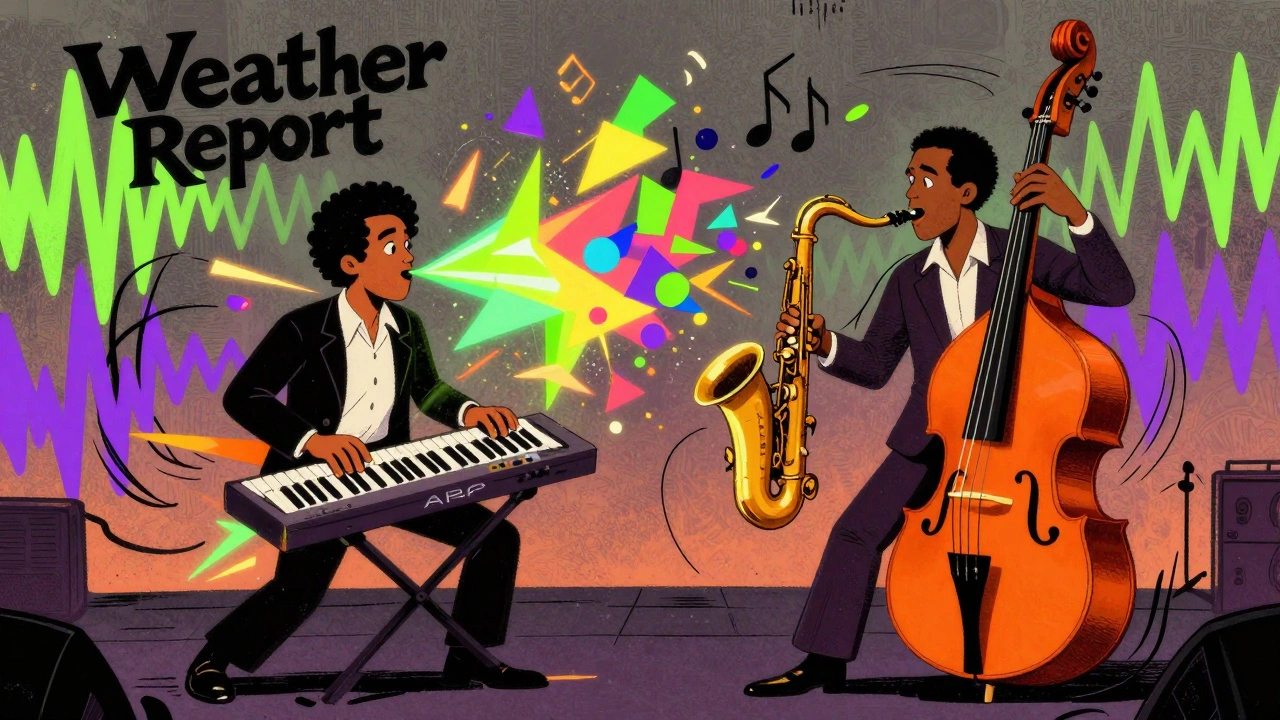

Have you ever listened to a band that sounded like the future while still feeling deeply human? Weather Report is an American jazz fusion band known for blending avant-garde improvisation with cutting-edge synthesizers and global rhythms. Founded in 1970, they didn't just play music; they engineered soundscapes that defied every rule of traditional jazz. If you think fusion is just guitar solos over drum beats, you haven't really heard Weather Report.
Their journey from free-form experimental noise to groove-heavy global hits is one of the most fascinating arcs in modern music history. This isn't just a story about albums; it's a case study in how technology and cultural curiosity can redefine an entire genre. By the time they wrapped up their career, they had paved the way for everything from hip-hop production to contemporary electronic jazz.
From Miles Davis to Musical Anarchy
To understand Weather Report, you have to look at where they came from. The band emerged directly from the electric era of Miles Davis, whose albums "In a Silent Way" and "Bitches Brew" revolutionized jazz by introducing long-form, textural improvisations without traditional song structures. Keyboardist Joe Zawinul and saxophonist Wayne Shorter were key players on those landmark records. When they left Davis’s orbit to form their own group, they brought that same rebellious spirit with them.
Their self-titled debut album, released in May 1971, was pure chaos in the best possible way. It wasn't structured around verses and choruses. Instead, it relied on continuous rhythm and movement, creating evolving soundscapes rather than discrete songs. Critics at DownBeat magazine called it "music beyond category," which is code for "we don't know what this is, but it's amazing." Original bassist Miroslav Vitouš bowed his upright bass through distortion pedals, making it sound like a screaming horn. Zawinul ran his electric piano through guitar effects. They weren't trying to sound like a jazz band; they were trying to sound like electricity itself.
The Technology Behind the Sound
What set Weather Report apart wasn't just their attitude; it was their gear. While other jazz musicians stuck to acoustic pianos or basic organs, Joe Zawinul became obsessed with synthesizers. He worked closely with companies like ARP Instruments and Oberheim to develop custom patches and voicings that no one else could replicate.
Zawinul didn't use synths as background decoration. He used them as structural tools. He layered multiple synthesizers to create orchestral washes underpinning Wayne Shorter’s abstract saxophone lines. He even employed vocoders and manipulated recorded sounds-filtering and transposing them-to build what he described as a synthesis of jazz harmonics and "noise." In this context, "noise" meant the full range of sounds the world generates, not just static. This approach allowed the band to create textures that felt organic yet futuristic, bridging the gap between the mechanical precision of electronics and the fluidity of live improvisation.
| Technology | Artist/User | Musical Impact |
|---|---|---|
| ARP Synthesizers | Joe Zawinul | Created complex orchestral textures and custom timbres |
| Oberheim Synthesizers | Joe Zawinul | Enabled precise control over envelope shapes and filter sweeps |
| Distortion Pedals | Miroslav Vitouš | Transformed upright bass into a lead voice resembling a horn |
| Vocoder | Joe Zawinul | Blended human voice with electronic tones for unique vocalizations |

Embracing Global Rhythms
As the 1970s progressed, Weather Report began to shift from pure free improvisation toward groove-based fusion. This wasn't a move away from experimentation; it was a different kind of exploration. Joe Zawinul developed a deep interest in R&B and native musics from around the world. He started incorporating non-Western scales, percussion patterns, and modal drones into their compositions.
A prime example is the track "Badia," written by Zawinul. Concert notes from their November 6, 1975 performance at the Berlin Philharmonie described it as an "exotic masterpiece" and a "harbinger of the future world music movement." At that concert, the lineup included Zawinul on keyboards, Wayne Shorter on saxophones, Alphonso Johnson on electric bass, Alex Acuña on percussion, and Chester Thompson on drums. This rhythm section was capable of funk-infused grooves and polyrhythmic vigor that drew heavily on Latin and African traditions. They weren't just adding congas to a jazz tune; they were building entire harmonic structures around global rhythmic concepts.
The Heavy Weather Phenomenon
If you want to see how avant-garde jazz meets mainstream appeal, look no further than the 1977 album Heavy Weather. Its opening track, "Birdland," became the closest thing the band ever had to a hit single. Written by Joe Zawinul, it combined a catchy, chant-like melody with intricate electronic textures and a tight, groove-based structure.
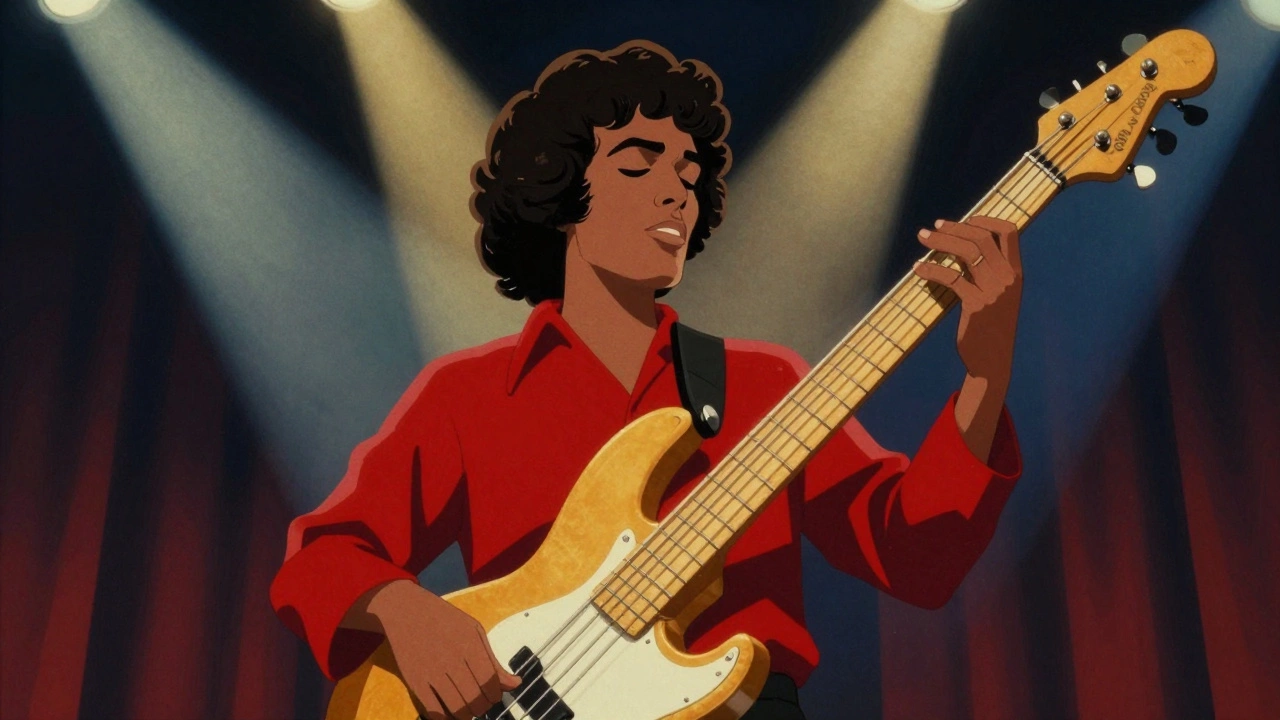
The lineup for this era featured Jaco Pastorius on fretless bass, whose virtuosic playing became iconic in the jazz fusion world. His fretless bass sound, often compared to a singing voice, provided a warm, melodic counterpoint to Zawinul’s sharp synthesizer lines. Manolo Badrena added layers of percussion, including tambourine and vocals, while Alex Acuña kept the beat driving forward. MusicRadar notes that "Birdland" later won three Grammy Awards when covered by The Manhattan Transfer and Quincy Jones, highlighting how an originally avant-garde concept was translated into mainstream recognition.
This period marked the peak of Weather Report’s commercial success, but it also sparked debate among fans and critics. Some praised the band for making complex fusion accessible and cinematic. Others argued that the focus on groove and melody diluted the raw, unpredictable energy of their early work. Yet, even in this more polished phase, the underlying complexity remained. The tracks could "groove, float, stretch," offering a dynamic listening experience that appealed to both casual listeners and seasoned jazz enthusiasts.
The Digital Shift and Later Years
By the early 1980s, Weather Report’s sound changed again. Joe Zawinul embraced MIDI, sequencers, drum machines, and digital programming. Drummer Peter Erskine described this new direction as a "one-chord groove, vamp thing," where electronic grids and roadmaps replaced complex harmonic structures. Albums like Mr. Gone (1978) and subsequent releases relied heavily on programmed drums and sequenced synth parts.
This shift divided the fanbase. Community discussions on platforms like Reddit and Facebook reveal a stark contrast in opinions. Some fans view this era as a decline, criticizing the reliance on technology as an "all-consuming distraction" from musical substance. Others appreciate the boldness of experimenting with emerging digital tools. Regardless of opinion, this period demonstrated Zawinul’s commitment to staying ahead of the curve. He wasn't interested in repeating past successes; he wanted to explore what music could become in the digital age.
Legacy and Influence
Today, Weather Report is consistently ranked among the most influential jazz fusion groups of the 1970s and 1980s. Their impact extends far beyond jazz. Producers in hip-hop, electronic, and pop music frequently sample their recordings, drawn to the unique blend of organic instrumentation and synthetic textures. New reissues, such as the 2023 release of their Berlin 1975 live recording, continue to introduce their work to new audiences. These releases include essays that celebrate the group’s "profound influence on jazz during an era of bold experimentation and profound transformation."
For musicians, studying Weather Report requires familiarity with both avant-garde jazz concepts and electronic sound design. Their early records demand comfort with collective improvisation and modal harmony, while their later works require knowledge of MIDI synchronization and pattern-based arranging. Many musicians spend years unpacking Jaco Pastorius’s bass lines, Wayne Shorter’s abstract melodic phrasing, and Joe Zawinul’s textural strategies. The high learning curve associated with fully internalizing their style underscores the depth and complexity of their contributions to music.
In the end, Weather Report’s legacy is defined by their refusal to stay in one place. They moved from free-form improvisation to groove-based fusion, from analog synthesizers to digital programming, from Western jazz traditions to global rhythmic vocabularies. They proved that jazz could be both intellectually rigorous and emotionally immediate, both technologically advanced and deeply human. As long as musicians continue to push boundaries, Weather Report will remain a vital reference point for anyone interested in the evolution of modern music.
Who were the founding members of Weather Report?
Weather Report was founded in 1970 by keyboardist Joe Zawinul, saxophonist Wayne Shorter, and bassist Miroslav Vitouš. All three had previously played with Miles Davis during his electric period.
What makes Weather Report's music considered avant-garde?
Their early work avoided traditional song structures like head-and-chorus forms. Instead, they focused on collective improvisation, textural shifts, and continuous rhythm, creating evolving soundscapes that defied easy categorization.
How did Joe Zawinul use synthesizers in Weather Report?
Zawinul used synthesizers not just for color but as structural tools. He created custom patches with ARP and Oberheim synths, layered multiple units for orchestral textures, and employed vocoders and effects to blend jazz harmonics with electronic "noise."
What is the significance of the album 'Heavy Weather'?
Released in 1977, 'Heavy Weather' features the hit track "Birdland." It marked the band's transition to groove-based fusion, combining catchy melodies with complex rhythms and featuring Jaco Pastorius's iconic fretless bass playing.
Did Weather Report incorporate world music into their sound?
Yes, especially in the mid-to-late 1970s. Joe Zawinul integrated elements from Latin, African, and other global traditions, using non-Western scales and percussion patterns to create a hybrid fusion sound.
Why do some fans criticize Weather Report's later albums?
Some fans feel that the band's heavy reliance on MIDI, sequencers, and drum machines in the 1980s led to a loss of harmonic complexity and spontaneous improvisation, favoring repetitive vamps over musical depth.