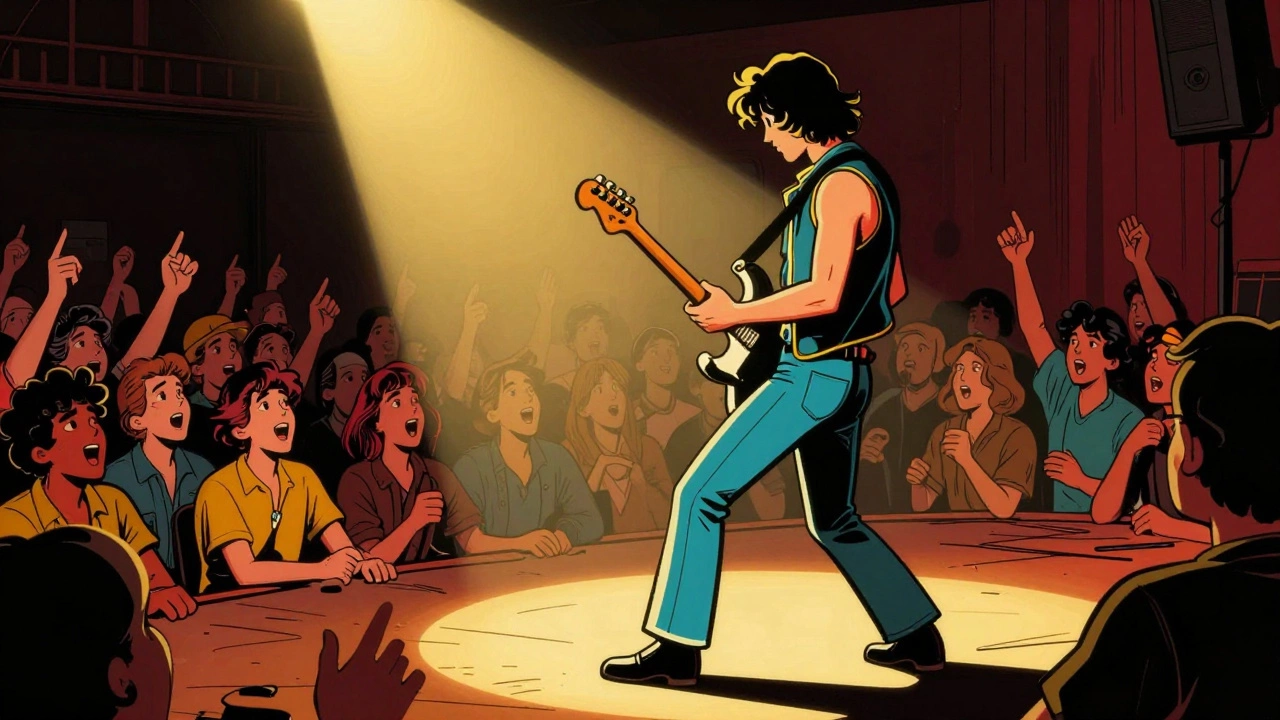

Rock bands usually fade in popularity after a few years, but Van Halena pioneering American hard rock band formed in 1974 that defined the sound and spectacle of 1980s rock did something different. They didn’t just stay relevant; they dominated arenas year after year. When you look back at the 1980s, you aren’t just looking at a decade of songs. You are looking at an industrial machine of touring. The way they performed live evolved from high-energy club runs to filling massive stadiums, changing how rock shows were built.
Most people remember the hair metal look or the iconic solos, but the real story lies in the logistics and the endurance required to pull off those tours. How does a band maintain its stage presence when you have to play 114 shows in a single year? That is the question we need to answer to understand their legacy.
The World Invasion Tour Sets the Standard
To understand where they were going, we first need to look at where they started in the new decade. The World Invasion TourVan Halen's 1980 headlining tour supporting the album Women and Children First kicked off in March 1980. This wasn’t just a warm-up; it was their third world tour overall and their first full headlining run of this magnitude.
The schedule was grueling right out of the gate. The earliest documented show took place on March 19, 1980, in Victoria, Canada at the Victoria Memorial Arena. From there, they moved quickly. On March 21, 1980, they played at Compton Arena in Central Point, United States. By April, they were already hitting major hubs like the Seattle Center Coliseum. These weren’t small gigs. By July, they appeared at the Boston Garden and the International Amphitheatre in Chicago.
This tour established the baseline for their live reputation. It showed the band could travel internationally and sustain momentum through spring, summer, and fall. The tour concluded in late November, wrapping up over several months of constant motion. To support this heavy lifting, they utilized opening acts that kept audiences engaged before the main event. Early dates featured Rail, while later shows starting in October saw the band Talas step in as the primary opener.
Diver Down and the Sell-Out Record
As the decade progressed, the demand for tickets grew. Following the initial success, the band launched the 1982-1983 tour, often called the Diver Down Tour. Some sources refer to it as the Hide Your Sheep tour. The numbers here tell a more interesting story than just dates.
This tour sold out all 80 of its U.S. concerts. Think about the market conditions at the time. Concert ticket sales were slumping across the entire industry during this period. For Van Halen to sell out every single show demonstrates that their stage presence had become a guaranteed commodity. Fans knew they would get a premium experience.
Statistics indicate they performed 95 concerts in 1982 alone. When combined with the activity in 1981 (91 concerts), it shows a consistent build-up of touring power. The sheer volume meant they weren’t just playing hits; they were refining the delivery of those hits night after night. This repetition helped sharpen the band’s tightness and ability to manage crowd energy over long stretches.

Peak Power: The 1984 Tour
If the previous tours built momentum, the 1984 TourA major 1984 touring effort featuring Van Halen performing 114 concerts in a single year pushed them to their limits. In one single year, the band completed 114 concerts. Compare that to other years, and you see a clear peak in activity.
What makes this number significant is the physical toll. Playing nearly 120 shows a year requires immense stamina. This level of touring suggests that by 1984, their stage presence had reached a professional zenith. They weren’t experimenting anymore; they were executing a perfected product. The audience expected a certain level of energy, pyrotechnics, and musical precision that matched the high-profile nature of the era.
Touring Statistics and Performance Volume
Looking at the raw data reveals a pattern of intense activity followed by strategic pauses. Here is how their annual concert counts broke down during the critical middle years:
| Year | Number of Concerts | Key Context |
|---|---|---|
| 1981 | 91 | Establishing presence |
| 1982 | 95 | Selling out Diver Down tour |
| 1983 | 25 | Possible hiatus or reduced schedule |
| 1984 | 114 | Peak touring year |
Notice the drop in 1983. The concert count fell significantly to just 25 shows compared to the double-digit high 80s and 90s of the prior years. This likely indicates a touring hiatus or a deliberate reduction in schedule to recover. This fluctuation is important because it proves that even the most aggressive bands cannot maintain peak intensity forever without rest.
Archive Resources and Historical Documentation
How do we verify these numbers today? Fortunately, there are dedicated resources keeping this history alive. The Mighty Van HalenA fan site and archive resource documenting Van Halen performances and memorabilia and VH Archives maintain comprehensive records. These archives cover performances from 1978 through 1984, holding audio, video, photographs, and memorabilia from their first six tours.
Without these resources, many details about the tour logistics would be lost. Ultimate Classic Rock also documented set list evolution spanning from their first major tour in 1978 through their final concerts in 2015. While specific critiques of stage design might vary, the existence of these records allows historians to track how the show changed over time. We know they played extensively across North America, Europe, and beyond, establishing a template for future rock superstars.
Understanding the Evolution of Presence
When we talk about “stage presence,” we aren’t just talking about standing on a stage. It involves the interaction between the band and the venue. Moving from mid-size clubs in 1980 to large arenas by 1984 required adjustments in lighting, sound, and movement. Even though detailed technical logs aren’t always available, the scale of the venues implies a corresponding increase in production value.
Opening acts also played a role. Having a band like Talas open sets the mood for the crowd. By choosing strong support, they ensured the energy remained high before they took the stage. The fact that they maintained this standard across different continents highlights their professionalism. They understood that a successful tour isn’t just about the headline act; it’s about the total experience package delivered to the consumer.
What was the first major Van Halen tour of the 1980s?
The first major headlining tour of the decade was the World Invasion Tour, which commenced in March 1980. It supported the album Women and Children First and featured dates across North America and international locations.
Which tour marked their biggest commercial success in the early 80s?
The 1982-1983 Diver Down Tour is noted for selling out all 80 of its U.S. concerts, a rare achievement during an industry-wide slump in ticket sales.
How many concerts did Van Halen play in 1984?
During 1984, the band performed 114 concerts, marking the highest single-year performance count of the decade according to recorded statistics.
Who opened for Van Halen during the World Invasion Tour?
Early dates in 1980 featured the band Rail. Later in the tour, starting in early October, the band Talas became the primary opening act for most dates.
Where can I find archived tour data for Van Halen?
Fandom resources like the Mighty Van Halen site and VH Archives hold comprehensive collections of photos, audio, video, and memorabilia from their early tours up to 1984.
Did Van Halen stop touring in 1983?
They significantly reduced touring activity that year, performing only 25 concerts compared to 90+ in the surrounding years, suggesting a scheduled hiatus.


