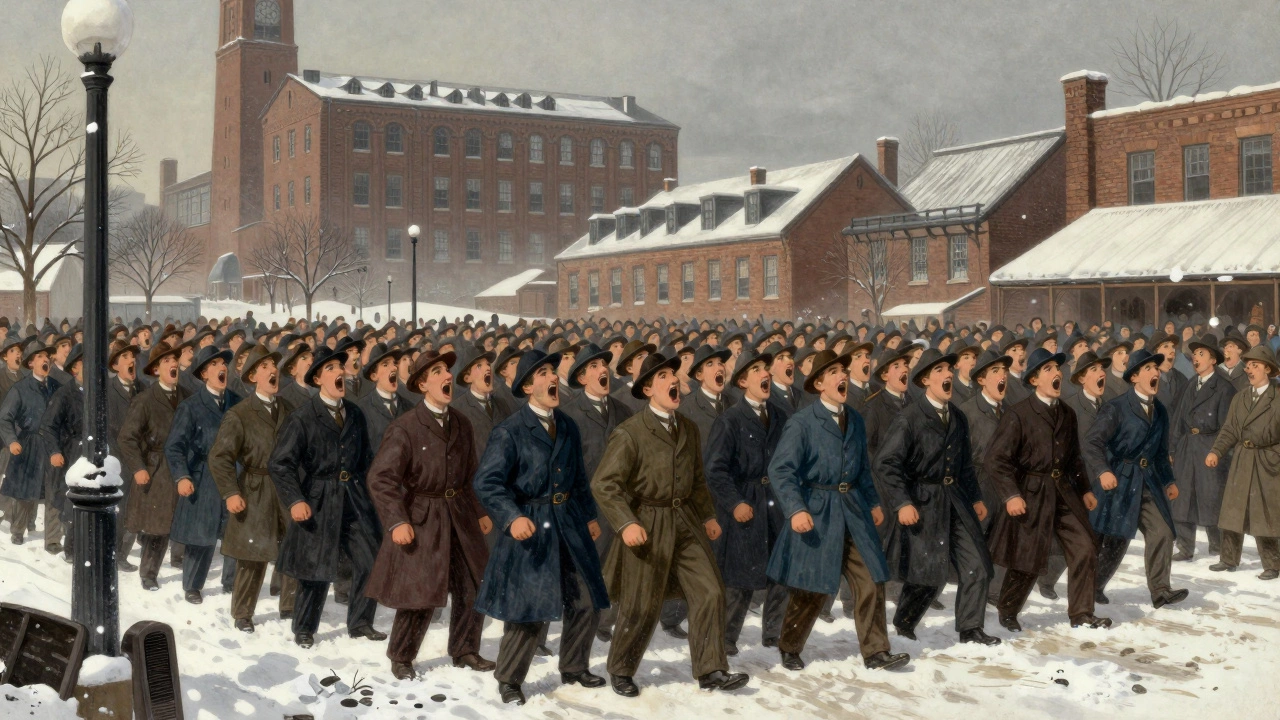

Imagine standing on a freezing street corner in 1912 Lawrence, Massachusetts. Around you are thirty thousand textile workers. There are no microphones, no speakers, and no digital playlists. Yet, a massive wall of sound rises from the crowd-not the sound of shouting, but of singing. This wasn't just a choir practice; it was a tactical weapon. Music has always been the secret engine of the labor movement, turning individual grievances into a collective roar that bosses couldn't ignore.
The "Singing Union" and the Strategic Genius of the IWW
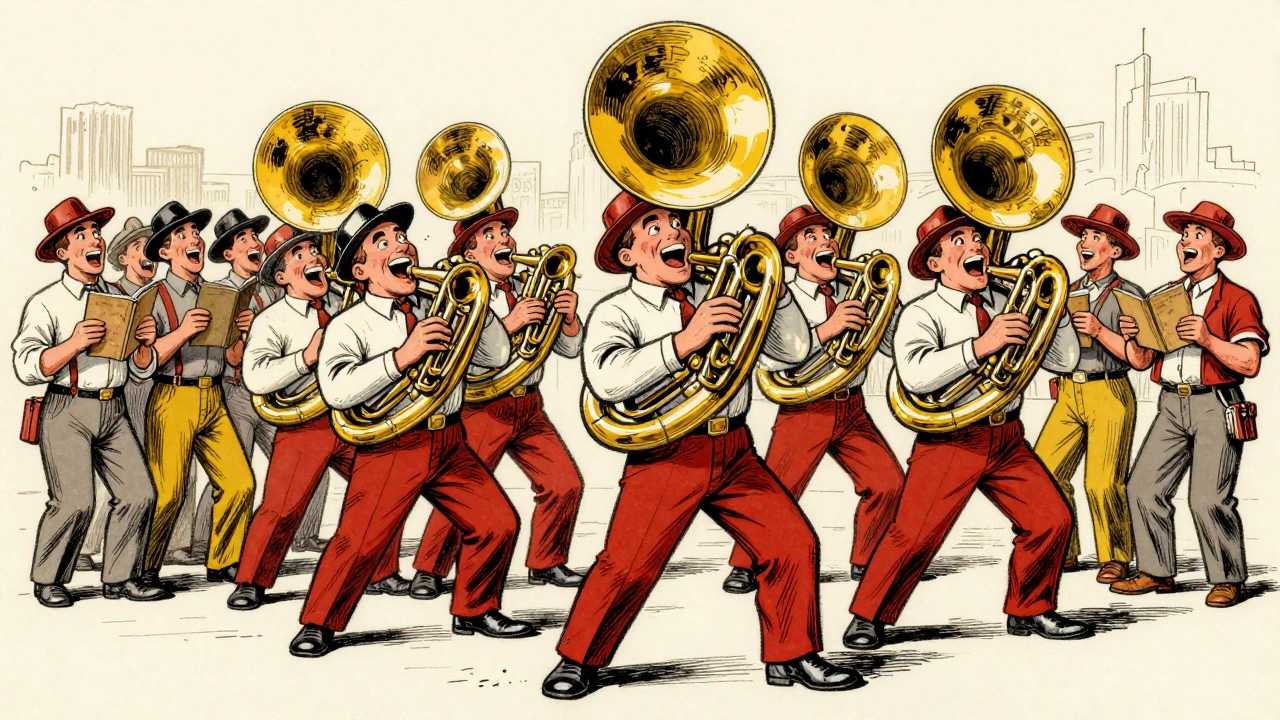
While many groups sang, the Industrial Workers of the World (also known as the IWW) turned music into a professional organizing strategy. They didn't just sing because it felt good; they did it to win. In the early 20th century, the IWW faced a battle for public attention against groups like the Salvation Army. To compete, the IWW's Spokane chapter actually formed its own brass band and choral group.
They used a brilliant psychological trick called "contrafacta." Instead of writing entirely new melodies-which takes time for a crowd to learn-they stole the tunes of popular hymns and street songs and swapped the religious lyrics for labor-focused ones. If you already knew the melody to a church hymn, you could pick up a union song in seconds. This removed the barrier to entry and let a crowd of thousands synchronize their message instantly.
The IWW's songbooks weren't just booklets; they were the structural base of the organization. By embedding music into their daily tactics, the IWW normalized mass public singing. This gave them a distinct image of "musicality" and confidence that intimidated employers and attracted new members. When journalist Ray Stannard Baker witnessed the Lawrence textile strike, he didn't just see a protest; he called it a "singing movement."
Turning Hymns into Weapons: Examples of Labor Contrafacta
The power of the labor song lay in its familiarity. By using a melody the listener already loved or feared, songwriters could sneak radical ideas into the subconscious of the working class. This transformed the street into a classroom and a rally ground.
| Union Song | Original Melody / Source | Core Message / Purpose |
|---|---|---|
| "I Don't Want Your Millions, Mister" | "What A Friend We Have In Jesus" | Demanding honest pay and decent work conditions. |
| "Hallelujah, I'm A Bum" | "Hallelujah, Praise the Lord" | Confronting stereotypes of the unemployed and homeless. |
| "Solidarity Forever" | "Battle Hymn of the Republic" | Connecting labor struggle to a sense of national destiny. |
| "In The Good Old Picket Line" | "In The Good Old Summer Time" | Using a nostalgic tune to make picketing feel communal. |
From Folk Heroes to the Civil Rights Fusion
As the movement evolved, music moved from the picket line to the radio and the concert hall. In the 1930s, figures like Woody Guthrie and Pete Seeger formed the Almanac Singers. They weren't just performing for art's sake; they were active supporters of union efforts, writing songs that gave voice to the dust-bowl migrants and factory workers of the Great Depression.
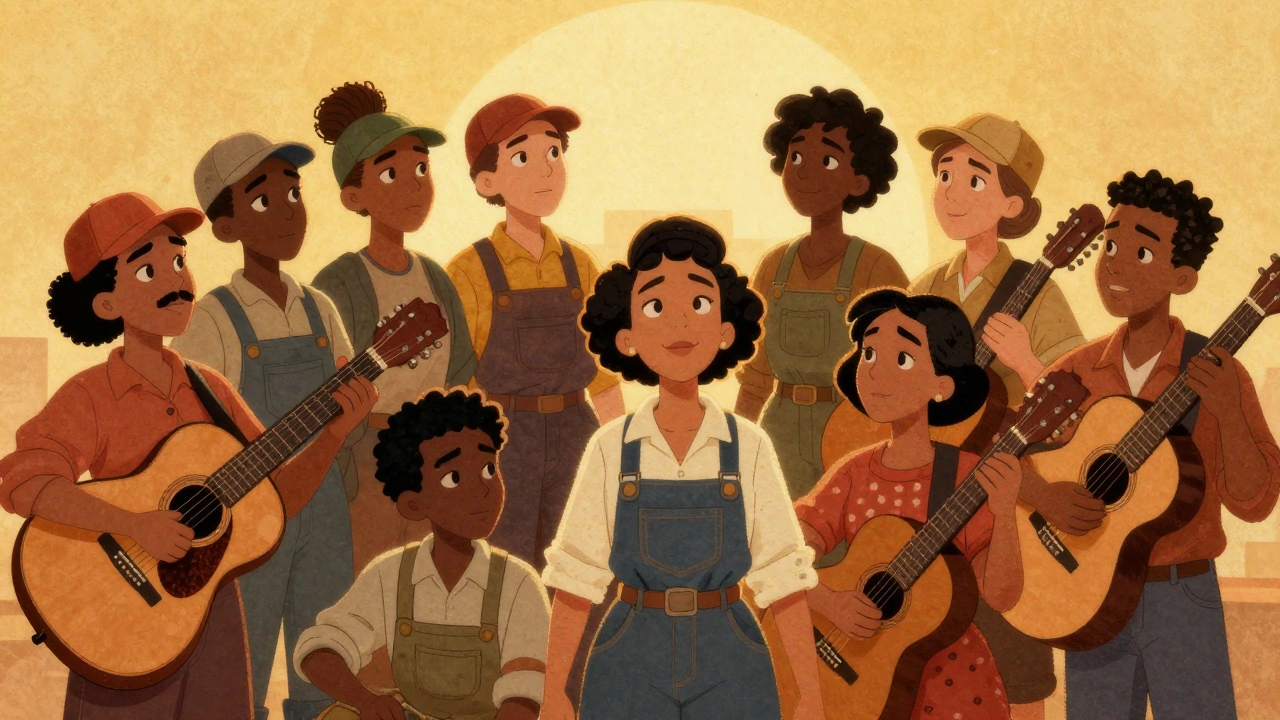
By the 1940s and 50s, labor music collided with the fight for racial justice. In Winston-Salem, North Carolina, African-American women workers in the Food, Tobacco and Agricultural Workers Union used music to organize a massive sit-down strike at the R.J. Reynolds company. They took old gospel songs and added lyrics about equality and fair wages, blending spiritual faith with industrial struggle.
This fusion reached its peak with the song "We Shall Overcome". While it is the definitive anthem of the Civil Rights Movement, it was also sung as "I Will Overcome" on union picket lines across the American South. It proved that the struggle for a fair paycheck and the struggle for human dignity were the same fight.
Why Music Actually Works for Organizing
You might wonder why someone wouldn't just give a speech. The truth is, a speech is a one-way conversation. A song is a collective action. When you sing in unison, you are physically synchronizing your breathing and your heartbeat with the person next to you. It creates a biological sense of belonging that a pamphlet cannot replicate.
- Building Morale: Songs like those in the "Songs to Fan the Flames of Discontent" book were designed to keep workers from giving up during long, hungry strikes.
- Creating a Shared Identity: Singing transforms a group of strangers into a unified body. It signals to the boss: "We are not just individuals; we are a single unit."
- Rapid Communication: In an era before social media, a catchy song was a viral meme. It carried the union's message from one town to another through oral tradition.
Even today, the legacy of these songs lives on. The Smithsonian Folkways collection preserves the voices of people like Paul Robeson and Florence Reece, whose song "Which Side Are You On?" continues to be a staple at modern protests. These aren't just museum pieces; they are blueprints for how to build power from the bottom up.
What is a contrafactum in the context of labor songs?
A contrafactum is the process of taking a well-known existing melody-such as a popular hymn or a folk tune-and replacing its original lyrics with new ones. For union organizers, this was a strategic move because it allowed workers to sing a "new" labor song immediately without having to learn a new melody, drastically speeding up the mobilization process.
Who were the Almanac Singers?
The Almanac Singers were a folk music group active in the 1930s and 40s, including legendary musicians like Woody Guthrie and Pete Seeger. They focused on songs that supported labor unions and social justice, performing at rallies and union halls to raise consciousness among the working class.
Why was the IWW called a "singing union"?
The IWW (Industrial Workers of the World) integrated music into their core tactical repertoire. From forming brass bands to distributing songbooks as organizational infrastructure, they used mass singing to build solidarity and project strength. The term was popularized by author Wallace Stegner in his accounts of the union's history.
How did labor songs influence the Civil Rights Movement?
Labor songs and racial justice songs fused through a shared need for collective power. African-American workers used gospel melodies to organize industrial strikes, and iconic songs like "We Shall Overcome" were used both on union picket lines and in civil rights marches, linking economic equality with racial justice.
Where can I find historical labor songs today?
The Smithsonian Folkways collection is one of the best resources for "Classic Labor Songs," featuring artists like Paul Robeson and Pete Seeger. Additionally, the Zinn Education Project and TeachRock provide educational materials and narratives surrounding the use of music in early 20th-century labor struggles.