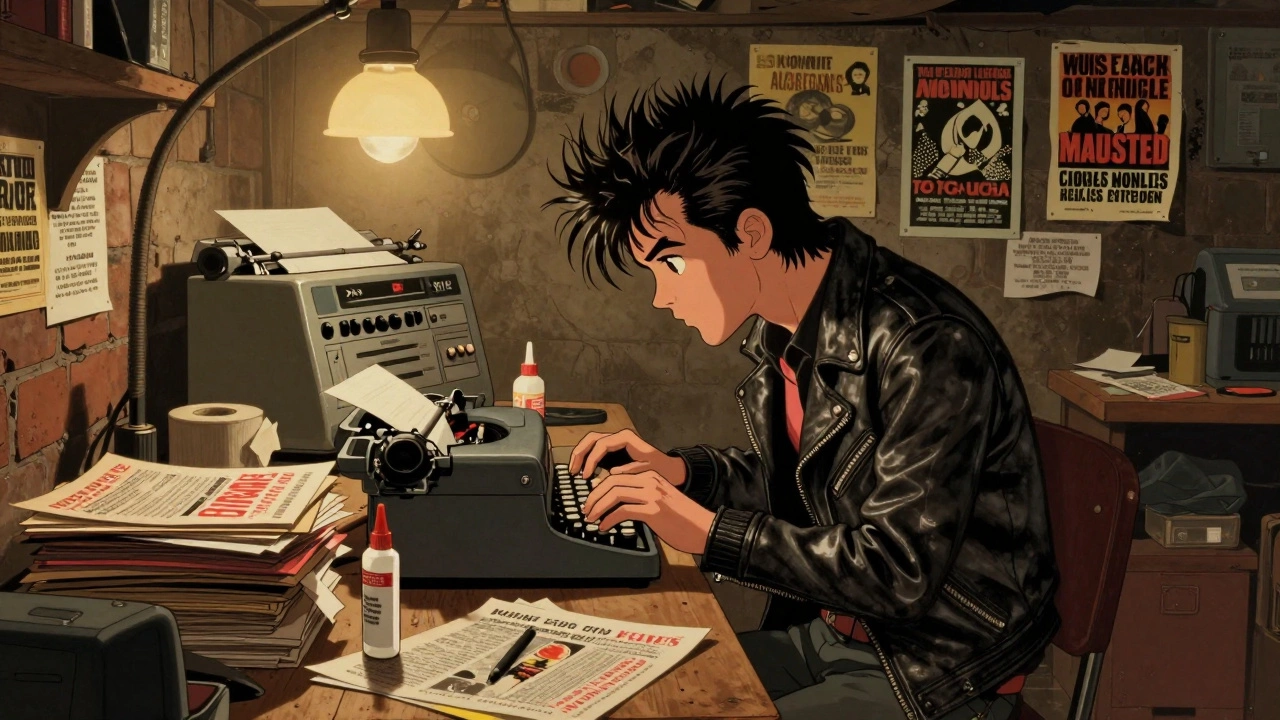

Before the internet gave everyone a microphone, there were mimeograph machines, Xerox copiers, and glue sticks. In the 1970s, a wave of underground publications that served as independent, small-circulation newspapers and fanzines covering music from non-mainstream perspectives changed how we talk about rock, punk, and jazz forever. These weren't glossy magazines with big ad budgets. They were raw, handwritten, photocopied zines made by fans for fans. If you think modern music blogs are direct, wait until you read some of these.
The mainstream music press was already getting professionalized by 1970. Magazines like Rolling Stone that was a major American magazine founded in 1967 focusing on music, politics, and popular culture and Creem that was an influential American music magazine based in Detroit known for its irreverent tone had thousands of readers and corporate advertisers. But they missed the gritty, local energy bubbling up in basements and dive bars. That’s where underground pubs stepped in. They didn’t just report on music; they created communities.
The Roots: From Political Papers to Music Zines
To understand the 1970s music zine boom, you have to look back at the late 1960s. The term “underground newspaper” originally described secret resistance papers in authoritarian states. But in America and Europe, young activists repurposed it for countercultural outlets opposing the Vietnam War and championing civil rights. Papers like East Village Other that was a prominent New York City underground newspaper active from 1965 to 1973 and London’s International Times that was a British underground newspaper published between 1966 and 1974 reached hundreds of thousands of readers. By 1968, roughly 20-40% of their pages were dedicated to music reviews and concert listings.
By 1970, this movement splintered. Some stayed political. Others went literary. And many went musical. This shift wasn’t accidental. As Stephen Duncombe notes in his seminal study Notes from Underground that is a 1997 book by Stephen Duncombe analyzing the history and impact of the American underground press, these publications offered something mainstream media couldn’t: direct control. Fans could write about the bands they loved without waiting for an editor in New York or London to approve it. This democratization of voice was the core value proposition of the era.
Defining Features of 1970s Underground Music Press
What made a publication “underground” in the 1970s? It wasn’t just about being anti-establishment. There were specific structural traits that defined these zines:
- Small Print Runs: Typically under 10,000 copies per issue, often starting in the low hundreds.
- DIY Production: Layouts were done with typewriters, felt-tip pens, scissors, and glue. No computers. No Photoshop.
- Low Cost: Printing costs ranged from $0.05 to $0.25 per copy in the US. Cover prices were usually $0.25 to $1.50.
- Partisan Stances: Editors didn’t pretend to be objective. They loved what they loved and hated what they hated.
- Participatory Authorship: Up to 80% of content was submitted by readers, not staff writers.
This model meant that if you wanted to start a zine, you didn’t need investors. You needed a friend with a copy machine and a strong opinion. The barrier to entry was virtually zero, which led to an explosion of voices documenting scenes that would otherwise have been ignored.
Key Titles That Changed Everything
While hundreds of zines existed, a few stand out for their influence. Let’s look at the ones that truly defined the era.
| Publication | Location | Years Active | Peak Circulation | Key Focus |
|---|---|---|---|---|
| Sniffin’ Glue | London, UK | 1976-1977 | ~15,000 | Punk rock, DIY ethos |
| Punk Magazine | New York, USA | 1975-1979 | ~20,000 | CBGB scene, art-punk |
| Bomp! | Los Angeles, USA | 1970-1979 | ~10,000 | Garage rock, power pop |
| Slash | Los Angeles, USA | 1977-1980 | ~40,000 | LA punk, graphic design |
| Search & Destroy | San Francisco, USA | 1977-1979 | ~10,000 | Punk, industrial, avant-garde |
Sniffin’ Glue that was a highly influential British punk fanzine founded by Mark Perry in 1976 is arguably the most famous. Mark Perry started it after seeing the Ramones in London. The first issue was just six pages, handwritten and photocopied. It included a now-iconic cartoon showing three chords (A, E, G) with the caption: “This is a chord, this is another, this is a third. Now form a band.” That simple image encapsulated the entire DIY philosophy. Perry stopped publishing when circulation grew too large because he feared industry co-option.
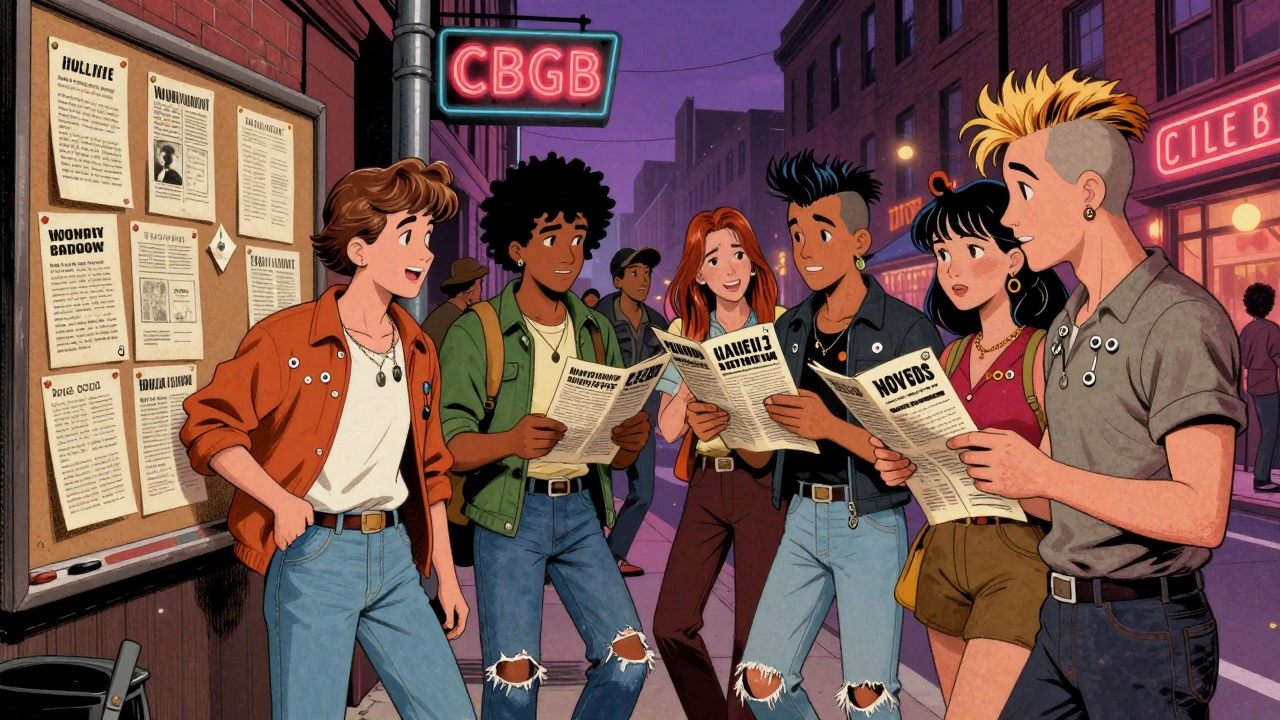
In New York, Punk Magazine that was an influential American fanzine founded by John Holmstrom and Legs McNeil in 1975 played a crucial role in codifying the term “punk rock.” Before this, “punk” was a loose descriptor used by critics like Lester Bangs. Punk magazine linked it specifically to the CBGB scene, featuring bands like Television, Talking Heads, and Blondie. Its dense collage style influenced visual aesthetics for decades.
On the West Coast, Bomp! that was a Los Angeles-based fanzine founded by Greg Shaw focusing on garage rock and power pop took a different approach. Less political, more historical. Greg Shaw championed obscure 1960s singles and early 1970s bands like the Flamin’ Groovies. He also launched Bomp Records, showing how zines could evolve into independent labels.
Production: The Art of Cut-and-Paste
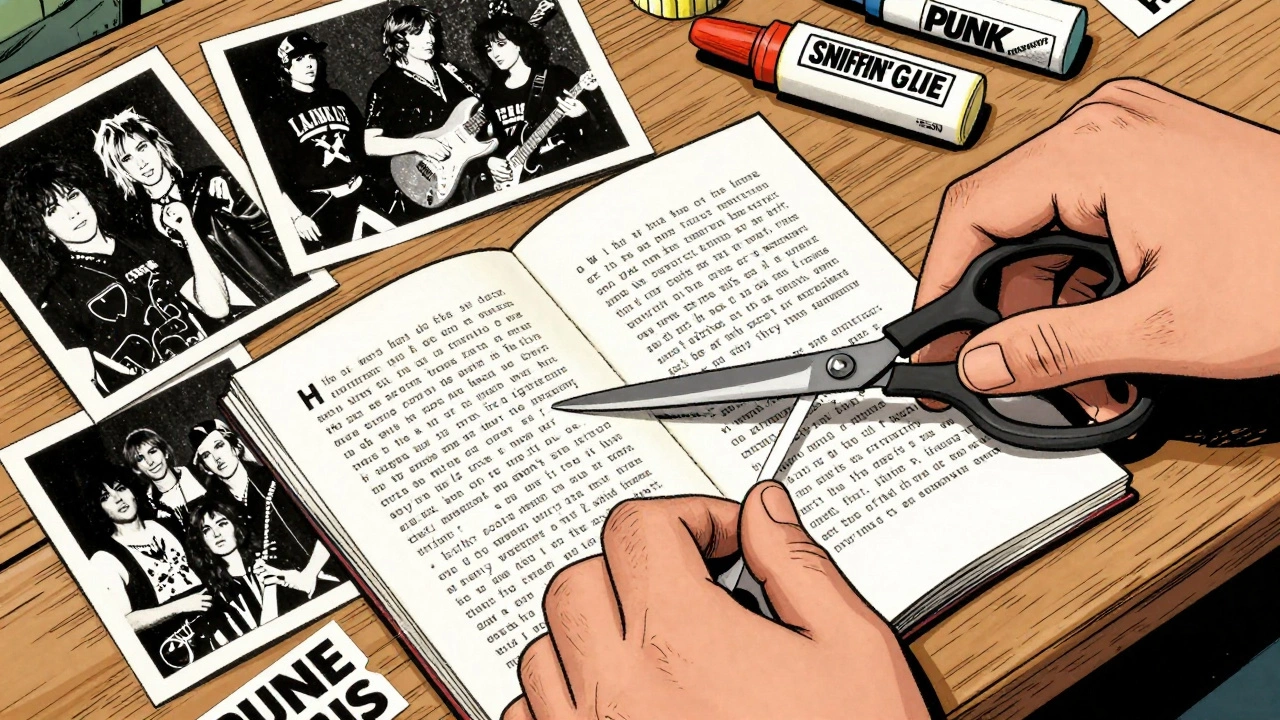
Creating a zine in the 1970s was a physical labor of love. There were no digital layouts. Editors used typewriters to write columns, then cut them out with scissors. They glued these strips onto boards using rubber cement. Photos were black-and-white photocopies, often degraded intentionally for aesthetic effect. Letraset transfer sheets provided fonts for headlines.
Turnaround times were incredibly fast. While mainstream magazines took 8-12 weeks to publish, zines like Sniffin’ Glue or Ripped & Torn could go from conception to distribution in 7-14 days. This speed allowed them to cover breaking news-like a riot at a gig or a new band forming-in real-time. It made them feel alive in a way that glossy magazines never could.
Politics and Culture Beyond Music
You can’t separate 1970s music journalism from the politics of the time. Underground papers were born from anti-war activism, feminist movements, and LGBTQ+ liberation efforts. Even music-focused zines carried these themes. Slash and Search & Destroy regularly covered police violence at shows and urban decay. UK zines supported Rock Against Racism, helping organize events like the Carnival Against the Nazis in 1978.
Feminist and queer perspectives were present but less dominant than today. Women musicians like Debbie Harry and Poly Styrene received coverage, and gay contributors wrote for several titles. However, explicit focus on these issues often came later in the 1980s with hardcore punk and riot grrrl zines. Still, the foundation was laid in the 70s, proving that music and social justice were intertwined.
Why Mainstream Media Couldn’t Compete
Mainstream magazines like NME that was the New Musical Express, a long-running British weekly music newspaper and Melody Maker that was a British weekly music newspaper published from 1923 to 2006 had circulations of 150,000-250,000. They had better paper, color photos, and national distribution. But they were slow. Corporate advertisers dictated editorial policies. Editors had to play it safe.
Underground zines moved faster. Sniffin’ Glue covered the Sex Pistols months before they appeared on NME covers. Punk profiled the Ramones when Rolling Stone was still hostile toward them. This temporal lead-sometimes years-made zines the true arbiters of cool. They discovered bands before labels did. They preserved local narratives that history might have forgotten.
The Legacy: First Blogs, Lasting Impact
Most 1970s zines died by the early 1980s. Economic models were fragile. Printing costs rose. Ad revenue remained minimal. But their legacy is immense. Scholars like Dick Hebdige argue that punk zines codified the semiotics of subculture-safety pins, torn clothing, anarchist symbols. Without them, the visual language of punk wouldn’t exist.
Today, we see their DNA in music blogs, Twitter threads, and Instagram posts. The participatory style, the partisan voice, the immediacy-all prefigured web culture by 20-30 years. Archives like the Internet Archive preserve thousands of scanned issues, allowing new generations to experience this raw history. Original copies sell for $50-$300, not just as collectibles, but as cultural artifacts.
If you want to understand how music journalism evolved, don’t just read the big names. Read the small ones. They were the ones who actually listened.
What exactly is an underground publication?
An underground publication is a small-circulation, independently produced newspaper or magazine that operates outside mainstream commercial channels. In the 1970s context, these were often fanzines focused on music, politics, or counterculture, characterized by DIY production methods, low costs, and partisan editorial stances.
How did people make zines in the 1970s without computers?
Editors used typewriters to write text, which they then cut out with scissors and glued onto layout boards. Headlines were created using Letraset transfer sheets or hand-lettering. Photos were black-and-white photocopies. The final layout was sent to a local printer or copied via mimeograph or Xerox machines.
Why did Sniffin’ Glue stop publishing so quickly?
Mark Perry, the founder, stopped publishing Sniffin’ Glue in 1977 because he feared that growing circulation and advertising revenue meant the zine was being co-opted by the music industry. He wanted to maintain its authentic, DIY spirit and independence.
Were underground zines profitable?
Rarely. Most operated on precarious economic bases, often breaking even or losing money. Printing costs were low, but advertising revenue was minimal. Many editors treated zines as passion projects rather than businesses, leading to short lifespans typically under five years.
How do 1970s zines compare to modern music blogs?
They share similar values: immediacy, partisanship, and community engagement. Zines prefigured blog culture by offering direct, unfiltered voices without corporate gatekeepers. However, zines required physical production labor, while blogs offer instant digital distribution. Both prioritize authenticity over polish.


