

Imagine standing on stage at age 44. You have no money, no band, and an industry that thinks you are past your prime. Now imagine topping the charts three weeks later. That is exactly what happened to Tina Turner, the Queen of Rock 'n' Roll who rebuilt her life and career from scratch in the 1980s. Her story isn't just about hitting number one. It is a blueprint for survival.
When we talk about comebacks in pop culture, Tina’s journey stands alone. She didn't just return; she redefined what it meant to be a woman in rock music. From fleeing an abusive marriage with pennies to her name to selling millions of copies of Private Dancer, her path was paved with grit, not luck. Let’s look at how she did it.
The Long Road Out: Leaving Ike Turner Behind
To understand the height of her success, you have to see the depth of her fall. In the 1960s and early 70s, Anna Mae Bullock-known to the world as Tina-was half of the Ike & Tina Turner Revue. A high-energy musical group known for hits like 'Proud Mary' and intense live performances. They were huge. But behind the sweat and screams, Tina was trapped. Ike Turner controlled every dollar and every move. The business was his. The royalties were his. Even her stage name was legally tied to him.
In 1976, she made the hardest decision of her life. She left. Biographies often cite the shocking detail that she walked out with only 36 cents and a gas station credit card in her pocket. It sounds like a movie script, but it was her reality. By the time her divorce was finalized in 1978, she was drowning in debt. She owed money to promoters, musicians, and even the IRS. Without the "Revue" brand, radio stations ignored her. Labels dropped her. She was invisible.
So, what did she do? She didn't quit. She worked. Between 1980 and 1983, Tina toured relentlessly. Not stadiums, but small clubs, Las Vegas lounges, and package tours across Europe and North America. Fan archives show her playing intimate venues, singing old hits to keep creditors at bay. This wasn't glamorous. It was survival. But it kept her voice sharp and her connection with audiences alive. She was grinding while the rest of the industry wrote her off.
A New Sound: The Turning Point in 1983
Something had to change. Playing the same soul covers wasn't enough to break through the noise of the early 1980s. Enter a new management team and a bold creative shift. They decided to strip away the R&B roots and lean into rock. It was risky. Would fans accept Tina as a rocker?
The test came in late 1983. She recorded a cover of Al Green’s 1971 song Let's Stay Together. A soul classic reimagined by Tina Turner with a contemporary rock arrangement. Instead of a smooth ballad, she gave it a driving beat and raw energy. The result? It became her first US Top 40 hit as a solo artist. Radio programmers took notice. For the first time since the 70s, people were asking, "Who is this Tina Turner again?"
This single proved she could compete with current acts. It gave her leverage. Capitol Records signed her for a full album. The stage was set for something massive.
Private Dancer: Rewriting the Rules
Released in 1984, Private Dancer. Tina Turner's breakthrough solo album that featured hits like 'What's Love Got to Do with It' and launched her global superstardom. was supposed to be a modest project. Industry insiders expected maybe a few hundred thousand sales. They were wrong. Big wrong.
The album went multi-platinum worldwide. It produced multiple hit singles, including Better Be Good to Me and the title track written by Mark Knopfler. But the crown jewel was the lead single, What's Love Got to Do with It. The iconic 1984 hit single that reached number one on the Billboard Hot 100.
On September 1, 1984, Tina Turner hit number one on the Billboard Hot 100. She stayed there for three weeks. At 44 years old, she became the oldest female solo artist to top the chart at that time. Consider the context: MTV was young. It favored teenagers and white male rock bands. Here was a Black woman in her mid-40s dominating the airwaves. She didn't fit the mold, so she broke it.
| Date | Milestone | Significance |
|---|---|---|
| 1976 | Leaves Ike Turner | Starts with $0.36 and a credit card; begins financial rebuild |
| 1983 | 'Let's Stay Together' Release | First solo Top 40 hit in the US; signals commercial resurgence |
| 1984 | 'Private Dancer' Album | Goes multi-platinum; redefines her image as a rock star |
| Sep 1, 1984 | 'What's Love Got to Do with It' Hits #1 | Oldest female solo artist to top Billboard Hot 100 at the time |
| 1985 | Grammy Awards | Wins Best Female Rock Vocal Performance, cementing critical acclaim |
The Power of Image: Conquering MTV
You can’t talk about the 80s without talking about MTV. The channel was the gatekeeper of cool. If you weren't on MTV, you didn't exist. Tina knew this. She needed a visual identity that matched her new sound.
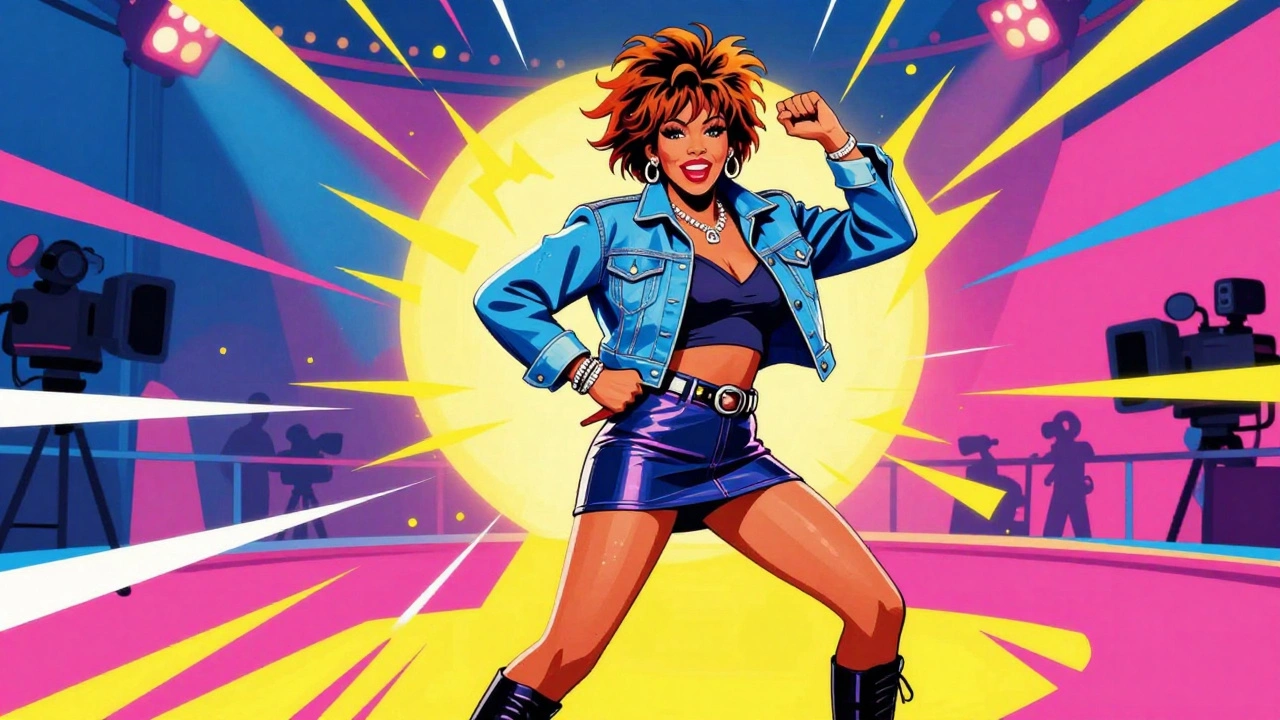
Forget the feathered dresses of the 60s. The new Tina wore denim jackets, leather miniskirts, and had short, spiky hair. She looked tough. She looked modern. The video for "What’s Love Got to Do with It" showed her striding through New York City streets, confident and unapologetic. It introduced her to a generation that had never heard "Proud Mary."
Billboard noted that MTV fueled her comeback. The videos forced the network to broaden its scope. It proved that older artists, and Black women specifically, could drive ratings. Tina wasn't just singing; she was commanding the screen. Her presence alongside contemporaries like Madonna and Prince shifted the cultural landscape.
More Than Music: A Symbol of Resilience
Why does this story still matter today? Because it’s not just about records sold. It’s about survival. Tina’s public battle with domestic abuse was rare for the time. Most victims stayed silent. She spoke out. She survived.
Her memoirs and later the stage musical TINA. The award-winning jukebox musical based on Tina Turner's life. highlighted her journey from victim to victor. She credited Buddhist chanting for helping her find peace and focus during those dark years. This spiritual grounding gave her the strength to endure the grueling tour schedules and the pressure of sudden fame.
For many women facing similar struggles, Tina became a beacon. She showed that it was possible to start over at any age. She turned pain into power. When she stepped on stage during the Private Dancer Tour, she wasn't just performing songs; she was proving she was alive, free, and unstoppable.
Legacy: The Queen of Rock 'n' Roll
The 1980s comeback didn't end with "Private Dancer." It opened doors. She starred in Mad Max Beyond Thunderdome. A 1985 sci-fi film where Tina Turner played Aunty Entity and sang 'We Don't Need Another Hero'. She won Grammys. She settled in Switzerland, eventually becoming a citizen. But the core of her legacy was forged in those eight years between 1980 and 1988.
Critics call her the "Queen of Rock 'n' Roll." Fans call her a survivor. Both are true. Her story challenges us to rethink what we expect from artists-and from ourselves. Age is just a number. Trauma doesn't have to be the end. And sometimes, the greatest hits come after the hardest falls.
Next time you hear "What’s Love Got to Do with It," remember the 36 cents. Remember the club gigs. Remember the courage it took to stand alone. That’s the real magic of Tina Turner.
How much money did Tina Turner have when she left Ike Turner?
Tina Turner famously left Ike Turner in 1976 with only 36 cents and a gas station credit card in her pocket. She had no assets, no savings, and was saddled with significant debt from their previous partnership.
What was Tina Turner's biggest hit in the 1980s?
Her biggest hit was "What’s Love Got to Do with It," which reached number one on the Billboard Hot 100 in September 1984. It was her first and only US number-one single as a solo artist.
Did Tina Turner win any awards for her comeback?
Yes, she won multiple Grammy Awards during this period, including Best Female Rock Vocal Performance for "What’s Love Got to Do with It" and "Better Be Good to Me" in 1985. These awards validated her transition from soul singer to rock icon.
Why was Tina Turner's comeback considered historic?
It was historic because she achieved massive commercial success at age 44, defying industry norms that favored younger artists. Additionally, as a Black woman breaking through on MTV and rock radio, she challenged racial and gender barriers in the music industry.
What role did MTV play in Tina Turner's success?
MTV was crucial. The heavy rotation of her videos, particularly for "What’s Love Got to Do with It," introduced her to a new, younger audience. Her modern, edgy visual style helped her fit into the rock-oriented programming of the channel, expanding her reach globally.
When was the album Private Dancer released?
Private Dancer was released in 1984. It became a multi-platinum seller worldwide and is widely regarded as one of the most successful comeback albums in music history.