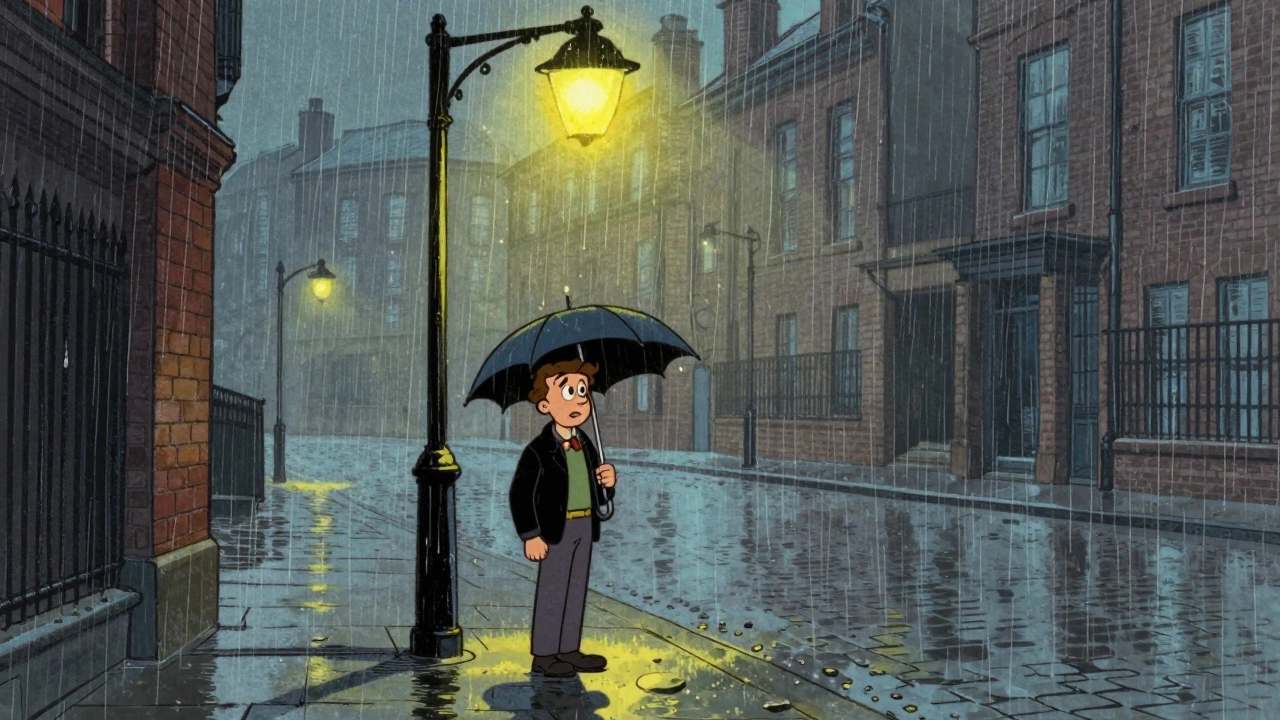

There is a specific kind of loneliness that feels like standing under a streetlamp in Manchester while it rains. It isn’t just sadness; it’s a sharp, witty, deeply British ache for connection that never quite arrives. When you listen to The Smiths, an English rock band formed in Manchester in 1982, known for their jangly guitar pop and literate, melancholic lyrics, you aren’t just hearing music. You are hearing the sound of an entire generation’s emotional architecture. At the center of this soundscape stands Steven Patrick Morrissey, whose lyrics from the mid-1980s remain some of the most quoted, debated, and emotionally resonant writing in popular music history.
We often talk about rock stars as larger-than-life figures, but Morrissey did something different. He made himself small. He wrote about shy men, awkward women, the unemployed, and the socially invisible. In doing so, he gave voice to millions who felt exactly the same way. This article breaks down why his 1980s lyrical genius works, how it paired with Johnny Marr’s music to create magic, and why those songs still hit hard today.
The Alchemy of Words and Jangle
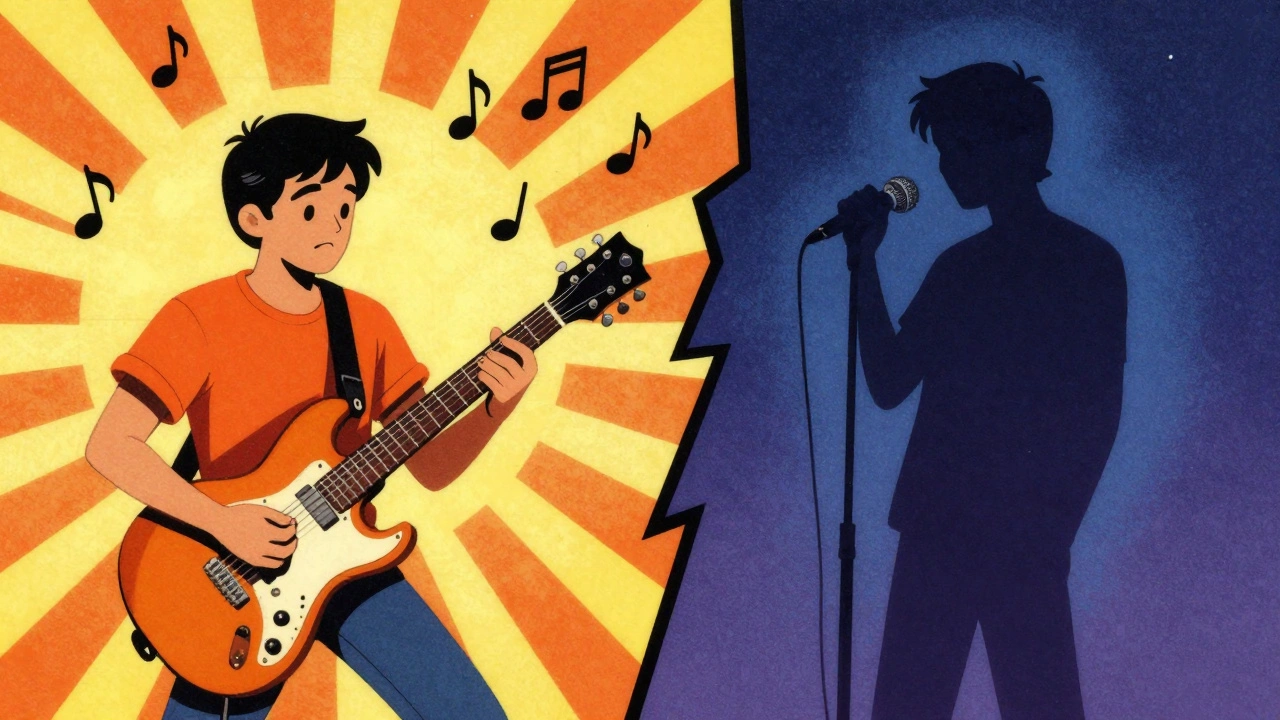
To understand Morrissey’s lyrics, you have to understand the music they sit on top of. The Smiths were not a typical power trio or quartet. They were a delicate balance of tension. On one side, you had Johnny Marr, a guitarist known for his complex, jangly chord progressions and melodic sensibility influenced by jazz and classical music. Marr was playing bright, major-key chords. His guitar work was intricate, upbeat, and often sounded like sunshine breaking through clouds.
On the other side, you had Morrissey singing about despair, sexual repression, and social alienation. This contrast is key. If Morrissey had sung these lyrics over heavy, slow doom metal, they might have felt melodramatic. But set against Marr’s shimmering, optimistic guitar lines, the sadness becomes poignant rather than depressing. It creates a sense of irony that defines the band’s aesthetic.
| Role | Member | Contribution Style |
|---|---|---|
| Vocals & Lyrics | Morrissey | Narrative, character-driven, melancholic, literary references |
| Guitar & Composition | Johnny Marr | Jangly, harmonic complexity, upbeat melodies, structural innovation |
| Bass | Andy Rourke | Melodic counterpoints, grounding the rhythm section |
| Drums | Mike Joyce | Steady, propulsive beats, supporting the vocal phrasing |
This partnership meant that Morrissey didn’t have to carry the musical weight alone. He could focus entirely on the story. He treated his songs like short stories or monologues. Each track introduced a character, a setting, and a conflict. By the time the song ended, usually within three minutes, you knew everything you needed to know about that person’s life.
The Anatomy of Melancholy
Morrissey’s melancholy wasn’t generic. It wasn’t just “I’m sad.” It was specific. It was rooted in place. He wrote about bus stops, council estates, provincial dance halls, and grey skies. These weren’t abstract concepts; they were real locations in Thatcher-era Britain. This groundedness made his lyrics relatable. You didn’t need to be a poet to understand them. You just needed to have ever felt left out.
Consider the song Please, Please, Please, Let Me Get What I Want. Released in 1984 as a B-side, it lasts less than two minutes. Yet, it captures a lifetime of longing. The lyrics are sparse. There is no elaborate plot. Just a plea for relief from suffering. The simplicity is its power. Morrissey uses plain language to express complex emotions. He doesn’t use big words to impress you. He uses clear words to make you feel seen.
This approach contrasts sharply with many of his contemporaries. While bands like Joy Division explored existential dread in abstract terms, Morrissey kept things domestic. His characters go shopping. They wait for buses. They sit in bedrooms. He turned mundane activities into dramatic set pieces. A trip to the supermarket became a metaphor for hopelessness. A glance across a room became a tragedy. This technique, often called "kitchen-sink realism," brought high art down to earth.
The Queen Is Dead: The Peak of the Era
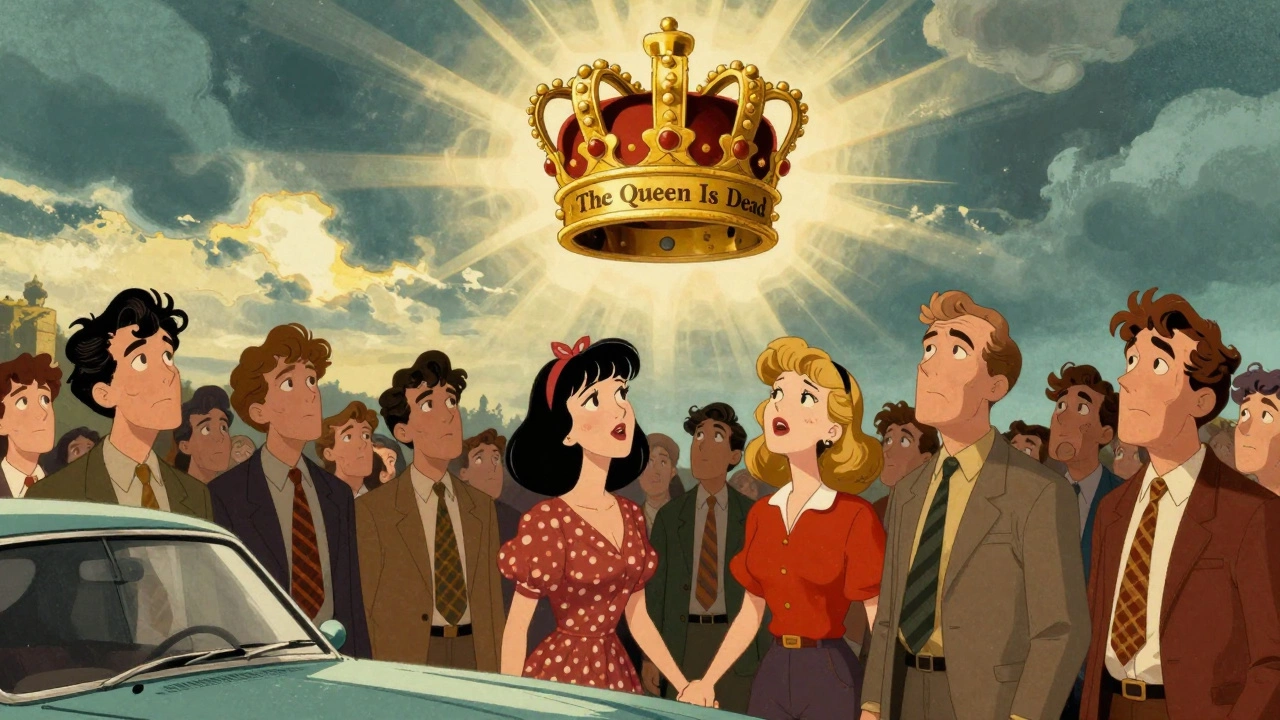
If you want to see Morrissey’s lyrical genius at its absolute peak, look at The Queen Is Dead, the third studio album by The Smiths, released in June 1986, widely considered one of the greatest British albums of all time. Released in 1986, this album is a complete work. It flows from political satire to intimate confession without missing a beat. Critics often call it the definitive statement of the band’s career.
The title track itself is a masterpiece of irony. It mocks royal pageantry and national pride while celebrating the beauty of ordinary people. Morrissey writes about the death of the monarchy not as a political manifesto, but as a personal liberation. He frees himself from the constraints of tradition. This theme runs throughout the album. Songs like Panic and Girlfriend in a Coma blend humor with horror. They are funny because they are absurd, but they are also sad because they reflect real anxieties about love and loss.
What makes The Queen Is Dead so enduring is its cohesion. Every song fits together. The production is clean. The performances are tight. Morrissey’s vocals are trembling yet confident. He knows he has something special to say. And he says it clearly. This album proved that indie rock could be both commercially successful and artistically profound. It showed that you didn’t need stadium budgets to make history.
Wit, Biting Sarcasm, and Social Critique
Morrissey wasn’t just a weeper. He was a critic. His lyrics are often biting. He attacks hypocrisy, conformity, and cruelty. He uses sarcasm as a weapon. In songs like Shoplifters of the World Unite, he mocks consumer culture and class pretensions. He exposes the emptiness of material success. This edge keeps his melancholy from becoming self-indulgent. It adds a layer of intelligence to the emotion.
He also tackled sexuality with remarkable boldness for the time. In the 1980s, open discussions of queer identity were rare in mainstream music. Morrissey sang about desire, ambiguity, and repression. He didn’t always label his characters explicitly, but the subtext was clear. This resonance helped him connect with LGBTQ+ listeners who saw themselves in his words. He created a space for those who felt marginalized. His lyrics became a form of validation.
This combination of wit and vulnerability is what makes his writing so unique. He can make you laugh and cry in the same verse. He tickles your ear with clever wordplay, then wounds your heart with raw honesty. This duality is difficult to pull off. Many artists try it and fail. Morrissey succeeded because he trusted his audience. He didn’t explain everything. He let you fill in the gaps.
Why It Still Matters Today
Decades later, The Smiths’ catalog remains vital. New generations discover these songs through TikTok, YouTube, and streaming playlists. Why? Because human nature hasn’t changed. We still feel lonely. We still fear rejection. We still struggle with our place in society. Morrissey’s lyrics speak to universal truths. They transcend their 1980s context.
Fans often cite specific songs as companions during difficult times. There Is a Light That Never Goes Out is frequently played at funerals or during breakups. Its imagery of dying in a car crash as a romantic consummation is extreme, yes. But it captures the intensity of teenage love and despair. It validates feelings that adults often dismiss as silly. Morrissey takes those feelings seriously. That respect matters.
Moreover, the debate around Morrissey’s legacy continues. Some critics point to his later controversial statements and question whether his art should be separated from his actions. Others argue that the lyrics stand on their own. This tension keeps the conversation alive. It forces us to think critically about art, morality, and memory. The Smiths are not just a band. They are a cultural touchstone.
What makes Morrissey's lyrics different from other 1980s rock singers?
Morrissey focused on specific, everyday scenarios rather than abstract themes. He wrote about bus stops, supermarkets, and shy encounters, using simple language to convey deep emotion. Unlike peers who used grandiose imagery, he grounded his melancholy in domestic reality, making it highly relatable to ordinary listeners.
How did Johnny Marr's music influence Morrissey's lyrics?
Marr's bright, jangly guitar melodies provided a contrasting backdrop to Morrissey's dark lyrics. This juxtaposition created a sense of irony and prevented the songs from becoming purely depressive. The upbeat music allowed Morrissey to explore sadness with a layer of wit and detachment.
Why is 'The Queen Is Dead' considered their best album?
Released in 1986, 'The Queen Is Dead' showcases perfect cohesion between lyrics and music. It balances political satire, personal confession, and humor seamlessly. Critics praise its narrative arc and the maturity of Morrissey's writing, marking it as the peak of the band's creative synergy.
Did Morrissey write about politics in his lyrics?
Yes, Morrissey addressed political issues like class inequality, unemployment, and anti-establishment sentiment. However, he often framed these topics through personal narratives and irony rather than direct manifestos, making his critique more subtle and emotionally resonant.
Are The Smiths' songs still relevant today?
Absolutely. Themes of loneliness, unrequited love, and social alienation are timeless. New generations continue to find comfort in Morrissey's honest portrayal of awkwardness and despair, proving that the emotional core of the songs transcends their 1980s origins.


