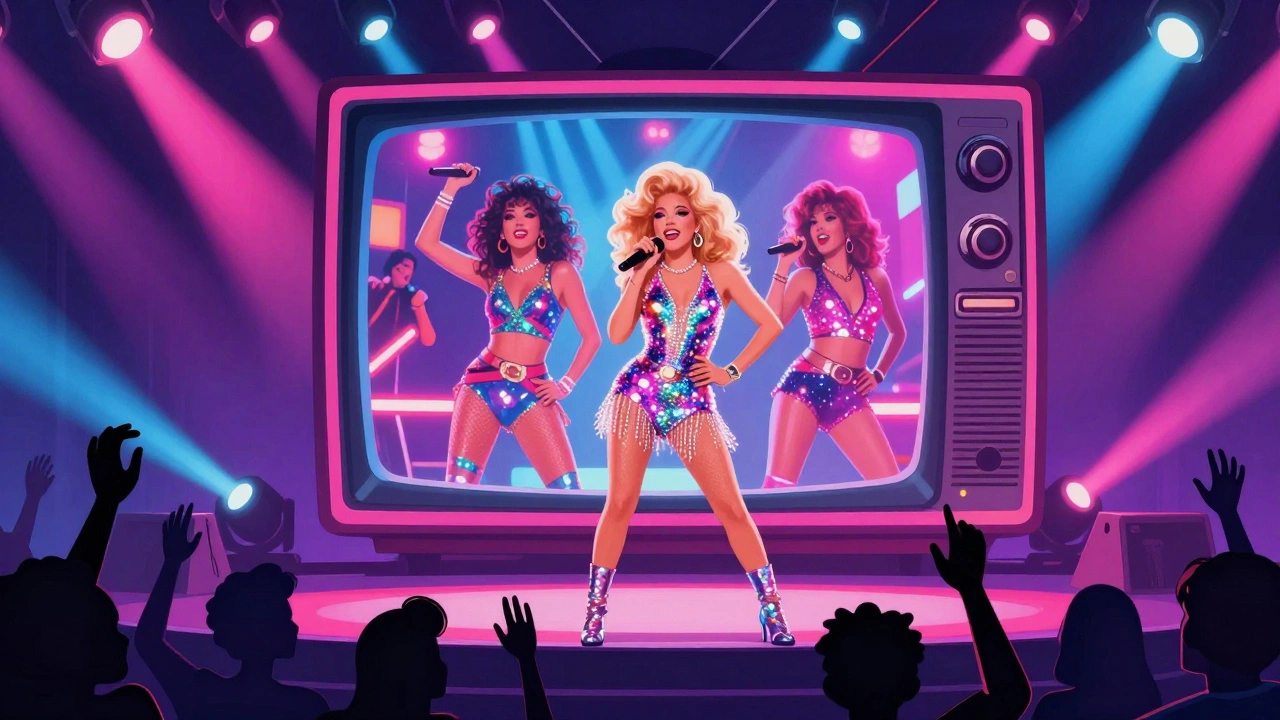

Imagine walking into a stadium in 1980. You'd likely see a decent sound system and some colorful lights. Now, fast forward to 1989, and you're staring at a 236-foot-wide apocalyptic jungle of steel and fluorescent neon. The gap between those two experiences wasn't just a few years of growth; it was a total demolition and rebuild of how we experience live music. In the 80s, the concert stopped being just about the songs and became a full-blown multimedia event. This was the era where tour staging evolved from simple platforms into massive, engineered architectural feats that pushed the boundaries of what was physically possible in a venue.
The MTV Effect and the Hunger for Visuals
You can't talk about the 80s without talking about MTV is a cable channel that revolutionized the music industry by broadcasting music videos 24/7 . Before the music video took over, a concert was primarily an auditory experience. But suddenly, fans weren't just listening to artists; they were watching them in high-definition, stylized clips every hour. This created a massive shift in audience expectations. When people bought a ticket to see someone like Madonna or Michael Jackson , they didn't just want to hear the hits-they wanted the music video brought to life in front of them. This demand forced production crews to think bigger, louder, and flashier.
The result was the birth of the "spectacle-driven" show. Artists began crafting their sets around choreography and visual cues rather than just musical flow. It wasn't unusual for a show to be structured as a "greatest hits" sequence, where every single song had a corresponding costume change or a dramatic pyrotechnic blast. The music became the soundtrack to a larger theatrical play, and the stage became the canvas.
Engineering the Impossible: Landmark Stage Designs
As the venues shifted from theaters to massive arenas and stadiums, the engineering had to keep up. This is where the role of the stage designer became as critical as the musical director. We saw the rise of specialists like Mark Fisher , an architecture student turned production genius who realized that a stage could be a physical manifestation of an album's concept.
Take Pink Floyd and their 1980 production of "The Wall." They didn't just put up a backdrop; they built a 31-foot-high, 160-foot-wide brick wall out of cardboard, using hydraulic platforms and stabilizing masts to raise it during the show. It was a daring piece of structural engineering that transformed the stage into a literal barrier between the artist and the crowd.
By the late 80s, the scale became almost absurd. David Bowie 's Glass Spider tour in 1987 featured a three-story-high mobile scaffolding system made of fiberglass and metal. It looked like a giant spider with vacuum tube legs that changed colors, moving across the stage to bring the performer closer to the audience. Then came the Rolling Stones with their Steel Wheels tour. They spent $40 million on a stage that was 236 feet wide and 82 feet high, designed to look like an urban wasteland. These weren't just stages; they were temporary cities built and dismantled in a matter of hours.
| Tour/Production | Key Feature | Scale/Dimension | Design Aesthetic |
|---|---|---|---|
| The Wall (Pink Floyd) | Hydraulic Brick Wall | 31' High x 160' Wide | Isolation/Psychological |
| Glass Spider (David Bowie) | Mobile Scaffolding | 3 Stories High | Futuristic/Technological |
| Steel Wheels (Rolling Stones) | Massive Steel Rigging | 236' Wide x 82' High | Urban Decay/Jungle |
The Tech Leap: Lighting and Sound
While the physical sets were growing, the electronics were evolving just as fast. The early 80s relied on manual lighting cues-people literally pulling levers to change a color. But the decade saw the introduction of Automated Lighting . This allowed designers to program specific movements and color shifts that were perfectly synchronized with the music. If a snare hit happened at exactly 2 minutes and 14 seconds, a flash of white light could hit the stage at that exact millisecond.
Sound systems also had to evolve to fight the "stadium echo." As tours moved into massive open-air venues, the basic amplification of the 70s wouldn't cut it. Engineers began developing more powerful, nuanced arrays that could push clear audio to 100,000 people without it sounding like a muddy mess. This push for clarity and power laid the groundwork for the digital soundboards and line arrays we see in every modern festival today.
Turning a Concert Into a Business Empire
The 80s didn't just change the look of the show; they changed the math. When you're spending $40 million on a stage, ticket sales aren't enough. This decade marked the explosion of professional Merchandising . The concert became a brand-building exercise. T-shirts, posters, and branded gear became primary revenue streams, turning the tour into a commercial enterprise.
The scale of these operations is staggering when you look at the numbers. Bruce Springsteen's Born in the U.S.A. Tour hit over 5.3 million people across 156 shows. Michael Jackson's tours were similarly massive, attracting millions of fans across dozens of countries. The Rolling Stones' Steel Wheels tour didn't just move a lot of tickets; it generated $320 million in revenue. This level of income justified the insane production costs and turned tour management into a high-stakes corporate operation.
The Legacy of 80s Excess
If you go to a show today and see a giant LED screen, a stage that moves, or a perfectly timed pyrotechnic display, you're seeing the DNA of the 1980s. The decade proved that the visual experience is just as important as the audio experience. It shifted the role of the performer from "musician" to "entertainer," and it shifted the role of the crew from "roadies" to "specialized engineers."
We moved from a world where a band just played their instruments and hoped the lights worked, to a world where the show is a choreographed, engineered, and branded experience. The 80s took the risk on the "big idea," and in doing so, they created the blueprint for every stadium tour in the 21st century.
Why did tour staging change so much in the 1980s?
The primary driver was the rise of MTV, which made audiences expect high-visual impact and theatricality. Additionally, the shift toward larger arena and stadium venues required more powerful sound and lighting systems to reach massive crowds effectively.
Who were some of the key figures in 80s stage design?
Mark Fisher was a pivotal figure, particularly known for his architectural approach to staging, such as the massive wall used in Pink Floyd's "The Wall." Mark Ravitz was also influential, designing the complex Glass Spider tour for David Bowie.
How did lighting technology evolve during this period?
The 80s saw the transition from manual lighting rigs to computer-controlled automated lighting. This allowed for precise synchronization between the music and the visual effects, enabling complex light shows that could be repeated exactly every night.
What was the impact of merchandising on 80s tours?
Merchandising turned concerts into brand-building opportunities and created a critical new revenue stream. This extra income allowed artists to invest more heavily in expensive, high-tech stage productions and larger-than-life sets.
Which tour had the largest stage in the 1980s?
The Rolling Stones' Steel Wheels/Urban Jungle tour represented the peak of the era's engineering, featuring a stage that was 236 feet wide and 82 feet high, reflecting an apocalyptic urban aesthetic.


