
Key Takeaways
- The 1965 Shea Stadium show proved rock could work in massive outdoor venues.
- The shift created a new genre called "Arena Rock," defined by bombastic sound and visuals.
- Technological leaps in sound and lighting were necessary to reach thousands of fans.
- Modern tours have evolved into multi-million dollar multimedia productions.
The Day the Scale Changed
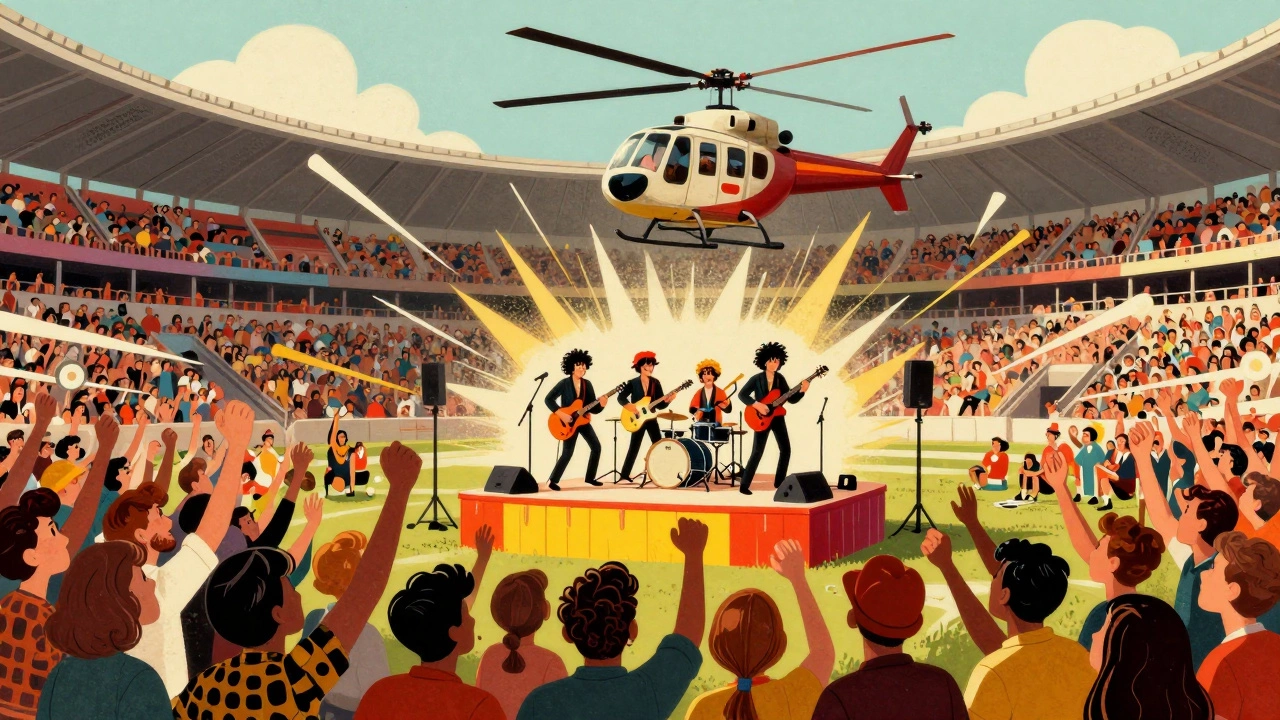
For a long time, the idea of a rock concert was a crowded ballroom or a theater. But in the early 60s, promoters started looking at the March on Washington and wondering why they couldn't replicate those massive crowds for pop music. On August 15, 1965, that curiosity turned into a reality. When The Beatles played Shea Stadium, they didn't just break attendance records; they broke the traditional mold of how a performer interacts with an audience. This event triggered a gold rush. Suddenly, every major act wanted to see how big they could go. The Who followed suit, using the massive space to experiment with volume and theatricality. Their performance of the rock opera Tommy in 1969 turned the concert into a narrative experience, proving that a stadium wasn't just a big room-it was a blank canvas for a theatrical spectacle.
The Birth of Arena Rock
By the late 70s and early 80s, the "stadium show" had evolved into a specific style known as Arena Rock, which is a subgenre of rock music characterized by anthemic choruses, soaring guitar solos, and high-production values designed for large crowds. The music itself began to change to fit the venue. You couldn't play subtle, nuanced folk songs to 40,000 people in a concrete bowl; you needed bombast. This era introduced the "stadium anthem"-songs with simple, repetitive hooks that a crowd could sing along to even if they were sitting in the nosebleed sections. Think of the pyrotechnics, the dry ice, and the towering stacks of amplifiers. The grit of the bar scene was replaced by a polished, high-energy show where the visual presentation was just as important as the audio quality. The focus shifted from the music as an art form to the music as an event.
Engineering the Wall of Sound
You can't just plug a guitar into a standard amp and expect people in the back row of a stadium to hear it. The transition to big venues forced a revolution in Sound Reinforcement, the process of amplifying sound to be heard by large audiences. Engineers had to develop massive speaker arrays and high-wattage systems to prevent the music from disappearing into the open air. Look at Queen at the 1985 Live Aid event. Their setup was a behemoth: a stage measuring 50x15 meters and speakers pushing 500,000 watts. This wasn't just about volume; it was about precision. They managed to synchronize the clapping of 72,000 people during "We Will Rock You," creating a rhythmic force that could be felt in the chest of every attendee. This level of coordination required a small army of technicians and a level of lighting installation that had never been seen in a stadium before.
| Feature | Club/Theater Era | Stadium/Arena Era |
|---|---|---|
| Audience Size | Hundreds to low thousands | Tens of thousands to millions |
| Primary Focus | Musical intimacy and lyrics | Spectacle, energy, and anthems |
| Tech Needs | Basic PA systems | Line arrays, pyrotechnics, LED screens |
| Economic Model | Ticket sales and small doors | Global touring, massive sponsorships, merch |
The Mega-Tour and Multimedia Spectacles
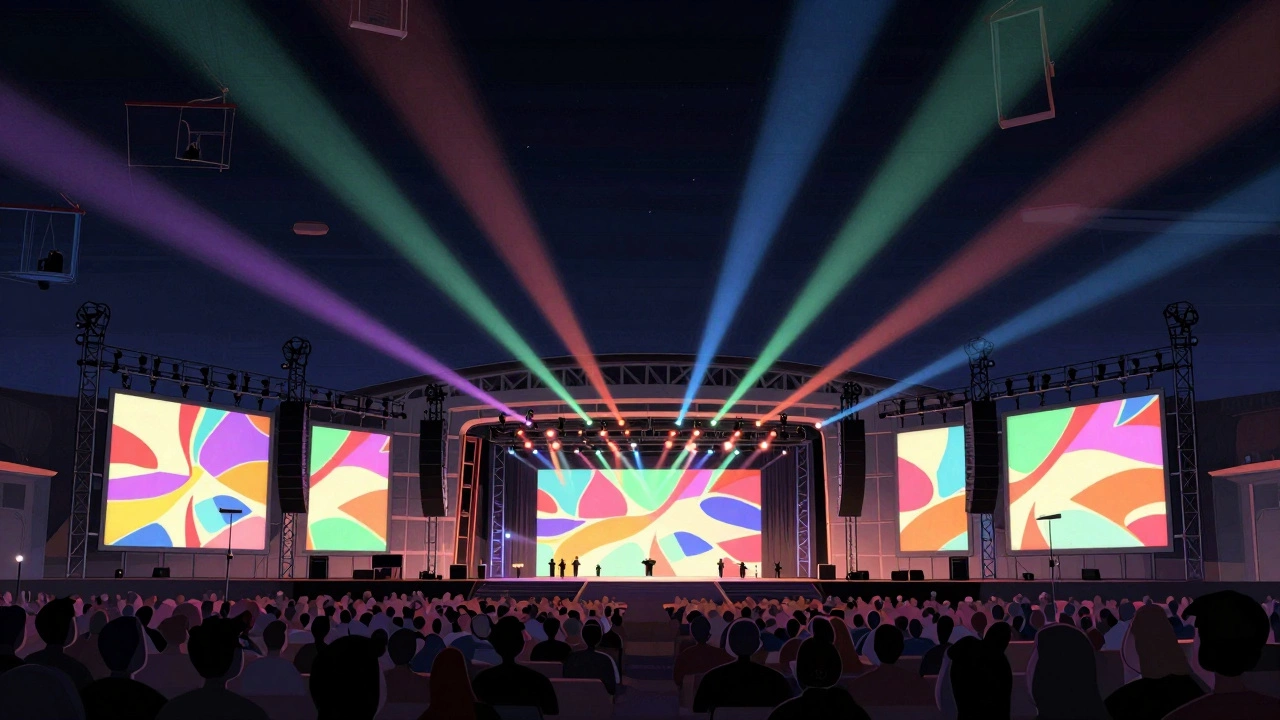
If the 60s were about the crowd and the 80s were about the sound, the 21st century is about the total sensory experience. Stadium concerts have shifted from "playing a show" to 「staging a production」. A perfect example is Roger Waters' The Wall Live tour. This wasn't just a series of concerts; it was a massive architectural undertaking. The tour cost roughly $60 million to stage, featuring a giant wall that literally rose up in front of the audience. These modern tours use Multimedia Production to bridge the gap between the artist and the distant fan. High-definition screens, synchronized light shows, and immersive audio ensure that someone in the furthest seat feels the same impact as someone in the front row. This evolution has turned rock concerts into a high-stakes business where the production budget can sometimes exceed the actual cost of the musicians' salaries.
The Cultural Impact of the Big Show
Beyond the gear and the money, the shift to stadiums changed how we relate to music. There is a psychological phenomenon that happens when 100,000 people sing the same lyric at the same time. It creates a sense of collective identity that you simply can't get in a 200-seat club. Events like Live Aid took this a step further, using the stadium format to create a global community. By broadcasting two massive stadiums in London and Philadelphia to an estimated 1.9 billion people, it proved that music could be used as a tool for global mobilization and humanitarian aid. Even non-rock artists jumped on the trend. Michael Jackson's 1993 Rose Bowl performance showed that the stadium format wasn't just for guitar riffs; it was for anyone who could command a massive space with choreography and charisma. The stadium became the ultimate proving ground for superstardom. If you could fill a stadium and keep the energy high for two hours, you weren't just a musician-you were an icon.
Why did rock music move from clubs to stadiums?
The move was driven by a combination of exploding popularity and a realization by promoters that the revenue potential of 50,000 seats far outweighed the limited capacity of theaters. The success of The Beatles at Shea Stadium in 1965 proved that the demand existed and that the music could translate to a massive outdoor environment.
What is the difference between a theater show and a stadium show?
A theater show focuses on intimacy, detailed musicality, and a direct connection between the artist and the fan. A stadium show focuses on spectacle, high-volume sound reinforcement, and the energy of a massive crowd. Stadium shows require significantly more complex lighting and sound engineering to ensure the performance reaches every corner of the venue.
How did technology enable these huge concerts?
The development of high-wattage amplifiers, line-array speaker systems, and massive LED screens allowed artists to be seen and heard across vast distances. Additionally, the use of pyrotechnics and complex lighting rigs transformed the stage from a simple platform into a visual experience that could compete with the scale of the venue.
What was the significance of Live Aid in 1985?
Live Aid was a landmark event that combined stadium-scale performance with global satellite broadcasting. It demonstrated the power of rock music to raise awareness and funds for famine relief in Ethiopia and established the blueprint for the modern global benefit concert.
Who were the pioneers of the stadium rock sound?
The Beatles paved the way with the first major stadium event at Shea Stadium. Later, bands like The Who and Led Zeppelin pushed the boundaries of volume and theatricality, while Queen perfected the art of crowd interaction and high-production audio for massive venues.
What to Do Now
If you're a fan of live music, try comparing a small-venue show with a stadium experience. Notice how the setlist differs-stadium shows usually rely on more "hits" and anthems to keep the energy up. For those interested in the technical side, look into the history of sound reinforcement and how line-array speakers changed the way we hear music today. If you want to dig deeper into the history of the 60s, explore the transition of the "British Invasion" from small US clubs to the massive arenas that defined the end of the decade.


