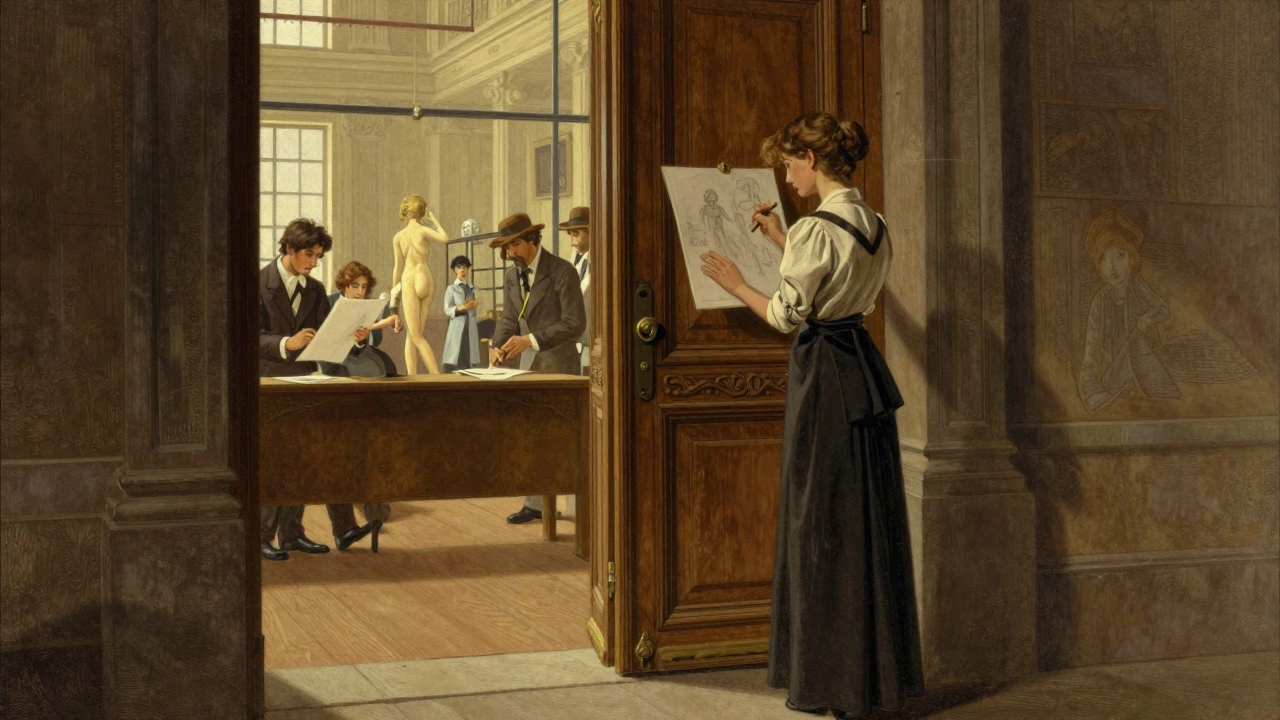

Ever wonder why some of the most famous painters in history are almost exclusively men? It isn't because women weren't painting. For centuries, the art world operated like a private club where the entry fee wasn't just talent, but the ability to fit a specific, male-defined mold. When women did break in, the conversation often shifted away from their brushwork or conceptual depth and landed squarely on how they looked. This wasn't an accident; it was a tool of control. By judging a woman's appearance, the establishment could easily sideline her intellect and artistic agency.
To understand this, we have to look at the systemic barriers that existed long before a critic ever wrote a review. For a long time, female artists is a group of creative professionals who have historically faced institutional exclusion and gender-based valuation in the fine arts. Back in the day, formal art schools were often off-limits. If a woman wanted to learn, she had to pay for private tutoring or join a small academy. But here is the kicker: women were banned from studying the male nude. Since the human figure was the gold standard of technical skill, women were essentially blocked from mastering the very thing that would make them "serious" artists in the eyes of the academy. Imagine trying to win a race while your feet are tied together-that was the starting line for women.
The Trap of the Male Gaze
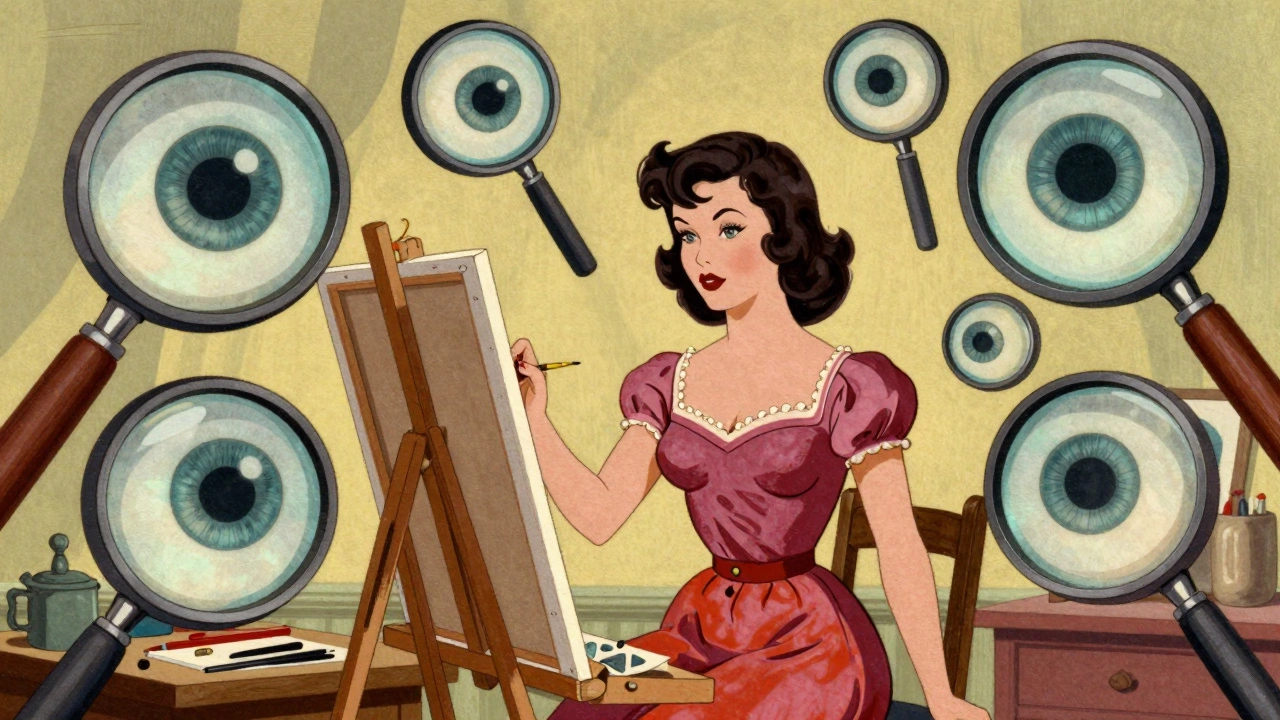
When women finally gained more visibility, they encountered a new hurdle: the male gaze. This isn't just about a man looking at a woman; it is a psychological perspective where the world is viewed through a masculine lens, and women are positioned as objects to be looked at rather than subjects with their own desires and thoughts. For an artist, this is a nightmare. When a critic focuses on whether a female painter is "feminine" or "beautiful," they are essentially treating her as another piece of art to be consumed, rather than the creator of the art.
This objectification creates a dangerous feedback loop. Psychologists have identified a phenomenon called self-objectification, where women start to see themselves from the outside in. Research by Rachel Calogero suggests that when women internalize this view, beauty starts to feel like a form of social currency. The tragedy here is that the more a woman views her appearance as her primary asset, the less likely she is to engage in political activism or challenge the status quo. It's a subtle way of keeping women compliant; if you're too busy maintaining a "perfect" image to satisfy the gaze, you don't have the energy to tear down the walls of the gallery.
| Focus of Judgment | Perception of Artist | Institutional Outcome |
|---|---|---|
| Physical Appearance | Seen as an "object" or a curiosity | Undervalued in museums; lower auction prices |
| Technical Merit/Concept | Seen as a competent professional | Higher archival priority; academic recognition |
Breaking the Mold: The Feminist Art Movement
By the late 1960s, women had enough. The feminist art movement emerged not just as a style, but as a political act. Artists like Judy Chicago and Miriam Schapiro didn't just want a seat at the table; they wanted to build a new table entirely. They began using their work to explicitly challenge what it meant to be a woman, often using imagery and materials that the "high art" world considered too domestic or too raw.
Take Yayoi Kusama, for example. Her immersive installations and repetitive patterns aren't just visually stunning; they are a way of claiming space and controlling the environment. These artists turned the gaze back on the viewer, forcing the world to confront the female body on the artist's own terms. They proved that the "feminine" could be powerful, unsettling, and intellectually rigorous all at once.
The Fight Against the "Woman Artist" Label
Not every woman took the same approach. Some felt that by labeling them as "women artists," the world was just creating another box to keep them in. In 1973, Bridget Riley wrote a provocative essay called "The Hermaphrodite." She argued that being called a woman artist was a "red herring." To Riley, the act of creating art is a universal human experience that transcends gender. She pointed out that male artists don't spend their time in the studio thinking about their "exclusive masculinity," so why should women have to carry the weight of their gender in every brushstroke?
This perspective highlights a critical tension: do you lean into your identity to fight for representation, or do you demand the right to be seen as an individual first and a woman second? Both paths are valid, but both are reactions to a world that refuses to let women just be artists.
Modern Day Reality: Is the Gap Closing?
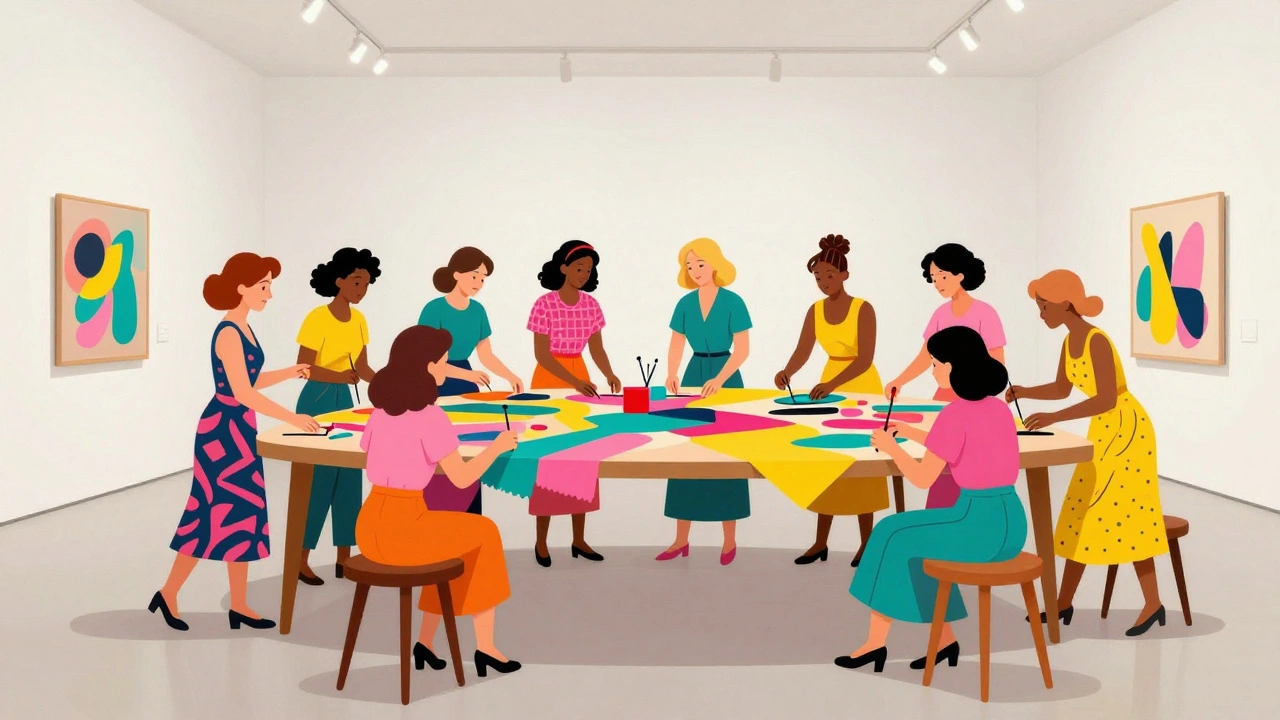
You might think we've moved past this, but the data says otherwise. The National Museum of Women in the Arts (NMWA) reports that women are still dramatically underrepresented and undervalued in galleries and auction houses. The "parity" we talk about in the media often masks a deeper reality where women's work is still priced lower and exhibited less frequently than men's.
We also see this in how the media covers women in power. Studies show that when news coverage focuses on a woman's outfit or appearance rather than her policies or skills, the public perceives her as less competent and less "human." This is the same mechanism used against female artists for centuries. If you can reduce a person to their skin, hair, or clothes, you can ignore their brain.
However, the resistance is evolving. Contemporary exhibitions, such as "My Body, My Rules" at the Pérez Art Museum Miami, are pushing the conversation further. Curators like Jennifer Inacio are bringing together artists from across the globe to confront the stereotypes and violence imposed on the female body. This isn't just about "beauty" anymore; it's about the disabled body, transgender identities, and the intersection of race and gender. The goal is to decouple the body from the expectation of being a pleasing object.
Why This Matters for Everyone
When we judge art based on the artist's appearance, we aren't just hurting the women involved-we're robbing ourselves of a full understanding of human creativity. Aesthetic evaluation is often used as a form of social control. By keeping women in the category of "the muse" or "the pretty painter," the system ensures that power remains concentrated in the hands of a few.
The real victory happens when the auras of "masculine" and "feminine" art disappear. When we stop asking if a piece is "feminine" and start asking if it's provocative, technically skilled, or emotionally honest, we move toward a world where merit actually matters. The history of female artists is a history of fighting for the right to be judged by the work they leave behind, not the face they show the world.
Why were women banned from studying nude models?
It was largely based on Victorian-era notions of propriety and modesty. Art academies believed that women seeing a naked male body was "indecent." Because anatomical study was the foundation of professional art training, this restriction prevented women from developing the technical skills necessary to be accepted into the highest tiers of the art world.
What is the "male gaze" in art?
The male gaze is a term describing how visual arts and literature are structured around a masculine viewer's perspective. In this framework, women are presented as objects for visual pleasure rather than as active participants with their own agency. For female artists, this meant their work was often interpreted through the lens of how it appealed to men, rather than its own intrinsic value.
How does self-objectification affect a woman's career?
Self-objectification occurs when women internalize the external gaze and prioritize their physical appearance as their primary social asset. According to research, this can lead to a decrease in gender-based political activism and a higher satisfaction with the status quo, potentially stifling the drive to challenge systemic inequalities in their professional fields.
Is there a difference between a "woman artist" and a "female artist"?
Technically, they are often used interchangeably, but some artists, like Bridget Riley, find the label "woman artist" reductive. The argument is that by categorizing art by the gender of the creator, the work is automatically separated from the "universal" (usually meaning male) standard of art, making it a niche or a curiosity rather than a primary contribution to the field.
Where can I find more information on the lack of gender parity in museums?
The National Museum of Women in the Arts (NMWA) is a primary resource for this data. They track the representation of women in major museum collections and auction houses, highlighting the ongoing gap in how women's work is archived, valued, and displayed compared to their male counterparts.


