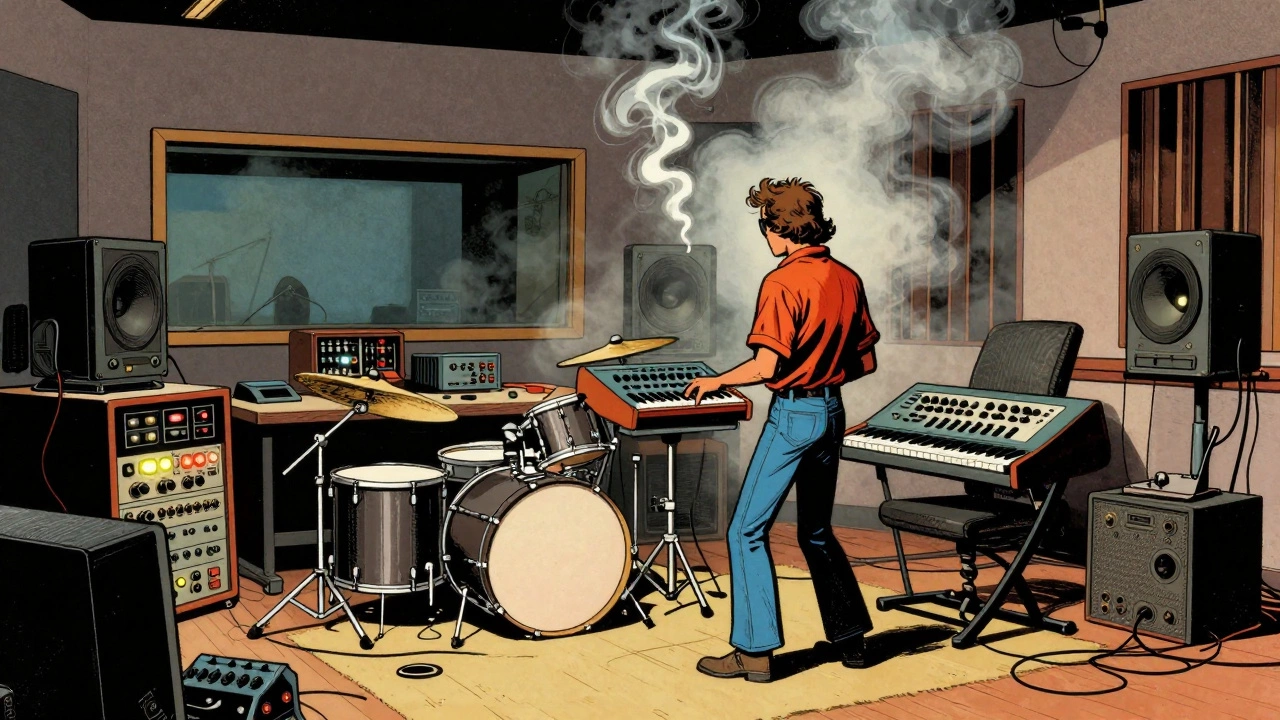

Picture a studio in Minneapolis, Minnesota, around 1979. The air is thick with the smell of cigarettes and hot electronics. Instead of a massive horn section blasting brass lines, you hear the sharp, metallic click of a drum machine. A synthesizer screams where a saxophone used to play. This wasn't just a new song; it was the birth of a sonic revolution that would define pop music for decades.
The Minneapolis Sound is a distinct subgenre of funk rock that fuses funk, R&B, rock, new wave, and synth-pop into a tightly produced, electronic, dance-oriented style. It emerged from the Twin Cities in the late 1970s, but its true explosion happened in the 1980s. At the center of this storm stood one man: Prince. Alongside collaborators like André Cymone, Prince didn't just make hits; he built a blueprint. He took the raw energy of Black funk and merged it with the cold precision of white new wave technology. The result was a sound that broke racial barriers, confused critics, and eventually took over the world's radio waves.
From Sound 80 to Dirty Mind: The Birth of a Genre
You can’t understand the Minneapolis Sound without looking at where it started. It wasn't born in a vacuum. The seeds were planted at Sound 80, a recording studio in Minneapolis. In 1979, producer Steven Greenberg’s project Lipps Inc. recorded “Funkytown.” That track, which became a global hit in 1980, blended disco-funk grooves with prominent synthesizers. It prefigured the electronic-funk traits that would soon become synonymous with the city.
But Lipps Inc. was just the warm-up. Before 1980, Prince’s first two albums, *For You* (1978) and *Prince* (1979), were seen as smooth, slightly suggestive commercial R&B. They were enjoyable, sure, but they didn't scream innovation. Then came the fall of 1980. Prince released his third studio album, Dirty Mind.
This album was a shock to the system. Critics called it "one of the most radical 180-degree turns in pop history." Why? Because Prince abruptly shifted from smooth R&B to a visionary amalgam of funk, punk, new wave, and experimental rock. He laced it with sexually explicit lyrics and over-the-top production. *Dirty Mind* introduced the nation to the Minneapolis Sound. It proved that you could take cutting-edge technology-synthesizers and drum machines-and use them not just for background pads, but as the primary drivers of rhythm and melody.
The Anatomy of the Sound: Tech Meets Groove
So, what exactly makes the Minneapolis Sound unique? If you listen closely, you’ll notice several key technical characteristics that set it apart from traditional 1970s funk.
| Feature | Traditional 1970s Funk | Minneapolis Sound |
|---|---|---|
| Horn Sections | Dominant brass (trumpets, saxophones) | Replaced by bright, staccato synthesizers |
| Rhythm & Tempo | Deeply syncopated, slower grooves | Faster, straighter rhythms influenced by new wave |
| Bass Guitar | Dominant low-end driver | Less dominant; low end shared with kick drum and synth bass |
| Guitar Role | Rhythmic chop or occasional solo | Louder, aggressively processed solos; wah-wah rhythm parts |
| Drums | Live drummers, organic feel | Programmed drum machines, crisp and machine-like |
In traditional funk, the bass guitar is king. It drives the groove. In the Minneapolis Sound, the bass steps back. The low end is created by a combination of the kick drum, drum machines, and synthesizer bass lines. This creates a cleaner, more electronic texture. Meanwhile, the guitars get louder. Prince often used distortion and heavy processing on his guitar solos, giving them a rock punch that invited high-volume listening. Songs like “Let’s Go Crazy” from the 1984 album Purple Rain are perfect examples. You have the sermon-like spoken intro, the driving rhythm section built on machine-like drums, and then those explosive, distorted guitar riffs.
The drums themselves are crucial. They aren't just keeping time; they're part of the melody. Using programmed drum machines and gated reverb, producers created a sound that was "crisp and machine-like." This wasn't about mimicking a human drummer; it was about creating a robotic precision that felt futuristic. When you add pealing synths taking the place of horn lines, you get a hybrid of electro-funk and New Wave that sounded like nothing else on the radio.
More Than Just Prince: The Satellite Acts
It’s easy to think of the Minneapolis Sound as just "the Prince sound," but that’s a mistake. Prince was the architect, yes, but he built an entire ecosystem. He cultivated a network of satellite acts and protégés who helped propagate the style. These artists weren't just copying him; they were expanding the genre.
Take The Time. This band, largely written and produced by Prince, became known for songs that were danceable, funky, and highly processed. Their 1984 hit “Jungle Love” is an archetypal Minneapolis Sound single. It features the same drum-machine precision and synth-driven hooks found in Prince’s work, but with a playful, cartoonish edge. The lineup included Jimmy Jam and Terry Lewis before they left to become full-time producers.
Then there was Vanity 6, a female trio created and produced by Prince. Their early-1980s records mirrored Prince’s approach: drum machines, synths, and sexually charged funk-pop. And let’s not forget Sheila E., whose percussive skills added a live, organic layer to the electronic backdrop. These acts showed that the Minneapolis Sound wasn't a solo act; it was a community effort. It was a regional identity that made Minneapolis synonymous with a new ‘80s sound.
Jam & Lewis: Exporting the Blueprint
If Prince was the inventor, Jimmy Jam and Terry Lewis were the distributors. After leaving The Time, this production duo became hitmakers for other artists. They took the Minneapolis-style electronic funk and brought it to national and international audiences. This is where the blueprint truly changed the course of pop music.
Their most famous collaboration was with Janet Jackson. Her 1986 album Control is a masterclass in the Minneapolis Sound applied to mainstream R&B. Tracks like “Nasty” and “What Have You Done for Me Lately” feature the classic ingredients: clipped funk guitar, bright synth stabs, and tight, programmed drum patterns. Jam and Lewis translated Prince’s experimental edge into a radio-ready format. Suddenly, the sound that started in a small Midwestern city was dominating MTV and Top 40 charts everywhere.
This expansion had structural implications for the music industry. The Minneapolis Sound helped break down barriers between musical traditions and racial communities. It explicitly merged Black funk and R&B idioms with rock and new wave aesthetics, which were historically associated with white audiences. By blending these elements, Prince and his peers created a fusion that appealed to a broader demographic. It wasn't just music; it was cultural assimilation in audio form.
Legacy: Why the Blueprint Still Matters
The heyday of the Minneapolis Sound stretched through the late 1980s. By the early 1990s, Prince and many of his peers had moved toward other styles. Jam and Lewis adapted their principles into evolving R&B production trends, leading to sounds like New Jack Swing. But the influence never really went away.
Today, when you hear a pop song with a heavy synth hook, a crisp electronic beat, and a touch of rock guitar, you’re hearing the ghost of the Minneapolis Sound. Contemporary artists continue to borrow its drum programming, synth-horn textures, and rock/funk fusion. It remains a touchstone for historians and musicians alike. The blueprint Prince drew in 1980 taught us that technology doesn't have to kill soul; it can amplify it. It showed us that genre boundaries are meant to be crossed, not respected.
What defines the Minneapolis Sound?
The Minneapolis Sound is defined by its fusion of funk, R&B, rock, new wave, and synth-pop. Key characteristics include the use of synthesizers replacing traditional horn sections, programmed drum machines instead of live drummers, faster and less syncopated rhythms, and prominent, heavily processed electric guitar solos. It emphasizes electronic textures while maintaining a strong funk groove.
Who invented the Minneapolis Sound?
While the sound emerged from a collaborative scene in Minneapolis, Minnesota, Prince is widely recognized as the central architect and pioneer. He began experimenting with these elements in the late 1970s, with his 1980 album *Dirty Mind* marking the first full realization of the style. Collaborators like André Cymone, The Time, and producers Jimmy Jam and Terry Lewis also played crucial roles in developing and popularizing the sound.
How did the Minneapolis Sound differ from 1970s funk?
Unlike traditional 1970s funk, which relied heavily on live horn sections and dominant bass guitars, the Minneapolis Sound used synthesizers for melodic hooks and drum machines for rhythm. The bass was less dominant, sharing the low-end frequency with kicks and synth bass. Additionally, the rhythms were often faster and straighter, influenced by new wave, and the guitar was more prominent and distorted.
What is the significance of Prince's album *Dirty Mind*?
Released in 1980, *Dirty Mind* is considered the debut of the Minneapolis Sound. It marked a radical shift from Prince's earlier smooth R&B style to a hybrid of funk, punk, and new wave. The album introduced the use of drum machines and synthesizers as primary instruments and featured sexually explicit lyrics that shocked critics but established Prince as a visionary innovator.
Did the Minneapolis Sound influence other genres?
Yes, significantly. Through producers like Jimmy Jam and Terry Lewis, the Minneapolis Sound heavily influenced mid-to-late 1980s R&B and pop, particularly Janet Jackson's work. Its blend of electronic production and funk grooves laid the groundwork for later styles like New Jack Swing and continues to influence modern pop, hip-hop, and electronic music today.