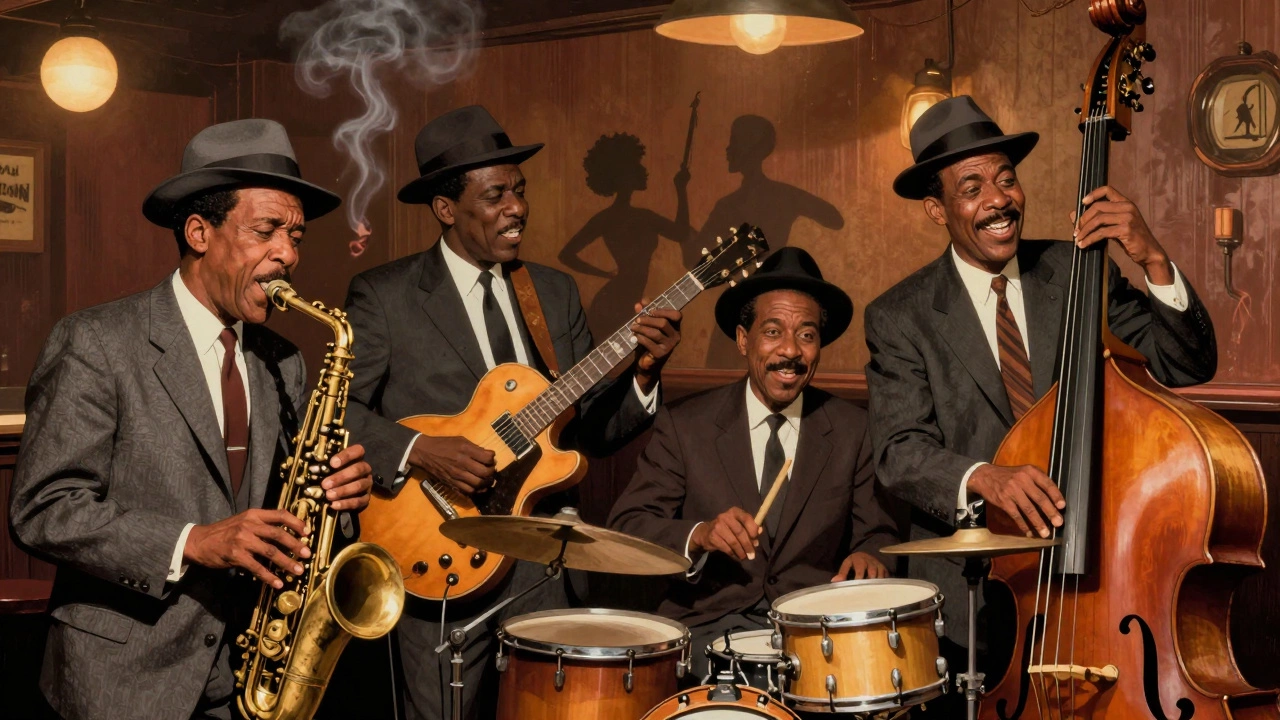

Forget everything you think you know about a "hit song." Usually, we expect a catchy vocal hook, a soaring chorus, or a complex solo. Now imagine a track with no lead singer, no flashy guitar shredding, and barely any lyrics at all. Just four musicians locking into a rhythm so deep it feels like gravity itself has shifted. That is the sound of The Meters, a band that didn't just play music-they built the architectural blueprint for modern funk.
Formed in New Orleans in 1965, this quartet changed how the world dances. They took the street rhythms of funeral processions and Mardi Gras parades and translated them onto drum kits, bass guitars, and electric organs. The result was a stripped-down, syncopated pocket that influenced everyone from James Brown to hip-hop producers decades later. If you’ve ever heard a bassline that makes your head nod involuntarily, you can thank The Meters.
From Bar Band to Blueprint
The story starts not in a fancy studio, but in the smoky bars of New Orleans. Art Neville, Leo Nocentelli, George Porter Jr., and Joseph "Zigaboo" Modeliste started as a working band called The Neville Sounds. They weren't trying to reinvent music; they were trying to get people on the dance floor. But their approach was radically different from the polished R&B coming out of Motown or Stax.
Producer Allen Toussaint saw something special in their raw energy. He signed them to his label, Josie Records, and renamed them The Meters. Between 1968 and 1971, they cut a series of singles that would become legendary. Tracks like "Cissy Strut," "Sophisticated Cissy," and "Look-Ka Py Py" hit the Top 10 on the R&B charts. These weren't pop songs designed for radio airplay; they were instrumental grooves designed for movement. Toussaint understood that their power lay in what they left out-no unnecessary notes, no ego-driven solos. Just pure, unadulterated rhythm.
Anatomy of the Second-Line Pocket
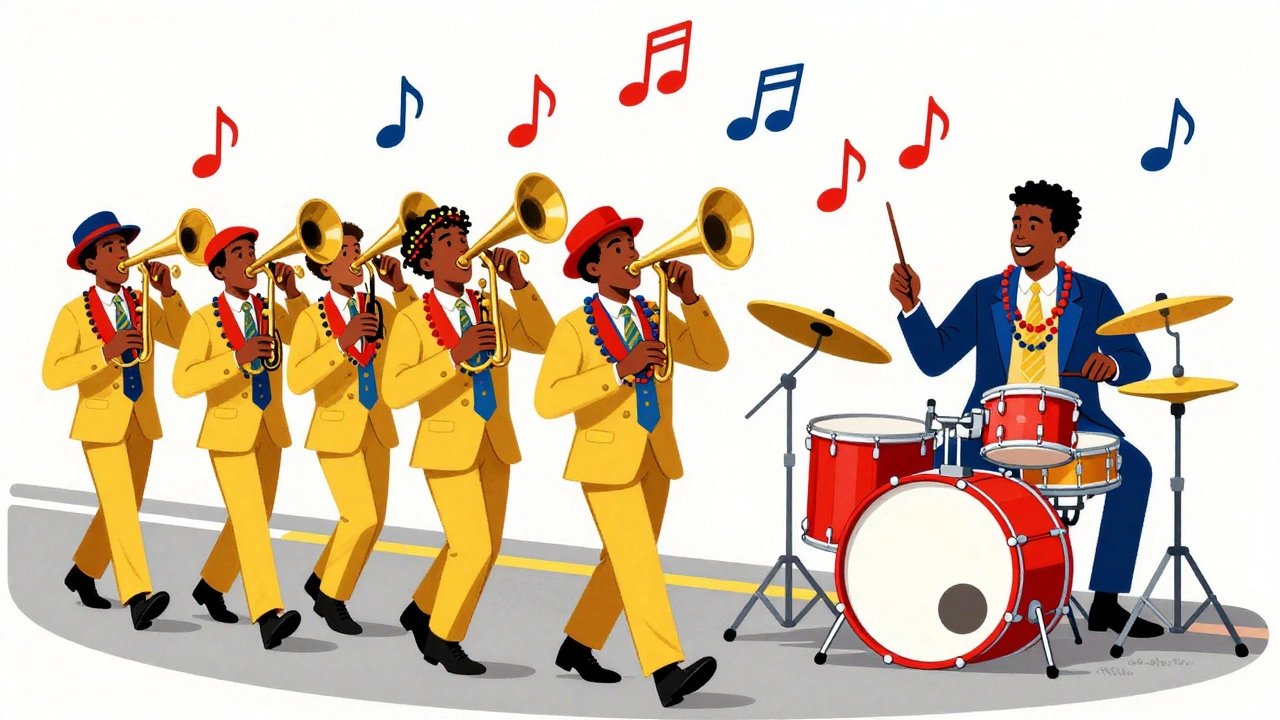
So, what exactly made their sound unique? It wasn't magic; it was geography. New Orleans has a distinct rhythmic tradition known as "second-line" music. This comes from brass bands marching behind caskets at funerals or leading parade floats during Carnival. The rhythm is bouncy, syncopated, and deeply communal.
Zigaboo Modeliste, the drummer, grew up hearing these sounds. He didn't try to copy jazz drumming or rock beats. Instead, he adapted the tambourine and bass-drum patterns of street parades to his kit. He played slightly behind the beat, creating a laid-back feel that pulled listeners forward. This technique, often called "playing in the pocket," became the foundation of New Orleans funk.
- Drums: Modeliste used ghost notes (quiet, muted hits) on the snare to create texture without clutter. His kick drum mirrored the heavy thud of parade bass drums.
- Bass: George Porter Jr. played repetitive, hypnotic motifs. He focused on eighth-note pulses and subtle anticipations, locking tightly with the drums rather than wandering off into melodic excursions.
- Guitar: Leo Nocentelli used clipped chord stabs. He treated his guitar more like a percussion instrument, hitting short, sharp chords that punctuated the groove.
- Keys: Art Neville provided gritty organ lines that filled the harmonic space without overpowering the rhythm section.
This interplay created a "monster groove" that felt both mathematically precise and dangerously loose. It was organic, complex, and impossible to ignore.
The House Band Behind the Hits
While The Meters released their own records, their true influence spread through their work as session musicians. They served as the house band for Allen Toussaint’s Sansu Enterprises. This means they played on countless tracks for other artists, often without credit.
If you listen to Lee Dorsey’s "Soul Man" or Dr. John’s early recordings, you’re hearing The Meters’ DNA. They backed Robert Palmer, Ernie K-Doe, and even Toussaint himself. Their groove became the sonic signature of New Orleans in the late 1960s and early 1970s. By embedding themselves in the local recording ecosystem, they ensured that their rhythmic innovations reached far beyond their own discography.
| Element | Traditional R&B/Funk | The Meters Style |
|---|---|---|
| Vocals | Lead singer prominent, hooks essential | Minimal or absent; instruments are the voice |
| Rhythm Focus | Backbeat driven, steady pulse | Syncopated, second-line bounce, polyrhythmic |
| Solos | Extended improvisation common | Rare; focus on collective groove |
| Production | Polished, layered arrangements | Raw, sparse, "street" feel |
Legacy Beyond the Bayou
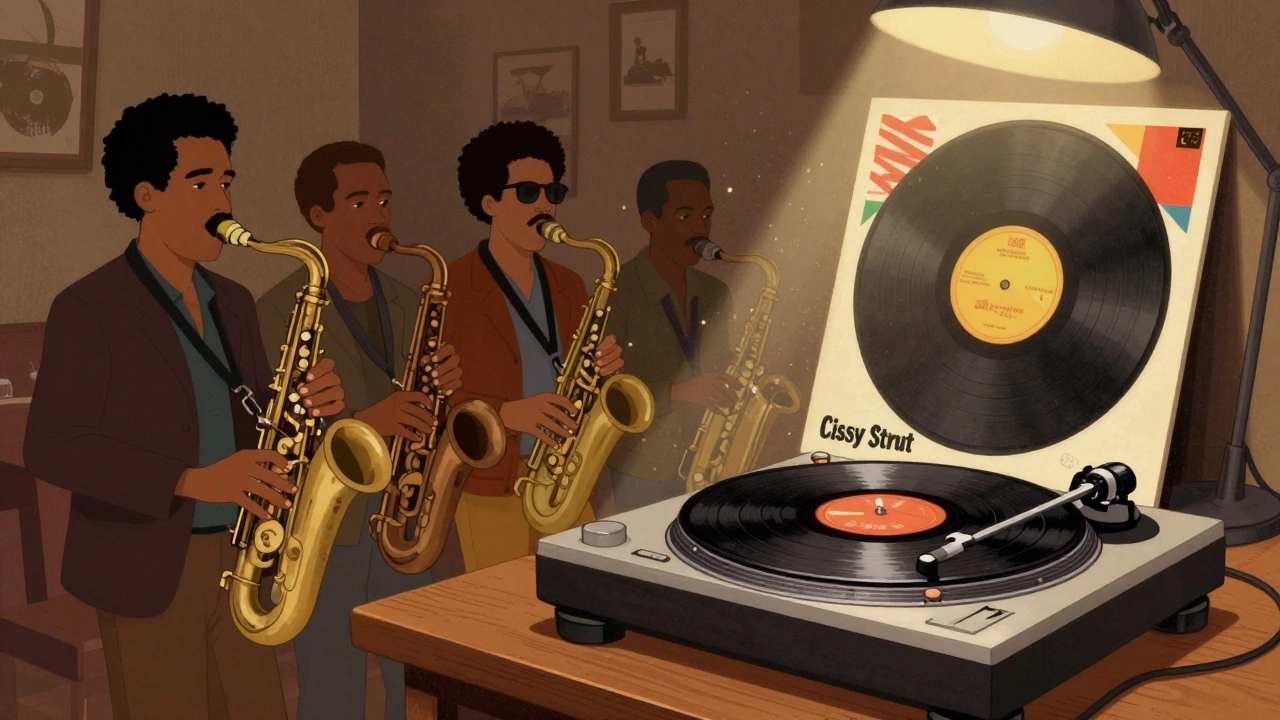
The Meters disbanded in the late 1970s, but their impact never faded. In fact, it grew. As hip-hop emerged in the 1980s, producers began mining old funk records for breakbeats. The Meters’ drum breaks, especially from "Cissy Strut," became gold. The isolated kick and snare pattern offered a perfect template for rapping over.
Their influence also crossed the Atlantic. Jamaican ska and reggae musicians adopted their rhythmic templates, blending Caribbean traditions with American funk. Even Detroit’s Funkadelic cited The Meters as an inspiration. While James Brown brought high-energy precision to funk, The Meters brought a swampy, soulful looseness that expanded the genre’s emotional range.
Today, musicians still study their parts. Drummers spend months trying to replicate Modeliste’s ghost notes. Bassists analyze Porter’s phrasing to understand how less can be more. The Meters proved that you don’t need complexity to be profound-you just need to find the right pocket.
Why It Still Matters
In an era of digital production and quantized beats, The Meters remind us of the human element in music. Their grooves breathe. They swing. They feel alive. When you listen to "Hey Pocky A-Way" or "Fire on the Bayou," you aren't just hearing notes; you're feeling a culture. You're hearing the streets of New Orleans, the heat of the summer, and the joy of community celebration.
They may not have been household names in their prime, but they were infrastructure artists. They built the roads that modern music travels on. And every time you hear a bassline that locks in perfectly with a kick drum, making your body move against your will, The Meters are playing in the background.
Who were the members of The Meters?
The classic lineup consisted of keyboardist/vocalist Art Neville, guitarist Leo Nocentelli, bassist George Porter Jr., and drummer Joseph "Zigaboo" Modeliste. They formed in 1965 and remained together through most of their recording career until the late 1970s.
What is "second-line" music?
Second-line music is a traditional New Orleans style featuring brass bands marching in parades or funerals. The "second line" refers to the crowd following the band, dancing and celebrating. The Meters adapted these rhythmic patterns-characterized by a bouncy, syncopated feel-to their electric instruments.
Did The Meters have any hit songs?
Yes, though they were mostly instrumental. Songs like "Cissy Strut," "Sophisticated Cissy," "Ease Back," and "Look-Ka Py Py" all reached the Top 10 on the U.S. R&B charts in the late 1960s. They are considered funk classics today.
How did The Meters influence hip-hop?
Hip-hop producers extensively sampled The Meters' drum breaks, particularly from "Cissy Strut." The tight, isolated kick-snare patterns provided ideal backing tracks for rappers. Their emphasis on rhythm over melody aligned perfectly with early hip-hop aesthetics.
Are The Meters still active?
The original band reunited under the name "The Original Meters" in the 2000s after a long hiatus. Art Neville passed away in 2019, but the remaining members continued to perform. There is also a related group called "The Funky Meters" that carries on their musical legacy.


