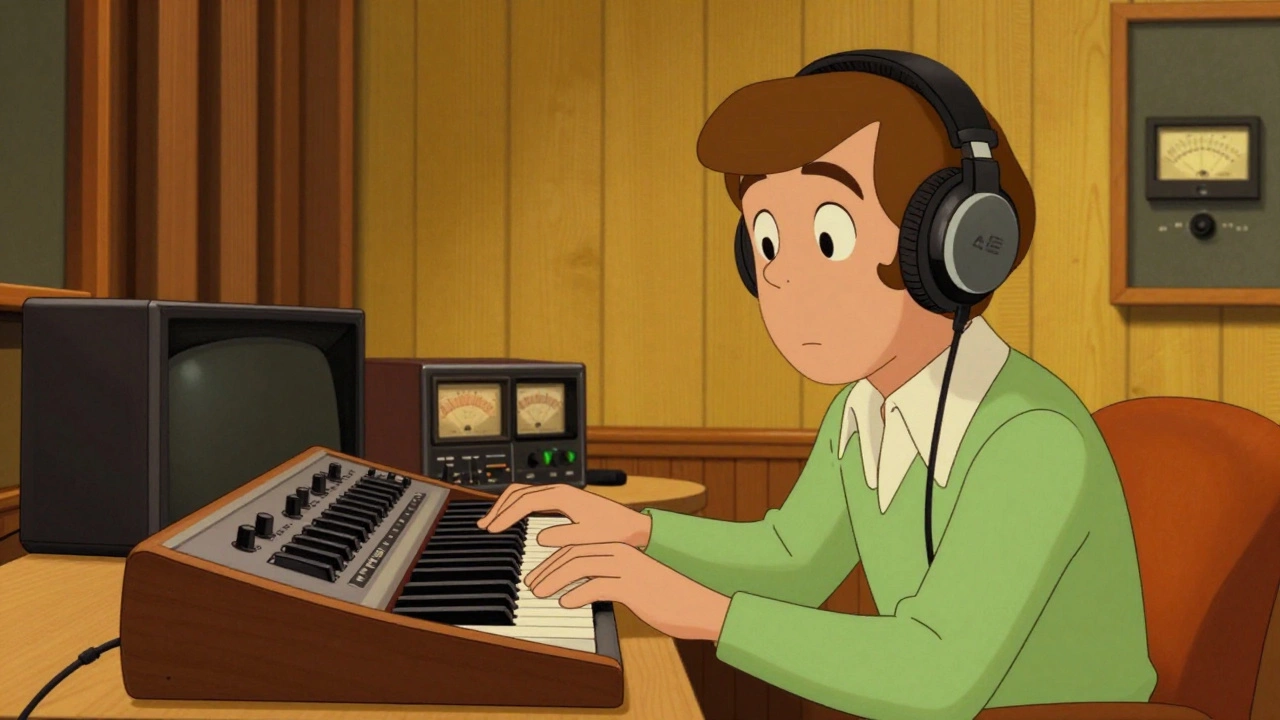

Imagine you're a producer in 1974. You want that sweeping, cinematic orchestral feel on your track, but you don't have the budget to hire a 40-piece string section or the patience to wrestle with a massive, unstable early polyphonic synth that costs as much as a house. This was the exact gap in the market that ARP Solina is a legendary string synthesizer that democratized lush, orchestral textures for musicians across the globe. Also known as the Eminent Solina String Ensemble, it didn't just mimic strings; it created a shimmering, synthetic atmosphere that became the sonic wallpaper of an entire decade.
The Dutch Secret Behind the Sound
While many associate the machine with the American brand ARP, the Solina was actually born in the Netherlands. The Dutch company Eminent created it by stripping the string section out of their 310U Organ. When ARP Instruments saw the potential, they rebranded and distributed it in the US from 1974 to 1981. This wasn't a complex subtractive synthesizer where you tweak oscillators and filters; instead, it used divide-down synthesis is a method of sound generation where a high-frequency master oscillator is divided by integers to create lower notes, allowing for full polyphony without needing a separate oscillator for every key . This allowed the Solina to play full chords effortlessly, a feat that was incredibly rare and expensive at the time.
Decoding the Ensemble Effect
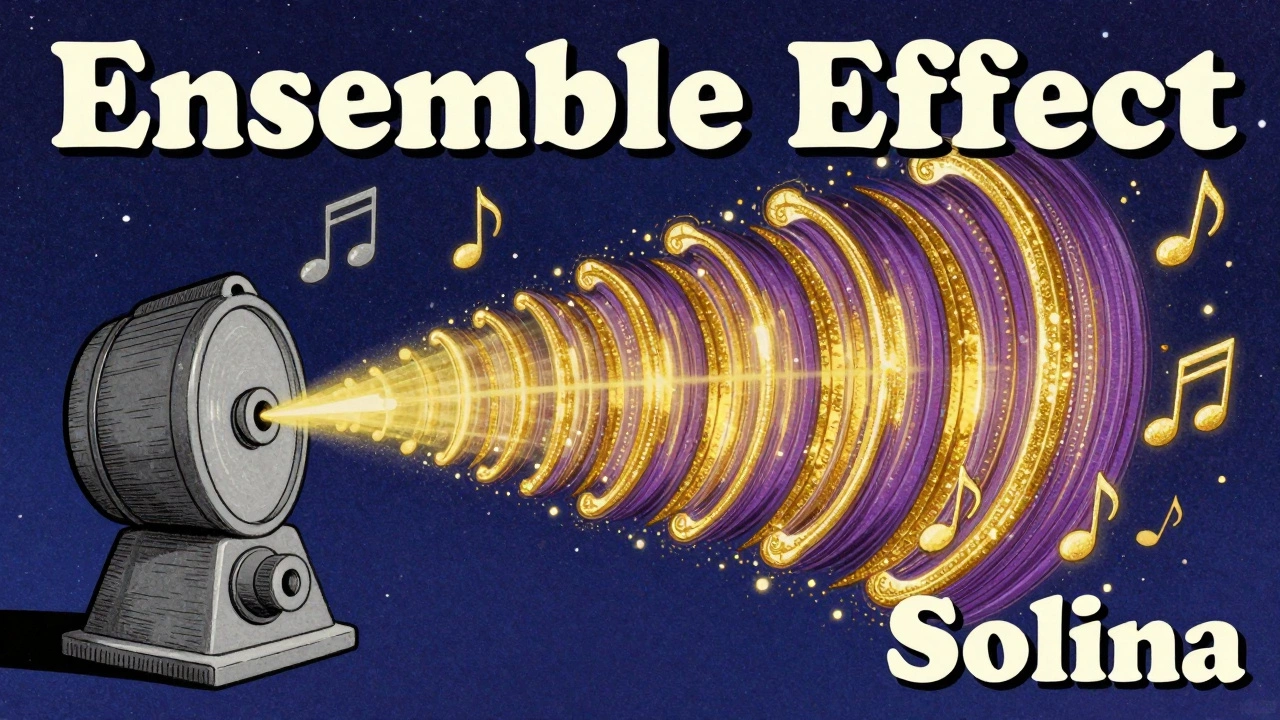
If you play a single note on a Solina with the effects off, it sounds thin-almost like a cheap organ. The magic happens when you engage the ensemble effect. This isn't just a simple chorus; it's a sophisticated analog delay system. The sound passes through three modulated delay lines, creating a phase-shifting movement. This mimics a real orchestra where twenty different violinists aren't playing in perfect, robotic unison, but are slightly off from one another by microseconds.
This creates a "shimmer" that fills the stereo field. It's the difference between a flat line and a 3D sculpture. By using this psychoacoustic trick, the Solina turned basic waveforms into a lush, breathing wall of sound. This specific architecture is why the Solina still sounds distinct from modern digital plugins that try to replicate it.
| Model | Key Addition / Change | Audio Output |
|---|---|---|
| SE-I | Permanent Chorus | Mono |
| SE-II | Chorus On/Off Switch | Mono |
| SE-III | Stereo Imaging | Stereo |
| SE-IV | LED Status Indicators | Stereo |
From Pink Floyd to Disco Floors
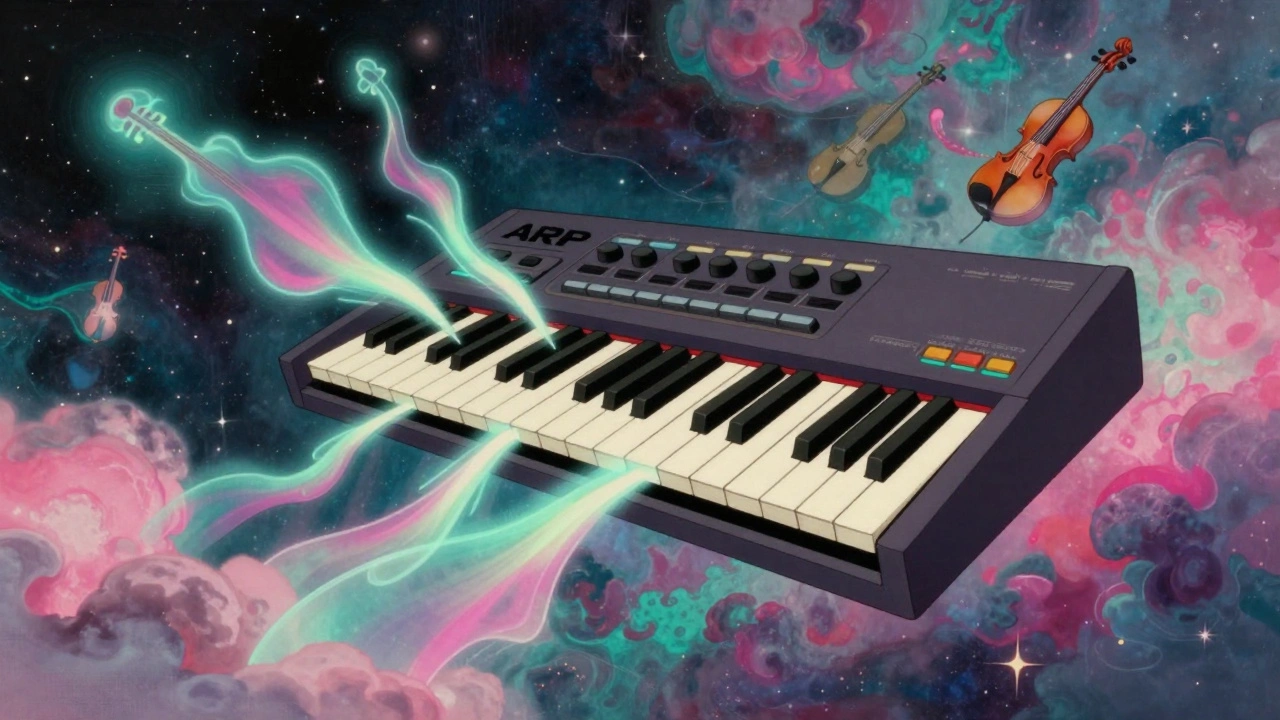
Because it was relatively affordable and easy to use, the Solina ended up everywhere. In the realm of progressive rock, Richard Wright of Pink Floyd used it to craft the atmospheric depth of Wish You Were Here, particularly on "Shine On You Crazy Diamond." It provided a cosmic, otherworldly foundation that a standard piano or organ just couldn't hit. Meanwhile, experimentalists like Tangerine Dream used it to build the "space rock" aesthetic-vast, evolving landscapes of sound that felt like a journey through a nebula.
But the machine wasn't just for art-school rock. It became a staple of the disco and funk era. The Bee Gees utilized those shimmering textures on "Nights on Broadway," and later, Nu Shooz brought that classic Solina vibe to "I Can't Wait." Whether it was the moody depths of Joy Division or the pop sensibilities of Elton John, the Solina provided a level of cinematic polish that made home-studio recordings sound like big-budget productions.
The Tools of the Trade
Operating a Solina is intuitive. You have six primary orchestral sounds to choose from via switches: violin, viola, trumpet, horn, cello, and contrabass. Now, here is a pro tip: the cello and contrabass are monophonic and only work on the bottom 20 keys. If you try to play them high up, you get nothing. However, the other four sounds are fully polyphonic across the whole board.
To shape the sound, you use two main sliders: Crescendo is the attack control that determines how slowly the sound reaches its peak volume and Sustain Length, which controls the decay. By pushing the Crescendo slider up, you get that iconic "swell" where the strings fade in slowly, creating an immediate sense of drama.
Why It Eventually Faded (and Why It's Back)
By the early 80s, the Solina started to feel limited. The arrival of Sequential Circuits Prophet 5 is one of the first fully programmable polyphonic synthesizers, allowing users to save patches and manipulate filters with precision and the Yamaha DX7 brought FM synthesis to the masses. These new machines offered far more flexibility; you could design your own sounds from scratch rather than relying on a set of six preset orchestral voices. The Solina was a "string machine," not a full-blown synthesizer, and as sound design became more complex, the Solina's simplicity became a drawback.
However, that same simplicity is exactly why it's seeing a revival today. Modern producers are tired of "perfect" digital strings that sound sterile. The grit and organic movement of the analog Solina chorus are highly sought after. Companies like Behringer have released hardware clones of the MK II circuitry, and software like the Korg Modwave has integrated these specific 1970s string textures. Even contemporary artists like Francis Cofone continue to use the Solina to evoke that specific vintage space-rock mood.
Is the Solina a true synthesizer?
Technically, it's more of a string machine than a traditional synthesizer. It doesn't have the oscillators, filters, and envelopes you find in a Moog or a Prophet. Instead, it uses divide-down synthesis to create specific orchestral-like tones that you blend together using switches.
What makes the Solina sound different from a modern synth string preset?
The secret is the analog ensemble effect. Most modern synths use digital chorus or simple LFOs to modulate pitch. The Solina uses three analog delay lines that create a complex, shimmering phase shift, which sounds much more "alive" and thick than a standard digital emulation.
Can I get the Solina sound without buying a vintage machine?
Yes. There are several options: hardware clones (like those from Behringer), software emulations in VSTs, or specialized collections like the Korg Modwave, which specifically recreates 70s string machines including the Solina, Roland VP-330, and Elka models.
Which artists are most famous for using the Solina?
Pink Floyd (especially Richard Wright) is the most prominent example, using it for the lush textures on 'Wish You Were Here'. Other heavy users include Tangerine Dream, The Cure, Joy Division, and disco legends like the Bee Gees.
What does 'divide-down synthesis' actually mean?
In a standard synth, if you want to play five notes, you need five oscillators. That's expensive. Divide-down synthesis takes one very high-frequency oscillator and divides that frequency by 2, 4, 8, etc., to create all the notes on the keyboard. This allows for full polyphony-meaning you can play every single key at once without any notes dropping out.