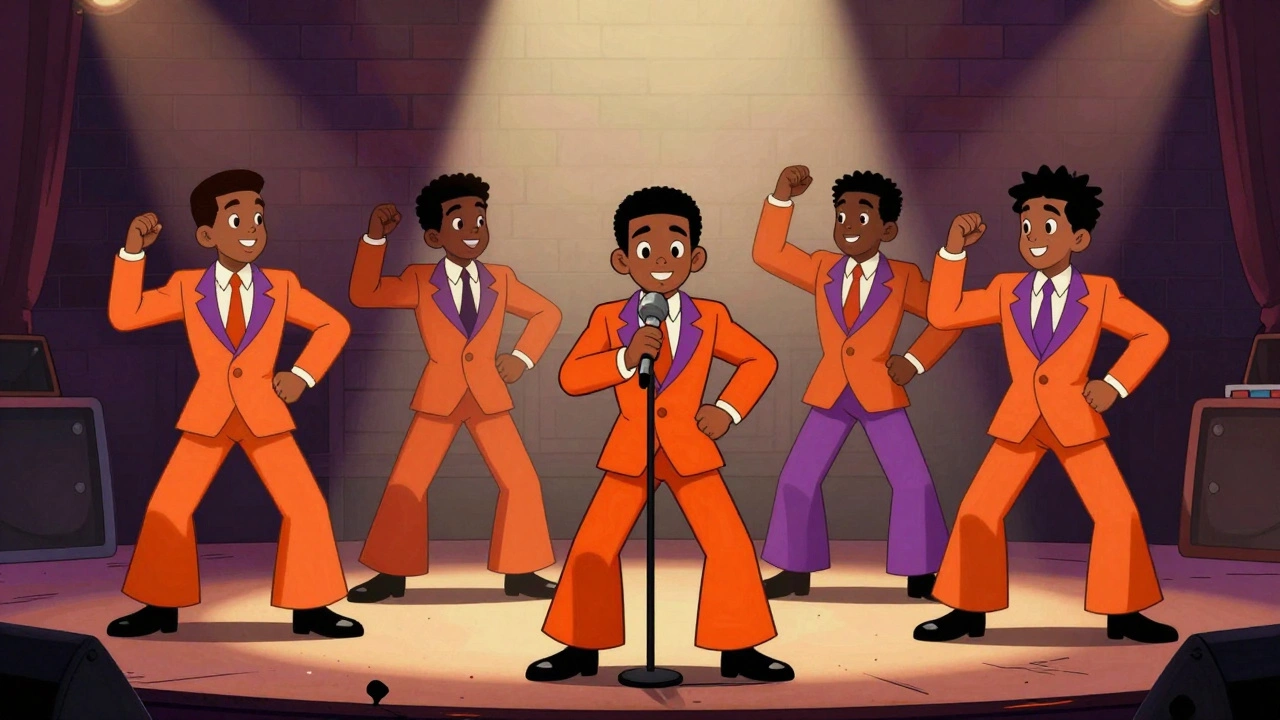

Picture a group of five brothers from Gary, Indiana, stepping onto a stage in matching suits, moving with a precision that seemed impossible for kids their age. One of them is barely eleven years old, yet he commands the room with a voice that sounds like it belongs to a seasoned veteran. This wasn't just a concert; it was the start of a cultural earthquake. The Jackson 5 is an American pop-soul vocal and instrumental group formed by five Jackson brothers who became one of the most energetic and commercially successful acts of the early 1970s. Also known as The Jackson Five, they redefined what a family band could achieve, blending raw soul talent with polished pop production. Their rise wasn't accidental. It was a carefully engineered phenomenon that captured the spirit of a changing America.
From the Steel Mills of Gary to Detroit's Hit Factory
Before the flashing lights and the chart-topping hits, there was hard work. The group started in Gary, Indiana, a city known for its steel mills rather than its music scene. Their father, Joseph (Joe) Jackson, a steel mill worker with big musical dreams, began training his sons in the early 1960s. By 1964, the lineup solidified into the Jackson 5: Jackie, Tito, Jermaine, Marlon, and the youngest, Michael Jackson.
For years, they played local talent shows and club dates across the Midwest. They weren't famous then, but they were building something crucial: stamina and showmanship. Michael, only six or seven years old at the time, quickly emerged as the lead vocalist. His pitch was perfect, his timing sharp, and his stage presence undeniable. But talent alone doesn't break barriers. The breakthrough came in 1968 when Bobby Taylor, a Motown artist, saw them perform and took them to Detroit.
They auditioned for Berry Gordy, the president of Motown Records is a record label founded in Detroit that pioneered the crossover success of African American artists in the pop market. Gordy was impressed almost immediately. He signed them in 1969, marketing them as "presented" by Diana Ross to give them instant credibility. This move positioned the Jackson 5 as Motown’s new flagship act, targeting a youth audience that had been largely ignored by the industry's focus on adult-oriented R&B.
The Anatomy of "Youthful Energy"
What exactly made the Jackson 5 so special? It wasn't just one thing; it was a combination of musical innovation, visual flair, and sheer kinetic energy. Let's break down the components that created this phenomenon.
- Vocal Precision: Michael's high-pitched, emotionally intense lead vocals contrasted with the rich harmonies of his older brothers. This call-and-response texture drew heavily from gospel traditions but was delivered by children, creating a unique sense of innocence mixed with sophistication.
- Choreography: Their dance moves were synchronized, rapid-fire, and physically demanding. Spins, kicks, and coordinated steps required professional-level discipline. For teenagers and a child to execute this flawlessly on national television was mesmerizing.
- Visual Identity: Matching colorful outfits, Afro hairstyles, and bright smiles projected a modern, fashionable image. They looked like the future, appealing to both Black and white audiences during a period of intense social change.
- Lyrical Simplicity: Songs like "ABC" used simple metaphors-love is like learning the alphabet-to make complex emotions accessible to young listeners. This "bubblegum" approach didn't dilute the soul; it packaged it for mass consumption.
This blend created a product that felt genuine yet carefully crafted. The energy wasn't faked; it was channeled. The boys loved performing, and that joy translated through the speakers and screens.
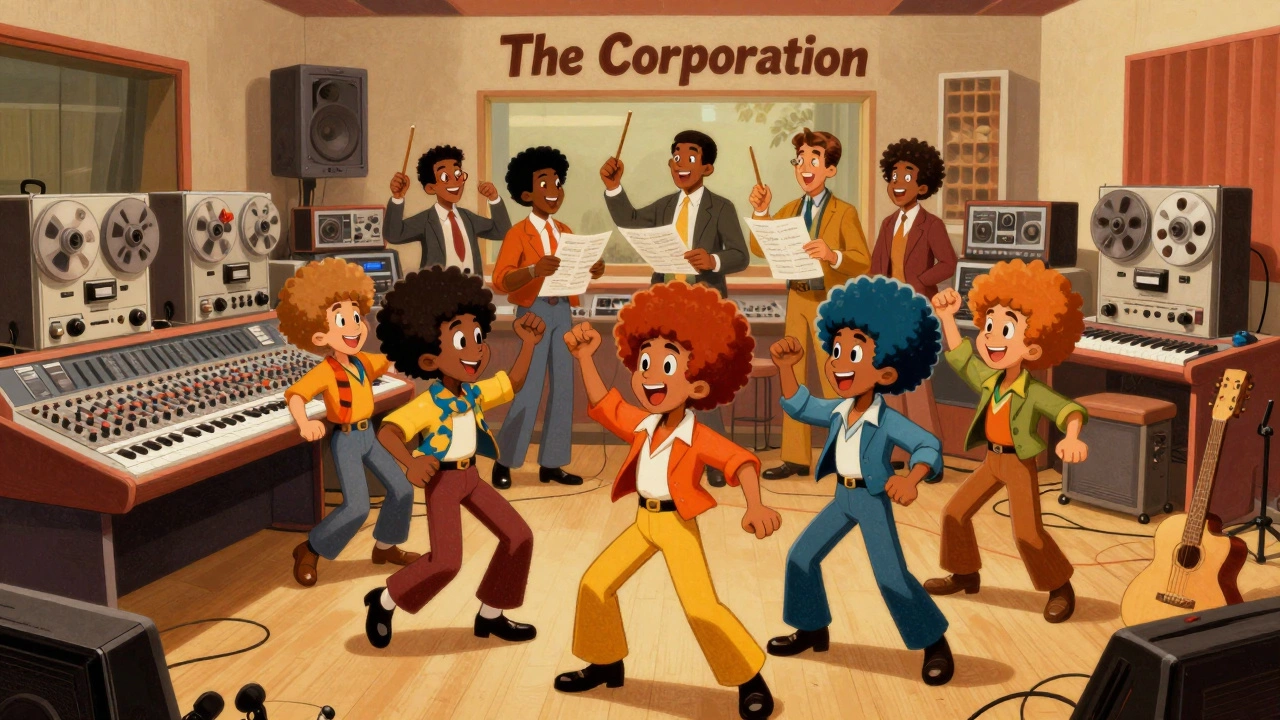
Motown's Machine: The Corporation's Role
You can't talk about the Jackson 5 without talking about The Corporation is a collective of songwriters and producers at Motown, including Berry Gordy, Freddie Perren, Deke Richards, and Fonce Mizell, responsible for crafting many of the label's biggest hits. This team wrote and produced the group's early masterpieces. They understood radio better than anyone. Their arrangements featured driving bass lines, prominent rhythm guitars, and upbeat horns. Every track was designed for maximum dance-floor impact.
Consider the statistics. In roughly 6.5 years with Motown (1969-mid-1975), the group scored 17 singles that reached the R&B Top 10. More impressively, their first four singles-"I Want You Back," "ABC," "The Love You Save," and "I'll Be There"-all hit No. 1 on the Billboard Hot 100. No other group had ever achieved four consecutive No. 1 debuts. This wasn't luck; it was the result of a highly efficient production pipeline where songs were tested, refined, and released with strategic timing.
| Act | Primary Audience | Musical Style | Key Differentiator |
|---|---|---|---|
| The Supremes | Adults | Pop-Soul Ballads | Elegance and vocal harmony |
| The Temptations | Adults/Young Adults | Socially Conscious Soul | Dramatic storytelling and choreography |
| The Jackson 5 | Youth/Children | High-Energy Pop-Soul | Family dynamic and youthful exuberance |
Unlike The Supremes or The Temptations, who appealed to adults with romantic or socially conscious themes, the Jackson 5 targeted kids. This opened up a massive new demographic for Motown. Parents bought the records because they were wholesome; kids bought them because they were cool. It was a win-win strategy that generated enormous revenue.
Media Saturation: Beyond the Music
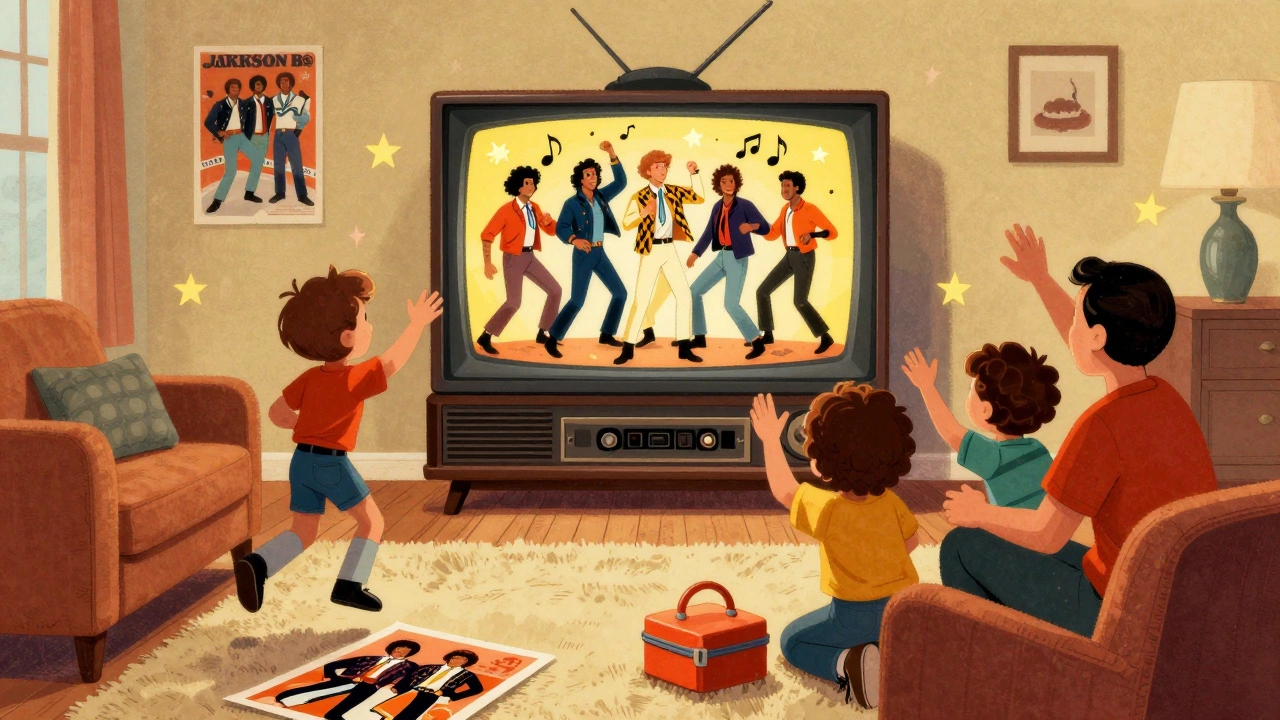
In the 1970s, you couldn't escape the Jackson 5. They appeared on "The Ed Sullivan Show," "Soul Train," and virtually every major variety program. But Motown went further. In 1971, they launched "The Jackson 5ive," a Saturday morning cartoon series. This was groundbreaking. It brought the group into living rooms on weekends, embedding their image in the daily lives of children.
Merchandising followed suit. Posters, lunchboxes, dolls, and comic books turned the brothers into household names. This saturation wasn't just about selling products; it was about building a brand. The Jackson 5 became synonymous with fun, family, and success. For Black families, seeing five Black brothers achieving such mainstream visibility was profoundly significant. It challenged stereotypes and expanded the definition of who could be a pop star.
Creative Tensions and the Move to Epic
Despite the success, cracks began to show. The brothers, now teenagers, wanted more creative control. They felt constrained by Motown's system, which treated them like products rather than artists. Much of their material was written by staff writers, leaving little room for their own input. Michael, in particular, grew frustrated with the "bubblegum" image.
In 1975, the group left Motown for Epic Records, a subsidiary of CBS. Jermaine stayed behind, partly due to his marriage into Berry Gordy's family. The others changed their name to The Jacksons, as Motown retained the trademark. This move marked the end of the youthful era. As The Jacksons, they explored funk and disco, gaining artistic freedom but losing some of the commercial dominance they enjoyed as the Jackson 5.
This transition highlights a common tension in the music industry: the balance between commercial packaging and artistic growth. The Jackson 5's early success was built on a tight leash, but that same leash eventually restricted their evolution. Yet, the foundation they laid remained unshakable.
Lasting Legacy in Modern Music
Today, the Jackson 5's influence is everywhere. Boy bands like New Kids on the Block, Backstreet Boys, and *NSYNC owe their existence to the template the Jacksons set: harmonized vocals, synchronized dancing, and managed images. Even solo superstars draw inspiration from Michael's early performances.
Streaming platforms keep their music alive. Spotify and Apple Music feature curated playlists highlighting their "exuberant and funky pop-soul hits." These tracks remain staples on classic R&B and oldies radio stations. The songs don't sound dated; they sound timeless. Why? Because the energy is authentic. You can hear the joy in "ABC" and the heartbreak in "I'll Be There." That emotional resonance transcends generations.
Moreover, the Jackson 5 paved the way for greater diversity in pop culture. They proved that Black artists could dominate the charts without compromising their identity. They showed that family bonds could be a strength, not a limitation. And they demonstrated that youth, when harnessed correctly, could be a powerful force for change.
Who were the members of the Jackson 5?
The Jackson 5 consisted of five brothers: Jackie Jackson (born May 4, 1951), Tito Jackson (born October 15, 1953), Jermaine Jackson (born December 11, 1954), Marlon Jackson (born March 12, 1957), and Michael Jackson (born August 29, 1958). They were formed in Gary, Indiana, in 1964 under the guidance of their father, Joseph Jackson.
Why did the Jackson 5 leave Motown Records?
The Jackson 5 left Motown in 1975 to gain more creative control over their music and careers. They felt restricted by the label's production style and lack of artistic input. After signing with Epic Records, they renamed themselves The Jacksons, as Motown retained the rights to the "Jackson 5" name.
What was the significance of "The Corporation" in the Jackson 5's success?
The Corporation was a team of Motown songwriters and producers, including Berry Gordy, Freddie Perren, Deke Richards, and Fonce Mizell. They crafted the group's early hits, ensuring each song had a catchy melody, tight arrangement, and broad appeal. Their expertise was crucial in translating the boys' raw talent into chart-topping records.
How did the Jackson 5 influence later boy bands?
The Jackson 5 established the blueprint for modern boy bands. Their combination of synchronized choreography, harmonized vocals, matching outfits, and heavy media promotion became the standard for groups like New Kids on the Block, Backstreet Boys, and *NSYNC. They proved that youth-oriented pop could be both commercially viable and culturally impactful.
What are the Jackson 5's biggest hits?
Their biggest hits include "I Want You Back," "ABC," "The Love You Save," and "I'll Be There." All four of these singles reached No. 1 on the Billboard Hot 100, making the Jackson 5 the first group to achieve four consecutive No. 1 debuts. Other notable tracks include "Mama's Pearl" and "Never Can Say Goodbye."


