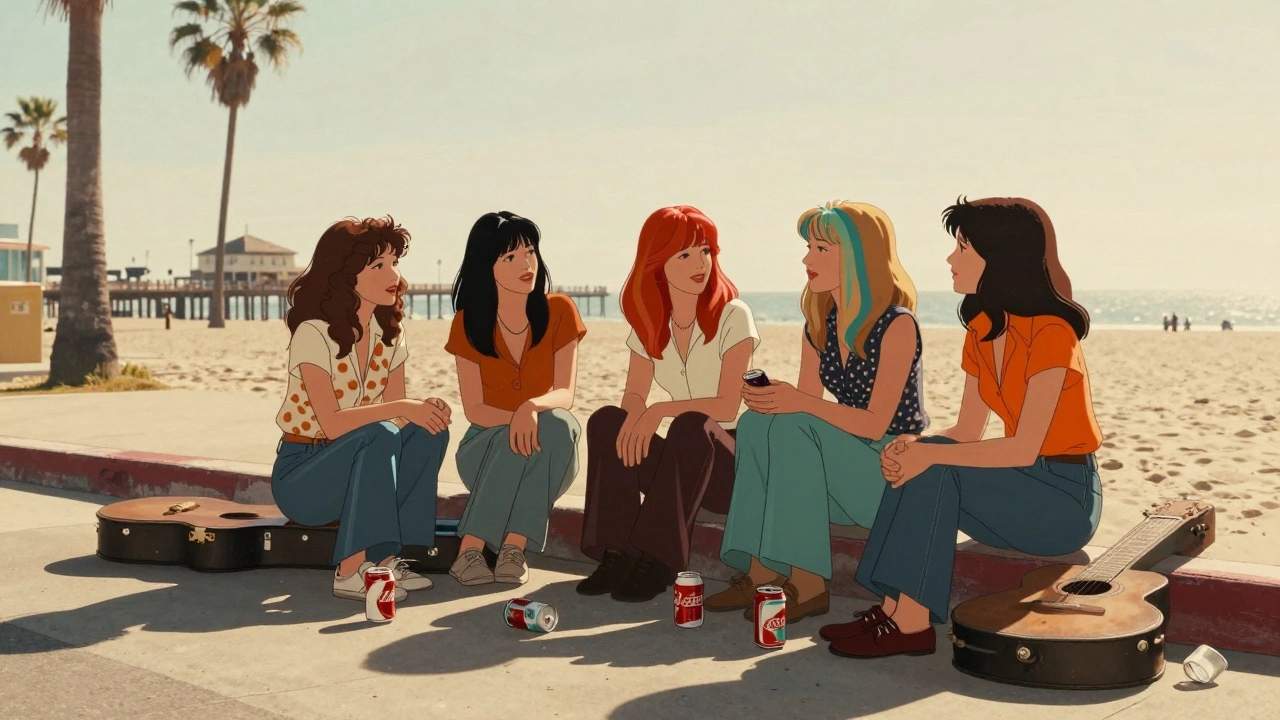

Picture this: five women sitting on a curb in Venice, California, surrounded by garbage bags used as dresses and streaked with bright hair dye. They were bored, hungry, and decided right then to start a band. That moment in 1978 sparked one of the biggest surprises in rock history. By 1981, that small idea had exploded into the most dominant sound on radio waves worldwide.
This wasn't just another pop group. They were The Go-Go's an all-female rock and pop band that emerged from the Los Angeles punk and new wave scene in the late 1970s. Also known as The Go Goes, they proved you didn't need male producers or session musicians to top the charts. They wrote every note themselves.
From Punk Curbs to Chart Toppers
Before they conquered the world, they were part of the gritty underground. The story starts in 1978 when Belinda Carlisle, Jane Wiedlin, and Margot Olaverra met in Venice. They wanted to play loud, fast music. They initially called themselves The Misfits, sharing a stage with local acts like X and The Germs. These were raw, rebellious days in clubs like Bingenheimer's English Disco. Rodney Bingenheimer ran the place, and it was essential for anyone wanting to be heard in the Southern California new wave scene back then.
They didn't fit into any box immediately. The original lineup was fluid. Drummer Elissa Bello was replaced by Gina Schock in 1979, which changed the rhythm section forever. Bassist Margot Olaverra got sick and left, paving the way for Kathy Valentine to join later. Charlotte Caffey rounded out the guitar duties. This shuffle stabilized just before they hit their stride. They weren't trying to be pretty; they wanted to be dangerous.
By late 1980, things shifted from club gigs to international tours. They spent six months touring England, playing alongside British ska revivalists like Madness. That UK trip was crucial. They recorded "We Got the Beat" there with Stiff Records. When that single leaked back to the U.S., it became an underground club anthem. Suddenly, American radio stations couldn't ignore them.
The Breakout Year: 1981
Early 1981 marked the turning point. They signed with IRS Records, a label famous for championing new wave artists. Their debut album, Beauty and the Beat, dropped in the summer. Nobody expected much. The industry was skeptical that an all-female band could handle real instruments and writing credits without male backing.
Then came the explosion. The album hit number one on the charts. It stayed there for six weeks. Sales surpassed two million copies. This wasn't luck; it was talent amplified by timing. MTV launched just as their music videos started dropping. Clips for "Our Lips Are Sealed" and "We Got the Beat" played on repeat. You couldn't turn on a TV set without seeing them smiling, playing guitars, and owning the screen.
"Our Lips Are Sealed" reached number 20, setting the stage. "We Got the Beat" climbed to number two. These songs sounded sunny but had bite. The melodies were catchy enough for the mainstream, but the energy kept the punk purists happy. It was a perfect storm of accessibility and edge.
Albums That Defined an Era
After the massive success of their debut, maintaining momentum became harder. Here is how their major studio efforts stacked up over the first few years:
| Year | Album Title | Key Singles | Chart Position |
|---|---|---|---|
| 1981 | Beauty and the Beat | We Got the Beat | #1 US Billboard |
| 1982 | Vacation | Vacation | #3 US Billboard |
| 1984 | Talk Show | Head Over Heels | #20 US Billboard |
Their second album, Vacation (1982), continued the fun vibe. The title track shot to the top ten. But the follow-up effort showed cracks. The third record, Talk Show (1984), tried something different. They moved toward jazz influences and slower tempos. While "Turn to You" remained a hit, the audience didn't quite buy into the shift. Fans wanted the anthems they loved before. Similar bands like Blondie faced the same pressure to stick to the formula.
Cultural Impact Beyond the Charts
Why does this matter decades later? Think about the landscape of the early 1980s. Bands were mostly men. If women sang, they often relied on male producers or backing tracks. The Go-Go's refused that dynamic. They sang, they played, and they wrote. This sent a message to a generation of girls: you can hold the microphone yourself.
Beyond the records, they became celebrities. They landed magazine covers. They guest-starred on TV shows. They offered movie roles that usually went to established stars. In that brief window, they were everywhere. Their presence challenged the male-dominated structure of the recording industry directly. They weren't asking for permission; they were taking space.
Even after the commercial peak passed, the foundation remained solid. They helped pioneer the punk-pop genre. Their legacy influenced countless subsequent bands who cited them as inspirations for breaking gender barriers. They represented a punk version of the American Dream: working hard, starting small, and conquering the airwaves through sheer skill.
Lasting Legacy of Sisterhood
Most bands burn out quickly after hitting gold. The Go-Go's faced internal tensions and personal struggles common in high-pressure environments. Yet, they maintained their sisterhood over multiple decades. They reunited for performances years later, proving the bond went deeper than contracts. Their journey from the Venice curb to international stardom remains a unique case study in music business history.
Their achievement was specific. They balanced the grit of punk origins with the polish of stadium pop. Few bands managed that walk across the tightrope without losing their identity. The fact that they did so without compromising on who played the instruments made their success undeniable.
Frequently Asked Questions
Did The Go-Go's write their own songs?
Yes, they wrote all of their own material. Unlike many pop acts of the time, they did not rely on outside composers or session players.
Who were the core members of the band?
During their peak success, the lineup included Belinda Carlisle (vocals), Jane Wiedlin (guitar/vocals), Charlotte Caffey (lead guitar/keyboards), Gina Schock (drums), and Kathy Valentine (bass).
What was their biggest hit song?
"We Got the Beat" is often considered their signature song, reaching number two on the charts and defining their sound globally.
When did the band form?
They originated in 1978 in Venice, California, evolving from previous projects involving Belinda Carlisle and Jane Wiedlin.
How did MTV influence their success?
MTV gave them heavy rotation for their music videos, significantly boosting their popularity just as the network launched in the early 80s.


