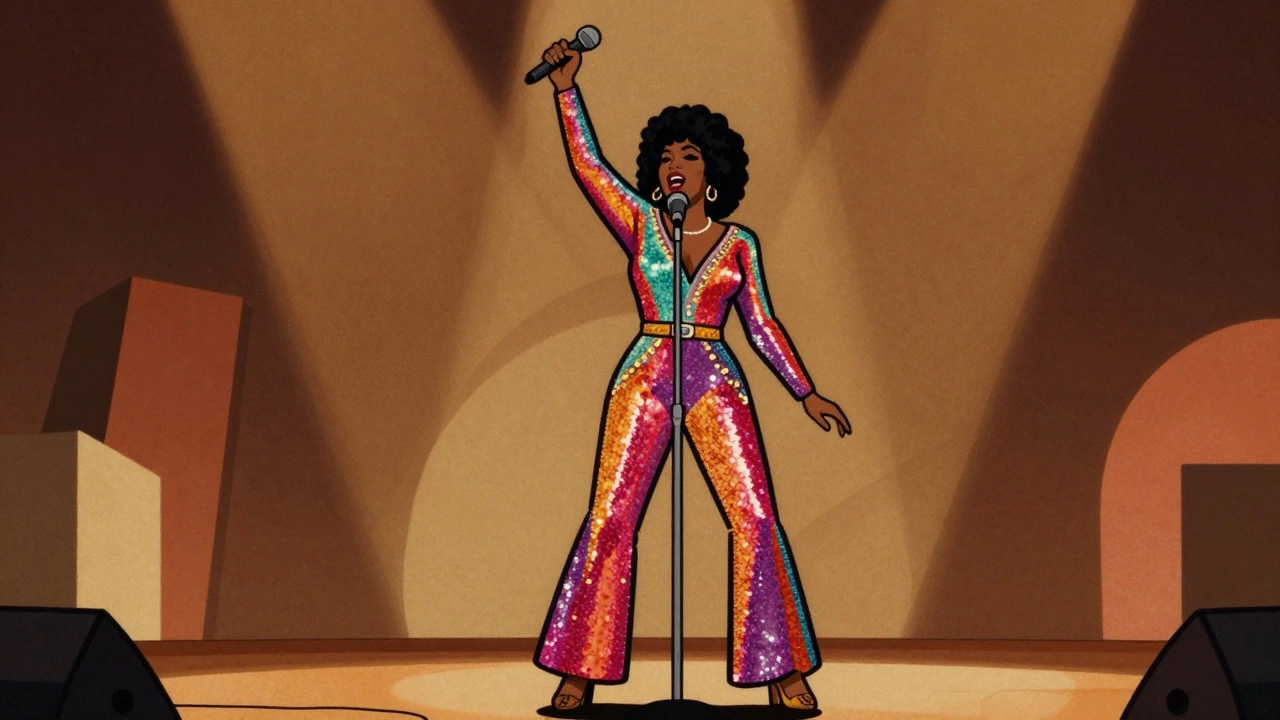

There is a specific sound that defines the 1970s. It’s gritty, emotional, and undeniably powerful. While rock bands dominated headlines, it was the female vocalists in Soul, a genre rooted in African American musical traditions blending gospel, blues, and R&B who truly captured the spirit of the era. These women didn't just sing songs; they delivered manifestos on love, independence, and survival. If you listen closely to any classic track from this decade, you will hear a shift. The polished pop of the 60s gave way to something rawer, funkier, and more personal.
We often remember the male giants of the era, but the female voices were the backbone of the industry. From the church steeples of the South to the discotheques of New York, these artists reshaped music history. They brought technical mastery to their craft while maintaining an unshakeable authenticity. This isn't just about nostalgia. Understanding these artists helps us see where modern R&B and pop come from. Today, let's look at the women who held the microphone and changed everything.
The Queen Who Set the Standard
You cannot talk about 70s soul without starting with Aretha Franklin, known as the Queen of Soul, an American singer whose powerful voice and commanding stage presence defined the genre. By the 1970s, she was already a legend, but this decade saw her cement her status as an untouchable icon. Her voice wasn't just loud; it was precise. She could hit a note that made your chest vibrate, then drop into a whisper that felt like a secret.
Franklin’s work in the 70s was diverse. She tackled upbeat tracks like "Rock Steady" and deeply emotional ballads. Songs like "Ain't No Way" showed her ability to convey heartbreak with devastating clarity. But it was her earlier hits, still dominating radio waves, that set the tone for empowerment. "Respect" wasn't just a song; it was a demand. Franklin proved that a woman could be vulnerable and dominant simultaneously. Her influence is visible in every powerhouse vocalist since, from Whitney Houston to Beyoncé. She taught the world that technique matters less than truth.
The Solo Superstars: Ross, Knight, and LaBelle
While Aretha ruled the charts, other women were breaking out of group dynamics to claim their own space. Diana Ross, former lead singer of The Supremes who launched a massively successful solo career in the 1970s transitioned from Motown star to global superstar. Her solo debut in the 70s was a masterclass in reinvention. Tracks like "Ain't No Mountain High Enough" showcased her agility, while "Love Hangover" demonstrated her dramatic flair. Ross wasn't just singing; she was performing opera for the masses. She brought glamour to soul music, proving that style and substance could coexist.
Then there was Gladys Knight, lead vocalist of Gladys Knight & the Pips, known for her expressive storytelling and smooth vocal delivery. With her group, The Pips, she released some of the most poignant stories in music history. "Midnight Train to Georgia" remains a masterpiece of narrative songwriting. Knight’s voice carried a warmth that felt like home. She didn't need pyrotechnics; her emotion did the heavy lifting. Similarly, Patti LaBelle, vocalist for Labelle and later a solo artist, known for her incredible range and energetic performances was pushing boundaries. With Labelle, she released "Lady Marmalade," a track that bridged soul, jazz, and disco. LaBelle’s raw power hinted at the rock-infused soul that would follow in the 80s.
The Smooth Operators: Flack, Phillips, and Shaw
Not all soul was high-energy. Some of the most impactful music of the 70s was quiet, intimate, and sophisticated. Roberta Flack, Grammy-winning artist known for her soft, nuanced vocal style and crossover appeal was the queen of this subgenre. Her rendition of "Killing Me Softly" is perhaps the most famous example of soul meeting pop perfection. Flack’s approach was delicate. She used silence as much as sound to create tension. This sophistication helped bring jazz audiences into the R&B fold. She proved that soul music could be complex and intellectual without losing its emotional core.
Esther Phillips, singer known for her passionate interpretations and unique phrasing in jazz and R&B offered another dimension. Her version of "Release Me" is haunting. Phillips had a voice that sounded like it was crying even when she was smiling. She navigated the line between jazz standards and R&B hits with ease. Meanwhile, Marlena Shaw, artist known for blending jazz, soul, and African influences with a powerful, distinctive voice brought a worldly perspective. Songs like "California Soul" and "Woman of the Ghetto" showed a deeper connection to social issues. Shaw’s work was less about radio play and more about artistic statement. She represented the intellectual side of soul, influencing listeners who wanted depth over dance beats.
Funk, Disco, and the New Wave
As the decade progressed, soul merged with funk and disco. This shift required new kinds of vocalists-ones who could command a dance floor. Gwen Dickey, lead singer of Rose Royce, known for her soulful voice and charismatic stage presence rose to fame with Rose Royce. Hits like "Car Wash" became anthems. Dickey’s voice was rich and grounded, providing the perfect anchor for the band’s intricate arrangements. She showed how soul could adapt to the electronic sounds of the late 70s without losing its humanity.
Then there was Chaka Khan, lead singer of Rufus and a solo star, known for her powerful vocals and innovative approach to R&B. With Rufus, she delivered "Tell Me Something Good" and "Sweet Thing." Khan had a voice that could soar above any instrumentation. She was the bridge between traditional soul and the funk-rock fusion that would define the next decade. Her energy was infectious, and her talent was undeniable. Even Jean Knight, R&B singer best known for her one-hit wonder 'Mr. Big Stuff' made a mark. Despite being labeled a one-hit-wonder, Knight’s performance on "Mr. Big Stuff" was culturally significant. It was bold, sexual, and unapologetic. It broke taboos and paved the way for more liberated expressions in R&B.
Legacy and Influence
Why do these voices still matter? Because they established the blueprint for female autonomy in music. In the 1970s, these women controlled their narratives. They sang about divorce, desire, and dignity. Artists like Betty Wright, soul singer known for tracks like 'Clean Up Woman' and 'Girls Can't Do What the Guys Do' addressed gender inequality directly. Her song "Girls Can't Do What the Guys Do" was a critique of double standards that resonated deeply. Wright may not have had the same commercial longevity as Ross or Franklin, but her impact on the culture was profound.
Even those who emerged late in the decade, like Angela Bofill, late-70s R&B singer known for her mellow, romantic style, carried the torch forward. Bofill’s smooth style influenced the neo-soul movement of the 90s. And let’s not forget Sylvia Robinson, musician and producer known as the 'Mother of Hip-Hop' for her role in launching early rap artists. While primarily a producer, her early singing career connected the dots between soul and the emerging hip-hop scene. She showed that soul wasn't a dead end; it was a foundation.
These artists didn't just fill airtime. They filled a void. They gave voice to experiences that were often ignored. Their recordings remain timeless because they are honest. When you listen to "Neither One of Us" by Gladys Knight or "Right Back Where We Started From" by Maxine Nightingale, British soul singer known for her smooth voice and crossover hits, you aren't just hearing music. You're hearing history. You're hearing the struggle and the triumph of women who refused to be silent.
| Artist | Signature Style | Key Hit(s) | Cultural Impact |
|---|---|---|---|
| Aretha Franklin | Powerhouse Gospel-Influenced Soul | "Rock Steady", "Ain't No Way" | Defined female empowerment in music |
| Diana Ross | Glamorous Pop-Soul | "Love Hangover" | Brought soul to mainstream global pop |
| Gladys Knight | Narrative Balladry | "Midnight Train to Georgia" | Mastered emotional storytelling |
| Roberta Flack | Jazz-Soul Fusion | "Killing Me Softly" | Bridged jazz and R&B audiences |
| Patti LaBelle | Virtuosic Rock-Soul | "Lady Marmalade" (with Labelle) | Paved way for rock-infused R&B |
| Chaka Khan | Funk-Rock Soul | "Tell Me Something Good" (with Rufus) | Connected soul to funk and rock |
Listening Guide: Where to Start
If you want to dive into this era, don't just stream random playlists. Build your own journey. Start with Aretha Franklin’s "Sparkle Live" album to see her live power. Then move to Roberta Flack’s "First Take" for intimacy. Switch to Chaka Khan with Rufus for energy. End with Gladys Knight’s "Imagination" for pure drama. Notice how each artist uses their voice differently. Franklin uses it as a weapon. Flack uses it as a brush. Ross uses it as a spotlight. Recognizing these differences will deepen your appreciation for the genre.
The 1970s were a golden age for female vocalists. They weren't supported by autotune or digital editing. What you hear is real breath, real strain, and real joy. That authenticity is why we still listen. These women didn't just sing the soundtrack of the 70s; they wrote the script for the future of music.
Who was the most influential female soul singer of the 1970s?
While many artists were influential, Aretha Franklin is widely considered the most impactful. Her title "Queen of Soul" was earned through her technical mastery, emotional depth, and cultural resonance. She set the standard for vocal power and female empowerment in music that subsequent generations still emulate.
What distinguishes 1970s soul from 1960s Motown?
1960s Motown was often more polished, structured, and aimed at crossover pop appeal. 1970s soul was grittier, more experimental, and incorporated elements of funk, jazz, and disco. Vocals became more raw and emotionally direct, reflecting the social changes of the decade.
Did female soul singers face challenges in the 1970s industry?
Yes. Despite their success, women often had less control over production and publishing rights than men. Many fought for creative autonomy. Artists like Sylvia Robinson later became producers to gain more power, highlighting the systemic barriers women faced in the music business.
How did disco affect soul music in the 1970s?
Disco introduced a four-on-the-beat rhythm and synthesizers to soul. Vocalists like Gwen Dickey and Chaka Khan adapted by incorporating funkier, dance-oriented styles. This fusion expanded the audience for soul music but also led to debates about commercialization versus authenticity.
Which 1970s soul albums should I listen to first?
Start with Aretha Franklin’s "Spirit in the Dark" (though late 60s, it defines her 70s style), Diana Ross’s "Diana Ross", Gladys Knight & the Pips’ "Imagination", and Roberta Flack’s "Killing Me Softly". These albums showcase the diversity and quality of the era.


