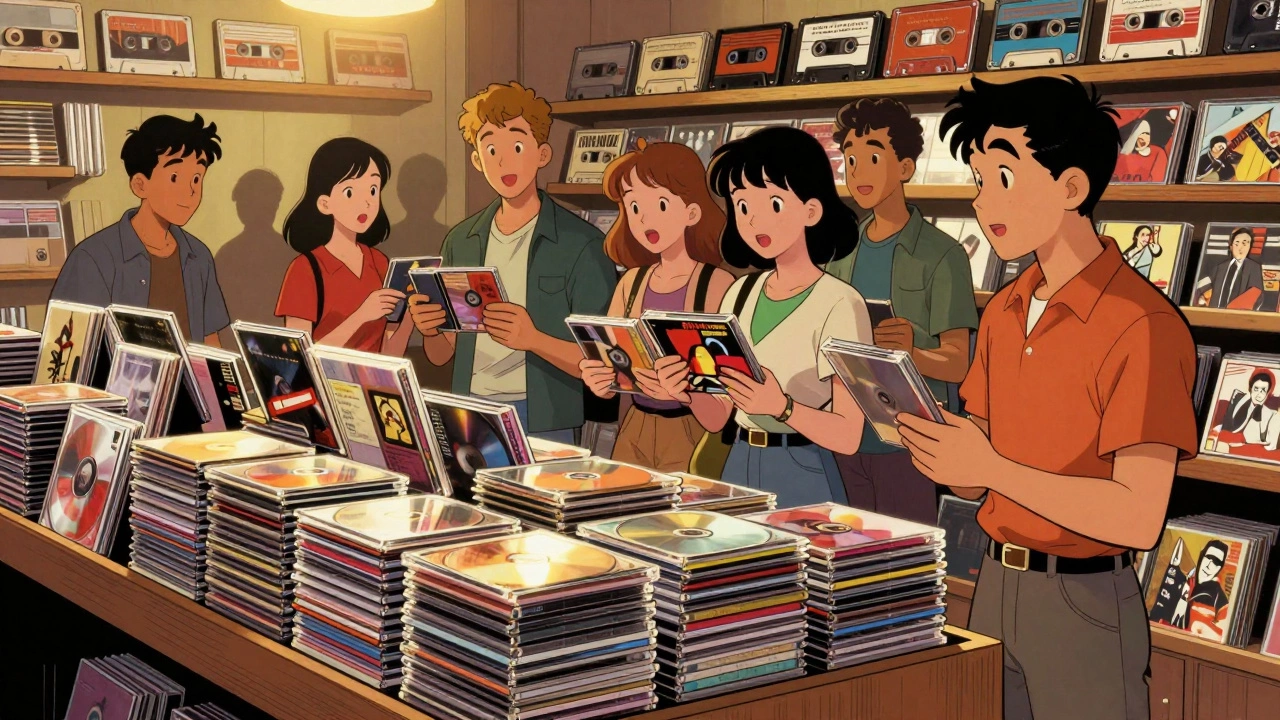

Think back to the last time a song was everywhere. Not just on your phone or in a TikTok trend, but plastered on every billboard, played on every radio station, and featured in commercials for soda, jeans, and fast food. That was the reality of the 1990s. If you were alive then, you couldn't escape the mega hits. But those songs didn't just happen by accident. They were manufactured through some of the most aggressive, coordinated, and expensive marketing campaigns in history.
The 1990s music industry wasn't just about talent; it was a high-stakes business war fought over compact discs, television screens, and airwaves. Labels spent millions to turn artists into global brands. To understand how tracks like "Smells Like Teen Spirit" or "Wannabe" became cultural phenomena, we have to look past the lyrics and into the boardrooms where the real magic-and manipulation-happened.
The CD Boom: Selling Albums, Not Singles
The foundation of 1990s music marketing was physical media. Specifically, the compact disc. Before the digital streaming era, if you wanted to hear a hit single, you usually had to buy the whole album. This model was incredibly profitable for record labels. In 1990, CD album revenue in the United States was roughly US$3.45 billion, nearly matching cassettes. By the end of the decade, CDs had completely dominated the market, with peak annual sales reaching approximately 942.5 million units around 2000.
| Year | CD Revenue | Cassette Revenue | Dominant Format |
|---|---|---|---|
| 1990 | $3.45 Billion | $3.47 Billion | Tied |
| 1995 | $6+ Billion | $1.5 Billion | CD |
| 2000 | Peak Sales | Negligible | CD |
This shift changed everything. Marketing budgets were no longer focused on getting a single onto the radio; they were designed to drive consumers into stores to spend $15 to $20 on a full-length album. Every video, every interview, and every poster was a funnel leading to that purchase. The goal wasn't just fame; it was moving physical inventory at scale.
SoundScan: The Data Revolution
Before 1991, record charts were basically guesses. Store managers would call in estimates of what they thought they sold. This system heavily favored pop and adult contemporary acts while undercounting genres like hip-hop, country, and hard rock. Then came Billboard adopting Nielsen SoundScan’s barcode-based tracking system on May 25, 1991.
Suddenly, data was king. When the numbers came in, everyone was shocked. Artists like Garth Brooks and Pearl Jam were outselling established pop stars. Labels realized their old assumptions were wrong. They started redirecting massive promotional budgets toward these newly visible blockbusters. SoundScan also revamped the Hot 100 singles chart, combining actual sales with radio airplay. This forced labels to invest heavily in both retail push and radio promotion to keep a song climbing the charts. It turned hit-making into a science based on real-time feedback rather than intuition.
MTV: The Visual Billboard
If radio was the ears of the 1990s, MTV was its eyes. Launched in 1981, the channel had evolved by the early '90s into a mandatory advertising platform. Producing a music video cost hundreds of thousands of dollars, but it was non-negotiable for major label releases. By 1991, roughly 80 percent of the top singles on the Billboard Hot 100 had accompanying videos.
MTV didn't just play videos; it curated them. Programs like "Buzz Clips" actively promoted selected videos to break new artists. Remember when Oasis released "D’You Know What I Mean?"? MTV built anticipation for weeks before the premiere, then flooded the schedule with repeats. This strategy turned song releases into events. For alternative rock acts like Nirvana, MTV was the bridge from underground college radio to mainstream dominance. When "Smells Like Teen Spirit" moved from late-night slots to daytime rotation, it signaled to the entire industry that grunge was the new pop.
Radio Payola and Consolidation
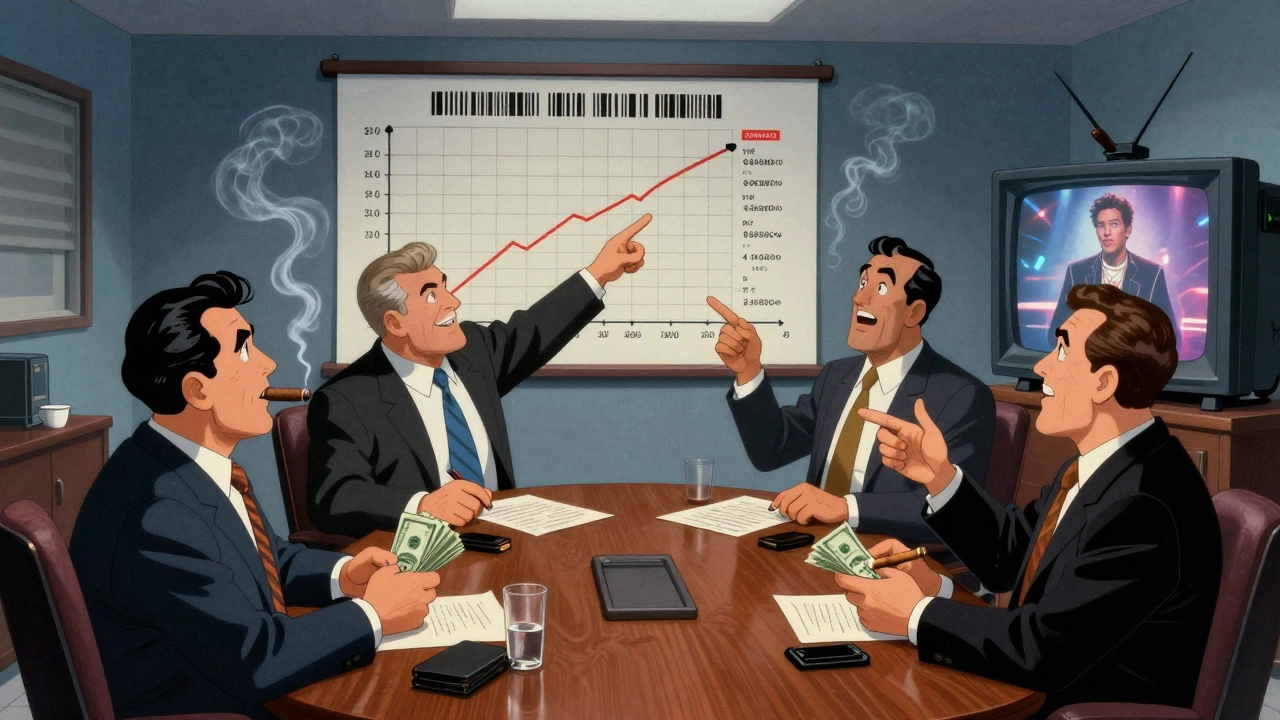
While MTV handled visuals, radio handled repetition. However, getting airplay wasn't free. The industry relied on a quasi-legal system known as payola. Independent radio promoters would spend around US$25,000 per song to launch a record nationally. Smaller independent labels simply couldn't afford this, locking them out of prime time.
The game changed further after the 1996 Telecommunications Act relaxed ownership caps. Conglomerates like Clear Channel Communications (now iHeartMedia) bought up hundreds of stations, creating near-monopolies. This consolidation meant that playlist decisions were centralized. A deal struck with one corporate office could get a song playing across an entire region simultaneously. Radio advertising revenue more than doubled from US$8.4 billion in 1990 to over US$17 billion by 2000, incentivizing these giants to sell standardized national promotional packages to labels seeking chart domination.
Grassroots Grit: Street Teams and College Tours
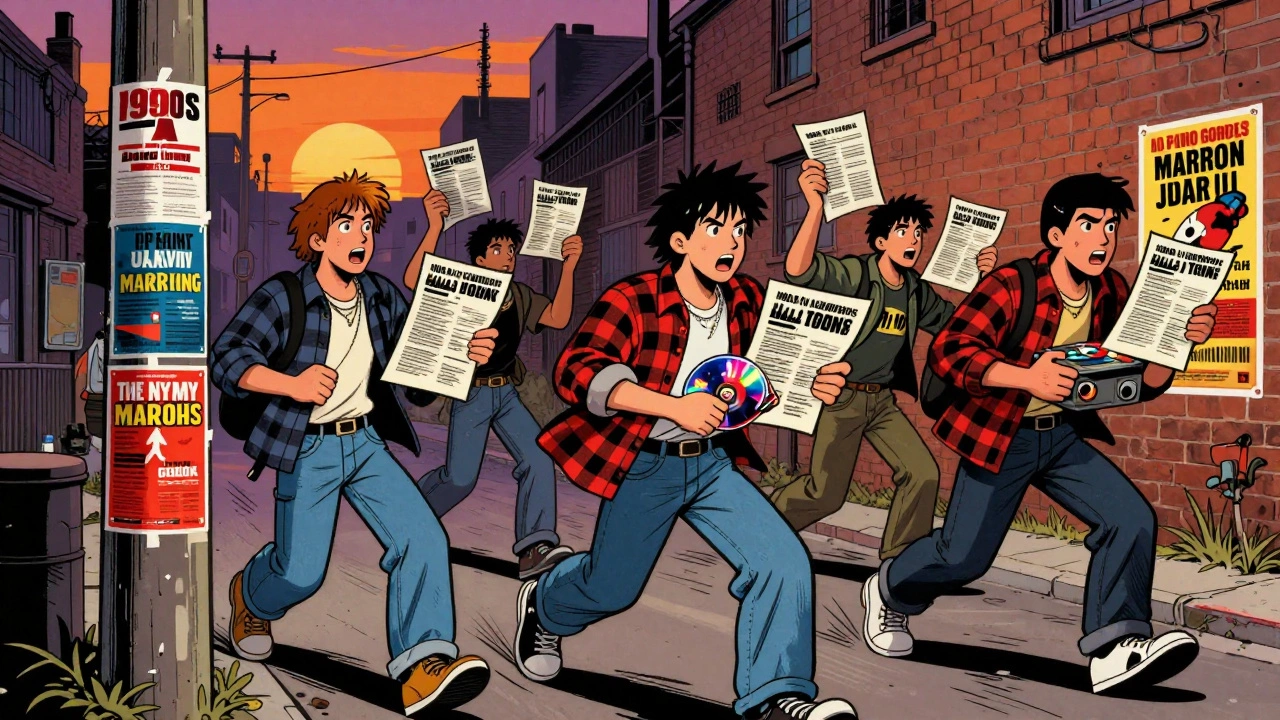
Not all marketing happened in skyscrapers. For alternative and indie acts, success often started on the ground. Street teams were the lifeblood of the underground scene. These groups of fans would plaster posters on telephone poles, hand out flyers outside clubs, and burn demo CDs to distribute on college campuses.
A typical regional campaign might involve mailing 9x12 inch envelopes with posters to venues and sending demos to local papers like Folio Weekly or CityBeat. Burning 200-500 demo CDs per show could yield 20-40 attendees from 300 giveaways. It was labor-intensive work, but it created genuine buzz. Touring itself was often a marketing expense rather than a profit center. Bands played small clubs to build a fanbase that would eventually buy their albums when they crossed over to mainstream radio.
Case Study: The Spice Girls Brand Machine
No group exemplifies 1990s marketing better than the Spice Girls. Released in July 1996, their debut single "Wannabe" spent seven weeks at number one in the UK. But the real genius was in the merchandising. The group wasn't just selling music; they were selling a lifestyle brand called "Girl Power."
Each member had a distinct persona-Posh, Scary, Baby, Sporty, and Ginger-which allowed fans to identify with specific archetypes. This visual consistency extended to endless product deals. They signed contracts with Pepsi, Cadbury, Polaroid, Walkers Crisps, Benetton, and British Telecom. Asda paid £1 million for exclusive Christmas merchandising rights. A Pepsi promotion tied to the group generated 600,000 redemptions, becoming the most successful on-pack promotion in UK soft-drink history. Walkers crisps sold 16 million Spice-branded packets, increasing volume share by six percent in eight weeks. The Spice Girls proved that a pop group could be a multinational corporation.
Teen Pop Precision: Britney and the Backstreet Boys
On the other side of the spectrum was the teen-pop machine, perfected by Jive Records with the Backstreet Boys and later Britney Spears. The strategy involved synchronized multi-channel campaigns targeting specific demographics.
Britney Spears' "...Baby One More Time" campaign is a masterclass in timing. The single was sent to radio in September 1998, but the groundwork was laid months earlier. Spears performed at the Singapore Jazz Festival and toured North American malls in a L’Oréal-sponsored "Hair Zone" event, placing her directly in front of teenage shoppers. When the album dropped in January 1999, she was already a household name. Her headlining tour was sponsored by Tommy Hilfiger and Polaroid, turning concerts into brand showcases. Every element-from the schoolgirl imagery to the Disney Channel appearances-was carefully calibrated to balance family-friendly appeal with edgy sexuality.
Hip-Hop Rivalries as Marketing Tools
In hip-hop, marketing took a different form: narrative warfare. The rivalry between Death Row Records and Bad Boy Entertainment defined the mid-90s. Death Row, led by Dr. Dre and Suge Knight, projected a gritty, West Coast aesthetic. Bad Boy, run by Sean "Puff Daddy" Combs, offered a polished, East Coast glamour.
These weren't just musical differences; they were brand identities. Media events, like Suge Knight’s confrontational speech at the 1995 Source Awards, served as high-visibility promotion. Tabloid coverage of violence and legal troubles paradoxically strengthened each label's notoriety. By framing their releases as part of a larger cultural conflict, labels ensured that their albums stood out in a crowded market. The drama was the marketing hook.
Legacy of the 1990s Playbook
Today, the tools have changed-we stream instead of buying CDs, and algorithms replace radio programmers-but the core principles remain. The 1990s taught the industry that a hit is never just a song. It is a visual identity, a data-driven release strategy, a grassroots movement, and a cross-industry partnership all rolled into one. Understanding these historical strategies helps us see why certain songs still resonate today and how the modern music business continues to evolve from that golden age of mega-hits.
Why were music videos so important in the 1990s?
Music videos were crucial because MTV was the dominant visual medium for youth culture. Without a video, an artist risked being ignored by a massive audience. Videos served as mini-commercials for albums, helping to establish an artist's visual brand and personality, which was essential for driving CD sales.
How did SoundScan change the music industry?
SoundScan introduced accurate, barcode-based sales tracking in 1991. This replaced subjective estimates with real data, revealing that genres like hip-hop and country were much more popular than previously thought. It allowed labels to make smarter marketing decisions based on actual consumer behavior rather than guesswork.
What role did street teams play in 1990s marketing?
Street teams provided grassroots promotion, especially for alternative and indie artists. They distributed flyers, burned demo CDs, and posted flyers on campuses and in cities. This low-cost, high-effort strategy helped build local buzz that could eventually attract radio and TV attention.
How did the Spice Girls use merchandise in their marketing?
The Spice Girls treated their image as a lifestyle brand. They secured massive deals with companies like Pepsi, Cadbury, and Asda. Their distinct personas (Posh, Scary, etc.) made it easy for fans to buy into specific characters, driving huge sales in snacks, drinks, and clothing, effectively making them a multinational corporation.
Did radio payola affect which songs became hits?
Yes, significantly. Major labels paid independent promoters tens of thousands of dollars per song to secure airplay. After the 1996 Telecommunications Act, radio consolidation meant that paying for exposure in one corporate hub could get a song played across hundreds of stations, favoring artists with big budgets over smaller independents.