
When you think of 1980s funk, you probably picture the neon lights, the synthesizers, and the iconic basslines. But behind those grooves was a ruthless, high-stakes business machine that operated very differently from today’s streaming economy. There were no algorithms to push a track to millions of users overnight. Instead, success depended on physical vinyl, expensive radio tours, and underground club networks that could make or break an artist’s career in weeks.
The decade saw funk transform from a niche genre into a global commercial force, but it required navigating a fragmented landscape of independent labels, shifting radio formats, and strict regulatory hurdles. Understanding how this industry worked reveals why certain artists thrived while others vanished, and how the strategies used then still influence modern music promotion.
The Rise of Independent Powerhouses
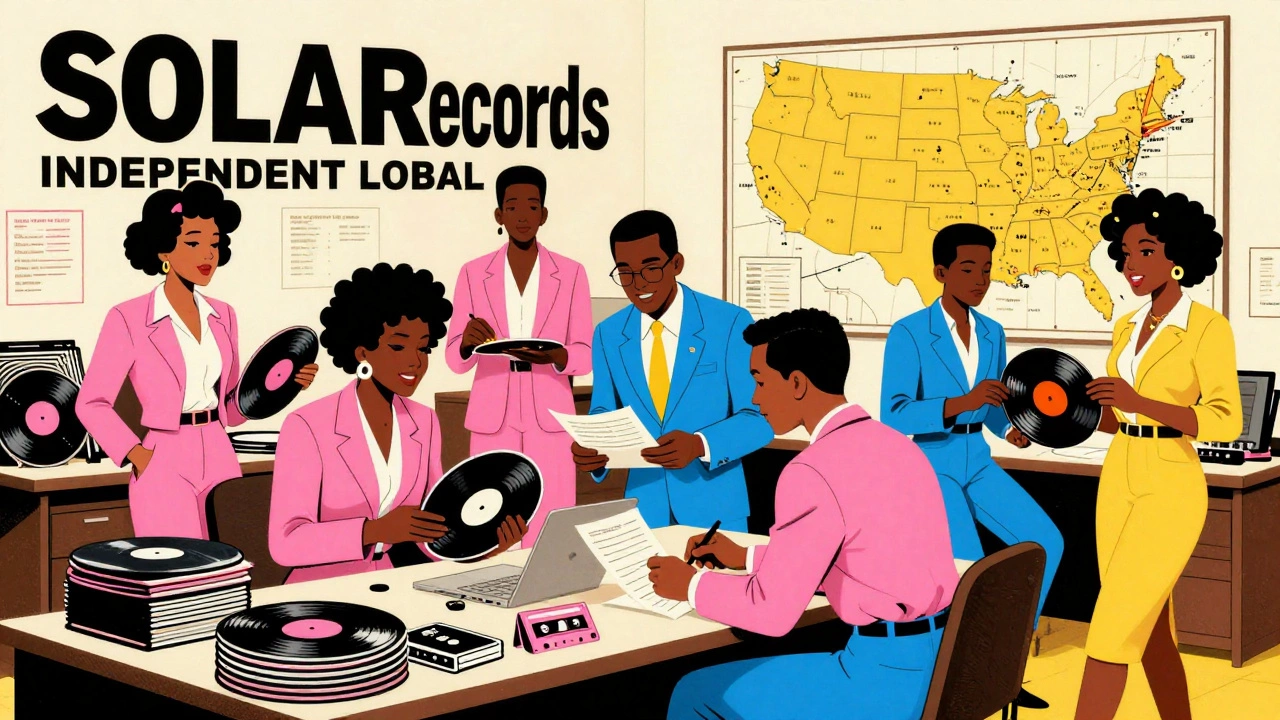
In the 1970s, major labels like Motown and Atlantic dominated soul and funk distribution. By the 1980s, however, the power shifted dramatically toward independent labels that understood the specific needs of funk audiences. SOLAR Records, founded by Dick Griffey in 1978, became the most significant example of this shift. Unlike major labels that often treated funk as a secondary market, SOLAR focused exclusively on Black artists and built a self-sufficient empire.
SOLAR didn’t just release records; they controlled production, distribution, and publishing. Between 1980 and 1989, the label released 157 funk and R&B singles. Their roster included superstars like The DeBarges, Shalamar, and Midnight Star. The financial impact was massive: The DeBarges alone generated $23.7 million in album sales according to Billboard’s 1983 industry report. Meanwhile, Midnight Star’s 1983 album No Parking on the Dance Floor sold 500,000 copies in its first three months, proving that independent labels could compete with major corporate budgets.
| Feature | Major Labels (e.g., Motown) | Independent Labels (e.g., SOLAR, Tabu) |
|---|---|---|
| Market Share (1980) | 78% of US funk market | 22% of US funk market |
| Promotion Focus | Crossover pop appeal | Club-first, urban radio focus |
| Artist Control | Limited; complex royalty accounting | Higher autonomy; clearer terms |
| Distribution Model | In-house national networks | Direct-to-store & regional test markets |
Other independents like Tabu Records, founded by Clarence Avant, and Sugar Hill Records, established by Sylvia and Joe Robinson, also carved out significant niches. Sugar Hill, originally known for hip-hop, leveraged early crossovers between rap and funk, though this led to legal challenges over sampling that would reshape copyright law.
Radio Promotion: The Cost of Airplay
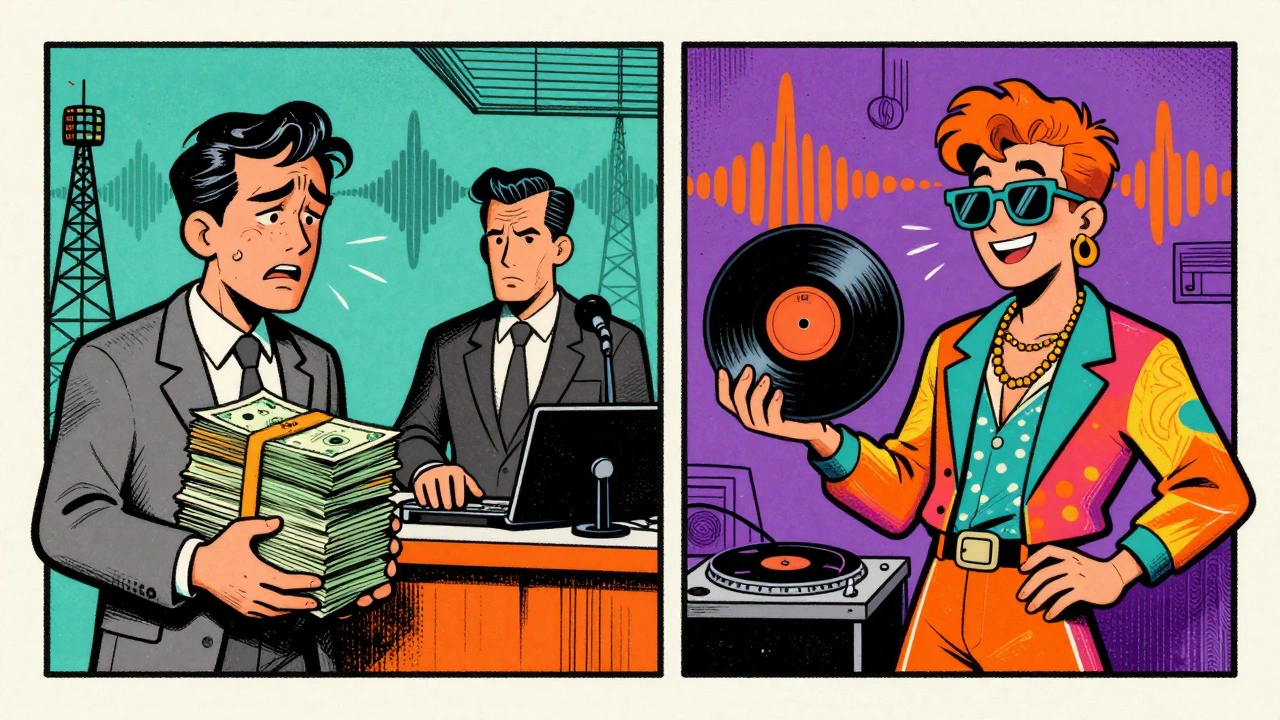
Getting a song played on the radio in the 1980s was not about sending a digital file to a playlist curator. It was a labor-intensive, expensive process that required personal relationships and substantial financial investment. Urban contemporary radio stations like WBLS in New York and KJLH in Los Angeles became the gatekeepers of funk success.
Program directors at these stations demanded rigorous promotional campaigns. According to Billboard’s 1986 "Radio Promotion Budget Analysis," a typical campaign cost between $75,000 and $120,000 per artist in 1985 dollars. This budget covered paid radio tours, where artists traveled to key markets to perform live interviews and meet DJs face-to-face. Labels also employed "street teams" to distribute exclusive 12-inch singles directly to influential disc jockeys, bypassing traditional retail channels.
The stakes were incredibly high. Tom Versen, who programmed KJLH during the decade, noted in a 2017 interview that corporate pressure forced stations to reduce dedicated funk slots from 40% of playlists in 1980 to just 18% by 1987. This meant funk tracks had to compete aggressively with pop crossovers to survive on airwaves. If a record failed to gain traction within four weeks of promotion, it was often dropped entirely, leaving labels with sunk costs and unsold inventory.
Club Networks: The Underground Engine
While radio provided mainstream exposure, clubs were where funk records truly lived or died. Club promotion operated through a sophisticated underground network that preceded radio airplay by six to eight weeks, according to a 1984 study in the Journal of Popular Music Studies. This "club-first" model allowed labels to test tracks in real-time before committing to expensive radio campaigns.
Influential DJs held immense power. In New York, Larry Levan at Paradise Garage could ignite a trend simply by playing a new pressing. In the UK, figures like Greg Edwards, Robbie Vincent, and Chris Hill drove the Brit funk scene. Labels like West End Records built deep relationships with these DJs, providing them with advance copies of singles. If a track moved the dance floor, labels would press more copies for that region. If it flopped, the record disappeared.
This system relied heavily on the 12-inch single format. These extended mixes sold for $7.98 wholesale compared to $6.98 for standard 7-inches, offering higher profit margins for labels. More importantly, they gave DJs the extended intros and outros needed for seamless mixing. Data from the era shows that successful funk tracks often derived 70% of their initial sales from dance club markets before crossing over to mainstream radio. Without club validation, radio programmers rarely took a chance on unknown funk acts.
Technology and Production Costs
The 1980s marked a pivotal transition from analog to digital recording technology, which fundamentally altered the economics of funk production. The introduction of tools like the Fairlight CMI sampler and the LinnDrum drum machine reduced studio time expenses by 35-40%, according to a 1983 AES Convention paper. However, these technologies came with steep upfront costs-the Fairlight CMI priced at $27,000 in 1982, equivalent to roughly $85,000 today.
Artists like Rick James mastered this new economic landscape. Billboard identified James in June 1981 as the leading funk musician of the early decade. He produced his landmark album Street Songs for Motown at a cost of $185,000, significantly below the industry average of $250,000 for R&B albums that year. By leveraging digital efficiency and strategic club promotion targeting 1,200 venues, the album generated $14.2 million in revenue.
However, technology also introduced new legal complexities. Sampling technology blurred the lines of ownership, leading to landmark lawsuits. Sugar Hill Gang’s "Rapper’s Delight" sampled Chic’s "Good Times" without clearance, resulting in a 1983 U.S. District Court ruling that established strict royalty standards for uncleared samples. This decision forced labels to navigate increasingly complicated copyright laws, adding another layer of risk to the business model.

Global Divergence: US vs. UK Markets
The business of funk looked vastly different across the Atlantic. In the United States, major labels controlled approximately 78% of the market share in 1980, with Motown leading at 29%. The US model prioritized high-revenue crossover hits, such as Chaka Khan’s "I Feel For You," which generated $3.2 million in US sales compared to $487,000 in the UK.
In contrast, the UK Brit funk scene operated almost entirely through independent labels, with only 8% of releases distributed via major subsidiaries. Acts like Jimmy James and the Vagabonds, Average White Band, and Ian Dury & the Blockheads thrived in this decentralized environment. Radio promotion in the UK relied less on expensive paid campaigns and more on specialist shows, such as Robbie Vincent’s program on BBC Radio 1, which could break records with minimal budget.
| Metric | United States | United Kingdom |
|---|---|---|
| Label Dominance | Major labels (78% share) | Independents (92% share) |
| Radio Strategy | Paid tours ($50k+ per single) | Specialist DJ support (low cost) |
| Club Culture | Paid DJ appearances | Community sound systems |
| Output Volume | 147 funk-only singles (1980-85) | 200+ Brit funk singles (1980-85) |
While the US model generated higher revenues, the UK approach fostered greater artistic diversity. Over 200 Brit funk singles were released between 1980 and 1985, compared to 147 comparable US funk-only releases. However, this independence limited international reach; only three Brit funk albums cracked the US Top 40 despite significant local club success.
Regulatory Challenges and Industry Shifts
The 1980s funk business faced severe regulatory headwinds. The Federal Communications Commission launched investigations into payola practices, resulting in $4 million in fines against 22 radio stations in 1986 for accepting improper payments. This forced labels to restructure their promotional strategies, shifting from direct bribes to legal "consulting fees" for influential DJs.
Additionally, the Parents Music Resource Center (PMRC) hearings in 1985 led to the implementation of "Parental Advisory" labels. Funk artists with explicit content, such as Rick James, faced radio restrictions that cost an estimated $1.2 million per album in potential sales, according to Motown’s internal 1986 assessment. These regulations compressed the window for commercial success, forcing labels to move faster and take bigger risks.
By the end of the decade, the market was shifting again. Hip-hop and new jack swing began to dominate urban radio, reducing funk’s share of R&B sales from 12.7% in 1980 to 8.3% in 1989. Despite this decline in percentage, total funk revenue grew from $217 million to $389 million (adjusted for inflation) due to overall market expansion and the rise of CD sales, which accounted for 34% of funk album sales by 1987.
Why were 12-inch singles so important to 1980s funk?
12-inch singles provided extended mixes with longer intros and outros, essential for club DJs to blend tracks seamlessly. They also offered higher profit margins for labels, selling for $7.98 wholesale versus $6.98 for 7-inches. Crucially, 70% of initial sales for successful funk tracks came from the club market, making the 12-inch format the primary vehicle for breaking new records.
How did SOLAR Records differ from major labels like Motown?
SOLAR Records operated as a fully independent entity focused exclusively on Black artists, controlling production, distribution, and publishing. Unlike major labels that often diluted funk for pop crossover appeal, SOLAR prioritized club-first promotion and maintained stronger relationships with urban radio and dance venues, allowing artists like The DeBarges and Midnight Star to achieve massive commercial success without compromising their core audience.
What role did club DJs play in promoting funk music?
Club DJs acted as critical tastemakers and validators. Labels sent test pressings to influential DJs like Larry Levan and Greg Edwards. If a track succeeded on the dance floor, it signaled to radio programmers that the song had mass appeal. Club play typically preceded radio airplay by 6-8 weeks, creating a grassroots momentum that reduced the financial risk of expensive radio campaigns.
How much did radio promotion cost in the 1980s?
A comprehensive radio promotion campaign in the mid-1980s typically cost between $75,000 and $120,000 per artist. This budget covered paid radio tours, travel expenses for artists to visit key markets, and the production and distribution of promotional materials to stations. Additional costs included "consulting fees" for DJs following FCC crackdowns on payola.
Did digital technology help or hurt funk artists financially?
Digital technology like the Fairlight CMI and LinnDrum reduced studio production costs by 35-40%, allowing artists like Rick James to produce hit albums below industry averages. However, it also introduced complex royalty issues related to sampling, leading to costly lawsuits and stricter copyright enforcement that increased legal overhead for labels and artists alike.