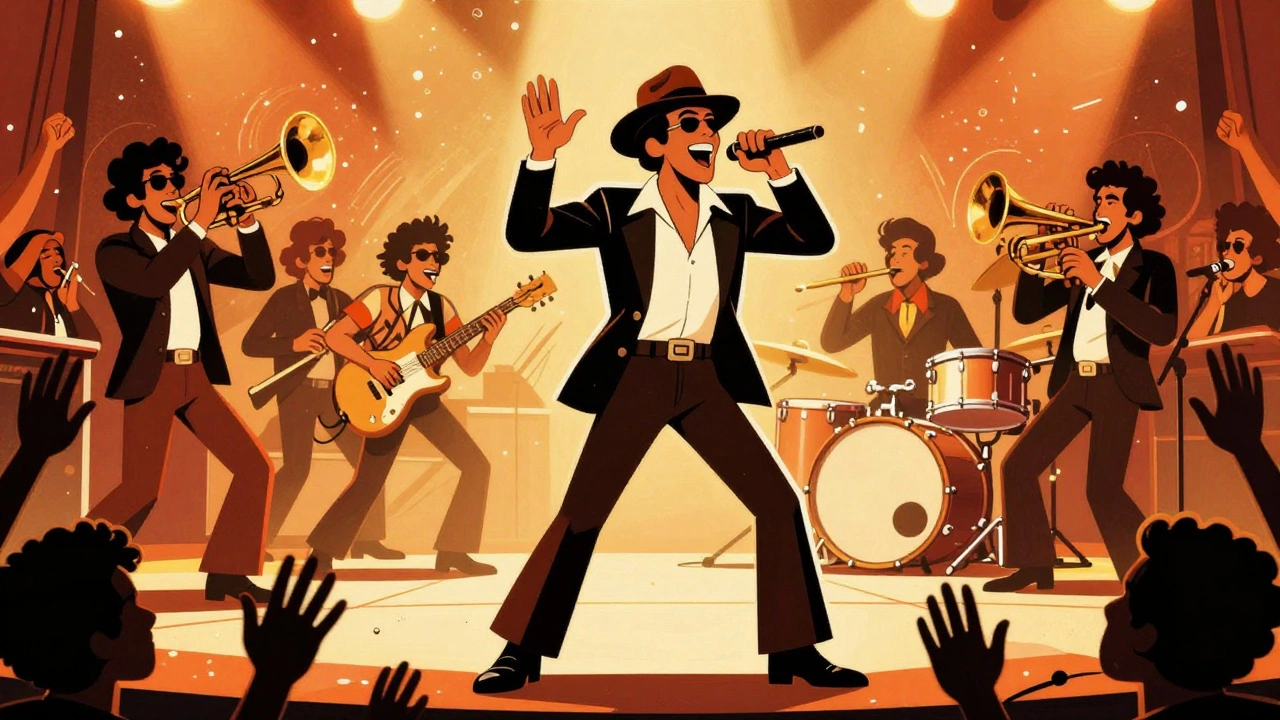

Studio recordings are polished. They are clean, edited, and often overdubbed to perfection. But if you want to understand what funk actually felt like in the 1970s, you need to hear it live. The live funk albums from this decade capture something studio sessions simply couldn't: the sweat, the spontaneity, and the electric connection between a band and a crowd that demanded movement.
In the early 1970s, mobile recording trucks became sophisticated enough to capture complex horn sections and tight rhythm sections without losing clarity. This technological leap allowed labels to release full-length concert documents that preserved the raw energy of clubs, theaters, and arenas. These records aren't just archives; they are blueprints for how groove music operates in real time. They show us that funk is not just about playing notes-it's about holding a pocket while an entire room moves together.
Why Live Recordings Define the Funk Experience
Funk is built on repetition, syncopation, and interaction. In a studio, a producer might cut a song down to three minutes for radio play. On stage, that same track could stretch into a ten-minute vamp where the bassist locks in with the drummer, the horns trade riffs, and the lead singer feeds off the audience's energy. This difference in structure makes live albums essential listening.
When you listen to a live funk record, you hear the "tempo flex." Bands would subtly speed up or slow down based on the crowd's reaction, creating a living, breathing performance. You also hear the call-and-response dynamics that define the genre. A studio vocal take is static; a live vocal performance is a conversation. The audience shouts back, the band reacts, and the groove deepens. This interplay creates a sense of urgency and joy that is difficult to replicate in a controlled environment.
Furthermore, these albums document the sheer endurance of these musicians. Funk bands in the 1970s were large ensembles, often featuring multiple percussionists, a full horn section, and several guitarists. Keeping all those players locked into one groove for hours required immense discipline and musical intuition. The live records prove they had it.
The Godfather’s Blueprint: James Brown
You cannot talk about funk without starting with James Brown. He is the architect of funk, who shifted emphasis from melody to rhythm and the 'one' beat. His live albums from the early 1970s set the standard for every funk band that followed. While some of his releases mixed studio tracks with crowd noise, albums like Revolution of the Mind: Live at the Apollo, Volume III (1971) offer a pure look at his command of a stage.
Brown didn't just sing; he directed traffic. His live performances were masterclasses in economy and power. He would strip a song down to its barest rhythmic elements-a kick drum, a snare hit, and a guitar chop-then build it back up with explosive horn blasts. The Soul Survivor era live sets showcase this dynamic range perfectly. You can hear the band tightening their grip on the groove as the night progresses. It’s exhausting to watch, but electrifying to hear.
Critics often note that Brown’s live recordings feel less like concerts and more like workouts. There is no filler. Every second serves the rhythm. If you want to understand the mechanical precision of funk, start here. Brown taught his bands that mistakes were not tolerated, but improvisation within the pocket was encouraged. That balance is evident in every track.
P-Funk’s Theatrical Spectacle
If James Brown was the mechanic of funk, Parliament-Funkadelic were the psychedelic architects who expanded funk into a cosmic, theatrical experience. Their live albums, particularly Live: P-Funk Earth Tour (1977), document a different side of the genre. This wasn't just about the groove; it was about the journey. George Clinton turned concerts into sci-fi operas, complete with spaceships, costumes, and elaborate stage props.
The Earth Tour album captures this spectacle. It features long medleys that blend hits like "Flash Light" and "Give Up the Funk" into seamless narratives. What stands out is the improvisational freedom given to soloists. Eddie Hazel’s guitar work on Funkadelic sides or Bernie Worrell’s synth explorations on Parliament tracks shows how the band used the live setting to experiment. Unlike the tight, militaristic precision of Brown’s J.B.’s, P-Funk was loose, weird, and wildly creative.
These albums also highlight the importance of the bass line in funk. Bootsy Collins’ playing on these live records is foundational. He doesn’t just keep time; he drives the melody. Listening to these tracks, you realize that the bass is often the lead instrument, carrying the harmonic weight while the horns provide color. This approach influenced generations of hip-hop producers who later sampled these grooves.
Horn-Driven Power: Tower of Power and Average White Band
Not all funk relied on psychedelia or minimalism. Some bands leaned heavily into jazz-influenced horn arrangements. Tower of Power is a San Francisco-based band known for its tight horn section and soulful R&B fusion. Their album Live and in Living Color (1976), recorded at the Old Waldorf, is a testament to the power of brass in funk. The horn section doesn’t just play riffs; they engage in complex counterpoint with the rhythm section.
Similarly, the Average White Band released Person to Person, a live album captured during their U.S. tours in 1975. AWB brought a Scottish flair to American funk, blending bluesy guitar licks with driving rhythms. Their live sound was incredibly tight, almost robotic in its precision, yet deeply emotional. Tracks like "Cut the Cake" explode with energy when performed live, showcasing how a smaller ensemble can create massive sonic impact through sheer skill and arrangement.
These bands proved that funk could be sophisticated. They appealed to audiences who appreciated musical complexity alongside danceable beats. Their live albums serve as bridges between jazz, rock, and soul, demonstrating the genre’s versatility.
Spiritual Grooves: Earth, Wind & Fire
Earth, Wind & Fire created a unique blend of funk, soul, jazz, and pop characterized by uplifting lyrics and lush harmonies. Their double album Gratitude (1975) is perhaps the most commercially successful live funk record of the decade. It reached number one on the R&B charts and stayed there for weeks. The album mixes live performances with studio tracks, but the live portions are undeniable highlights.
Maurice White, the band’s leader, understood the power of positivity. Their live shows were celebrations. Songs like "Shining Star" and "September" become anthems in a live setting, with the crowd singing every word. The horn section, led by Fred Wesley and others, delivers crisp, bright riffs that cut through the mix. The percussion section adds layers of texture, using congas, bongos, and shakers to create a polyrhythmic foundation.
What makes Gratitude special is its accessibility. It introduced funk to mainstream pop audiences. The production is cleaner than many underground funk records, making it easier for new listeners to digest. However, it never sacrifices the groove. The rhythm section remains locked in, providing a steady pulse that invites dancing. This album shows how funk could be both artistically rigorous and massively popular.
Festival Documents: Wattstax and Beyond
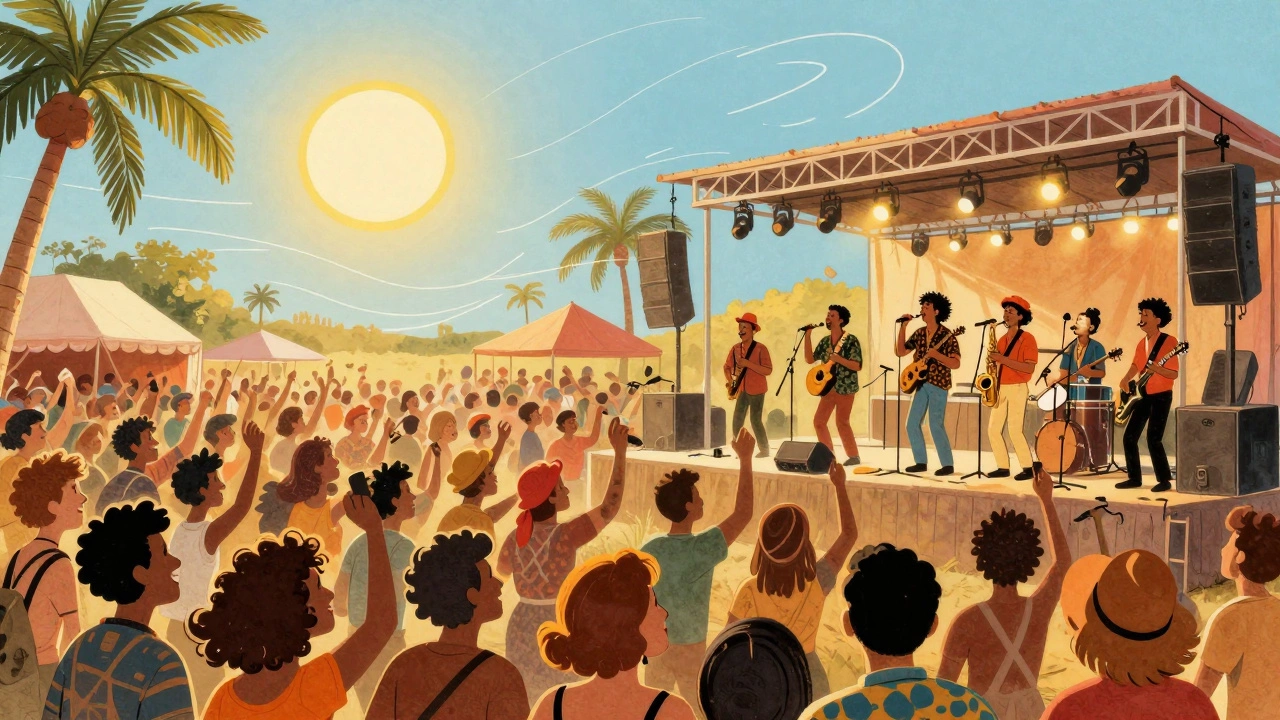
Sometimes the best way to capture the spirit of an era is to record a festival. Wattstax is a landmark 1972 film and album documenting a historic concert held at the Los Angeles Coliseum. Held on August 20, 1972, Wattstax was a response to the 1965 Watts riots, aiming to celebrate Black culture and community. The resulting album features performances by Sly & The Family Stone, Isaac Hayes, The Staple Singers, and many others.
The energy on the Wattstax recordings is palpable. You can hear the heat of the day, the size of the crowd, and the political weight of the event. Sly Stone’s performance, though reportedly troubled behind the scenes, still delivers moments of brilliance. The audience participation is intense, with thousands of voices joining in on choruses. This album is more than music; it’s a historical document of Black resilience and joy.
Other festival recordings, like Kool & The Gang’s Live at the Sex Machine (1971), offer grittier perspectives. Recorded in New York clubs, these tapes capture the raw, unpolished side of funk. The sound quality may not be perfect, but the authenticity is unmatched. You hear the clinking of glasses, the murmur of conversations, and the sudden eruption of applause. These details make you feel like you’re sitting in the front row.
| Artist | Album Title | Year Released | Key Characteristic | Best For |
|---|---|---|---|---|
| James Brown | Revolution of the Mind | 1971 | Militaristic precision, minimalist grooves | Purists seeking the roots of funk |
| Parliament | Live: P-Funk Earth Tour | 1977 | Theatricality, extended jams, bass-driven | Fans of psychedelic and experimental funk |
| Earth, Wind & Fire | Gratitude | 1975 | Uplifting harmonies, polished production | Mainstream listeners and dance enthusiasts |
| Tower of Power | Live and in Living Color | 1976 | Jazz-influenced horns, tight arrangements | Musicians appreciating technical skill |
| Various Artists | Wattstax | 1972 | Cultural significance, massive crowd energy | History buffs and social context seekers |
Technical Realities: Capturing the Groove
Recording live funk in the 1970s was a technical challenge. Engineers used 8-track, 16-track, or 24-track mobile rigs. They had to mic close to drums and horns to avoid bleed, yet still capture the room’s ambience. This often resulted in a "warm" or "gritty" sound due to tape saturation and microphone spill.
Unlike modern digital recordings, which allow for endless editing, analog tape meant that mistakes were permanent. Bands had to perform flawlessly. This pressure contributed to the high level of musicianship heard on these albums. Producers rarely chopped up tracks; instead, they let songs breathe, resulting in longer, more organic performances. The limitations of the technology forced creativity, leading to a distinct aesthetic that fans still cherish today.
How to Start Listening
If you’re new to live funk, don’t try to tackle everything at once. Start with three albums that represent different facets of the genre:
- Earth, Wind & Fire - Gratitude: Accessible, uplifting, and well-produced. It’s the perfect entry point.
- James Brown - Revolution of the Mind: Raw, intense, and foundational. Understand where the groove comes from.
- Parliament - Live: P-Funk Earth Tour: Weird, fun, and imaginative. See how far funk can stretch.
Listen for the interaction between instruments. Notice how the bass and drums lock in. Pay attention to the crowd’s reactions. Let the music move you. These albums are not just background noise; they are invitations to participate in a cultural moment that changed music forever.
What makes a live funk album different from a studio album?
Live funk albums capture the spontaneous interaction between the band and the audience, often featuring extended vamps, improvised solos, and call-and-response vocals. Studio albums are typically tighter, shorter, and heavily edited, whereas live records preserve the raw energy and imperfections of a real-time performance.
Which live funk album is best for beginners?
Earth, Wind & Fire’s Gratitude is widely considered the best starting point. It combines high-quality production with accessible melodies and uplifting energy, making it easy for new listeners to appreciate the genre without being overwhelmed by rawness or complexity.
Why are James Brown’s live albums so important?
James Brown defined the rhythmic structure of funk. His live albums demonstrate his demand for precision and his ability to control a band and a crowd simultaneously. They serve as the blueprint for the "one" beat and the minimalist approach that characterizes classic funk.
Did live funk albums sell well in the 1970s?
Yes, several did. Earth, Wind & Fire’s Gratitude topped the R&B charts and went multi-platinum. Other albums like Parliament’s Live: P-Funk Earth Tour found strong niche audiences. While not all live records were commercial giants, they were crucial for maintaining fan engagement and documenting touring success.
How were these albums recorded technically?
They were recorded using mobile multitrack tape machines (8, 16, or 24-track) mounted in trucks. Engineers used close-miking for instruments to reduce bleed but accepted some ambient noise and tape saturation, which contributed to the warm, gritty sound characteristic of the era.


