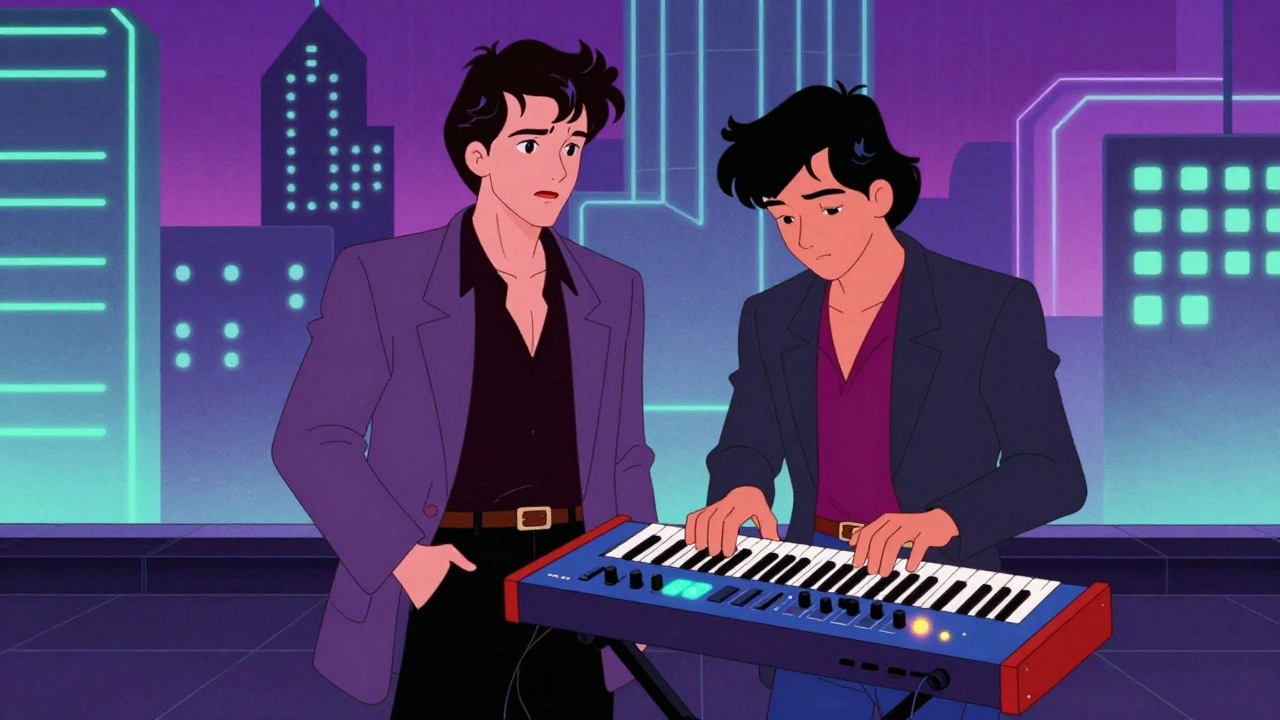

Imagine a world where guitars were swapped for circuits and drummers were replaced by programmable machines. In the early 80s, this wasn't just a futuristic dream-it was the sound of the radio. While big bands had their place, the real magic of the era often happened in pairs. The duo format was the perfect vehicle for the new electronic age: one person to handle the complex Synthesizer an electronic musical instrument that generates audio signals to create a wide variety of sounds and another to provide the human emotion through vocals. This lean setup allowed for a level of experimentation that larger bands simply couldn't manage.
Key Takeaways: The Icons of Electronic Pop
- Pet Shop Boys: Mastered the art of the "intelligent dance pop" song with witty lyrics.
- Yazoo: Proved that soulful, powerhouse vocals could blend perfectly with cold electronic beats.
- Erasure: Brought high-energy performance and pure pop sensibility to the genre.
- Soft Cell: Explored the darker, more avant-garde side of the synth sound.
- Eurythmics: Balanced experimental textures with massive global commercial appeal.
The Architects of Sophistication: Pet Shop Boys
When you think of Pet Shop Boys, you're thinking of the gold standard of 80s synth-pop a subgenre of new wave music that features synthesizers as the primary instrument. Neil Tennant and Chris Lowe didn't just make dance music; they made social commentary you could dance to. They avoided the typical rock star tropes, opting instead for a detached, almost ironic delivery that felt incredibly modern.
Their breakout hit, "West End Girls," didn't just climb the charts; it defined an aesthetic of urban sophistication. If you listen to tracks like "It's a Sin" or "Always on My Mind," you can hear how they used electronic layers to create a mood of longing and drama. They were the first to prove that you didn't need a guitar solo to have a hit; you just needed a great hook and a sequenced bassline that wouldn't let go.
The Powerhouse Contrast: Yazoo
If the Pet Shop Boys were about cool detachment, Yazoo (known as Yaz in the US) was about raw emotional friction. This duo was a fascinating experiment in contrast: Vince Clarke, the technical wizard who had just left Depeche Mode, provided the clinical, precise electronic structures, while Alison Moyet brought a soulful, gritty vocal presence that felt like it belonged in a Motown studio.
This tension is exactly why songs like "Only You" and "Don't Go" still sound fresh today. They didn't try to make the vocals sound "robotic" to match the machines; instead, they let the human voice fight against the electronic backdrop. It created a dynamic where the music felt both futuristic and deeply grounded in human feeling, setting a blueprint for many indie-electronic acts that followed decades later.
High Energy and Pure Pop: Erasure and Eurythmics
Not every duo was looking to be moody or intellectual. Erasure took the synth-pop formula and dialed the joy up to ten. Andy Bell's soaring vocals paired with Vince Clarke's (yes, the same Vince from Yazoo) meticulous songwriting created a brand of pop that was impossible to ignore. They focused on melody and accessibility, turning the synthesizer into a tool for pure euphoria.
Then there were the Eurythmics. Annie Lennox and Dave Stewart brought a different kind of energy-one that was often more experimental and visually striking. They bridged the gap between the art-school underground and the mainstream Top 40. Their ability to blend synth textures with a certain rhythmic soul allowed them to dominate the airwaves with hits that felt a bit more dangerous than the average pop song.
| Duo | Primary Vibe | Key Strength | Defining Track |
|---|---|---|---|
| Pet Shop Boys | Sophisticated / Urban | Witty Lyricism | West End Girls |
| Yazoo | Soulful / Electronic | Vocal Power | Only You |
| Erasure | Bright / Energetic | Pure Melodic Hooks | A Little Respect |
| Eurythmics | Artistic / Bold | Sonic Experimentation | Sweet Dreams |
| Soft Cell | Dark / Provocative | Atmospheric Moods | Tainted Love |
The Darker Side: Soft Cell and OMD
While the radio was full of bright pop, Soft Cell was exploring the sleazier, darker corners of the electronic world. Marc Almond's vocals weren't about perfection; they were about passion and desperation. "Tainted Love" is a masterclass in how to use a sparse electronic arrangement to heighten the drama of a breakup. They didn't just make music for the dancefloor; they made music for the after-party where things start to get a bit messy.
Similarly, Orchestral Manoeuvres in the Dark (OMD) took a more cerebral approach. They were fascinated by the idea of using synthesizers to mimic traditional orchestral instruments, blending a love for choral music with the cutting edge of MIDI technology. Their work was often more atmospheric and melodic, proving that synth-pop could be as much about landscape and mood as it was about a four-on-the-floor beat.
Why the Duo Format Worked So Well
You might wonder why so many of these acts were pairs rather than solo artists or full bands. The answer lies in the division of labor. In the 80s, the technology was daunting. One person usually spent hours tweaking the oscillators and sequencers-the "scientist" of the group-while the other focused on the "art" of the performance. This separation of roles allowed for a check-and-balance system; the songwriter ensured the song was a hit, while the programmer ensured it sounded like the future.
This synergy is what gave these duos their edge. When you have a vocalist who isn't bogged down by the technicalities of the gear, they can push their performance further. Conversely, the producer can push the electronic boundaries without worrying if the song is losing its pop appeal. It was a symbiotic relationship that defined the sonic landscape of the decade.
The Legacy of the Electronic Pair
Looking back from 2026, it's clear that these duos weren't just a trend. They laid the groundwork for almost everything we hear in modern pop and dance music. Every time a producer uses a synth-bass to drive a track or a pop star uses a minimal electronic arrangement, they are echoing the work of the Pet Shop Boys or Yazoo. The move away from the guitar-driven sound of the 70s opened the door for artists to prioritize texture and timbre over riffs and solos.
The influence also extends to the visual side. These duos leaned into the futuristic, often androgenous look of the era, challenging traditional ideas of how a musical act should present itself. They weren't just selling songs; they were selling a vision of a digitized future where the human voice and the machine lived in harmony.
What is the main difference between synth-pop and other electronic music?
Synth-pop specifically blends the sounds of synthesizers with the structure of traditional pop songs. While other electronic music might focus on long, atmospheric builds or repetitive loops (like early techno), synth-pop is all about the hook, the verse-chorus structure, and a strong melodic lead, usually delivered by a vocalist.
Was Vince Clarke in more than one of these duos?
Yes, Vince Clarke is a central figure in the genre. He was a founding member of Depeche Mode, then formed the duo Yazoo with Alison Moyet, and later formed Erasure with Andy Bell. His ability to craft infectious electronic melodies made him one of the most influential producers of the 80s.
Why was Yazoo only a short-lived partnership?
Yazoo's brief run was largely due to the contrasting artistic directions of Vince Clarke and Alison Moyet. While their contrast was their greatest strength sonically, it also led to differences in how they wanted to evolve their sound, leading to an amicable split after just two albums.
Which of these duos had the most global impact?
In terms of pure commercial numbers and longevity, the Pet Shop Boys and Eurythmics had massive global reach. Both acts managed to transition from the niche synth-pop scene into worldwide superstars, with their tracks becoming staples of international radio and dance clubs.
Do these artists still perform today?
Many do. The Pet Shop Boys are famous for their continuing activity and massive world tours. Erasure also continues to perform and release music, maintaining a loyal fanbase that appreciates their commitment to the classic synth-pop sound.
Next Steps for Fans of 80s Electronic Music
If you've enjoyed exploring these duos, your next move should be to dig into the solo pioneers of the era. Look for artists like Gary Numan or The Human League (especially their early experimental phase) to see where the sound originated. If you prefer the darker side of things, explore the New Wave movement in Germany, specifically the "Krautrock" influence that paved the way for the synthesizers to take over the world.