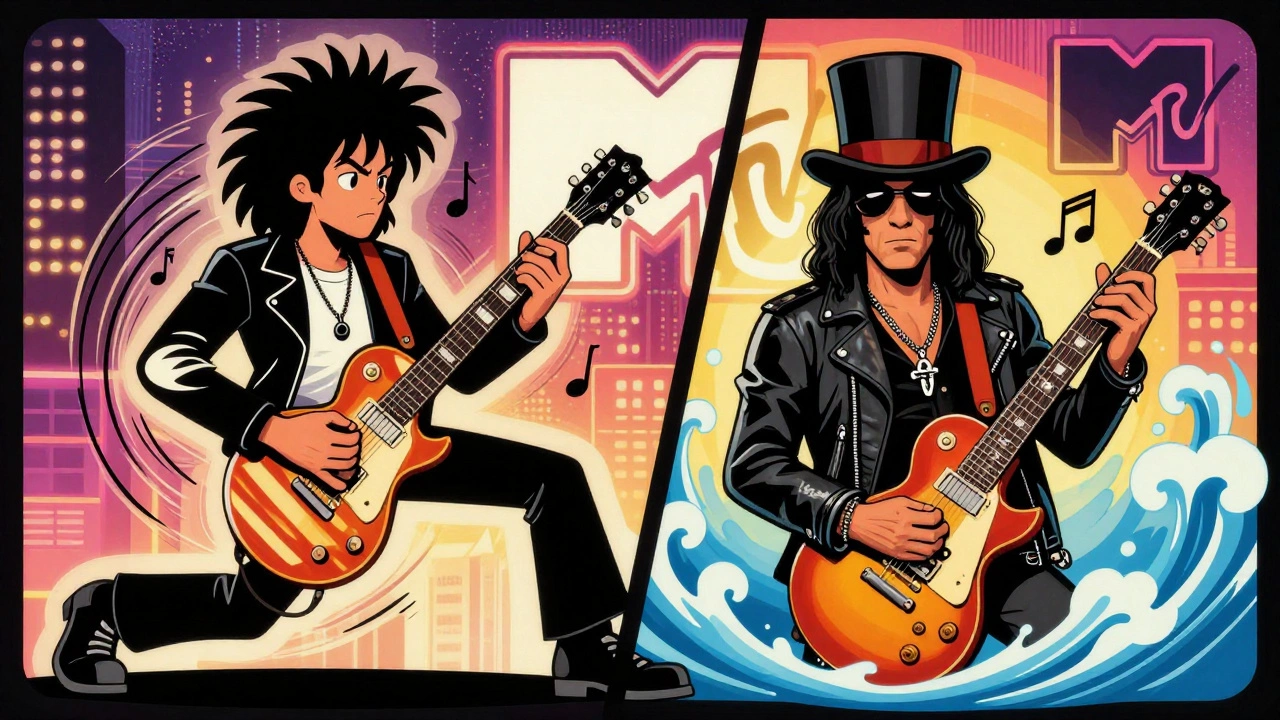

Close your eyes and think about the sound of the 1980s. You probably hear synthesizers first, right? But if you listen closer, underneath those neon lights and drum machines, there is a wall of distorted electric guitars screaming for attention. The decade didn't just give us MTV; it gave us some of the most iconic, technically groundbreaking, and emotionally charged guitar solos in history.
We aren't talking about background filler here. We are talking about moments that defined careers, changed how people played their instruments, and still get airplay today. From the two-handed tapping wizardry of Eddie Van Halen, who turned the guitar into a percussion instrument, to the blues-soaked, singing melodies of Slash, who proved you don't need speed to make people cry, the '80s were a golden age for lead guitar. Let’s break down why these specific solos stand out, what made them tick, and how they shaped the sound of rock music forever.
The Technical Revolution: Eddie Van Halen’s Legacy
If you want to understand 1980s rock guitar, you have to start with Eddie Van Halen. By the time the decade began, he had already changed the game with his 1978 debut album, but the '80s saw him refine his style into something almost otherworldly. He wasn't just playing notes; he was crafting textures.
Take "Panama" from the 1984 album. The solo here is a masterclass in economy and impact. It’s fast, sure, but it’s not just shredding for the sake of shredding. Eddie uses his signature two-handed tapping technique-not just on one string, but across multiple strings-to create arpeggios that sound like a piano or an organ. This approach allowed him to play chords at speeds that were previously impossible for a guitarist using only one hand on the fretboard.
Then there is "Hot for Teacher." The solo here is pure adrenaline. It features rapid-fire alternate picking and whammy-bar dives that became the blueprint for every hair metal guitarist who followed. Eddie’s use of the Floyd Rose tremolo system allowed for pitch bends that went far beyond standard vibrato, creating dive-bombs and squeals that added a theatrical element to the music. This wasn't just technical skill; it was performance art.
But perhaps his biggest cultural moment came with Michael Jackson’s "Beat It" (1983). Eddie’s solo bridged the gap between hard rock and pop. It was melodic, aggressive, and perfectly timed. It showed that a guitar solo could be the hook of a pop song, not just an interlude for guitar nerds. That track alone introduced millions of non-rock listeners to the power of the electric guitar.
The Melodic Master: Slash’s Singing Style
On the other end of the spectrum, we have Slash (Saul Hudson). While Eddie was pushing the boundaries of speed and technique, Slash was digging deep into the blues. His style in the late '80s, particularly with Guns N' Roses, was all about feel, tone, and melody.
Slash’s tone is legendary. He famously used a Gibson Les Paul plugged directly into a Marshall JCM800 amplifier. No fancy effects pedals, no rack-mounted processors-just pure, mid-range-heavy distortion. This setup gave his guitar a vocal-like quality. When he bent a note, it sounded like a human voice crying out.
Consider the solos on tracks like "Sweet Child O' Mine" or the ballad work on "November Rain" (recorded late '80s/early '90s). These solos aren't about how many notes you can cram into a second. They are about spacing, dynamics, and emotion. Slash uses wide vibrato and slow, deliberate bends to build tension. He often employs modal mixture, shifting between natural minor and harmonic minor scales to create a sound that feels both ancient and modern.
This approach resonated deeply with fans because it was accessible. You didn't need years of classical training to appreciate the sadness or anger in a Slash solo. It connected on a visceral level. In an era dominated by high-gain shred, Slash reminded everyone that the guitar could still sing.
Beyond the Headliners: The Fusion and AOR Giants
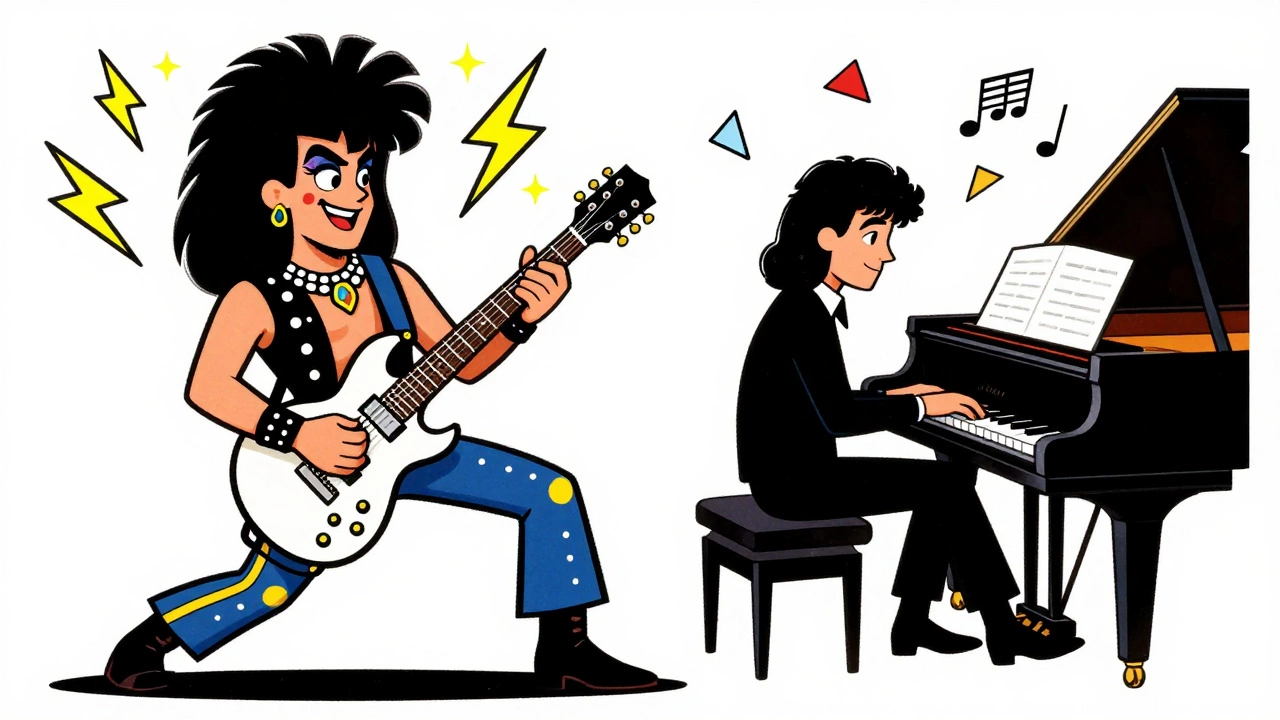
It would be a mistake to think only the biggest rock stars delivered great solos in the '80s. Some of the most impressive playing came from session musicians and fusion artists who operated behind the scenes or in niche genres.
Steve Lukather of Toto is a prime example. His solo on "Rosanna" (1982) is a study in precision. Unlike the raw energy of Van Halen or the bluesy wail of Slash, Lukather’s playing is clean, articulate, and incredibly complex. He blends jazz-influenced chromatic passing tones with rock phrasing. The tempo is slower (around 82 BPM), which allows him to focus on perfect intonation and rhythmic syncopation against the shuffle groove. It’s a solo that demands respect for its craftsmanship rather than its volume.
Then there is Allan Holdsworth, a British fusion guitarist who pushed technical limits even further. Tracks like "Devil Take the Hindmost" (1985) feature legato lines that flow like water. Holdsworth avoided traditional blues phrasing, opting instead for wide intervallic leaps and stacked fourths. His sound was horn-like, smooth, and utterly unique. While he may not have had mainstream radio hits, his influence on progressive and fusion guitarists was immense. He proved that the electric guitar could be as expressive and fluid as a saxophone.
The Hair Metal Explosion: Glam and Shred
You can’t talk about '80s guitar without mentioning the glam metal scene. Bands like Mötley Crüe, White Lion, and Ratt brought a different flavor to the table. This was the era of big hair, spandex, and dual-guitar harmonies.
Mick Mars of Mötley Crüe offers a fascinating counterpoint to the shredders. His solo on "Home Sweet Home" (1985) is short, sweet, and incredibly effective. It doesn't rely on speed. Instead, it uses carefully controlled vibrato and tasteful bends to tell a story. It’s a reminder that in the context of a power ballad, simplicity often beats complexity. The solo serves the song, building emotional intensity before the final chorus.
On the flip side, Vito Bratta of White Lion took the opposite approach. His cover of "Radar Love" (1989) features fast alternate-picked runs and tapped arpeggios that showcase sheer virtuosity. By the late '80s, shredding had become fully integrated into mainstream rock. Fans expected to see lightning-fast fingerwork on MTV, and players like Bratta delivered exactly that. This duality-melody versus speed-defined the hair metal aesthetic.
| Guitarist | Signature Technique | Key Gear | Emotional Impact |
|---|---|---|---|
| Eddie Van Halen | Two-handed tapping, whammy bar dives | Fender Stratocaster (Frankenstrat), Marshall Plexi | Excitement, innovation, energy |
| Slash | Wide vibrato, blues bends, melodic phrasing | Gibson Les Paul, Marshall JCM800 | Sadness, passion, nostalgia |
| Steve Lukather | Jazz-influenced chromatics, precise articulation | Fender Stratocaster, rack effects | Sophistication, polish, groove |
| Allan Holdsworth | Legato, wide intervals, horn-like phrasing | Carmine Appice guitar, high-gain amps | Awe, complexity, fluidity |
The Role of Technology and Production
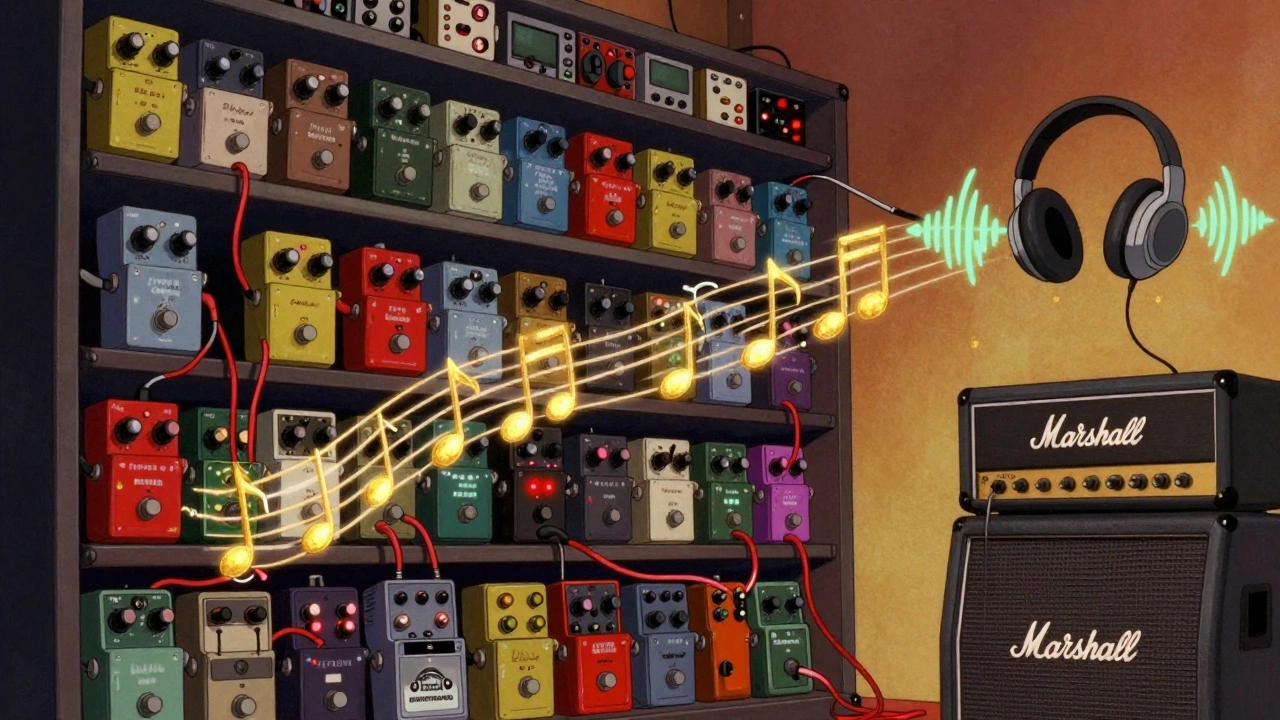
The sound of the '80s wasn't just about the players; it was also about the technology available to them. The rise of multitrack analog recording allowed guitarists to layer their solos. Double-tracking became common, especially in ballads. By recording the same solo twice and panning it left and right, producers created a massive, stereo-wide sound that felt larger than life.
Rack-mounted effects also played a huge role. Chorus, delay, and reverb were used liberally to add depth and space to the guitar tone. Steve Lukather’s work with Toto is a great example of this polished, processed sound. In contrast, Slash’s minimalist approach stood out precisely because it lacked these effects. His raw, dry tone cut through the mix in a way that felt more immediate and honest.
MTV, launched in 1981, changed how solos were perceived. Suddenly, guitarists were visual icons. Slash’s top hat and leather jacket, or Eddie Van Halen’s striped guitar, became part of the solo’s identity. The video format emphasized the dramatic nature of the lead break, framing it as the climax of the song. This visual component helped cement the status of these solos in popular culture.
Why These Solos Still Matter Today
Decades later, these solos remain relevant because they represent the peak of guitar-centric rock music. Modern production often prioritizes vocals and synths, leaving little room for extended instrumental breaks. But the '80s gave us a blueprint for how to write a solo that is both technically impressive and emotionally resonant.
For aspiring guitarists, studying these tracks offers valuable lessons. Eddie Van Halen teaches us about creativity and breaking rules. Slash teaches us about tone and feeling. Steve Lukather teaches us about precision and theory. Allan Holdsworth teaches us about expanding our musical vocabulary.
Whether you prefer the fiery energy of hair metal or the sophisticated grooves of AOR, the 1980s provided a diverse range of guitar heroes. Their solos are not just historical artifacts; they are living, breathing pieces of music that continue to inspire new generations of players. So next time you pick up your guitar, try learning one of these classics. You might just discover why the '80s will always be the golden age of rock guitar.
What made Eddie Van Halen's guitar style so unique in the 1980s?
Eddie Van Halen revolutionized rock guitar with his two-handed tapping technique, which allowed him to play complex arpeggios and chords at high speeds. He also mastered the use of the whammy bar for dramatic pitch bends and dive-bombs, creating a percussive and theatrical sound that influenced countless guitarists.
How did Slash achieve his signature singing guitar tone?
Slash achieved his iconic tone by using a Gibson Les Paul guitar with medium-output humbuckers plugged directly into a hot-rodded Marshall JCM800 amplifier. He avoided heavy use of effects pedals, relying instead on his playing technique-specifically wide vibrato and slow bends-to create a vocal-like, emotive sound.
Who are some underrated guitarists from the 1980s?
While Eddie Van Halen and Slash are household names, guitarists like Steve Lukather (Toto), Allan Holdsworth (fusion), and Mick Mars (Mötley Crüe) delivered exceptional solos. Lukather brought jazz sophistication to rock, Holdsworth pioneered fluid legato techniques, and Mars excelled at melodic, song-serving leads in the hair metal genre.
Did MTV influence the popularity of guitar solos in the 1980s?
Yes, MTV played a significant role. Music videos highlighted guitarists visually, turning them into icons. The dramatic presentation of solos in videos framed them as climactic moments in songs, increasing their cultural impact and encouraging bands to feature prominent lead breaks in their music.
What is the difference between hair metal solos and hard rock solos?
Hair metal solos often emphasize speed, dual-guitar harmonies, and flashy techniques like tapping and whammy bar tricks. Hard rock solos, particularly those by players like Slash, tend to focus more on blues-based phrasing, melodic content, and emotional expression, often using slower tempos and sustained notes.


