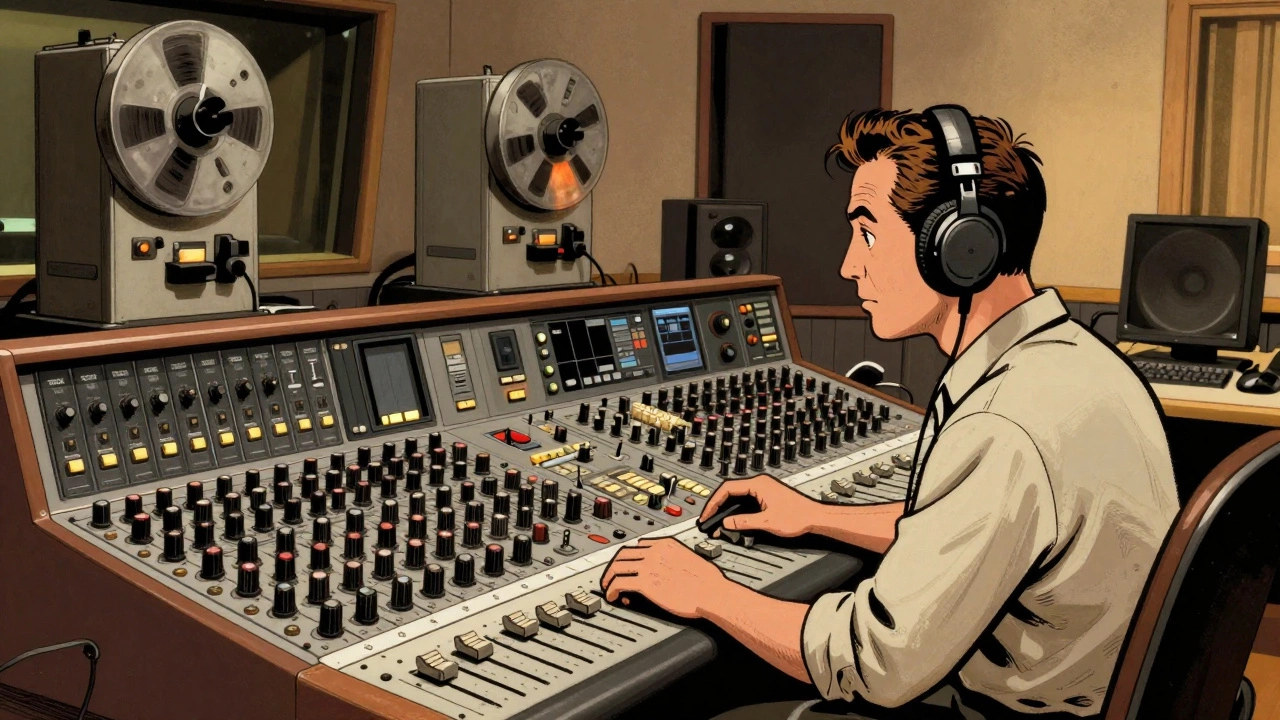

Walk into a modern bedroom studio, and you’ll see a laptop running software that costs less than a pair of jeans. Now imagine the year is 1994. To make a hit record, you needed access to a room worth millions, filled with analog tape machines, outboard gear, and engineers who treated mixing boards like surgical instruments. The 1990s producer era was a period where technological shifts in recording studios transformed music creation, elevating producers from technicians to primary creative architects. It wasn’t just about catchy melodies; it was about how those melodies were built, chopped, screwed, and polished using tools that were still being invented.
This decade marked a radical shift. Before the 90s, the producer was often seen as a facilitator-a person who helped capture a band’s live performance. By the end of the decade, the producer was the artist. Figures like Dr. Dre, Timbaland, and the Neptunes didn’t just record songs; they constructed sonic worlds that defined genres. This change was driven by two massive forces: the democratization of digital technology and the rise of hip-hop as the dominant cultural force in American music.
The Digital Revolution: Pro Tools Changes Everything
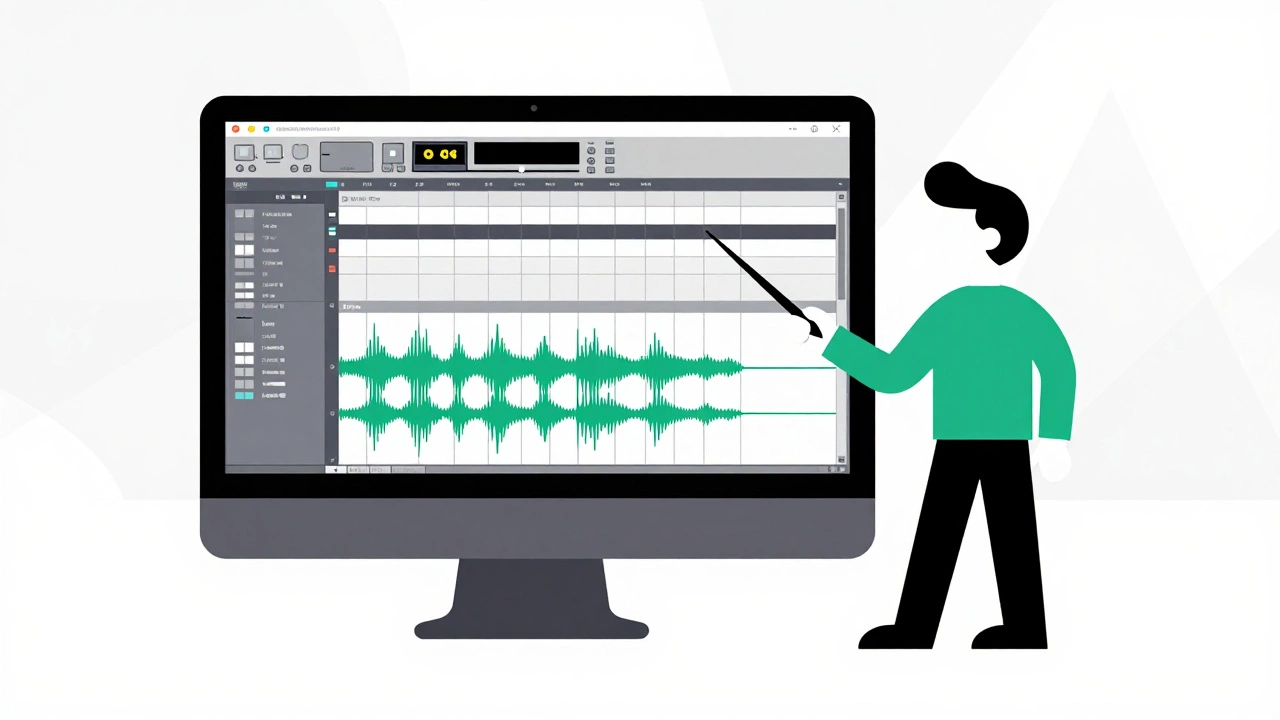
If there is one piece of technology that defines the 1990s sound, it is Pro Tools is a digital audio workstation developed by Avid Technology that allowed for non-linear editing, virtual mixing, and computer-based recording.
Before Pro Tools became ubiquitous around 1994-1995, editing meant cutting physical magnetic tape with a razor blade. If you made a mistake, you had to splice it back together. It was permanent, expensive, and slow. Pro Tools changed this instantly. Suddenly, a producer could move a vocal take three inches to the left on a screen, copy a drum loop, or reverse a guitar solo with a click. This flexibility encouraged experimentation. You could try ten different arrangements in an hour instead of ten days.
This shift lowered the barrier to entry but raised the ceiling for creativity. Producers no longer needed to wait for studio time booked months in advance. They could work late into the night in smaller rooms, refining sounds with precision that analog tape couldn’t match. The "glitch" aesthetic-the slightly robotic, perfectly quantized feel of many 90s pop and hip-hop records-came directly from this new ability to edit audio digitally. It wasn’t just cleaner; it was sharper, more aggressive, and distinctly modern.
Hip-Hop Architects: From Sampling to Synthesis
While pop music adapted to digital tools, hip-hop producers were already ahead of the curve, treating the studio as their primary instrument. The foundation laid in the 80s by pioneers like Marley Marl at House of Hits was a legendary New York studio known for pioneering complex sampling techniques and defining East Coast hip-hop aesthetics
In the early 90s, producers like DJ Premier and Pete Rock refined the art of sampling. They took obscure funk and soul breaks, slowed them down, and layered them with crisp drum machines. But as copyright laws tightened and sample clearance became a nightmare, producers had to innovate further. Enter the synthesizer.
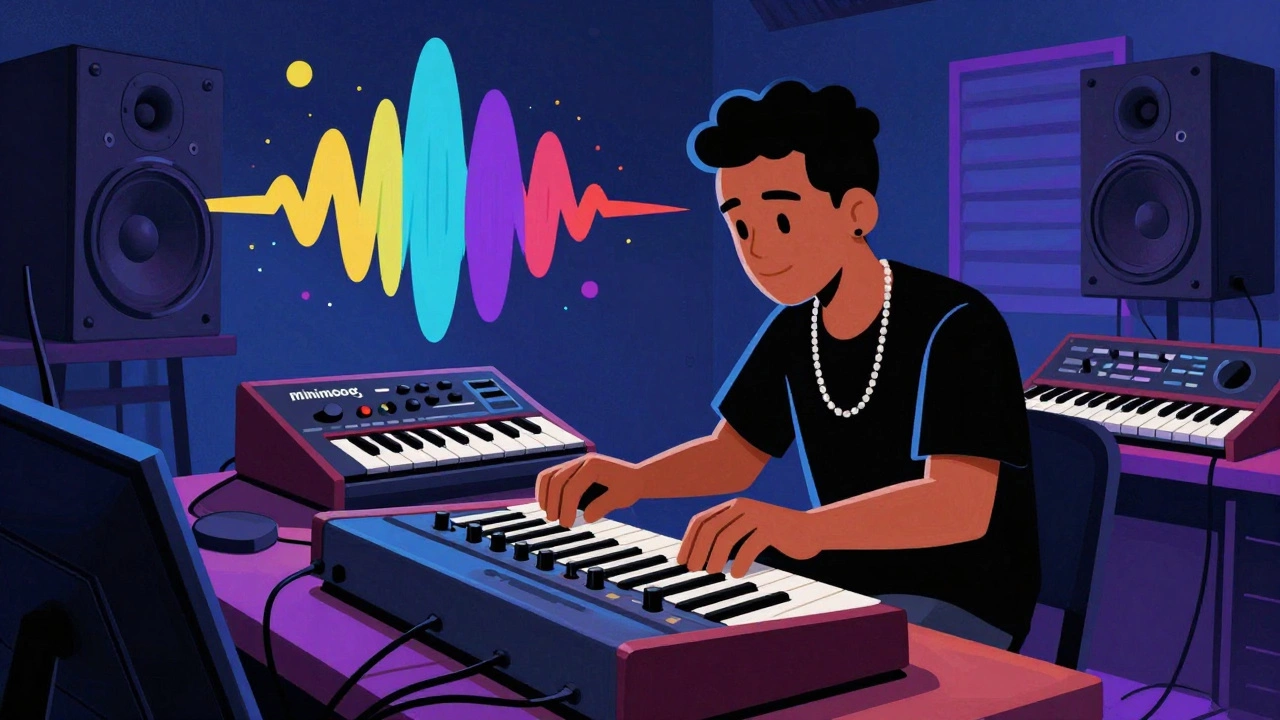
Dr. Dre is a pioneering hip-hop producer whose album 'The Chronic' introduced G-funk, blending heavy basslines with melodic synthesizers and West Coast funk influences. His 1992 album *The Chronic* didn’t just rely on samples; it used the Minimoog Voyager (and its predecessors) to create thick, swirling basslines that felt organic yet synthetic. This "G-funk" sound dominated the West Coast and proved that a producer could write a song entirely within the studio, without needing a traditional band.
On the East Coast, the focus remained on grit and texture. Studios like D&D Studios was a prominent East Coast recording facility that served as a hub for Golden Age hip-hop artists including Nas, Jay-Z, and The Notorious B.I.G.
The contrast between these two approaches created a rich dialectic in 90s music. Was the beat supposed to be clean and melodic, or raw and sampled? The answer was both, and producers constantly pushed the boundaries of what a "beat" could do.
The Pop Factory: Max Martin and the Swedish Sound
While hip-hop was revolutionizing rhythm, pop music was undergoing a similar transformation in Sweden. In the mid-90s, a young producer named Max Martin is a Swedish songwriter and producer who redefined pop music structure with mathematically precise hooks, pre-chorus builds, and minimalist production techniques
Martin approached songwriting like engineering. He analyzed why certain songs worked and stripped away everything that didn’t. Working with artists like Ace of Base and later Britney Spears and Backstreet Boys, he perfected the "hook." He realized that in a radio environment cluttered with choices, clarity was king. His productions were sparse, loud, and incredibly catchy.
This "Swedish Sound" relied heavily on digital sequencing and meticulous arrangement. Unlike the lo-fi aesthetic of some hip-hop, Martin’s tracks were polished to a high shine. Every element had a specific frequency range assigned to it, ensuring that nothing competed for space. This approach taught the world that pop music could be manufactured with scientific precision, turning hits into predictable, repeatable formulas.
Timbaland and the Rhythmic Avant-Garde
If Max Martin represented order, Timbaland is an innovative producer known for his unconventional use of percussion, synthesized textures, and off-kilter rhythmic patterns in R&B and pop music
Timbaland didn’t just use drums; he used everything as a drum. Car alarms, squeaky toys, metallic clangs-he sampled mundane objects and pitched them up to create bizarre, futuristic soundscapes. Working with artists like Aaliyah and Missy Elliott, he broke the standard 4/4 time signature conventions that dominated R&B. His beats were syncopated, jerky, and unpredictable.
This style required a deep understanding of digital manipulation. Timbaland would chop up samples so finely that they lost their original identity, becoming pure texture. He showed that production could be playful and weird while still topping the charts. His influence extended beyond hip-hop into mainstream pop, forcing other producers to think outside the box regarding rhythm and timbre.
The Neptunes: Minimalism Meets Maximum Impact
Another duo that reshaped the landscape was The Neptunes was the production team of Pharrell Williams and Chad Hugo, known for their minimalist, staccato-heavy beats and distinctive snare sounds
Their sound was instantly recognizable: thin, skittering hi-hats, muted guitars, and dry, punchy snares. They removed the low-end warmth that characterized much of 90s music, replacing it with a cold, electronic edge. This minimalism forced listeners to focus on the vocal performance and the lyrical content. When they produced for Nelly Furtado or Justin Timberlake, they brought a hip-hop sensibility to pop stars, blurring genre lines completely.
The Neptunes also demonstrated the power of branding. Their intro-"Nelly Furtado..." or "Justin Timberlake..." followed by their signature tag-became a stamp of quality. Fans knew that if The Neptunes touched a track, it would have a unique sonic fingerprint. This elevated the producer’s name to celebrity status, rivaling the artists themselves.
Comparing Production Styles of the 1990s
| Producer/Group | Key Innovation | Primary Genre | Signature Sound |
|---|---|---|---|
| Dr. Dre | G-Funk Synthesis | Hip-Hop | Heavy bass, melodic synths, smooth vocals |
| Max Martin | Structural Precision | Pop | Clean hooks, sparse instrumentation, loud mix |
| Timbaland | Unconventional Percussion | R&B/Pop | Bizarre samples, syncopated rhythms, futuristic textures |
| The Neptunes | Minimalist Electronics | Hip-Hop/Pop | Dry snares, skittering hi-hats, muted guitars |
| DJ Premier | Chopped Samples | Hip-Hop | Gritty loops, dusty drums, dense layering |
The Legacy of the 1990s Studio
The innovations of the 1990s didn’t disappear when the millennium turned. They became the standard. Today’s producers still use Pro Tools (or its successors), still sample obscure records, and still structure pop songs with the mathematical precision Max Martin pioneered. The distinction between "producer" and "artist" remains blurred, especially in hip-hop and electronic music.
More importantly, the 90s taught us that technology isn’t just a tool-it’s a collaborator. The limitations of tape forced creativity in one way; the infinite possibilities of digital audio forced creativity in another. Whether it was the warm, analog saturation of a classic hip-hop beat or the cold, digital sheen of a pop hit, the 1990s proved that the studio itself could be the star of the show.
How did Pro Tools change music production in the 1990s?
Pro Tools introduced non-linear editing, allowing producers to cut, paste, and manipulate audio digitally without splicing physical tape. This increased speed, reduced costs, and enabled new creative techniques like perfect quantization and complex layering, fundamentally changing the workflow and aesthetic of recorded music.
Who were the most influential producers of the 1990s?
Key figures include Dr. Dre (for G-funk), Max Martin (for pop structure), Timbaland (for rhythmic innovation), The Neptunes (for minimalist electronics), and DJ Premier (for sampling techniques). Each reshaped their respective genres and influenced subsequent generations of producers.
What is G-funk and why was it important?
G-funk is a subgenre of hip-hop characterized by heavy basslines, melodic synthesizers, and samples from 1970s funk music. Popularized by Dr. Dre's *The Chronic*, it shifted hip-hop production away from pure sampling toward original composition, creating a smoother, more atmospheric sound that dominated West Coast rap.
How did Max Martin influence pop music?
Max Martin applied a scientific approach to songwriting, focusing on clear, repetitive hooks and minimalist production. His emphasis on structural precision and ear-candy details created a blueprint for modern pop hits, making him one of the most successful producers in history.
Why were hip-hop studios like D&D and House of Hits significant?
These studios were cultural hubs where iconic albums were created. They provided the technical infrastructure and creative environment for producers to experiment with sampling and drum programming, helping to define the sonic identity of East Coast hip-hop during its golden age.