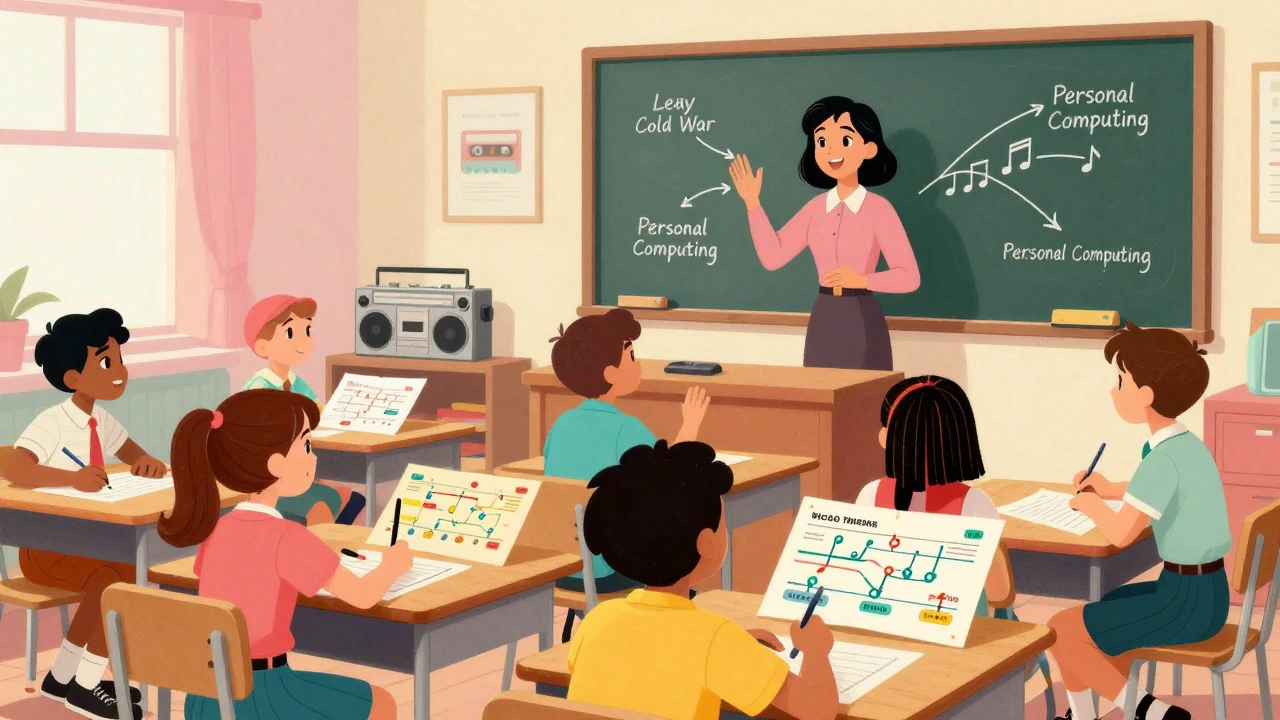

Imagine a classroom where the lesson plan isn't about Shakespeare or the Industrial Revolution, but about synthesizers, shoulder pads, and the cultural impact of MTV, the 24-hour music video channel that revolutionized how audiences consumed pop culture in the early 1980s. It sounds like a fun distraction, right? But for educators today, teaching 1980s pop history, the academic study of popular music from 1970-1989 within formal educational curricula is a serious tool for connecting students with social, political, and technological changes. We aren't just playing hits; we are using them as primary sources to understand a decade that defined modern media.
From Fringe Topic to Core Curriculum
If you went to public school in the United States before the 1990s, chances are your music class focused on classical repertoire, large ensembles, and sheet music. Popular music was often dismissed by traditional educators as "unworthy of serious study." This wasn't always the case everywhere. In Sweden, for instance, municipal music schools had already embraced popular genres by the early 1980s. They provided well-equipped ensemble studios where students could form rock and pop groups as part of their formal education. Hagström’s music school, a private Swedish enterprise, ran courses across the country from the late 1940s until its collapse in 1983, proving that guitar-based training was institutionally supported long before it became mainstream in American universities.
In the US, the shift happened slower. It took until the late 1980s and 1990s for institutions like the Rock and Roll Hall of Fame in Cleveland and the Experience Music Project in Seattle to start offering workshops that legitimized pop music education. Even elite conservatories were slow to adapt. Oberlin Conservatory, known for prestigious classical programs, didn't launch its songwriting-based popular music program, "Music for Everyone," until 2009. That’s more than two decades after the 1980s ended. Today, however, 1980s pop history is a standard module in middle schools, high schools, and undergraduate courses, marking a complete reversal from its status as a fringe topic four decades ago.
How Teachers Structure 1980s Lessons
So, how do you actually teach this? You don't just press play on a playlist. Effective curricula break down the decade into specific themes and activities. A great example is the "Explore Music 8" module from Nova Scotia’s curriculum. It targets Grade 8 students (typically aged 13 to 14) and requires them to investigate superstar artists of the 1970s and 1980s. But here’s the twist: they have to create a timeline of political, social, cultural, technological, fashion, and sports developments parallel to musical events.
Students work in small groups, given just 10 to 15 minutes to research significant timeline entries. They must justify how each event impacted the music of the era. This turns abstract history into concrete connections. For example, a student might link the rise of personal computing to the development of synthesizer technology, which then influenced bands like Depeche Mode or New Order. Another resource, the KNILT unit on "Pop and Hard Rock" and "Dance Revolution," organizes lessons around stylistic features rather than just dates. This helps students understand why disco faded and synth-pop rose, linking musical shifts to broader cultural movements.
| Approach | Focus Area | Typical Activity | Target Audience |
|---|---|---|---|
| Timeline Integration | Social & Political Context | Create parallel timelines of music and historical events | Middle School (Grades 6-8) |
| Genre Analysis | Stylistic Evolution | Analyze shift from guitar-based to synth-based music | High School / Undergraduate |
| Media Literacy | Visual Culture & MTV | Produce original music videos mimicking 1980s aesthetics | Secondary Education |
| Critical Pedagogy | Industry Power & Representation | Deconstruct criteria for historical significance in lyrics | Undergraduate / Advanced High School |
The Role of Technology and Media
You can’t talk about 1980s pop without talking about technology. The decade saw a massive shift from guitar-centric rock to synthesizer-driven sounds. This wasn't just an artistic choice; it was driven by economic and technological realities. When Hagström collapsed in 1983, it was partly due to the sudden halt in dance orchestra popularity and the shift toward electronic instruments. Teaching this history means discussing how drum machines and samplers democratized music production, allowing smaller acts to compete with major labels.
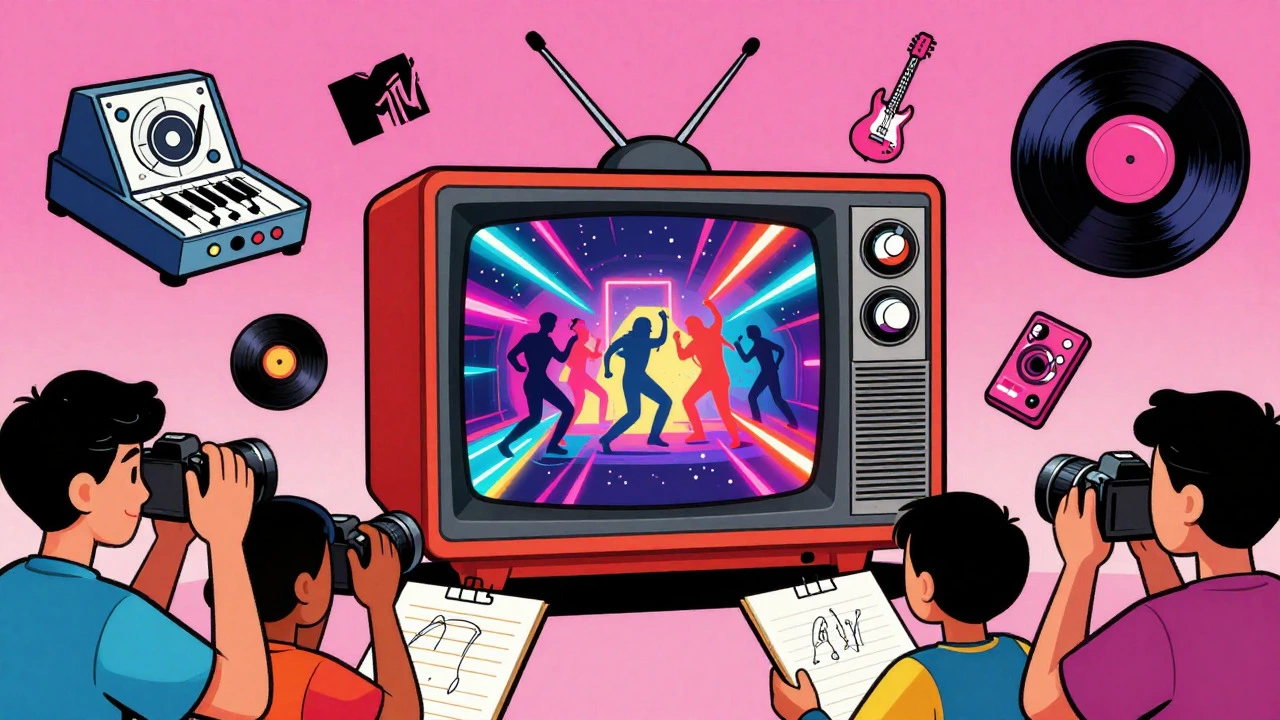
Then there’s MTV. Launched in 1981, it changed everything. Before MTV, listeners relied on radio stations, record shops, and magazines. MTV provided 24-hour access to music videos, creating a new market for visual branding. Educators use these videos as primary sources. In the Explore Music 8 module, students are asked to create their own music videos. This isn't just a creative exercise; it teaches them about the relationship between audio and visual storytelling, a skill that is directly relevant to today’s streaming platforms like TikTok and YouTube. By understanding how MTV transformed listening habits, students gain insight into how media shapes culture-a lesson that remains incredibly relevant in 2026.
Beyond Nostalgia: Critical Thinking Skills
One of the biggest risks in teaching 1980s pop is falling into the trap of nostalgia. It’s easy to treat the decade as a collection of catchy tunes and funny fashion choices. But scholars like Blake argue for a "critical pedagogy" that goes deeper. This approach encourages students to interrogate issues of race, gender, technology, and globalization within the music industry.
A powerful tool for this is Billy Joel’s 1989 song "We Didn’t Start the Fire." Scott Allsop, writing for the Historical Association, describes a lesson where students deconstruct the song’s implicit criteria for historical significance. Why did Joel choose certain events and ignore others? What does his list say about the perspective of a white male artist in 1989? Students then create updated versions of the song, applying the same critical lens to recent history. This method transforms a pop song into a scaffold for metacognitive historical reasoning. It forces students to question who gets to decide what is "important" in history.
Vocational Roots and Modern Applications
While public schools were slow to adopt pop music, private institutions were ahead of the curve. In 1987, the Los Angeles Times highlighted schools like Musicians Institute in Hollywood, which offered intensive one-year programs in guitar, bass, and percussion. Tuition was around $4,095 for 1,200 hours of instruction. These vocational schools treated rock and pop as serious trades, not just hobbies. Berklee College of Music in Boston also expanded its offerings, blending European-style conservatory training with contemporary performance.
This vocational model evolved into franchises like School of Rock, founded in 2002. By the early 2010s, it served over 10,000 students across 31 states. While School of Rock focuses on performance, its success shows the enduring demand for structured popular music education. Today, teachers blend these approaches. They might use the ensemble-based pedagogy of Swedish municipal schools-where small-group rehearsal is formalized as an educational activity-alongside the critical analysis methods developed in university departments. The goal is to balance practical skills with historical understanding.
Challenges in the Classroom
Teaching 1980s pop history isn't without its challenges. Time constraints are a major issue. In the Explore Music 8 module, students have only 10 to 15 minutes per group to research timeline entries. That’s tight! Teachers need to scaffold complex tasks carefully. Another challenge is balancing performance with analysis. Students often want to play the songs, while instructors want them to analyze industry structures. Finding the right mix requires clear objectives and engaging activities that don't feel like homework.
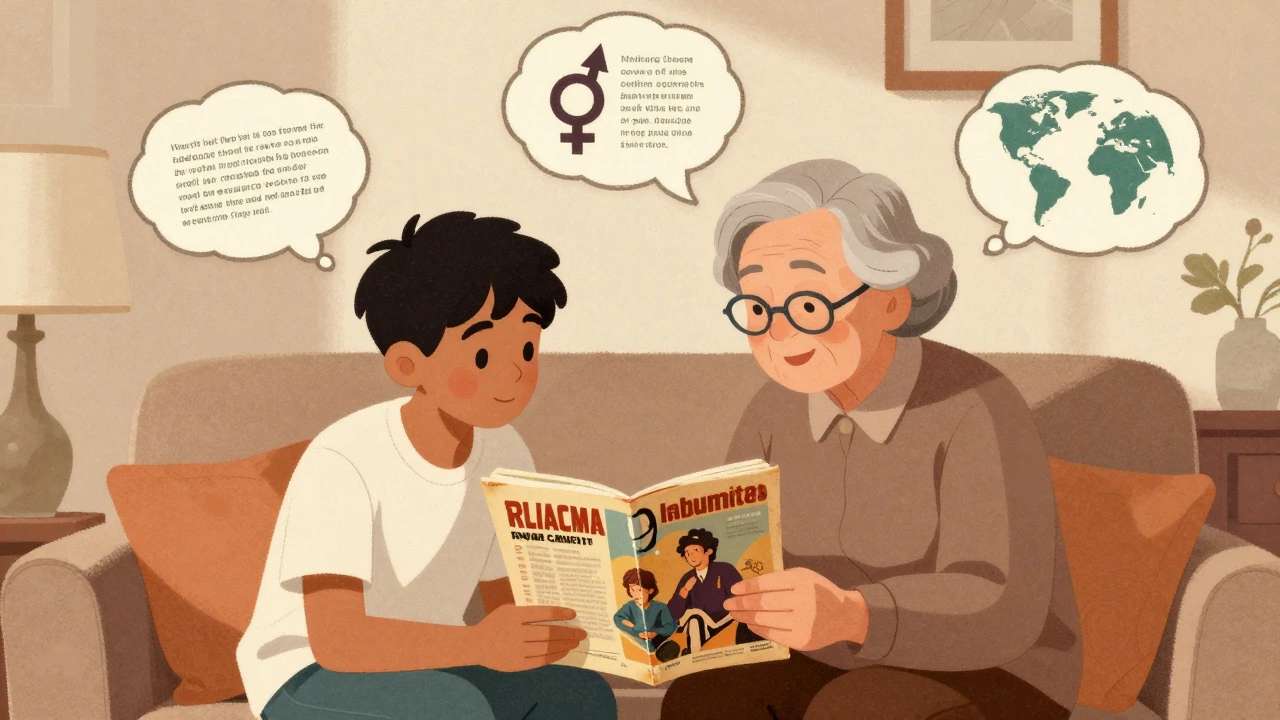
There’s also the generational gap. Many teachers today weren't alive in the 1980s. However, this can be an advantage. Modules like Explore Music 8 encourage students to interview their parents or caregivers about their experiences in the 1970s and 1980s. This turns family memories into primary sources, bridging the gap between past and present. It makes history personal and immediate, showing students that the music they hear at home has a rich context beyond just being "oldies."
Future Directions in Pop History Education
As we move further away from the 1980s, the distance allows for more objective analysis. Resources like TES’s lecture on 1980s electro and synth-pop, and BBC Bitesize’s reflection on MTV’s 40-year history, show that this content is still being updated and refined. Future teaching will likely emphasize global flows of music, representation, and the digital transition from analog to streaming. The key is to keep the focus on critical engagement rather than mere consumption. By treating 1980s pop as a legitimate academic subject, we equip students with the tools to understand not just the past, but the media landscape they live in today.
Why is teaching 1980s pop history important in schools?
Teaching 1980s pop history connects students with the social, political, and technological changes of that decade. It uses familiar music to explore complex topics like media influence, globalization, and cultural identity, making history more engaging and relevant for young learners.
How did MTV change music education?
MTV introduced music videos as a central part of pop culture, shifting focus from audio-only to visual storytelling. Educators now use these videos as primary sources to teach media literacy, analyzing how visuals shape audience perception and marketing strategies.
What is the difference between classical and pop music education?
Classical education traditionally focuses on notation, harmonic analysis, and large ensemble discipline. Pop music education emphasizes contextual learning, social issues, media literacy, and small ensemble performance, often prioritizing cultural relevance over technical tradition.
Can students learn historical thinking through pop songs?
Yes. Songs like Billy Joel's "We Didn’t Start the Fire" are used to teach students how to evaluate historical significance. By analyzing why certain events are included or excluded, students develop critical thinking skills and understand the subjective nature of history.
When did popular music become part of school curricula?
In Sweden, popular music was integrated into municipal schools by the early 1980s. In the US, it took longer, with widespread acceptance in public schools occurring in the late 1990s and 2000s, following earlier adoption by private vocational institutes and universities.