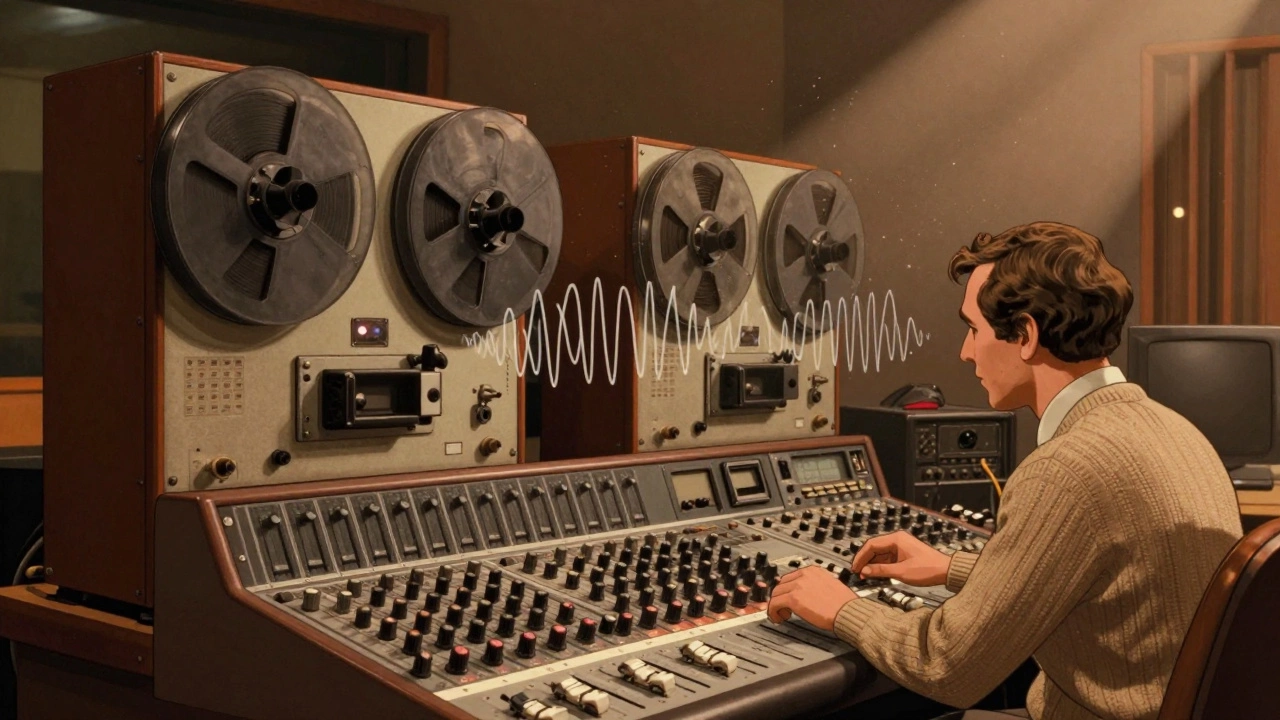

Walk into a recording studio in 1975, and you’d hear the hum of massive reel-to-reel machines spinning two-inch analog tape that captured sound as continuous magnetic waveforms. Fast forward to 1989, and those same rooms were filled with engineers debating whether the new digital recorders sounded "cold" or "transparent." This wasn’t just a change in equipment; it was a fundamental shift in how we perceived music itself. The transition from analog tape to digital recording systems during the 1980s redefined professional audio production, introducing higher fidelity but sparking debates about sonic character that continue today.
Understanding this era requires looking beyond simple specs. It’s about why studios spent fortunes on machines like the Sony DASH system despite their complexity, and why many engineers still kept their old analog decks running alongside them. Let’s break down what actually changed in those control rooms.
The Analog Standard Before the Shift
Before digital arrived, the industry standard was clear. Professional studios relied on 24-track machines using wide 2-inch tape. This format dominated because it offered a reliable way to layer instruments without excessive noise buildup. However, analog tape had inherent limitations. The signal-to-noise ratio typically hovered around 60-70 dB, meaning you could often hear a faint hiss if you turned up the volume too much.
Engineers worked within these constraints creatively. They embraced the "warmth" of tape saturation-the subtle compression and harmonic distortion that occurred when driving the tape hard. This coloration became part of the desired aesthetic for rock, jazz, and pop records. But there was a physical cost. Each generation of copying degraded the sound slightly, and the mechanical nature of the reels introduced wow and flutter-tiny speed variations that affected pitch stability.
| Attribute | Typical Value/Characteristic |
|---|---|
| Tape Width | 2 inches (for 24 tracks) |
| Signal-to-Noise Ratio | 60-70 dB |
| Track Count | Up to 24 tracks |
| Sonic Character | Warm, saturated, slight hiss |
Early Digital Pioneers: 3M and Mitsubishi
The first cracks in the analog monopoly appeared in the mid-1970s. Companies like 3M and Mitsubishi began developing systems that encoded audio as binary data while still using magnetic tape for storage. This hybrid approach allowed them to overcome the noise floor issues of analog without abandoning the familiar reel-to-reel workflow.
The 3M digital recorder was a game-changer. It promised a signal-to-noise ratio of over 90 dB, effectively eliminating the audible hiss associated with analog tape. Early adopters noted that the resulting masters were "transparent," meaning they reproduced the live performance with startling accuracy. Meanwhile, Mitsubishi introduced the ProDigi format, which used 1-inch tape to record 32 tracks. This was a significant improvement in density, allowing more instruments to be recorded simultaneously on narrower media.
However, these early systems faced challenges. They were expensive, complex to maintain, and required precise head alignment. Despite these hurdles, they proved that digital encoding could deliver superior technical performance, setting the stage for broader adoption.
Sony DASH and the Track Count Revolution
If 3M and Mitsubishi opened the door, Sony kicked it wide open with the introduction of the Digital Audio Stationary Head (DASH) system. Released in the early 1980s, DASH represented a quantum leap in capacity. By utilizing stationary heads similar to those in VCRs, Sony managed to fit up to 48 tracks of 16-bit audio onto just 1/2-inch tape.
This efficiency was revolutionary. Previously, doubling the track count meant doubling the tape width, which increased costs and mechanical instability. With DASH, studios could record entire orchestras or complex drum kits with individual mic placements without sacrificing space. The ability to store timecode separately from the audio tracks also freed up channels, ensuring all 48 tracks were available for sound rather than synchronization data.
Studios rushed to upgrade. The promise of cleaner sound, greater flexibility, and lower long-term tape costs made DASH an attractive investment. Yet, not everyone was convinced. Some engineers argued that the pristine clarity of digital recording exposed every flaw in a performance, removing the forgiving nature of analog tape.
Sound Quality: Warmth vs. Transparency
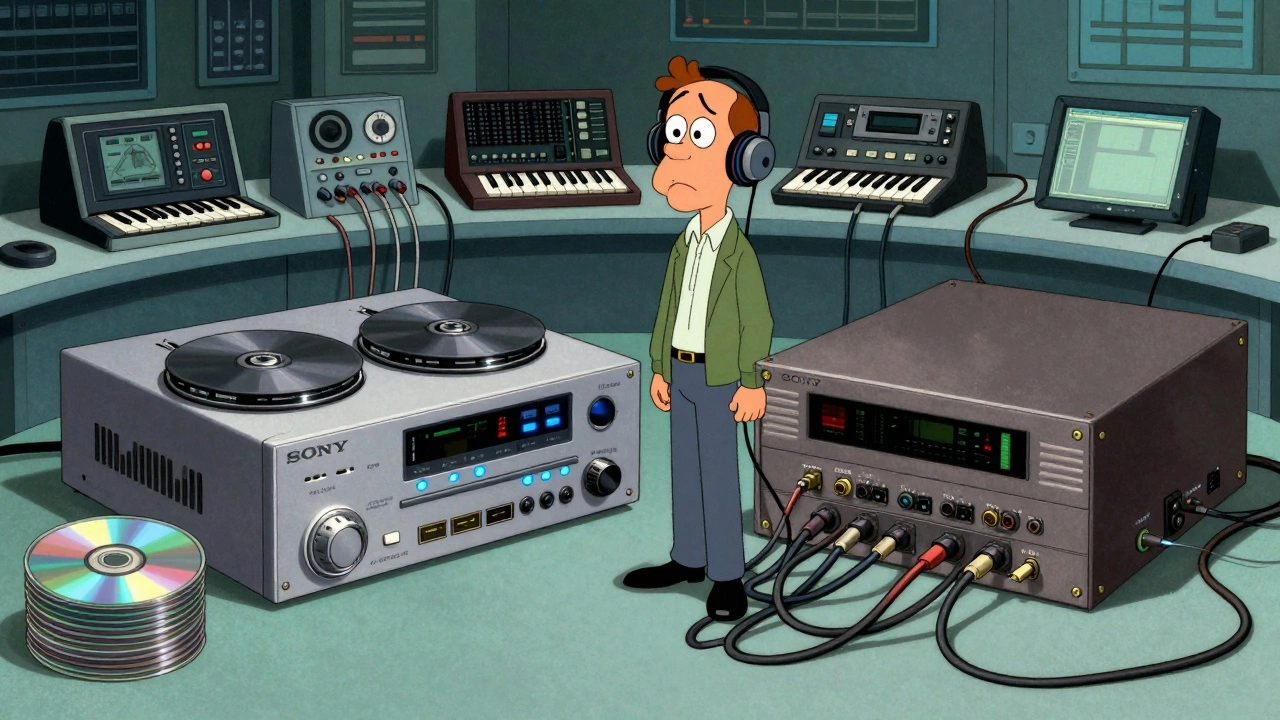
The debate over sound quality defined the 1980s transition. Proponents of digital recording highlighted its technical superiority. With a dynamic range exceeding 90 dB and minimal distortion, digital systems offered a clean canvas for producers. Critics, however, missed the nonlinear characteristics of analog tape. They described early digital sounds as "clinical," "brittle," or "harsh," particularly at the standard 16-bit/44.1 kHz resolution used in CD playback.
This perception stemmed partly from the technology of the time. Early digital converters and filters weren't as sophisticated as modern ones, leading to artifacts that colored the high frequencies. Additionally, the lack of natural compression meant transients-like snare hits or piano notes-could sound sharper and more aggressive. Engineers who valued the glue-like effect of tape saturation found themselves missing that organic feel.
Interestingly, opinions varied by genre. Electronic and pop producers often welcomed the precision and cleanliness of digital, while rock and jazz purists clung to analog warmth. This divide influenced mixing techniques, with some engineers deliberately adding distortion plugins later to mimic tape effects.
Workflow Changes and MIDI Integration
Beyond sound, the shift to digital altered studio workflows significantly. One major advantage was synchronization. As MIDI (Musical Instrument Digital Interface) became standard between 1981 and 1983, studios needed ways to lock sequencers and drum machines to tape machines. Digital recorders integrated more smoothly with these clocked systems, allowing precise editing and recall.
Analog tape required physical splicing and punch-ins, which were destructive processes-you couldn’t undo a cut easily. While digital tape didn’t offer the nonlinear editing of modern computer-based workstations, it did allow for easier duplication and archival. Master tapes stored digitally were less prone to wear and print-through (where sound bleeds from one layer to another), making them safer for long-term storage.
However, learning curves were steep. Technicians had to master new maintenance routines, such as cleaning laser heads for ADAT systems or aligning video heads for PCM recorders. Smaller studios often waited until prices dropped and reliability improved before making the switch, continuing to use analog for tracking while adopting digital formats like DAT for mixdowns.
Consumer Impact: The Rise of the Compact Disc
The studio transition mirrored changes in consumer habits. The introduction of the Compact Disc (CD) in 1982 marked the beginning of the end for vinyl dominance. CDs offered scratch-free playback, random access, and the same 16-bit/44.1 kHz resolution used in professional digital recording.
For artists and labels, this created pressure to produce material optimized for digital playback. Recordings made on analog tape were transferred to digital masters for CD pressing, sometimes involving multiple conversions that could degrade quality if not handled carefully. The convenience and durability of CDs accelerated the push toward digital workflows in studios, as producers wanted to ensure their final products matched the medium's capabilities.
Legacy of the 1980s Transition
Today, we view the 1980s transition not as a victory of one format over another, but as the birth of a hybrid ecosystem. Analog tape never disappeared; it evolved into a niche tool prized for its creative potential. Many modern producers route signals through tape machines or use emulations to capture that sought-after warmth. Meanwhile, digital remains the backbone of production, offering unparalleled flexibility and precision.
The lessons from this era remind us that technology serves art, not the other way around. Whether you prefer the grit of analog or the clarity of digital, the goal remains the same: capturing the emotion of a performance. Understanding this history helps us appreciate both the tools we use today and the artistic choices that shaped the music we love.
Why did studios switch from analog to digital in the 1980s?
Studios switched primarily for higher signal-to-noise ratios (over 90 dB vs. 60-70 dB for analog), increased track counts (up to 48 tracks on narrower tape), and better archival stability. Digital systems eliminated tape hiss and reduced mechanical issues like wow and flutter.
What was the Sony DASH system?
The Sony DASH (Digital Audio Stationary Head) system was a pioneering digital multitrack recorder introduced in the early 1980s. It used stationary heads to record up to 48 tracks of 16-bit audio on 1/2-inch tape, significantly increasing capacity compared to earlier formats.
Did digital recording sound worse than analog in the 1980s?
Many engineers felt early digital sounded "clinical" or "harsh" due to less sophisticated converters and filters. While technically cleaner with no hiss, it lacked the natural saturation and compression of analog tape, which some considered musically pleasing.
How did MIDI influence the transition to digital?
MIDI allowed precise synchronization between sequencers, drum machines, and tape recorders. Digital recorders integrated more smoothly with these clocked systems, enabling tighter timing and easier editing, which was crucial for emerging electronic and pop production styles.
Is analog tape still used in modern studios?
Yes, analog tape is still used, particularly for tracking drums and vocals to achieve specific tonal characteristics like warmth and saturation. Many producers use tape machines or digital emulations to add color to otherwise clean digital recordings.