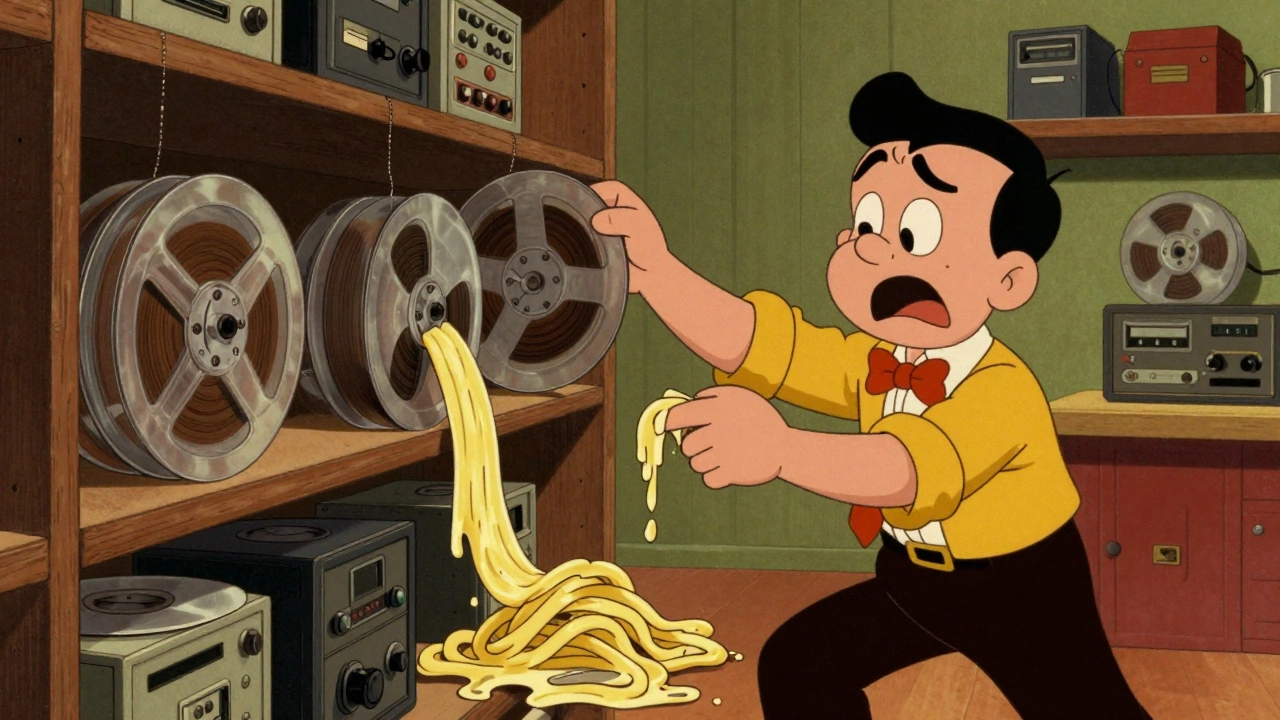

You pull a reel from the shelf. It’s supposed to be the master recording for a track you’ve been waiting years to release. You thread it onto the deck, press play, and hear nothing but a wet, squelching noise. The tape is sticking to the heads. This isn’t just bad luck; it’s sticky shed syndrome, a chemical degradation process where the binder holding magnetic oxide particles breaks down due to hydrolysis. Without intervention, that content is gone forever. But before you panic, there is a proven rescue method: tape baking.
Tape baking is not magic, but it is the closest thing archivists have to a time machine for degraded media. By applying controlled heat and low humidity, you can temporarily reverse the effects of binder hydrolysis, making the tape playable again. However, this is a temporary fix, not a cure. If you bake the tape but don’t copy it immediately, you lose the window. In this guide, we’ll walk through exactly how to bake tape safely, what storage conditions prevent this disaster in the first place, and when standard baking isn’t enough.
Understanding Sticky Shed Syndrome
Before you turn on the oven-or rather, the incubator-you need to understand what you’re fighting. Magnetic tape consists of three layers: a plastic base, a binder layer, and magnetic oxide particles. Over time, moisture penetrates the tape. This triggers hydrolysis, a reaction that breaks down the binder. When the binder fails, the oxide particles detach and stick to playback heads. This is why you hear squealing or see debris on your capstans.
The symptoms are distinct. If you play a tape and hear a high-pitched squeal, the tape is rapidly sticking to and releasing from the head. If you see black dust accumulating on the transport mechanism after a short play, the oxide is shedding. In severe cases, the tape may physically stretch or break. Recognizing these signs early is critical. Once the oxide has completely detached, no amount of heat will restore the signal. You must act while some integrity remains.
The Tape Baking Process: Step-by-Step
Baking works by driving off excess moisture from the binder, allowing it to regain its tackiness temporarily. This process requires precision. Too much heat damages the plastic base; too little does nothing. Based on industry standards from the Library of Congress and research by Sarah Norris, here is the protocol for ¼-inch open-reel tape, the most common format in studio archives.
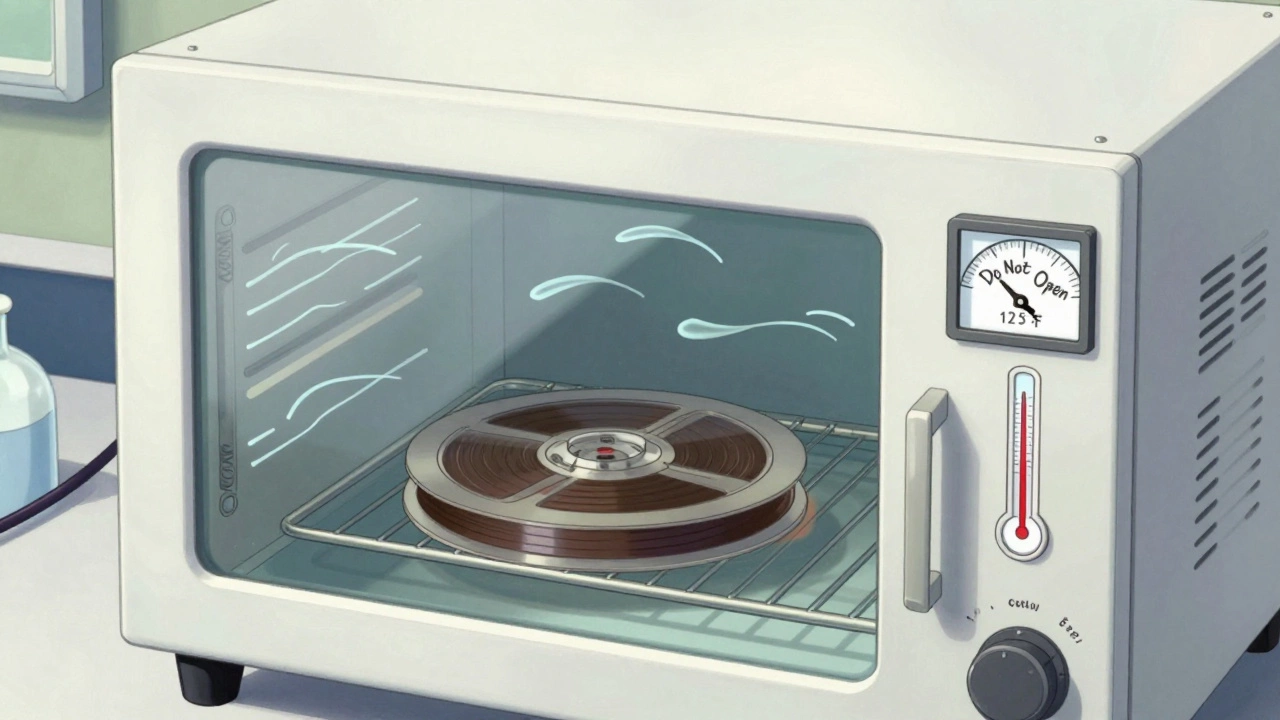
- Select the right equipment: Do not use a kitchen oven. Household ovens lack the precise temperature control needed and often have hot spots that can warp tape. Use a laboratory-grade incubator, such as the Fisher Scientific Isotemp Incubator 516D, or a specialized tape baker designed for archival work.
- Set the temperature: For ¼-inch tape, set the incubator to 125-130°F (51-54°C). Some institutions, like the National Park Service, recommend a more conservative 122°F (50°C) for eight hours. Stick to the lower end if you are unsure about the tape’s condition.
- Determine the duration: Bake for 4-8 hours. More severely degraded tapes may require longer exposure, but never exceed 8 hours without professional assessment. Wider formats (½-inch, 1-inch) generally require longer times, but data on these is less standardized.
- Cool properly: This step is often rushed but is vital. Remove the tape from the incubator and let it cool in a sealed container or bag to prevent moisture from re-entering immediately. Best practice dictates cooling for 24 hours. The National Park Service recommends this full cooling period to stabilize the binder.
- Copy immediately: The restored playability lasts only about one month. The National Park Service advises copying within three days. Transfer the content to a digital format or fresh analog tape as soon as possible. Do not wait.
Remember, baking is a temporary restoration. It buys you time to save the content, not to preserve the physical tape indefinitely. After copying, the original tape will likely degrade again if played frequently.
Storage Conditions That Prevent Degradation
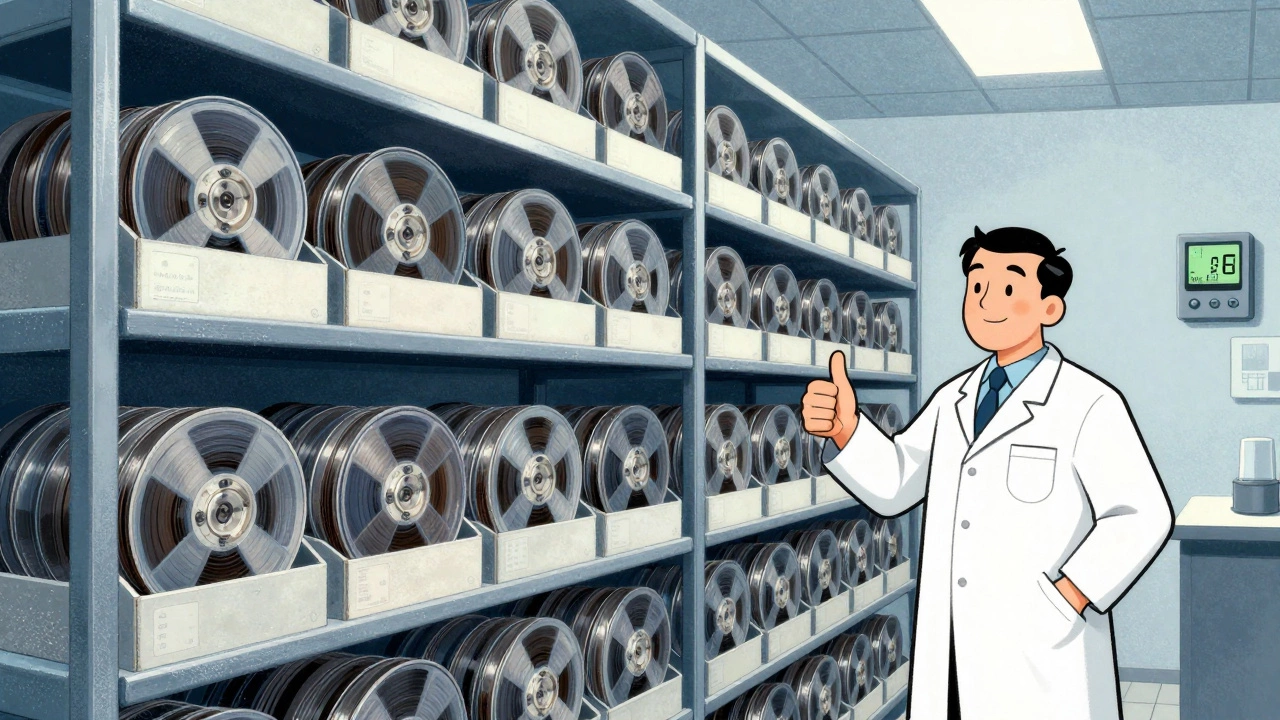
The best way to avoid sticky shed syndrome is to prevent it. Proper storage slows down hydrolysis significantly. Different institutions have slightly varying recommendations, but the consensus points to cool, dry environments.
| Institution / Source | Temperature | Relative Humidity | Duration Focus |
|---|---|---|---|
| Library of Congress (Long-term) | 65-70°F (18-21°C) | 45-50% | 10+ years |
| Library of Congress (Permanent) | 45-50°F (7-10°C) or colder | 20-30% | Indefinite |
| National Park Service | 5°C (40°F) ±2° | 20% ±2% | Originals / High Value |
| Recording The Masters (Studio) | 15-26°C (59-78°F) | 45-70% | Active Use |
| Recording The Masters (Archival) | 15-22°C (59-72°F) | 40-60% | Long-term Archive |
Note the strictness of the National Park Service guidelines. For irreplaceable masters, aiming for 40°F and 20% RH is ideal. However, achieving this in a typical studio is challenging. A practical compromise for active archives is maintaining temperatures between 60-70°F with humidity below 50%. Consistency matters more than perfection. Rapid fluctuations in temperature and humidity cause condensation, which accelerates degradation.
Handling and Physical Storage Best Practices
Even with perfect climate control, poor handling can ruin tape. Here are the non-negotiable rules for physical storage:
- Use unslotted hubs: Store reels on unslotted hubs. Slotted hubs can pinch the tape edge, leading to edge deterioration. Use slotted hubs only as take-up reels during playback.
- Store vertically: Reels should stand upright, supported by their center hubs. Storing them horizontally causes uneven tension, leading to warping and "printing," where the pattern of one layer imprints onto another.
- Maintain tails-out position: Ensure the tape tail extends outward from the reel. This allows the tape to pack evenly under its own weight, reducing stress on the leader.
- Acid-free containers: Use archival-quality boxes made of acid- and lignin-free paper. Avoid plastic containers that retain static charge, which attracts dust and contaminants.
- Acclimatize before use: If you move tape from a cold archive to a warmer studio, let it acclimatize in a sealed bag for at least 24 hours. This prevents condensation from forming on the tape surface when exposed to room air.
Cleaning your equipment is equally important. Wipe heads, capstans, and pinch rollers with methyl alcohol daily. Debris left on these parts can scratch the tape or exacerbate shedding issues.
When Baking Isn't Enough
Tape baking is effective for mild to moderate sticky shed syndrome. However, it has limits. If the binder has completely disintegrated, baking will not restore adhesion. In these cases, specialized restoration techniques are required.
Restoration experts like Pribble, featured in recent archival literature, have developed advanced methods for severely degraded tapes. These include soaking tapes in specific solvents to clean off residue, followed by mechanical processing through custom-built devices that gently separate stuck layers. These methods are risky and require significant expertise. They are not DIY solutions. If standard baking fails to make the tape playable, consult a professional audio restoration service. Attempting aggressive home remedies can permanently destroy the oxide layer.
Also, be aware of other degradation types. Vinegar syndrome affects acetate-based tapes, identifiable by a strong vinegar smell and visible shrinkage. Paper-based tapes are brittle and prone to flaking. Neither responds well to baking. Acetate tapes with vinegar syndrome should be copied immediately, as they are chemically unstable and can damage adjacent tapes in storage.
Why Tape Still Matters in 2026
In an era of cloud storage and SSDs, magnetic tape might seem obsolete. Yet, it remains a cost-effective medium for long-term archival, especially for studios managing terabytes of legacy sessions. Tape offers offline security against ransomware and cyber threats. Moreover, many artists and producers still prefer the sonic character of analog tape saturation. Preserving these masters ensures access to both historical value and creative tools.
The transition to digital is inevitable, but the source material must survive the journey. By implementing proper storage protocols and understanding tape baking, you protect your studio’s heritage. Don’t wait until you hear the squeal. Check your archives today, monitor your humidity levels, and establish a routine for inspecting older reels. Your future self-and your clients-will thank you.
How long does tape baking last?
Tape baking provides temporary restoration, typically lasting about one month. During this window, the binder regains enough tackiness to allow playback. It is crucial to copy the content to a stable format within this period, ideally within three days, as recommended by the National Park Service. The effect is not permanent, and repeated baking is not advised as it stresses the tape further.
Can I use a home oven for tape baking?
No, you should not use a home oven. Household ovens lack precise temperature control and often have uneven heat distribution, which can warp the plastic base of the tape or cause localized overheating. Professional archival work uses laboratory incubators, such as the Fisher Scientific Isotemp Incubator, which maintain consistent temperatures within narrow tolerances (e.g., 125-130°F).
What is the difference between sticky shed syndrome and vinegar syndrome?
Sticky shed syndrome affects the binder layer of magnetic tape, causing oxide particles to stick to heads due to hydrolysis. It is treated with tape baking. Vinegar syndrome affects the plastic base of acetate-backed tapes, causing them to shrink, warp, and emit a strong vinegar odor. Vinegar syndrome cannot be fixed by baking and requires immediate copying before the tape becomes unplayable and potentially damages other media in storage.
Should I store my tapes in the refrigerator?
For long-term archival of valuable masters, yes, refrigeration or freezer storage is recommended by institutions like the Library of Congress and National Park Service. Temperatures around 40-50°F with low humidity (20-30%) significantly slow degradation. However, tapes must be properly sealed to prevent moisture ingress and must be acclimatized to room temperature for at least 24 hours before opening to avoid condensation.
What should I do if my tape squeals during playback?
A squealing sound indicates that the tape is sticking to and releasing from the playback head, a sign of sticky shed syndrome. Stop playback immediately to prevent further damage to both the tape and your equipment. Clean the heads thoroughly. If the squealing persists, the tape likely needs baking. Do not continue playing the tape, as this can accelerate oxide loss and lead to permanent signal degradation.
Is tape baking safe for all types of magnetic tape?
Tape baking is primarily designed for oxide-coated magnetic tapes suffering from binder hydrolysis. It is not suitable for all media. For example, it does not help with vinegar syndrome in acetate bases or physical brittleness in paper-based tapes. Additionally, excessive heat can damage certain plastic bases. Always identify the tape type and degradation symptom before attempting baking. When in doubt, consult a professional archivist.


