

Imagine walking into a club in 1980. The air is thick with sweat and anticipation. On stage, a band of four people-soon to be nine-is playing music that sounds like it’s coming from another planet, yet makes your feet move involuntarily. This wasn’t just a concert; it was a collision of worlds. Talking Heads, led by the nervously energetic David Byrne, were doing something no one else in rock was attempting. They were taking the angular anxiety of punk, the slick grooves of funk, and the complex polyrhythms of West African Afrobeat, then filtering it all through the detached, conceptual lens of art school.
This era, particularly centered around their 1980 masterpiece Remain in Light, remains one of the most fascinating experiments in popular music history. It wasn’t just about making danceable songs. It was about deconstructing how we hear rhythm, melody, and meaning. If you’ve ever wondered how a band of white, college-educated Americans from Rhode Island could sound so deeply connected to the rhythmic traditions of Nigeria, or how they turned studio tape loops into a live performance art form, you’re looking at the right moment in time. Let’s break down how they pulled this off, why it mattered, and what it means for the music we listen to today.
The Art-School Foundation: More Than Just Nerds
To understand the Talking Heads’ sound, you have to look at where they came from. Before they were rocking CBGBs in New York City, David Byrne, Chris Frantz, and Tina Weymouth were students at the Rhode Island School of Design (RISD). This isn’t a trivial detail. Most rock bands learned their craft in garages, copying Beatles chords or James Brown riffs. Talking Heads learned composition, visual design, and conceptual theory.
Writer Josh Jones once described them as “art school nerds,” but that label misses the point. Their training taught them to see music not as a linear story with a verse, chorus, and bridge, but as a texture-a collage of sounds, images, and rhythms. When they moved to New York in the mid-1970s, they brought this mindset with them. They didn’t want to write “songs” in the traditional sense. They wanted to create experiences.
This background explains their willingness to experiment. While other punk bands were stripping music down to three chords and anger, Talking Heads were adding layers. They were interested in the space between the notes. They treated the studio like a laboratory and the stage like a gallery. This conceptual approach allowed them to embrace influences that might have seemed out of place for a typical American rock band at the time, such as the intricate drum patterns of Nigerian music or the hypnotic basslines of funk.
Remain in Light: The Center of the Storm
If there is one album that defines Talking Heads’ 1980s experiments, it is Remain in Light. Released on October 8, 1980, via Sire Records, this record was a radical departure from their earlier work. Albums like Talking Heads: 77 and Fear of Music had hints of funk and world music, but Remain in Light went all in.
The band recorded the album at Compass Point Studios in Nassau, Bahamas, and Sigma Sound Studios in New York. They worked closely with producer Brian Eno, an ambient pioneer who encouraged them to treat the studio as an instrument. Instead of writing songs from scratch, they started with jam sessions. They would loop short guitar riffs, bass lines, and drum beats, layering them over and over until they created dense, cyclical structures.
Track Name
Primary Influence
Musical Technique
Born Under Punches (The Heat Goes On)
Afrobeat / Fela Kuti
Interlocking guitar patterns, call-and-response vocals
Crosseyed and Painless
American Funk / Disco
Syncopated bass ostinatos, metronomic drums
The Great Curve
West African Polyrhythm
Layered percussion, fragmented lyrical phrases
Once in a Lifetime
New Wave / Art Rock
Minimalist structure, spoken-word delivery
Tracks like “Born Under Punches (The Heat Goes On)” and “Crosseyed and Painless” are built on these loops. The result is music that feels both ancient and futuristic. It’s hypnotic, repetitive, and incredibly complex. David Byrne’s vocals often function less as a narrative and more as another rhythmic element, using fragmented, slogan-like phrases that echo modernist poetry. This was a bold move. It challenged listeners to engage with the music on a subconscious level, feeling the groove before understanding the words.
The Afrobeat Connection: Fela Kuti’s Shadow
You can’t talk about Talking Heads in the early 1980s without mentioning Fela Kuti. The Nigerian bandleader and political activist was the godfather of Afrobeat, a genre characterized by long, groove-centered tracks, interlocking horn sections, and powerful, socially conscious lyrics. Kuti’s music was designed to make people dance while keeping them awake politically.
Talking Heads weren’t trying to copy Kuti. They were trying to capture the energy and structure of his music. They admired the way Afrobeat used repetition to build trance-like states. In songs like “The Great Curve,” you can hear the direct influence of Kuti’s ensemble approach. Multiple guitars play different, repeating patterns that lock together to create a wider sonic picture. The bass doesn’t just follow the root notes; it drives the song forward with syncopated precision.
However, there’s a crucial difference. Kuti’s music was rooted in community and resistance. Talking Heads’ version was filtered through an individualistic, Western art-school perspective. This has led to ongoing debates about cultural appropriation. Were they respectfully engaging with global sounds, or were they exoticizing them for a white audience? Critics like those at MusicMusingsAndSuch have pointed out the problematic aspects of “white art-school types playing West African music.” Yet, others argue that Talking Heads helped introduce African rhythmic concepts to a broader rock audience, paving the way for future cross-cultural collaborations.
Funk Grooves and Dance-Floor Politics
While Afrobeat provided the structural blueprint, American funk provided the heartbeat. Tina Weymouth’s bass playing is the anchor of Talking Heads’ sound. Her lines are tight, percussive, and undeniably funky. She draws heavily from 1970s funk and disco, creating grooves that are impossible to ignore.
Chris Frantz’s drumming complements this perfectly. His style is often described as propulsive and metronomic. He doesn’t show off with flashy fills; he keeps the time locked in, allowing the other instruments to weave around him. This combination of Weymouth’s bass and Frantz’s drums creates a pocket that invites movement. Even when the music is complex and intellectual, it’s fundamentally physical.
This focus on the body is key to understanding their success. Despite their art-school pretensions, Talking Heads cared deeply about making people dance. “Once in a Lifetime,” perhaps their most famous song, is a perfect example. It starts sparse and minimal, then builds into a driving, danceable anthem. The lyrics question conformity and identity, but the groove demands participation. This duality-intellectual depth paired with physical immediacy-is what made them unique.
Live Performances: From Four to Nine
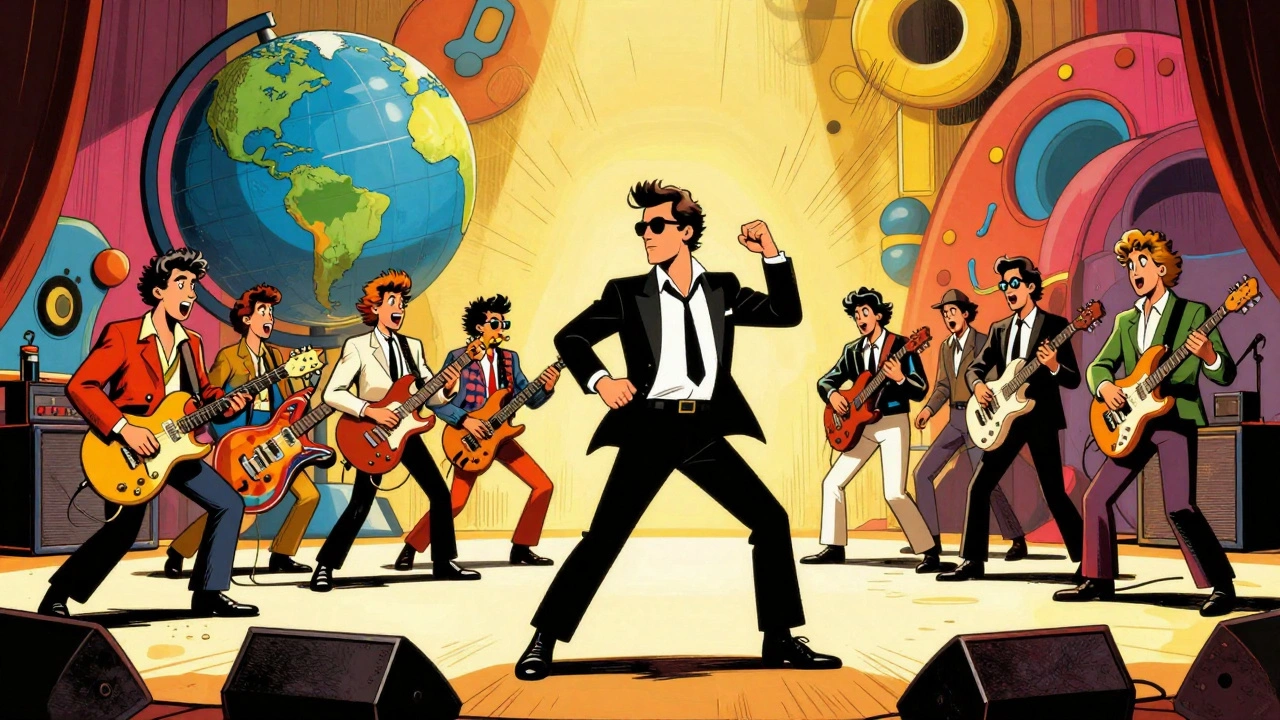
Playing Remain in Light live was a logistical nightmare. How do you recreate studio-layered loops with just four people? Talking Heads solved this by expanding their lineup. For their 1980-1981 tour, they added guitarist Adrian Belew, bassist Busta Jones, backing vocalist Dolette McDonald, and percussionist Steve Scales, among others.
This expanded ensemble functioned like a mini-Afrobeat orchestra. Each musician played a specific, repeating part that interlocked with the others. The result was a wall of sound that was both precise and chaotic. It required incredible discipline and communication. You can see this in footage from the era, where the band members seem almost robotic in their timing, yet alive with energy.
This live approach culminated in the legendary concert film Stop Making Sense (1984). Directed by Jonathan Demme, the film showcases the band’s ability to build a performance from nothing. It starts with David Byrne alone on stage, wearing a suit and dancing awkwardly. Slowly, other musicians join in, adding layers of sound and movement until the entire stage is filled with a vibrant, kinetic spectacle. It’s a masterclass in staging and choreography, reflecting their art-school roots in every frame.
Legacy and Evolution: Beyond the Experiment
After Remain in Light, Talking Heads continued to evolve. Albums like Speaking in Tongues (1983) and Little Creatures (1985) moved toward more accessible pop structures, but they never abandoned their rhythmic complexity. Hits like “Burning Down the House” still carry the DNA of their earlier experiments, with funky basslines and layered guitars.
Their influence is vast. Artists across genres-from indie rock bands like Arcade Fire to electronic producers like Daft Punk-cite Talking Heads as a major inspiration. They proved that rock music could be intellectually rigorous and physically engaging at the same time. They showed that you could borrow from global traditions without losing your own voice.
Today, listening to Remain in Light feels surprisingly modern. The use of loops, the emphasis on texture, and the blending of genres anticipate much of contemporary electronic and hip-hop production. It’s a reminder that great music doesn’t just reflect its time; it shapes the future.
Why did Talking Heads incorporate Afrobeat into their music?
Talking Heads were drawn to Afrobeat because of its complex polyrhythms and hypnotic grooves. They saw it as a way to expand beyond traditional rock song structures. Working with producer Brian Eno, they used Afrobeat techniques like looping and layering to create dense, cyclical compositions that felt both fresh and timeless.
How did their art-school background influence their sound?
Their education at RISD taught them to view music as a conceptual art form. This led them to experiment with studio techniques, visual presentation, and non-linear song structures. They treated albums like collages, combining disparate elements like funk, punk, and world music into cohesive artistic statements.
What role did Brian Eno play in Remain in Light?
Brian Eno served as producer and creative collaborator. He encouraged the band to use the studio as an instrument, suggesting they build songs from loops and jams rather than traditional chord progressions. His ambient music background helped shape the album's atmospheric and textured sound.
Is Talking Heads accused of cultural appropriation regarding Afrobeat?
Yes, there is ongoing debate about this. Some critics argue that as white Americans, they appropriated West African musical styles without fully acknowledging the source or context. Others believe they paid respectful homage and helped bring African rhythms to a wider audience. The issue remains a topic of discussion in music criticism.
How did Talking Heads perform Remain in Light live?
To replicate the complex studio layers, they expanded their lineup to include additional guitarists, bassists, percussionists, and vocalists. This larger ensemble allowed them to play interlocking parts in real-time, creating a dense, orchestral sound that mirrored the album's production.