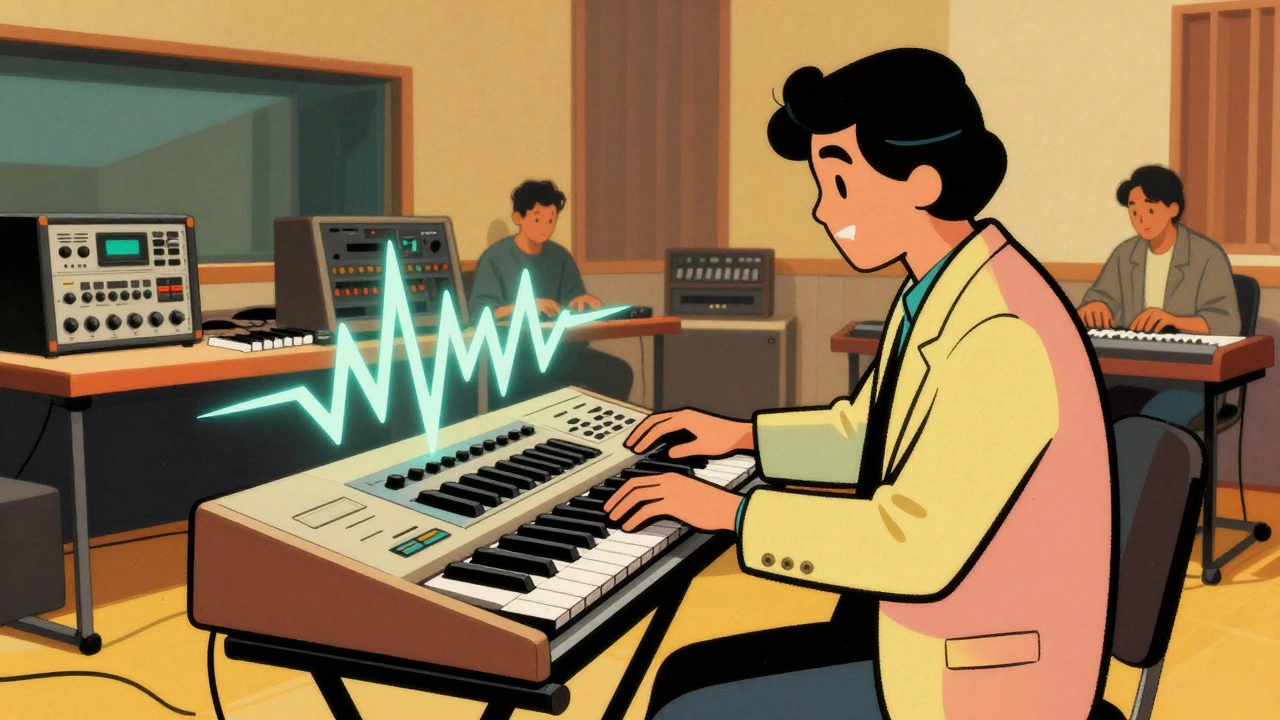

Close your eyes and think about the sound of the 1980s. What do you hear? Probably that bright, metallic electric piano on a pop ballad, or those lush, swelling pads behind a new wave chorus. Maybe it’s the punchy bassline in a dance track or the crisp, digital bell tones that seem to ring out from every retro commercial today.
That specific sonic fingerprint wasn’t an accident. It was forged by a handful of electronic instruments that changed how music was made forever. Before the decade began, rock guitars dominated the charts. By 1989, keyboards and drum machines were at the center of the studio. This shift happened because of five key pieces of hardware: the Yamaha DX7, a digital FM synthesizer released in 1983 that popularized frequency modulation synthesis with its iconic electric piano sounds, the Roland Jupiter-8, an 8-voice analog polyphonic synthesizer from 1981 known for its rich pads and powerful brass leads, the Roland Juno-60, an affordable analog polysynth from 1982 famous for its warm chorused pads, the Fairlight CMI, the first commercially successful digital sampling workstation that introduced sampled orchestra hits to pop music, and the later digital workstations like the Korg M1, a sample-based synthesizer released in 1988 that defined the late-80s and early-90s keyboard sound.
The Digital Revolution: Yamaha DX7
If you had to pick one instrument that screams "1980s," it is almost certainly the Yamaha DX7. Released in 1983, this machine didn't just join the market; it took over. It was the first commercially successful synthesizer to achieve massive sales, moving around 100,000 units shortly after launch. For context, earlier flagship synths were boutique items bought by a few lucky studios. The DX7 brought cutting-edge technology to mid-tier bands and session players everywhere.
The secret sauce was Frequency Modulation (FM) synthesis, a technology licensed from John Chowning. Unlike analog synths that subtract frequencies to shape sound, FM synthesis modulates one waveform with another to create complex harmonic spectra. This allowed the DX7 to produce sounds that analog gear simply couldn't mimic: realistic electric pianos, glassy bells, tight percussive basses, and plucked strings.
You’ve heard these sounds countless times. The preset known as "E.Piano 1" became the default choice for adult contemporary ballads and R&B tracks throughout the mid-to-late 80s. Think of hits by Whitney Houston, Michael Jackson, or Phil Collins. That bright, slightly sterile but incredibly crisp piano tone is the DX7. It defined the texture of radio airwaves during this period.
However, the DX7 wasn't without flaws. Its interface was notoriously difficult. There were no knobs to twist; instead, users navigated through menus using membrane buttons and numeric entry. This steep learning curve meant many musicians stuck to the factory presets. While this contributed to a certain sonic homogenization in 80s pop, it also cemented those specific timbres as the era's signature sound.
The Analog Flagship: Roland Jupiter-8
While Yamaha pushed the digital future, Roland held the line for analog warmth with the Jupiter-8. Introduced in 1981, this was a beast of a machine. It offered eight voices of polyphony, dual oscillators per voice, and a robust modulation matrix. It was expensive and heavy, often found only in top-tier studios, but its impact was immediate.
The Jupiter-8 excelled at creating wide stereo pads and massive unison leads. If you listen to early 80s new wave or synth-pop, particularly bands like Depeche Mode or Yazoo, you are likely hearing the Jupiter-8 providing that epic, cinematic backdrop. Its analog filters gave it a smooth, organic character that contrasted sharply with the brittle brightness of early digital synths.
Producers loved the Jupiter-8 for its ability to sit perfectly in a mix. The sounds were thick and resonant, filling up the frequency spectrum without muddying things up. It represented the peak of analog design before the industry fully pivoted toward digital affordability. Even today, when producers want that authentic early-80s grandeur, they reach for Jupiter-8 emulations.
The People’s Synth: Roland Juno-60
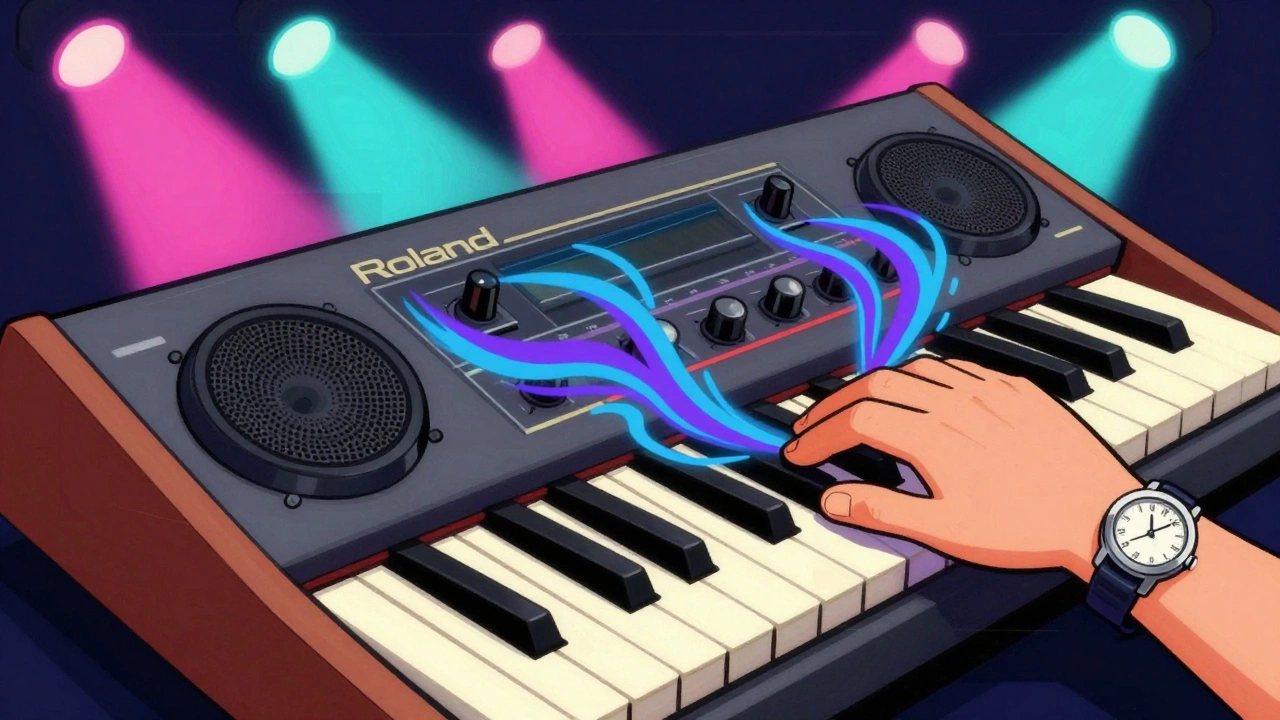
Not everyone could afford a Jupiter-8. Enter the Roland Juno-60, released in 1982. Priced significantly lower, it democratized the 80s sound. It featured six voices of polyphony, a single DCO (Digitally Controlled Oscillator) per voice, and-crucially-a built-in chorus effect.
That chorus circuit is what gives the Juno-60 its identity. It creates a shimmering, wide pad sound that feels both warm and spacious. This became the go-to texture for background chords in pop, rock, and funk records. The Juno series, including the later Juno-106, became staples for touring musicians because they were reliable, lightweight, and easy to program.
Unlike the DX7’s menu diving, the Juno-60 had a straightforward interface with one knob per function. You could dial in a patch in seconds. This accessibility meant that smaller bands and project studios could participate in the same sonic aesthetic as major label acts. The result? A consistent, recognizable layer of "chorus-heavy poly-synth" that underpins much of the decade’s hit records.
| Synthesizer | Release Year | Synthesis Type | Polyphony | Key Characteristic |
|---|---|---|---|---|
| Yamaha DX7 | 1983 | Digital FM | 16 notes | Bright E.Pianos, Glassy Bells |
| Roland Jupiter-8 | 1981 | Analog Subtractive | 8 voices | Lush Pads, Powerful Brass |
| Roland Juno-60 | 1982 | Analog Subtractive | 6 voices | Warm Chorused Pads |
| Fairlight CMI | 1979/Early 80s | Digital Sampling | Varies (4-12 notes) | Orchestra Hits, Sampled Stabs |
The Studio Luxury: Fairlight CMI
For the ultra-rich studios, there was the Fairlight CMI. Technically released in 1979, it gained widespread traction in the early 1980s. It wasn’t just a synthesizer; it was the first commercially available digital sampler. This distinction matters because it allowed producers to record real-world sounds, manipulate them, and play them back via a keyboard.
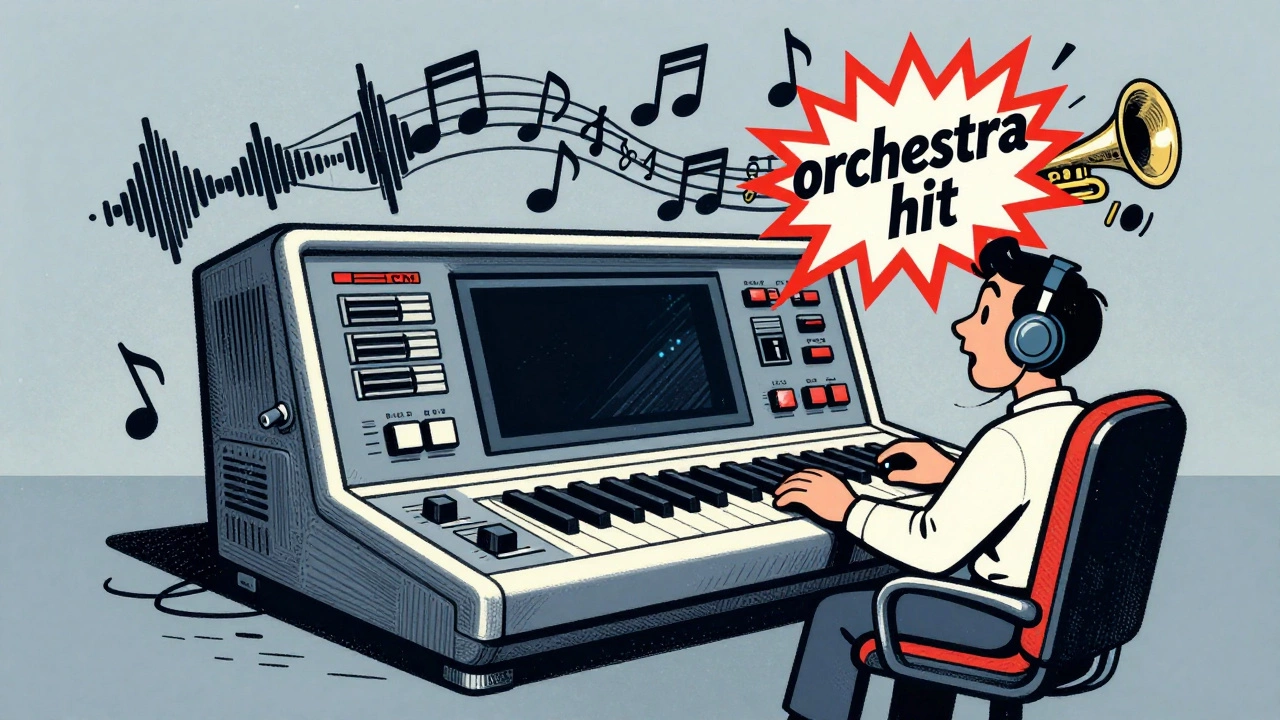
The Fairlight was astronomically expensive, costing tens of thousands of dollars. Only superstar artists and top production houses could justify the investment. But those who did used it to create sounds that were previously impossible. The most famous example is the "orchestra hit"-a short, punchy stab of sampled orchestral instruments played together. You hear this in countless 80s pop and dance tracks, adding a dramatic flair that synthesized brass couldn't quite match.
Artists like Peter Gabriel, Kate Bush, and Herbie Hancock used the Fairlight to push creative boundaries. It introduced the concept of sample-based composition into mainstream pop. While you couldn't buy one for your garage band, its influence seeped into the broader musical landscape, setting a standard for high-end production quality.
Production Techniques: The Glue That Held It Together
Having the right synthesizer was only half the battle. The "80s sound" also relied heavily on specific production techniques and effects processing. Producers didn't just plug these synths directly into the mixer; they drenched them in reverb, delay, and chorus.
Gated reverb on snare drums became a hallmark of the era, giving hits a huge, explosive tail that cut off abruptly. Synthesizers were often processed with long plate reverbs to create space and depth. Delay effects added rhythmic complexity, especially on lead lines. These effects combined with the raw output of the DX7, Juno, and Jupiter to create the expansive, polished mixes we associate with the decade.
MIDI (Musical Instrument Digital Interface), standardized in 1983, also played a crucial role. It allowed different synthesizers from different manufacturers to communicate. A sequencer could control a DX7 and a Juno simultaneously, enabling complex layered arrangements that would have been impossible to perform live with multiple players.
Legacy and Modern Revival
Today, the 1980s sound is experiencing a massive revival. Genres like synthwave, retrowave, and modern retro pop explicitly emulate these classic timbres. Producers use virtual instruments and plugins to recreate the behavior of the DX7, Juno-60, and Jupiter-8. However, accurate reproduction requires understanding the original hardware’s quirks-the slight detuning of analog oscillators, the specific algorithm structures of FM synthesis, and the exact character of vintage chorus circuits.
These instruments are not just historical artifacts; they remain reference points for sound design. When a producer wants to evoke nostalgia or create a sense of timelessness, they look to these machines. The Yamaha DX7’s electric piano, the Roland Juno’s chorused pads, and the Fairlight’s sampled stabs continue to shape how we perceive and recreate the sonic identity of the 1980s.
Why does the Yamaha DX7 sound so distinctively 80s?
The Yamaha DX7 uses Frequency Modulation (FM) synthesis, which creates bright, metallic, and percussive tones that analog synths couldn't easily replicate. Its famous "E.Piano 1" preset became ubiquitous on radio hits from 1983 onwards, making its specific timbre synonymous with the decade's pop and R&B music.
What makes the Roland Juno-60 different from the Jupiter-8?
The Juno-60 is more affordable and portable than the Jupiter-8. It features a simpler interface with one knob per function and includes a built-in chorus effect that creates its signature warm, wide pad sound. The Jupiter-8 is a larger, more complex analog flagship with dual oscillators and deeper modulation capabilities, suited for richer, more epic textures.
Was the Fairlight CMI a synthesizer or a sampler?
The Fairlight CMI was primarily a digital sampling workstation. While it could generate some synthesized sounds, its revolutionary feature was the ability to record, edit, and play back real-world audio samples. This introduced sampled instruments like the "orchestra hit" into mainstream pop production.
How did MIDI change the 1980s sound?
MIDI, standardized in 1983, allowed different synthesizers and drum machines to communicate and be controlled by a single sequencer. This enabled producers to layer complex arrangements from multiple instruments (like a DX7 piano over a Juno pad) precisely and efficiently, defining the dense, polished production style of the era.
Can I recreate the 80s sound with modern software?
Yes, many modern plugins accurately emulate the DX7, Juno-60, and Jupiter-8. To get an authentic result, focus on using FM-style algorithms for bright pianos, analog-style detuned saw waves with chorus for pads, and apply era-specific effects like gated reverb and tape delay.


