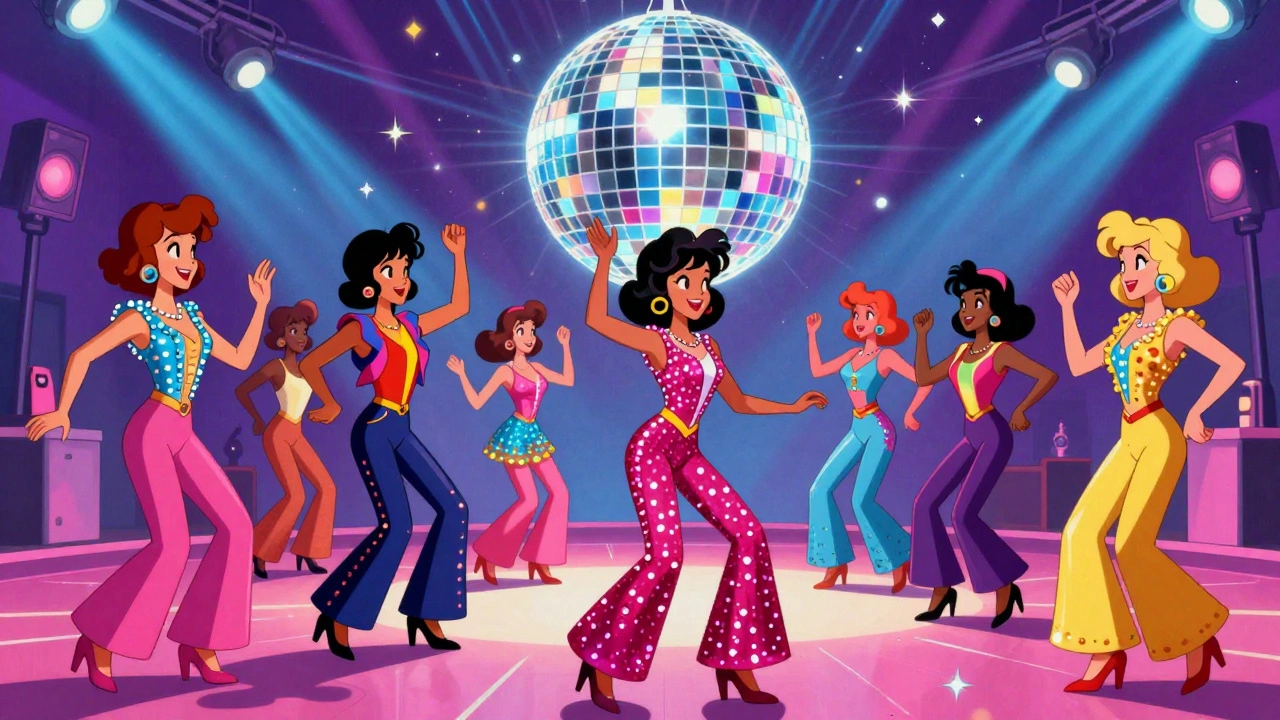

Before the late 70s, if you wanted a beat, you hired a drummer. But disco demanded a level of consistency-a relentless 4/4 time signature-that humans sometimes struggle to maintain for ten minutes straight. This created a perfect opening for the first generation of programmable rhythm machines. These tools allowed producers to lock in a groove that never wavered, giving DJs a reliable foundation to mix tracks seamlessly.
The Rise of the Programmable Beat
Early rhythm machines were basically glorified metronomes with a few pre-set patterns. You couldn't really change them; you just picked "Waltz" or "Samba" and hoped for the best. That changed in 1972 when Eko is a manufacturer that released the ComputeRhythm, one of the first programmable drum machines. It used a push-button matrix and even had a punch card reader to load rhythms. It was clunky, but it proved that musicians wanted control over their electronic beats.
The real game-changer arrived in 1978 with the Roland CR-78 CompuRhythm is a landmark rhythm machine that used integrated circuits to allow for custom pattern storage and tempo control. Unlike its predecessors, the CR-78 let you program your own patterns into memory locations. This gave disco producers the ability to create a signature rhythmic identity for a track. If you've heard the steady, electronic pulse in Blondie's "Heart of Glass" or the moody atmosphere of Phil Collins' "In the Air Tonight," you're hearing the influence of this specific era of technology.
| Instrument | Year | Key Technology | Main Advantage |
|---|---|---|---|
| Eko ComputeRhythm | 1972 | Push-button matrix | First user-programmable patterns |
| Roland CR-78 | 1978 | Integrated Circuits | Custom memory for patterns |
| Linn LM-1 | 1980 | Digital Sampling | Real drum sounds (not synthetic) |
Adding the Texture: Synthesizers and Vocoders
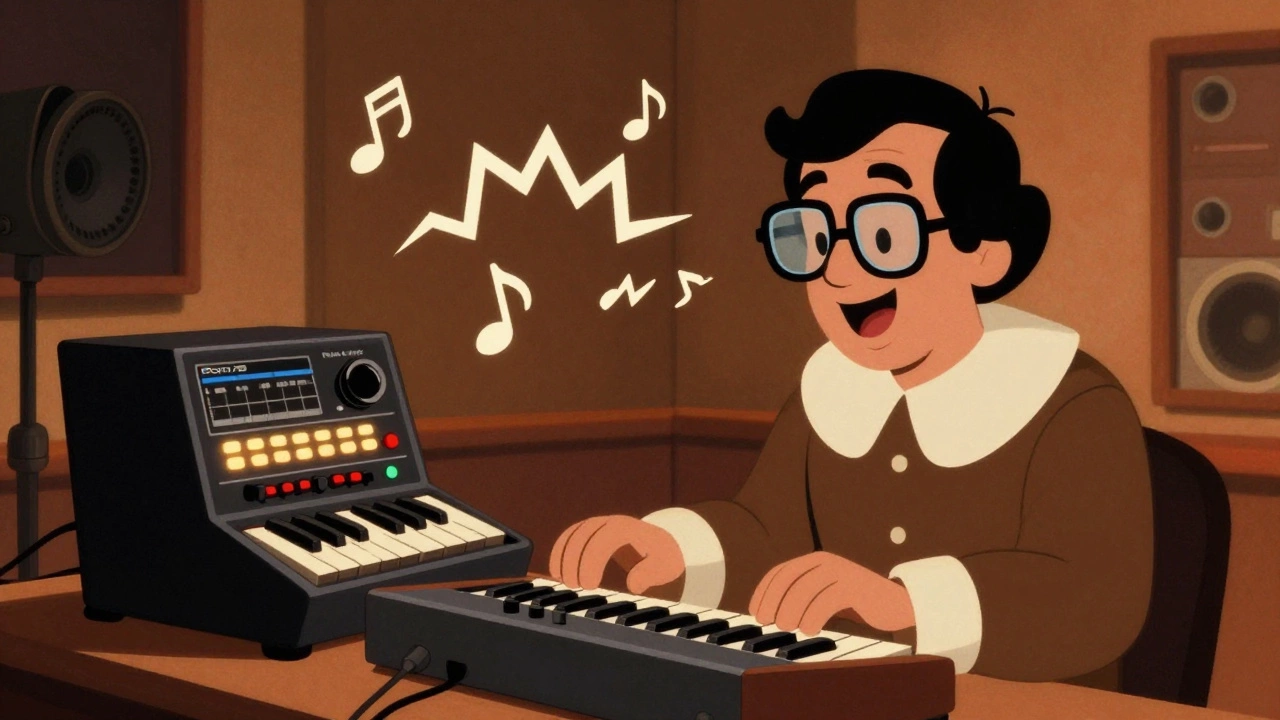
While the drum machines provided the skeleton, Synthesizers are electronic musical instruments capable of generating and modulating audio signals to create a wide variety of sounds provided the flesh. In the 70s, the market exploded with options from companies like Yamaha and Roland. These instruments allowed disco artists to move beyond traditional orchestral strings and horns, introducing "spacey" textures and deep, oscillating basslines that felt futuristic.
One of the coolest additions to the disco palette was the vocoder. Developed by pioneers like Bode, the vocoder allowed a human voice to be synthesized, creating that robotic, melodic talking effect. It fit the disco aesthetic perfectly-it was glamorous, artificial, and exciting. By combining these synth textures with a rigid electronic beat, producers created a sound that felt like it belonged in a neon-lit future.
The Shift from Analog to Digital
As we hit the turn of the decade, the sound of disco began to evolve into something more polished and realistic. The purely analog sounds-which were created using oscillators to mimic a drum-started to feel too "fake" for some artists. Enter the Linn LM-1 Drum Computer is the first drum machine to use digital samples of actual acoustic drums. Released in 1980, this machine was incredibly expensive-costing nearly $5,000 at the time-but it changed everything. Instead of a synthetic "thump," you got a recording of a real kick drum.
This digital leap paved the way for other monsters of the era. The Oberheim DMX improved on the 8-bit sound of the LM-1 by offering 12-bit sampling, making the drums sound even punchier and more realistic. This transition is why early 80s pop and funk sound so different from mid-70s disco; the "human" element was being digitally sampled and then sequenced with machine precision.

Defining the Modern Dance Floor
The legacy of these 70s instruments is most obvious when you look at the Roland TR-808 is a fully analog drum machine famous for its deep bass kick and synthetic snare. While the 808 was released in 1980, it was the direct result of the disco era's demand for programmable rhythms. Its warm, synthetic thud became the foundation for hip-hop and house music. The 808 didn't try to sound like a real drummer; it embraced its identity as a machine.
Similarly, the Roland TR-909 took things a step further by becoming a hybrid. It used analog circuits for some drums and digital samples for the cymbals and hi-hats. This hybrid approach allowed for a level of complexity and song-chaining-up to 896 measures-that made it a staple for the emerging rave scenes in Europe and the US.
Why does this matter now? Because the limitations of the 70s became the features of today. The 4/4 time signature, the obsession with a heavy kick drum, and the use of synthetic basslines aren't just trends-they are the technical DNA of every electronic track you hear today. Producers now spend thousands of dollars on plugins to replicate the "imperfections" of a Roland CR-78 or the grit of an 8-bit sampler.
What was the first programmable drum machine used in disco?
While the Eko ComputeRhythm was one of the first programmable machines in 1972, the Roland CR-78 (1978) was the instrument that truly popularized programmable patterns in the disco and pop scenes due to its affordability and integrated circuits.
How did synthesizers change the sound of disco?
Synthesizers allowed disco to move away from solely using live orchestras. They introduced futuristic textures, synthetic basslines, and robotic vocals via vocoders, creating a more polished, "electric" atmosphere that appealed to the club environment.
What is the difference between the TR-808 and the Linn LM-1?
The Linn LM-1 used digital samples of real drums to sound realistic, whereas the TR-808 was fully analog, creating purely synthetic sounds. The 808 is famous for its booming bass, while the LM-1 is known for its authentic drum kit feel.
Why is 4/4 time so important in disco music?
The 4/4 beat provides a consistent, predictable pulse that is easy to dance to and even easier for DJs to mix. The design of early drum machines reinforced this standard, making it the foundation for almost all subsequent electronic dance music.
Were these instruments affordable for all musicians in the 70s?
Not at first. Early studio gear was very expensive. However, instruments like the Roland CR-78 were more accessible than massive modular synths, and by the early 80s, models like the TR-707 became staples for independent producers and early house music artists.


