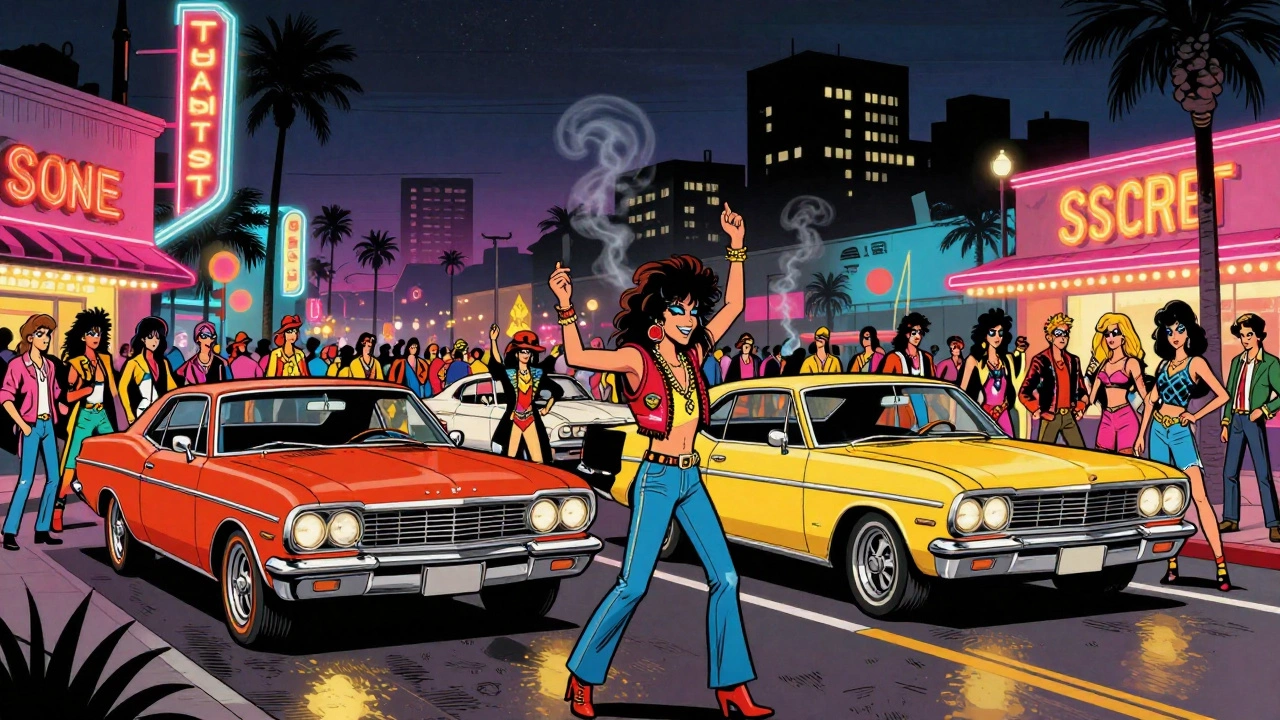

Picture a mile-and-a-half stretch of road that feels like the center of the universe. It’s 1985. You’re standing on Sunset Boulevard, specifically the section known as the Sunset Strip. The air smells like cheap whiskey, hairspray, and hot asphalt.
This wasn’t just a street; it was the main stage for American Glam Metala genre defined by flashy aesthetics, loud guitars, and rock star excess. If you weren’t here, you didn’t exist. This guide breaks down the exact spots where legends like Mötley Crüea rock band formed in Los Angeles in 1981 cut their teeth, how a simple piece of paper could launch a career, and why this corner of West Hollywood changed forever.
The Geography of Excess
You can’t understand the era without understanding the layout. It was impossibly small. You could walk the entire length of the strip in thirty minutes, yet the density of talent was staggering. Musicians, managers, agents, and supermodels all crammed into the same few blocks.
On the west end sat Gazzarri’sa nightclub known for wild behavior and historic performances. Before that place closed its doors in the late 70s, it had already seen Doors and Van Halen. By the 80s, even after official closure, the basement remained a ghost haunt for illicit gatherings nearby. Just one hundred yards away, The Roxy Theater loomed. Then there was The Rainbow Bar and Grilla popular gathering point for musicians and fans, which acted as the social glue between the big clubs.
Because everything was so close, networking became accidental. A drummer might get kicked out of one bar, wander two doors down, meet a guitarist, and form a new band before midnight. That proximity created a network effect. It wasn't just about playing a gig; it was about being seen doing something reckless.
The Big Three Clubs
While dozens of bars lined the street, three locations dominated the culture. Each had a distinct role in the ecosystem of the rock industry.
| Venue | Primary Function | Key Features |
|---|---|---|
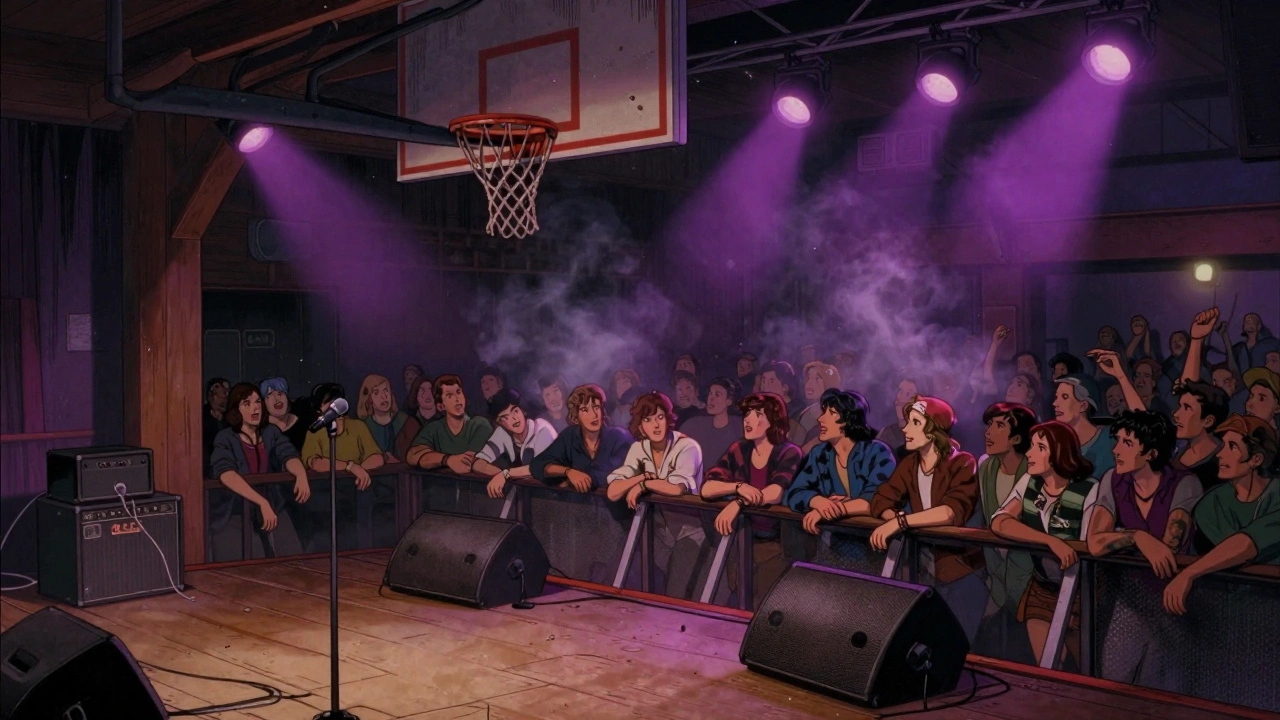
| Whisky a Go Go | Legendary Performance Hall | Basketball hoop above stage (for throwing drinks) |
| The Roxy | Crowd & Party Hub | Upstairs "On The Rox" private parties |
| The Cathouse | After-Hours DJ Club | Rock records, no cover charges initially |
Whisky a Go Go opened in 1964, long before the hair metal explosion, but it survived because it treated every act like a potential headliner. They kept the lights low, the sound system crisp, and the crowd drunk. The infamous basketball hoop hung above the stage. Throwing your drink through the hoop meant the band played an encore. It set the standard for audience interaction.
The Roxy took over the role of the insider hangout. Its upstairs bar, called On The Rox, became ground zero for high-profile debauchery. This space operated under the management of a controversial figure named Heidi Fleiss. She ran exclusive, hedonistic parties for celebrities and rock stars. For many bands, getting invited up to The Roxy meant you had graduated from the opening slots to the industry circles.
Then came The Cathouse. Opening in 1986 at the intersection of San Vicente and La Cienega, right south of the main Strip action, this place broke the mold. Instead of booking live bands all night, founders Riki Rachtman and Taime Downe focused on DJs spinning rock records. It became the "it" spot for post-gig socializing. Bands didn't come here to play; they came to see and be seen.
Flyers as Currency
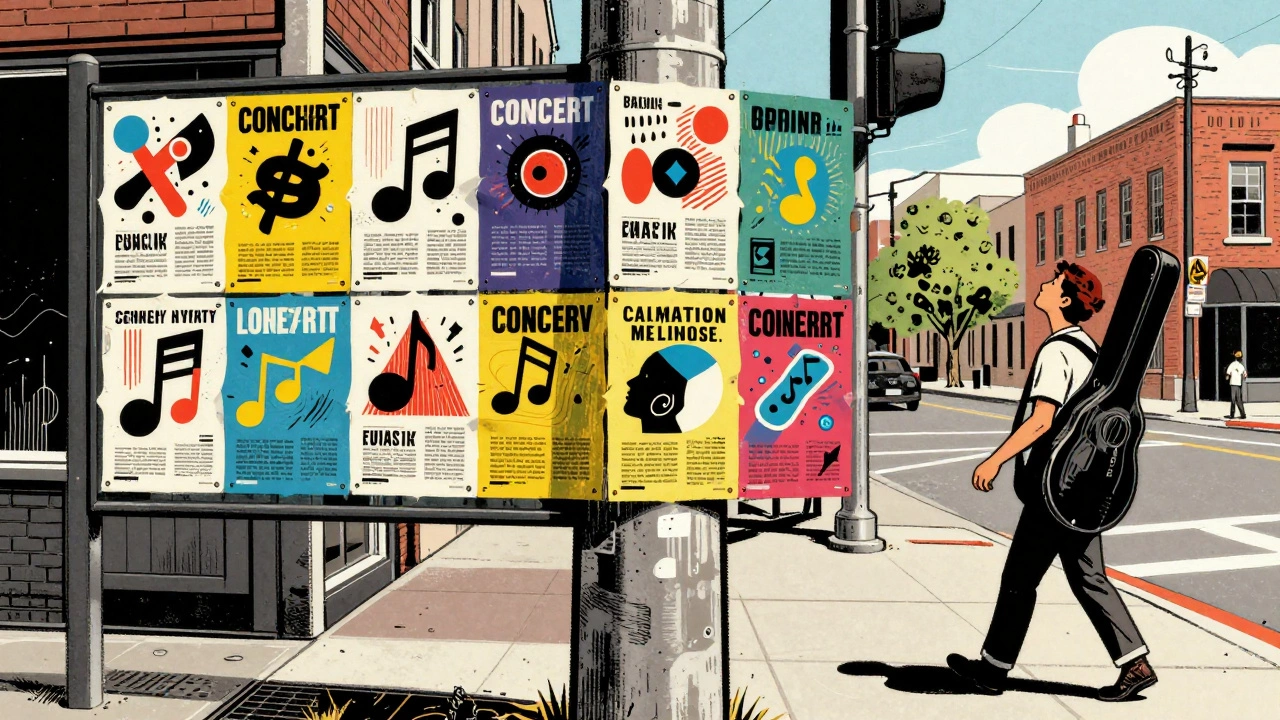
In the internet age, we scroll through infinite feeds looking for events. In 1985, the flyer was king. These pieces of paper were not just invitations; they were proof of coolness. A pink neon print telling you to find a show at Gazzarri’s meant you were in the loop.
Designers used thick marker lines, photocopied photos of band members, and hand-drawn logos. These flyers often appeared on telephone poles, bulletin boards at record stores, or taped inside the windows of local diners. If you saw a flyer, you knew two things immediately: who was playing and where to buy the merch.
The power dynamic was unique. Promoters would call bands directly, bypassing labels. You didn't need a contract to play the Strip; you needed a reputation. If you could draw a crowd for a $4 cover charge, record execs would notice. This grassroots approach allowed unsigned talent to bypass the gatekeepers of mainstream radio.
Breakout Stories: From Apartments to Arenas
We romanticize the stardom, but the early struggles were gritty. Take Mötley Crüe for example. Before they were rocking arenas, they were living in modest circumstances. During early 1981, core members Vince Neil, Tommy Lee, and Nikki Sixx moved into a white apartment complex at 1124 North Clark Street. Apartment 205 served as their creative headquarters.
It was a cramped two-bedroom unit financed by their manager. They wrote the material that would define their career in this single living room. Visitors constantly poured into the space, bringing drugs, alcohol, and endless chatter. It contrasts sharply with the multi-million dollar tours they later launched.
Similarly, bands like Faster Pussycat emerged directly from the scene. Their frontman, Taime Downe, co-founded The Cathouse. Many bands started by paying their rent via gigs at The Troubador or The Whisky. The path was linear but steep: Garage -> Local Club -> The Roxy -> National TV -> Headline Tour.
The Lifestyle: Models, Drugs, and Decadence
You cannot separate the music from the environment. The Strip was described as the most decadent and dangerous place for rock gods. The boundary between art production and partying blurred completely. Models walked out of gentleman’s clubs like Seventh Veil and The Body Shop, heading straight to concert halls. The line crossed in songs themselves-Mötley Crüe name-checking gentlemen’s clubs in "Girls" cemented the image.
Substance use was rampant, serving as both fuel for creativity and a destructive force. It wasn't hidden; it was part of the aesthetic. While today we view that lifestyle critically, back then, it was celebrated as the price of admission. Industry figures watched for signs of talent in the middle of drug-fueled all-nighters.
Riki Rachtman, host of MTV's Headbanger's Ball later, noted that these nights were less about listening to music and more about performance of identity. Wearing tight jeans, spandex, and heavy makeup was the uniform. It was a rebellion against the conservative Reagan era, packaged in shiny chrome and leather.
Decline and Digital Legacy
So where did it go? By the early 1990s, grunge killed the popularity of Glam Metal almost overnight. The economic bubble burst. The specific magic evaporated as bands either disbanded or went solo.
The architecture remains, but the soul has shifted. Many landmarks still stand amidst luxury brand shops and glitzy office buildings. However, the hippest music has migrated east-to downtown warehouses and Silver Lake venues. The Roxy itself changed hands multiple times and is now operated by Goldenvoice, the company behind Coachella. The programming shifted toward mainstream pop and festivals rather than underground hard rock incubation.
Yet, the physical footprint survives. Fans still pilgrimage to the street, tracing the steps of heroes. The flyers may be digital now, but the desire to discover the next big thing remains constant. Understanding this history helps us appreciate how fragile cultural moments can be, and how a block of dirt can change the sound of a generation.
What was the significance of The Roxy Theater in the 1980s?
The Roxy served as the central hub for industry connections. Its upstairs venue, On The Rox, hosted private parties managed by Heidi Fleiss, making it essential for bands wanting to access the celebrity circuit.
Did Mötley Crüe start on the Sunset Strip?
They developed their initial catalog in an apartment at 1124 North Clark Street in Los Angeles. While near the entertainment district, they gained their fame performing at venues like Gazzarri's and The Whisky a Go Go.
Are any original 80s venues still open today?
Yes, The Roxy and Whisky a Go Go remain open, though ownership and programming have shifted significantly. They no longer function primarily as launchpads for new glam metal bands.
Who founded The Cathouse?
Riki Rachtman and Taime Downe of Faster Pussycat founded The Cathouse in 1986. It was distinct for focusing on DJs playing rock records instead of live bands.
Why did the Sunset Strip scene die out?
The rise of Grunge music in the 1990s shifted musical tastes. Additionally, changing laws and gentrification pushed new music scenes toward Downtown Los Angeles and Silver Lake.


