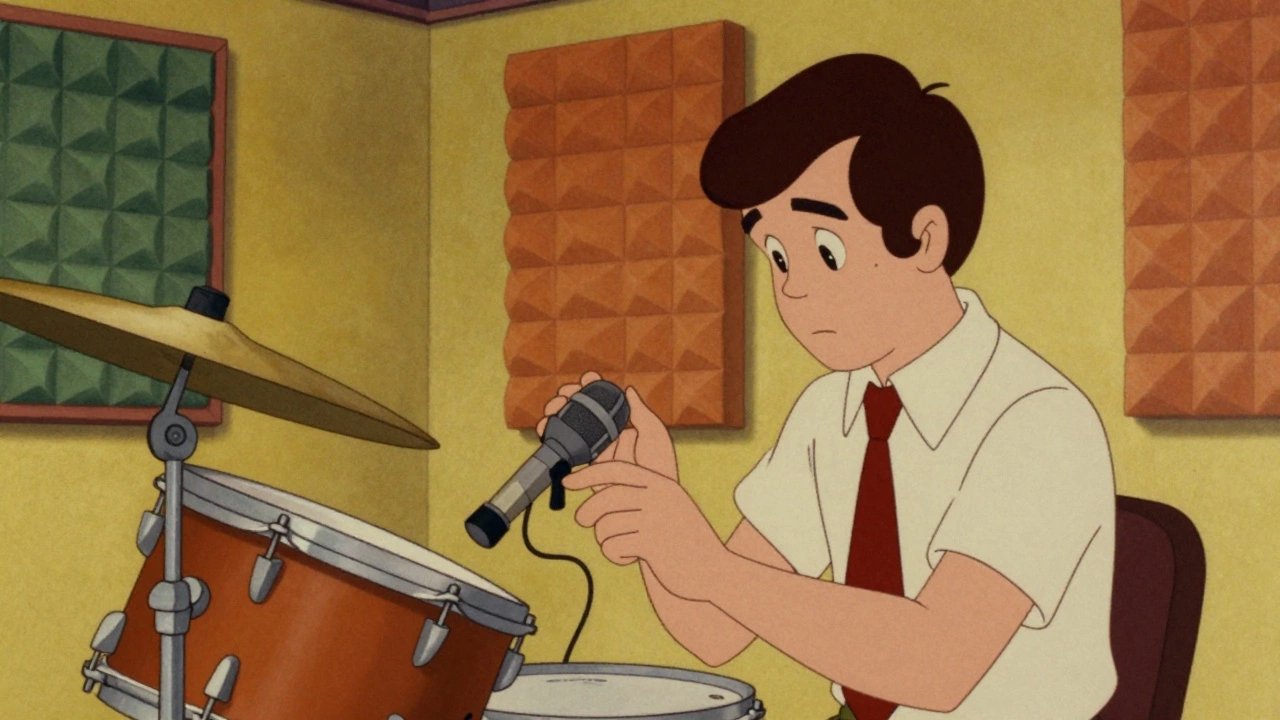

Think about the most iconic funk records from the 70s. The drums don't sound like they're in a cathedral; they sound like they're right in your face, tight and punchy. That "dead" sound isn't an accident. It's the result of a specific philosophy where the goal is to kill the room's natural reverb to make space for the rhythmic precision of the bass and horns. When you're working in a dry room, you aren't fighting the space-you're using it to isolate every single hit.
To get that sound, you need to move away from the idea of "capturing the air" and focus on funk drum recording through aggressive proximity. The secret lies in Close Miking the process of placing microphones directly adjacent to the sound source to maximize direct signal and minimize room reflections. In a small or untreated space, this is your best friend because it stops the microphones from picking up muddy reflections off the walls that would otherwise ruin the punch of the snare.
The Art of Individual Drum Placement
When you're close miking, every inch matters. If you move a mic from the center of the drum head toward the rim, you're shifting the focus from the raw attack to the ring and resonance. For funk, you generally want more attack. Position your mics slightly off-center to capture that "snap" without getting too much of the low-end boom that can muddy a mix.
The snare is the heartbeat of funk. A single mic on top is the standard, but if you want that professional, layered character, try a dual-mic setup. Put one mic on top for the hit and a second one on the bottom to catch the crispness of the snare wires. This lets you blend the raw power of the strike with the high-end sizzle during the mix, giving you a snare sound that cuts through a heavy bass line.
For the kick and toms, remember the proximity effect. Directional microphones boost bass as they get closer to the source. While a bit of low-end is great for the kick, too much on the rack toms can make them sound bloated. Aim for the "sweet spot"-the area where the shell's resonance and the head's attack balance out-rather than jamming the mic directly against the skin.
| Drum | Placement Goal | Sound Result |
|---|---|---|
| Snare (Top) | Slightly off-center | Sharp attack, minimized ring |
| Snare (Bottom) | Facing snare wires | Crisp sizzle and detail |
| Kick Drum | Inside the shell | Punchy, focused low-end |
| Toms | Rim-ward angle | Controlled resonance, tonal clarity |
Taming Overheads in Dry Environments
In a live room, overheads are often used to capture the "space." In a funk session in a dry room, that's a mistake. If your overheads are too high, they'll pick up the ceiling reflections and make the kit sound distant. To keep things tight, lower your overheads and point them directly at the center of the kit. This focuses the image on the drums rather than the room.
If you're struggling with too much cymbal bleed, look into the Recorderman Technique a specific overhead miking method designed to minimize cymbal wash and prioritize the snare and kick. By placing the mics in a specific array over or behind the kit, you get a much drier signal. It's a lifesaver in smaller studios where you can't afford to have a huge amount of air between the drums and the mic.
If you actually *do* want some room depth without sacrificing the dry core, you can supplement your close mics with a few distant ambient mics. The trick is to record them on separate tracks. That way, you can keep the drums bone-dry in the mix and just "dial in" a tiny bit of room sound to give the kit some natural dimension.

Dealing with Phase and Stereo Images
The biggest nightmare with using multiple microphones is phase cancellation-that hollow, thin sound that happens when two mics pick up the same sound at slightly different times. This is especially common in dry rooms where reflections are unpredictable. To avoid this, ensure your room mics are equidistant from the kick drum. If you're using a stereo pair, a triangle configuration with the kick as the apex is a reliable way to keep the image stable.
For those who want a balance of direct and ambient sound, the Mid-Side (M-S) Technique a stereo miking method using one cardioid mic for center image and one figure-of-8 mic for side ambience is a powerful tool. The "Mid" mic gives you the dry, centered punch, while the "Side" mic captures the room. However, a word of caution: M-S sounds terrible in small, untreated rooms because the side mic just picks up ugly reflections. If your room isn't acoustically treated, stick to close miking and simple overheads.
Another option is the XY Technique a stereo miking approach where two capsules are placed at a 90-degree angle to ensure phase coherence. This is the most straightforward way to get a stereo image without worrying about phase shifts. It's a great "safe" bet for funk records where the rhythmic timing is so tight that any phase smear would be distracting.
The Middle Ground: The Vurst Approach
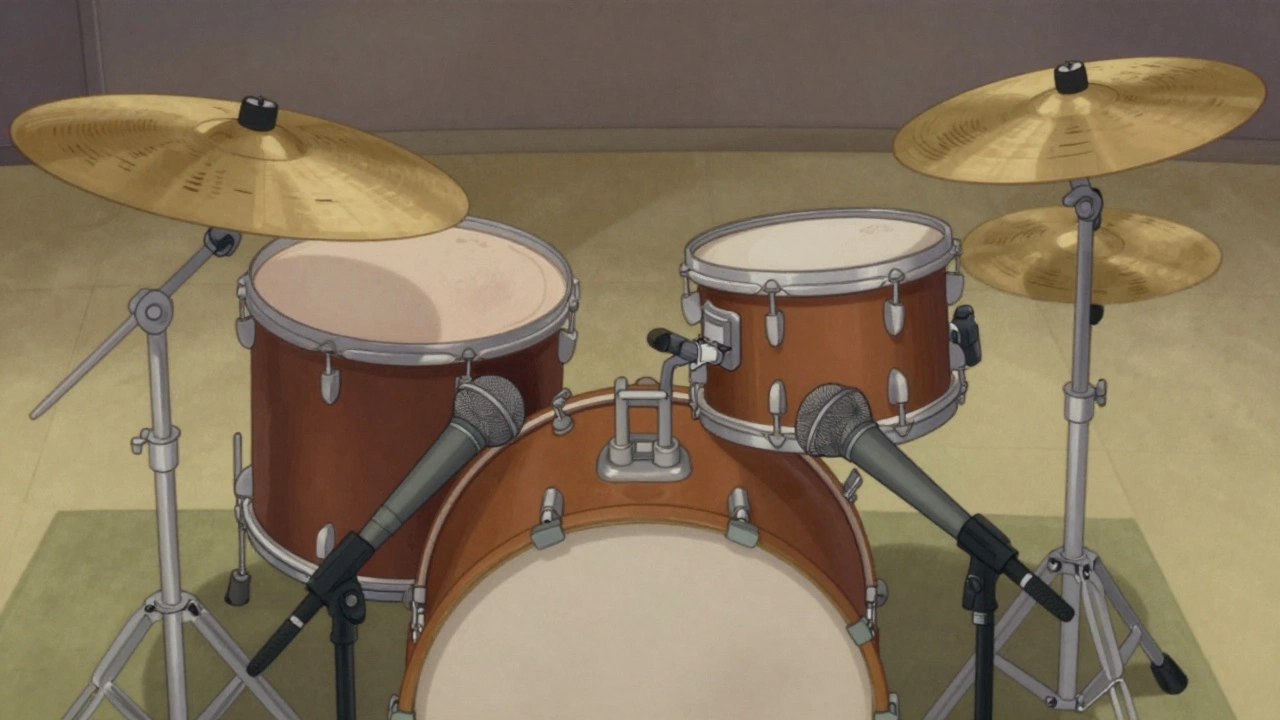
If close miking feels too sterile and room miking feels too washed out, there's a middle path. The Vurst Technique a miking strategy that targets the shell's sweet spot rather than the head or the air doesn't rely on strapping mics to the rims or hanging them from the ceiling. Instead, it finds the specific point on the drum shell where the frequencies balance naturally.
This approach is fantastic for funk because it captures the organic feel of the drum without the harshness of a mic placed too close to the beater or the muddiness of a distant mic. It’s about finding the equilibrium between the attack of the head and the resonance of the shell.
Putting It All Together in the Mix
The magic of funk is in the pocket. Your recording techniques should support that. By prioritizing close miking, you've given the mixing engineer total control. You can compress the snare to death for that snappy 70s sound without pulling the whole room into the fader. You can EQ the kick to be a thumping heart without bringing in the sound of the drummer's stool creaking.
Remember, a truly "dry" record doesn't have to be boring. By blending a few carefully placed room mics with your tight close-miked tracks, you create a sense of space that feels intentional rather than accidental. The goal is to make the listener feel like they are standing right in front of the kit, feeling the air move with every hit.
Why is a dry room better for funk drums?
Funk relies on extreme rhythmic precision and a tight "pocket." A dry room removes excessive reverb and long decay times, which prevents the drum hits from overlapping. This ensures the snare and kick remain punchy and distinct, leaving plenty of sonic space for the bass guitar and horns to cut through the mix.
How do I stop cymbals from overpowering my overheads?
Lower your overhead microphones so they are closer to the snare and kick, and angle them toward the center of the kit. Alternatively, use the Recorderman technique, which positions the mics to capture the kit's core while minimizing the direct blast of the cymbals.
What is the 'proximity effect' and how does it affect drum recording?
The proximity effect is an increase in low-frequency response that occurs when a directional microphone is moved very close to a sound source. In drum recording, this can make a kick drum sound massive, but it can also make toms sound "boomy" or muddy. To combat this, move the mic slightly away from the head or use a high-pass filter during mixing.
Should I use a bottom snare mic for every funk track?
Not necessarily, but it's highly recommended for funk. The top mic captures the impact, while the bottom mic captures the snap of the wires. Blending the two allows you to customize the "crispness" of the snare, which is essential for that high-energy funk sound.
How do I avoid phase issues when using many microphones?
The best way to avoid phase cancellation is to ensure that microphones used in stereo pairs (like room mics) are equidistant from the main sound source, usually the kick drum. You can also use the XY technique to maintain a consistent phase relationship or manually flip the phase polarity on individual channels during the mixing process to see which setting sounds "fuller."


