

If you've ever wondered why some rock records sound "thick" while others sound "chimy," it usually comes down to these two instruments. The choice wasn't just about looks; it was about how the guitar reacted to the massive amplifier stacks and chorus pedals that dominated the decade. Whether you were playing hair metal, new wave, or stadium rock, your choice of axe determined your place in the mix.
The Heavy Hitter: Why the Les Paul Owned the Hard Rock Scene
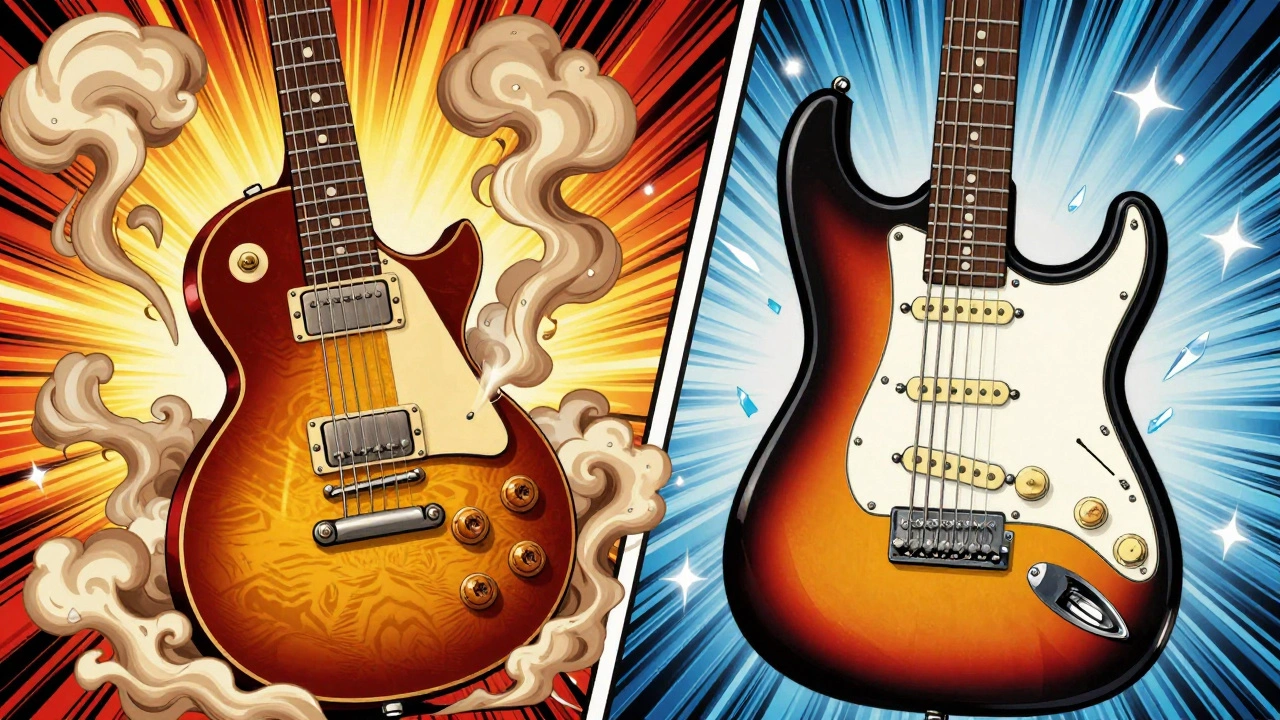
When people think of the "wall of sound," they're usually thinking of a Gibson Les Paul. The secret to its dominance in hard rock and early metal is all in the build. It's a beast of a guitar, featuring a heavy mahogany body and neck topped with a maple cap. This dense wood combination acts like a battery for sustain, allowing notes to ring out far longer than they would on a lighter instrument.
But the real magic happens at the electronics. The Les Paul uses humbucking pickups, which are essentially two coils working together to "buck the hum" (cancel out the 60-cycle noise common in electric guitars). Because they have a higher output, they push amplifiers into overdrive much harder. This creates that saturated, creamy distortion that defined the 80s lead guitar sound. With a shorter 24.75" scale length, the strings feel slightly looser, making those dramatic, slow-burn bends and buttery vibrato much easier for the player to execute.
The Sonic Scalpel: The Stratocaster's Quest for Clarity
While the Les Paul was bulldozing through the mix, the Fender Stratocaster was playing a different game. The Strat is built for articulation. With its double-cutaway body and three single-coil pickups, it produces a sound that is bright, percussive, and incredibly clear. If the Les Paul is a sledgehammer, the Strat is a scalpel.
One of the most famous aspects of the Strat is its 25.5" scale length. This extra length increases string tension, giving the notes a "snap" that makes chords pop with definition. Then there's the "quack"-that unique, nasal tone found in positions 2 and 4 of the pickup selector. This sound became a staple for the funk-influenced rock and pop-rock tracks of the 80s. However, the trade-off is the hum. Because single-coils don't cancel noise, players using high-gain amps often dealt with a constant buzz, a price they paid for that unmatched crystalline clarity.
| Feature | Gibson Les Paul | Fender Stratocaster |
|---|---|---|
| Primary Wood | Mahogany & Maple | Alder or Ash |
| Pickup Type | Humbuckers (Low noise, high output) | Single-Coils (Bright, high noise) |
| Scale Length | 24.75" (Easier bends) | 25.5" (More snap/tension) |
| Bridge Type | Fixed (Tune-o-matic) | Synchronized Tremolo |
| Core Vibe | Thick, Warm, Sustained | Glassy, Chimey, Percussive |
Breaking the Rules: The Genre Mashups
It would be easy to say "Les Pauls are for metal and Strats are for pop," but the best players always broke those rules. Take Mark Knopfler, who proved that a Les Paul could be used for nuanced, cleaner textures. Or look at the legacy of Jimi Hendrix; though he played a Strat, he pushed his gear so hard that he achieved a thick, crunchy roar that rivaled any humbucker-equipped guitar. He showed the world that a Strat could be a monster if you had the right amp and the right attitude.
By the mid-to-late 80s, the "Tone Wars" started to merge through hardware innovation. We saw the rise of the HSS (Humbucker-Single-Single) configuration. By putting a humbucker in the bridge of a Strat, players got the best of both worlds: the high-output punch needed for a heavy riff and the glassy cleans needed for a verse. This hybrid approach effectively ended the binary choice and allowed musicians to pivot their sound mid-song.
Stage Practicality: Tuning and Tremolos
Beyond the tone, these guitars behaved very differently under the pressure of a live show. The Les Paul's fixed bridge is a dream for the working musician who just wants to stay in tune. You hit a chord, and it stays where it is. It's a stable platform that supports the guitar's massive sustain.
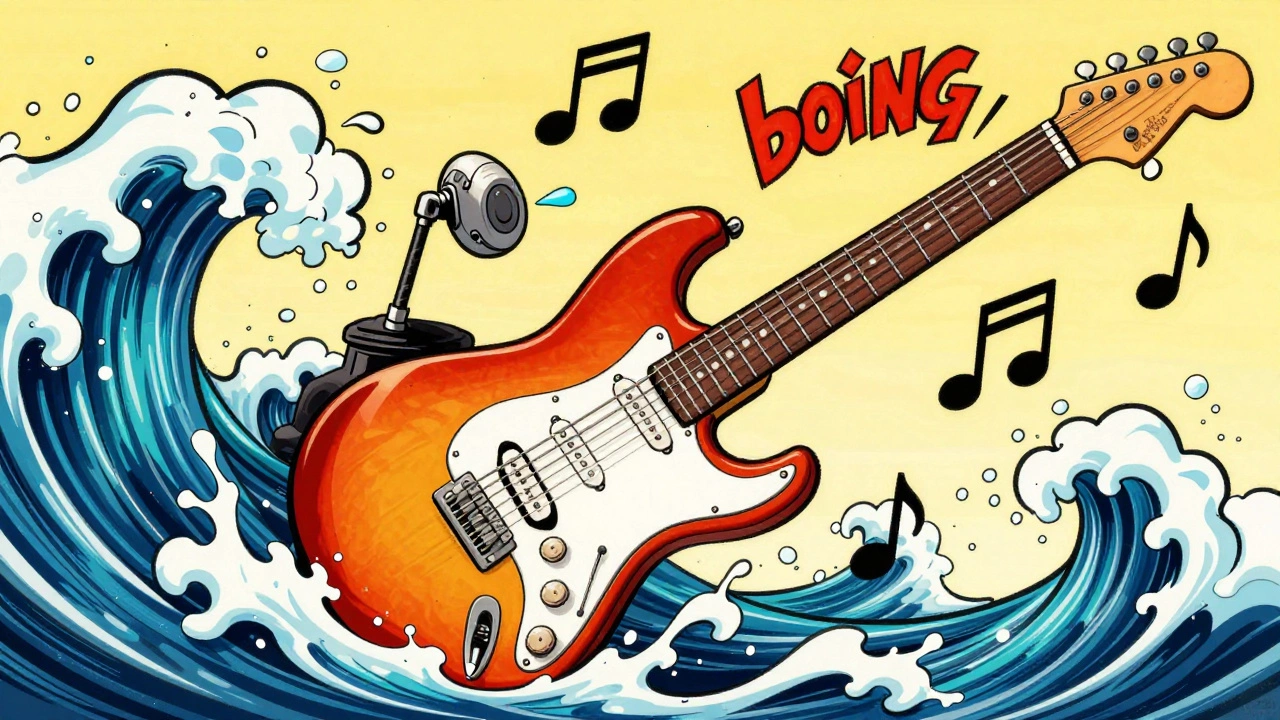
The Strat, however, offered the tremolo system. This allowed guitarists to dive-bomb or add a subtle shimmer to their chords. While this added a huge emotional dimension to the playing, it also introduced a headache: tuning stability. 80s players spent a lot of time lubricating their nuts and adjusting springs to make sure the guitar didn't go flat after a heavy whammy bar use. This is why locking tuners became such a crucial piece of gear for the touring pro.
Which One Actually Won?
The truth is, the "Tone War" was a tie because the victory depended on the goal. If the job was to provide a heavy, saturated foundation for a stadium anthem, the Les Paul was the only choice. If the goal was to cut through a dense mix of synthesizers and drums with a sharp, rhythmic attack, the Stratocaster took the trophy.
The Les Paul became the symbol of rock's power and ethos-a heavy tool for a heavy sound. The Stratocaster, conversely, became the "everyman" guitar, capable of morphing into whatever the artist needed it to be. Together, they expanded the vocabulary of rock music, giving us everything from the subtle chime of a clean pop riff to the earth-shaking roar of a distorted solo.
Why is a Les Paul heavier than a Stratocaster?
The Les Paul is constructed primarily from mahogany, a dense hardwood, and features a thick maple top. The Stratocaster typically uses lighter woods like alder or ash and has a contoured, thinner body design, making it significantly more lightweight and easier to handle on stage for long periods.
What is the "quack" sound in a Stratocaster?
The "quack" occurs when the pickup selector is in positions 2 or 4, combining the bridge and middle pickups or the neck and middle pickups. This creates a phase-like, nasal tone that is more percussive and less mid-heavy than a single pickup, making it a favorite for funk and clean rock rhythms.
Do humbuckers always sound "better" for distortion?
Not necessarily "better," but different. Humbuckers provide a thicker, warmer sound with more output, which drives an amplifier into distortion more easily and eliminates the 60-cycle hum. Single-coils provide more clarity and "bite," which some players prefer for a more aggressive, cutting distortion that doesn't get muddy.
Does scale length actually affect the sound?
Yes. The Strat's longer 25.5" scale creates higher string tension, resulting in a brighter, snappier sound. The Les Paul's shorter 24.75" scale results in lower tension, which gives a warmer tone and makes the strings feel "softer" under the fingers, facilitating easier bends.
Can a Stratocaster sound like a Les Paul?
To a certain extent, yes. By using a humbucker in the bridge position (HSS configuration) and pairing it with a high-gain amplifier, a Strat can achieve a thick, rock-ready roar. However, it will still retain some of the Strat's inherent brightness and lack the massive mahogany-driven sustain of a true Les Paul.


