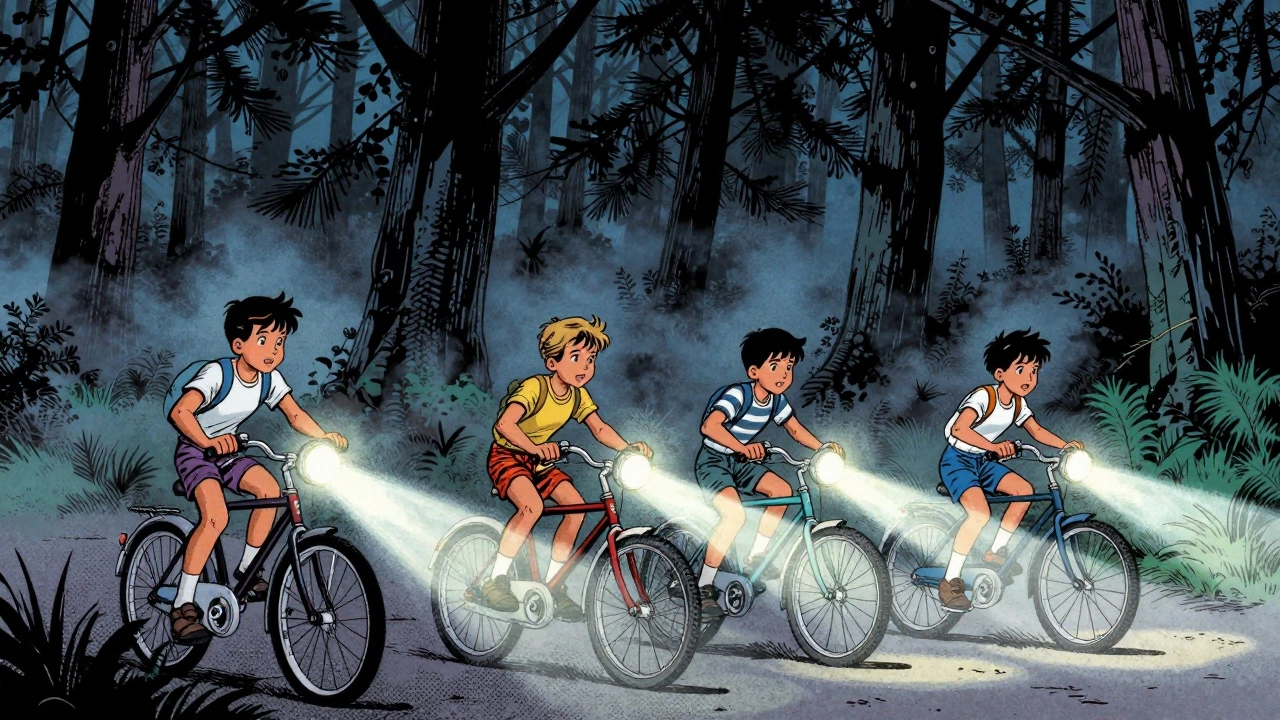

Have you ever felt a pang of longing for a time you never actually lived? You’re not alone. Millions of viewers have experienced this exact sensation while watching Stranger Things, a Netflix science-fiction horror series created by Matt and Ross Duffer that reconstructs a stylized version of 1980s American pop culture through homages to period films, analog technology, genre music, fashion, malls, and Cold War paranoia. The show doesn’t just use the 1980s as a backdrop; it treats the decade as a character itself. From the moment Will Byers disappears in 1983, the series pulls us into a carefully curated world where every boombox, arcade cabinet, and hair perm serves a specific emotional purpose.
The Duffer Brothers didn’t set out to make a history documentary. They wanted to capture the *feeling* of growing up in the early ’80s-a mix of suburban boredom, supernatural fear, and the thrill of adventure. This approach creates what scholars call "mediated nostalgia." Even if you were born in the 2000s, the show’s visual language and sound design trigger a deep sense of familiarity. It’s a trick of the mind, but it’s one that works incredibly well. Let’s look at how the show builds this world, piece by piece.
The Blueprint: Spielberg, King, and Carpenter
To understand why Stranger Things feels so authentic, we have to look at its DNA. The Duffers framed the series as an homage to three major creators who defined the genre in the late 70s and early 80s: Stephen King, an American author known for horror novels like It (1986) and Carrie (1974) that influenced the ensemble of kids confronting supernatural threats in small towns, Steven Spielberg, a filmmaker whose works like E.T. the Extra-Terrestrial (1982) and Poltergeist (1982) established visual motifs such as kids on bikes and haunted houses, and John Carpenter, a director and composer famous for his synth-heavy scores and atmospheric horror films like Halloween (1978).
The influence of Stephen King is structural. The idea of a group of children banding together to fight an adult-sized evil comes straight from King’s It. The powerful young girl with telekinetic abilities mirrors characters from Carrie and Firestarter. In fact, the Duffers reportedly used an old Firestarter book jacket to house their original pitch. Spielberg’s influence is visual. Remember the scene where Mike rides his bike through the woods at night, headlights shining forward? That’s a direct nod to E.T. Sheriff Hopper’s fedora and rugged demeanor channel Indiana Jones. And then there’s the color grading. After Season 1, Spielberg himself sent the Duffers a letter praising their use of blue hues for nighttime scenes, encouraging them to lean even harder into that vintage cinematic look. This collaboration between modern creators and classic icons is key to the show’s success.
Analog Technology and the Slower Pace of Fear
One of the most effective ways the show triggers nostalgia is by removing modern convenience. In our world, we have smartphones, GPS, and instant messaging. In Hawkins, Indiana, communication is slow, difficult, and often fails. This isn’t just aesthetic choice; it’s a plot device that increases tension.
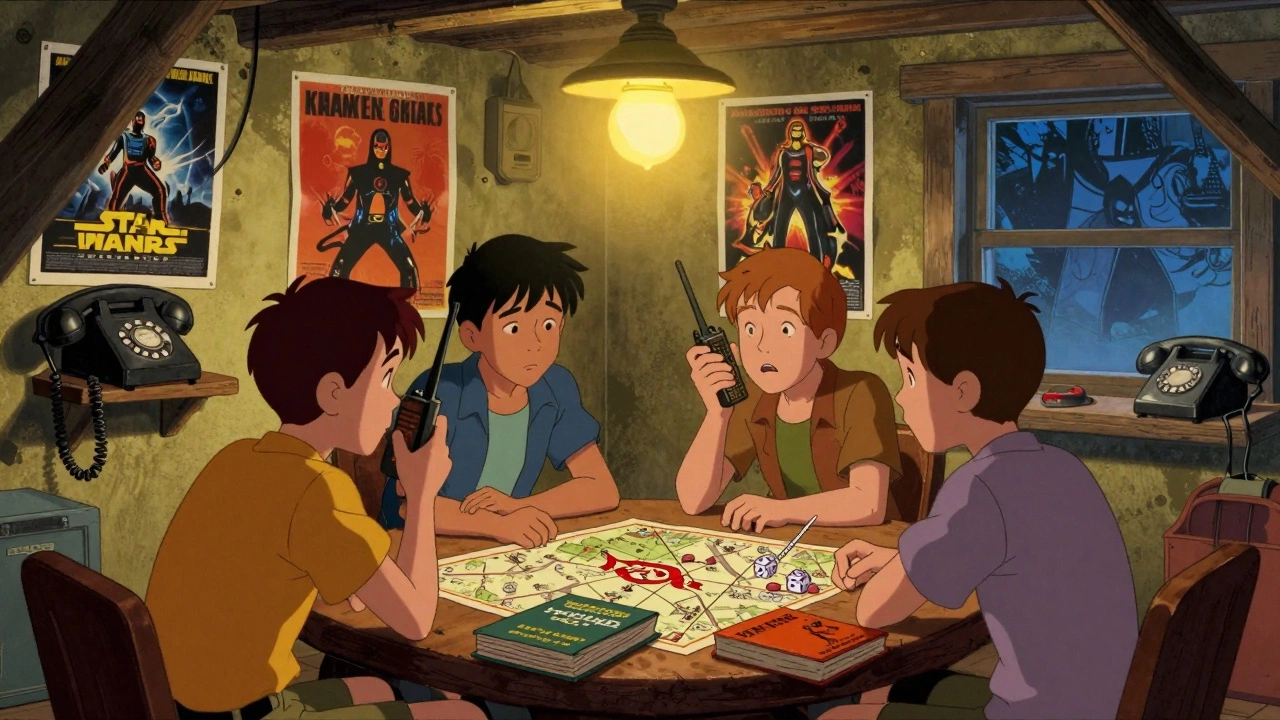
Consider the Realistic TRC-214 walkie-talkies, battery-powered handheld radios originally sold by RadioShack for around 70 USD today, used by the boys to coordinate during crises. These devices force the characters to stay close or risk losing contact. A dropped connection means real danger. Landline telephones, like Joyce Byers’ wall-mounted unit with its coiled cord, become conduits for the Upside Down. The physicality of these objects-the weight of the receiver, the static on the line-grounds the supernatural horror in tangible reality. HAM radios and short-wave sets anchor the kids’ attempts to reach Eleven or pick up Soviet transmissions, echoing real Cold War concerns about intercepted signals. Without cell phones, the mystery remains unsolved longer, keeping the audience hooked.
Board games also play a crucial role. Dungeons & Dragons, a tabletop role-playing game that structures friendship and myth-making in the series, with creatures like the Demogorgon named directly from its modules isn’t just a hobby for the boys; it’s their framework for understanding the world. When they encounter the Demogorgon, they don’t panic randomly-they consult their rulebooks. This reflects the "geek culture" of the 1980s, where fantasy literature and gaming provided a shared language for marginalized kids. The basement campaigns, comic books, and Star Wars posters aren’t just set dressing; they are tools the characters use to process trauma.
The Soundtrack: Music as Emotional Memory
If the visuals build the world, the music builds the emotion. Stranger Things uses over 180 licensed tracks from the 1960s-1980s, each placed strategically to evoke specific feelings. This isn’t random playlist curation; it’s narrative storytelling through sound.
| Song Title | Artist | Year | Narrative Context |
|---|---|---|---|
| Should I Stay or Should I Go | The Clash | 1981 | Will’s sonic lifeline from the Upside Down; motif of his relationship with Jonathan |
| Africa | Toto | 1982 | Season 1 finale; symbolizes hope and reunion after trauma |
| Time After Time | Cyndi Lauper | 1983 | Scoring the Snow Ball dance in Season 2; underscores adolescent romance |
| Material Girl | Madonna | 1985 | Accompanies Eleven’s mall makeover in Season 3; highlights consumerism |
| Running Up That Hill (A Deal with God) | Kate Bush | 1985 | Season 4 climax; catalyzed a real-world resurgence, reaching #1 on Billboard Global 200 |
Take Kate Bush’s "Running Up That Hill." Released in 1985, it had faded from mainstream consciousness until Season 4 of Stranger Things featured it prominently in 2022. The result? The song hit number one on the Billboard Global 200 and surpassed 1 billion streams on Spotify, nearly 37 years after its original release. This phenomenon illustrates the show’s power to convert narrative nostalgia into measurable contemporary consumption. Fans don’t just hear the song; they feel the urgency and desperation of Max Mayfield’s struggle. The music supervision team ensures that every track aligns with the emotional beat of the scene, making the 1980s feel alive rather than archived.
Fashion, Malls, and Consumer Culture
You can’t talk about 1980s nostalgia without talking about clothes and places. Costume designer Amy Parris differentiated each season through silhouettes. Season 1 features practical puffer jackets and corduroy. Season 2 shifts to preppy sweaters and denim. But Season 3, set in 1985, explodes with neon prints, cropped jackets, and high-waisted shorts. Hairstylist Sarah Hindsgaul recreated feathered bangs, perms, and mullets using period-accurate methods. Steve Harrington’s sculpted "Farrah Fawcett spray" mane isn’t just funny; it’s an era-specific status symbol.
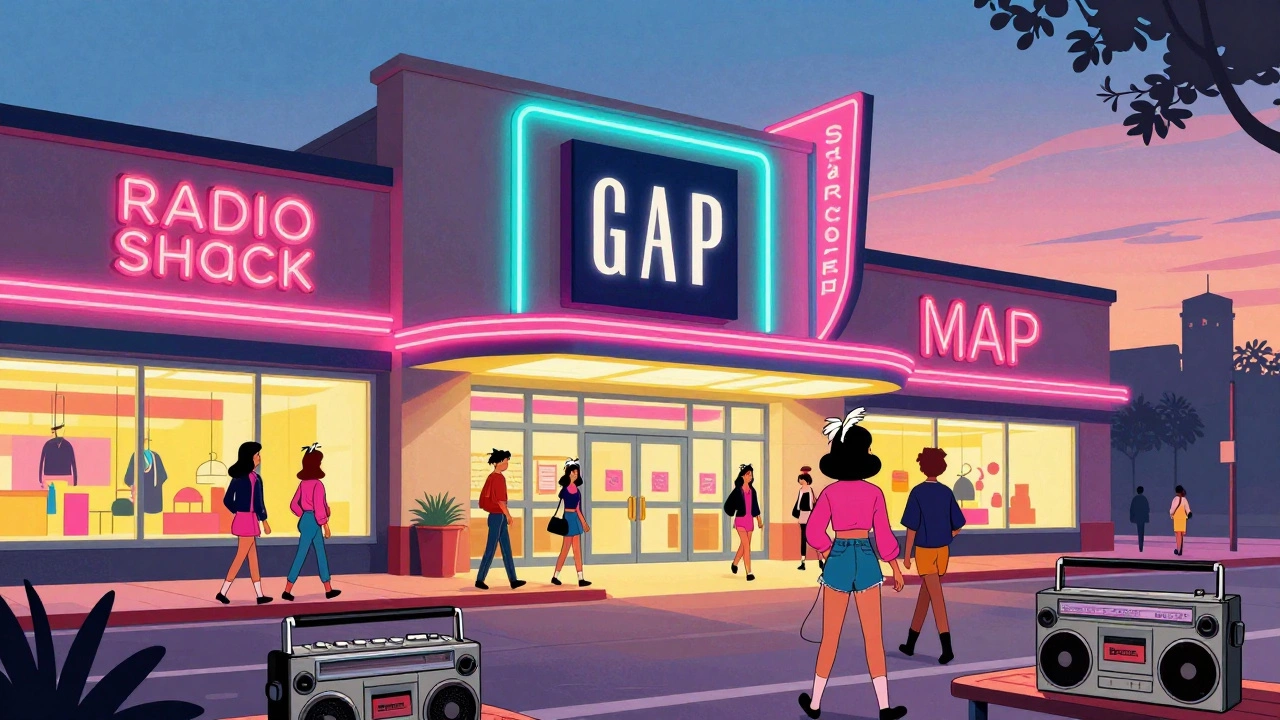
The setting amplifies this fashion. The Starcourt Mall in Season 3 is a monument to Reagan-era prosperity. Production designer Chris Trujillo transformed Duluth, Georgia’s Gwinnett Place Mall into an "1985 time capsule" with neon signage and period storefronts like Radioshack, Waldenbooks, and Gap. Inside, you see movies like Back to the Future and Cocoon playing in the multiplex. But the mall is more than a shopping center; it’s an allegory. It doubles as a Soviet front for an underground base, intertwining consumer culture with Cold War paranoia. Mayor Larry Kline’s collusion with Soviet money critiques the corruption hidden beneath the shiny surface of capitalism. For many viewers, the mall represents a lost social hub-a place where teens could gather, eat, and exist outside of school and home. Its decline in the real world mirrors the decay of the community in Hawkins.
Cold War Paranoia and Political Nostalgia
The political backdrop of the 1980s is woven into the fabric of the show. Stranger Things channels the stylized anti-Soviet tropes of 1980s action cinema like Red Dawn (1984) and Rocky IV (1985). The Russian villains, secret bases, and coded transmissions position Hawkins as a micro-front in a global ideological struggle. However, critics argue that the show reproduces Cold War propaganda rather than interrogating it. The USSR is portrayed as a monolithic, cartoonishly evil force, reflecting the fears of the time without adding much nuance.
This nostalgia extends to moral panics. The community hostility toward the Hellfire Club’s Dungeons & Dragons sessions echoes the real "Satanic panic" of the 1980s, where role-playing games were blamed for youth delinquency. By including these elements, the show revisits specific anxieties tied to youth culture, heavy metal, and fantasy. Some scholars warn that this continual recycling of Reagan-era aesthetics risks normalizing consumerism and Cold War patriotism as cozy memory objects, even as contemporary politics diverge sharply from that context. It’s a reminder that nostalgia is selective-it remembers the fun parts and forgets the systemic issues.
The Nostalgia Industry and Brand Synergy
Stranger Things is also a marketing powerhouse. Neuroscience-based branding experts describe nostalgia marketing as using familiar cues to trigger autobiographical memory. The show turns the "nostalgia dial to 100" by combining Eggo waffles, New Coke, and vintage clothing. The results are measurable. After Season 2, Eggo waffle sales jumped 14%, and Kellogg’s saw record social media mentions. Coca-Cola limited-released New Coke again in 2019, tying it to Lucas’s on-screen consumption while dressed as Ralph Macchio’s character from The Karate Kid. This meta-advertisement repackages a failed 1985 product for millennial and Gen-Z audiences.
Netflix’s broader campaign includes immersive live events, retro posters, and co-branded merchandise like Hasbro’s Palace Arcade handhelds featuring classic games such as Pac-Man and Galaga. This constructs a "billion-dollar nostalgia machine" around the show. While effective, this commercialization raises questions about authenticity. Is the nostalgia genuine, or is it manufactured? For many fans, the line blurs. They buy the merch because they love the world, but the world exists partly to sell the merch. It’s a cycle that defines modern pop culture.
Vicarious Nostalgia and Audience Response
Perhaps the most fascinating aspect of Stranger Things is its impact on viewers who never lived in the 1980s. Generation Z describes a "deep sense of nostalgia" generated purely by the show’s vibe-kids on bikes, arcades, and landlines. Scholars call this "vicarious" or "mediated" nostalgia. It’s a longing for a past that feels safer, simpler, and more tactile than the digital present. For Gen-X viewers, the show acts as a portal back to their teens, reminding them of reading Stephen King paperbacks and watching monster movies on VHS.
However, there’s growing ambivalence. Some long-time fans feel that later seasons lean too heavily on iconography, losing the core mystery and eeriness of Season 1. The show risks becoming primarily a nostalgia delivery system. Yet, as Season 5 approaches, set in autumn 1987, the series continues to evolve. It references later-1980s artifacts like David Bowie READ posters and Diana Ross’s Upside Down, signaling a shift toward mid-80s media self-awareness. Whether the final episodes balance comforting retro signals with meaningful engagement of trauma remains to be seen. One thing is certain: Stranger Things has revived the 1980s for a new generation, proving that pop culture nostalgia is a powerful, enduring force.
Why does Stranger Things feel so nostalgic even to people who weren't born in the 1980s?
This phenomenon is called "mediated" or "vicarious" nostalgia. The show uses universal sensory cues-synth music, warm color palettes, analog technology, and themes of childhood friendship-to create an emotional resonance that transcends actual historical experience. Viewers connect with the *idea* of a simpler, more tactile past, even if they never lived it.
Which 1980s films and authors most influenced Stranger Things?
The primary influences are Stephen King (especially It and Carrie), Steven Spielberg (E.T., Poltergeist), John Carpenter (Halloween), and George Lucas (Star Wars). The Duffer Brothers explicitly cited these creators as templates for narrative structure, visual style, and emotional tone.
How did Stranger Things affect the popularity of Kate Bush's "Running Up That Hill"?
After being featured prominently in Season 4 (released in 2022), the 1985 song reached number one on the Billboard Global 200 chart and surpassed 1 billion streams on Spotify. This demonstrated the show's ability to reintroduce older music to a massive contemporary audience.
What role does Dungeons & Dragons play in the show?
D&D provides the boys with a framework for understanding the supernatural threats they face. Creatures like the Demogorgon and Vecna are named directly from the game. It also serves as a bonding activity and a reflection of 1980s geek culture, highlighting how fantasy helped marginalized kids navigate social isolation.
Is the Starcourt Mall based on a real location?
Yes, the exterior and interior sets were filmed at Gwinnett Place Mall in Duluth, Georgia. Production designers transformed the existing mall into an accurate 1985 time capsule, adding period-appropriate stores like Radioshack and Waldenbooks to enhance authenticity.