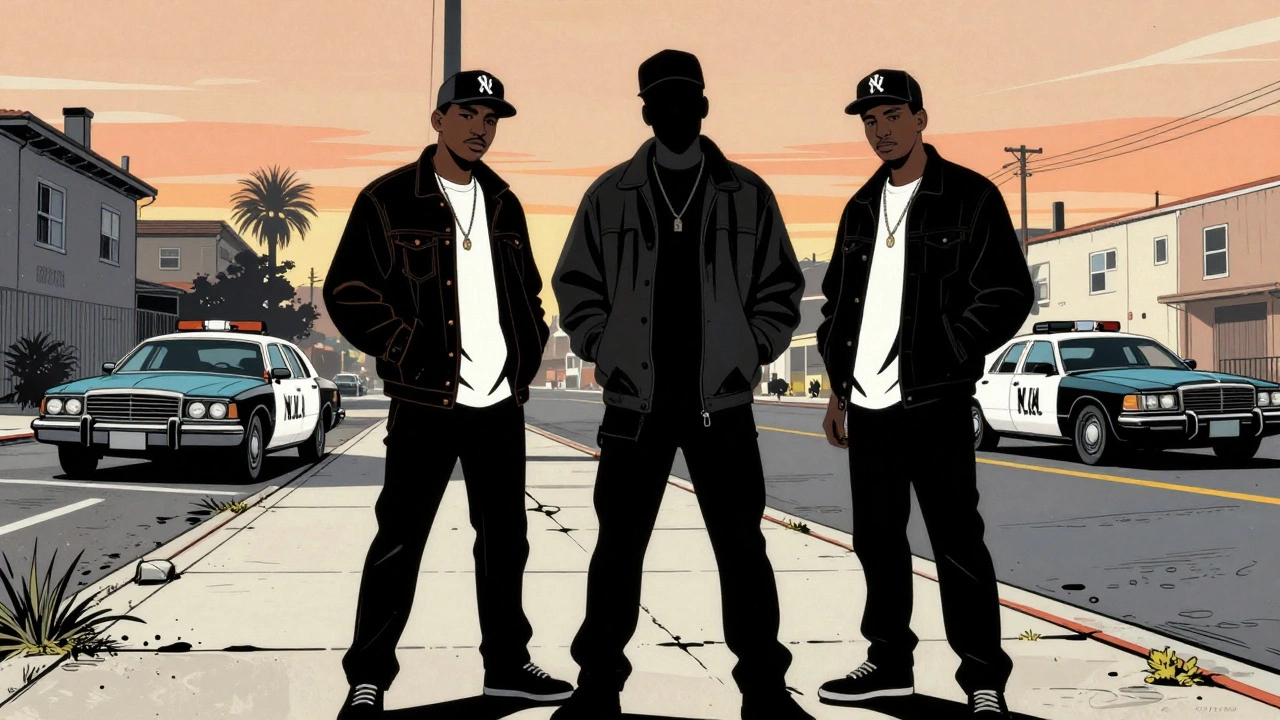

Imagine an album that sells two million copies without a single radio play or major tour stop. That sounds like a marketing myth, but it’s exactly what happened in the late 1980s. Straight Outta Compton is the debut studio album by the Los Angeles group N.W.A., released in 1988. It didn’t just make money; it shifted the entire center of gravity for hip-hop from New York to Los Angeles. This record turned a local street narrative into a national cultural earthquake, proving that raw, unfiltered storytelling could dominate the charts even when authorities tried to silence it.
The Birth of a Dangerous Group
To understand why this album hit so hard, you have to look at where it came from. N.W.A. (Niggaz With Attitude) formed in Compton, California in 1986. The core lineup included Ice Cube, Eazy-E, MC Ren, and producers Dr. Dre and DJ Yella. They weren’t signed to a major label initially because no one wanted their content. Major labels in 1987 considered their material too confrontational.
So, Eazy-E used money he had earned from local drug dealing to invest hundreds of dollars into connecting with manager Jerry Heller. Together, they built Ruthless Records as an independent label. They then secured a distribution deal with Priority Records, which was known mostly for novelty acts like the animated "California Raisins." This setup gave N.W.A. access to national retail chains without needing conventional radio promotion. It was a grassroots operation that relied on word-of-mouth and sheer shock value.
Sonic Aggression and Street Realism
Musically, the album is built on heavy drum machine patterns and dense samples. Dr. Dre and DJ Yella created a hostile but compelling sonic backdrop that pushed tempos into the mid-90 BPM range, typical for late-1980s West Coast rap. The opening sequence-"Straight Outta Compton," "Fuck tha Police," and "Gangsta Gangsta"-hits the listener with what critics call the force of a guided missile.
Lyrically, the songs revolve around gangs, sex, and crime in Black communities in California. Ice Cube wrote the bulk of the verses, crafting narratives of everyday survival in Compton. Eazy-E and MC Ren provided distinctive vocal deliveries that added layers of aggression and charisma. While most of the record is explicit, the track "Express Yourself" stands out. Built around a sample of Charles Wright & the Watts 103rd Street Rhythm Band, it is the only song on the LP that avoids profanity, offering a brief moment of self-expression amidst the chaos.
| Track Title | Primary Theme | Cultural Consequence |
|---|---|---|
| Fuck tha Police | Anti-police rhetoric | Received an official warning letter from the FBI; banned from many radio stations. |
| Gangsta Gangsta | Street credibility / Gang life | Became the group's signature anthem and defined the "gangsta" aesthetic. |
| Express Yourself | Relationships / Self-worth | Provided a clean alternative; showcased musical versatility beyond aggression. |
| Straight Outta Compton | Regional pride / Origin story | Established Compton as a central hub for hip-hop culture. |
Controversy as Fuel
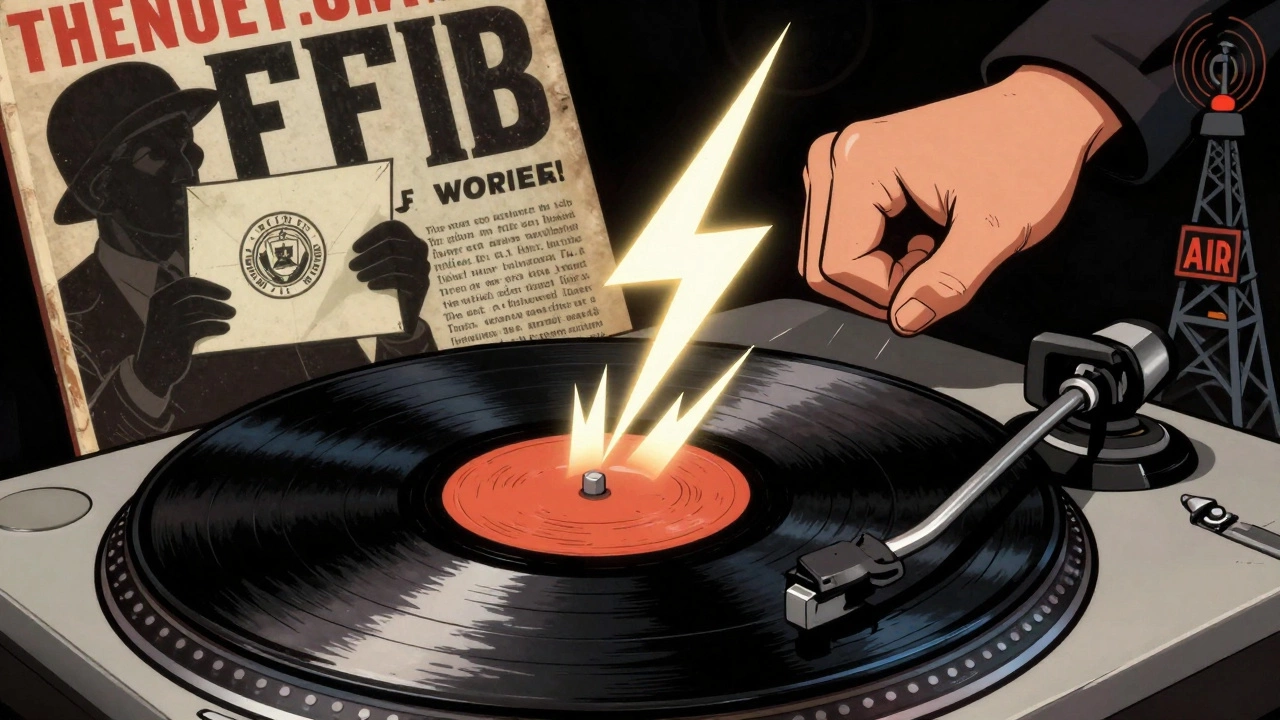
The single "Fuck tha Police" became the most controversial track in hip-hop history up to that point. It prompted an official warning letter from an FBI agent, radio bans in numerous U.S. markets, and restrictions on live performances. The FBI explicitly objected to the song’s portrayal of law enforcement. Instead of silencing N.W.A., this move amplified their notoriety. It reinforced their self-branding as radical truth-tellers from Compton.
This controversy gave the group outsized media attention relative to their tiny promotional budget. The album functioned as an anthem for the anti-police-brutality movement in Los Angeles. While the Rodney King beating and the 1992 LA riots hadn't happened yet, N.W.A. had already documented the tension between the LAPD and Black communities. Their antagonistic stance toward authority became a core feature of West Coast gangsta rap and wider debates about censorship and free speech.
Commercial Success Without Radio Support
Despite-or perhaps because of-the backlash, the numbers were staggering. By July 1989, roughly 11 months after its initial release, the album had sold over 1,000,000 copies in the United States. This made it the first gangsta rap album to earn platinum certification from the Recording Industry Association of America (RIAA). It peaked at number 9 on Billboard’s Top R&B/Hip-Hop Albums chart and number 37 on the Billboard 200.
Consider this: it reached double-platinum status (over 2,000,000 units sold) without the support of major radio airplay or large-scale touring. In 2015, following the release of the biographical film *Straight Outta Compton*, renewed interest pushed the album to triple-platinum certification. This commercial proof showed record labels that uncompromising, explicit narratives could sell millions. It opened the door for future investments in similarly explicit artists across the country.
Institutional Recognition and Legacy
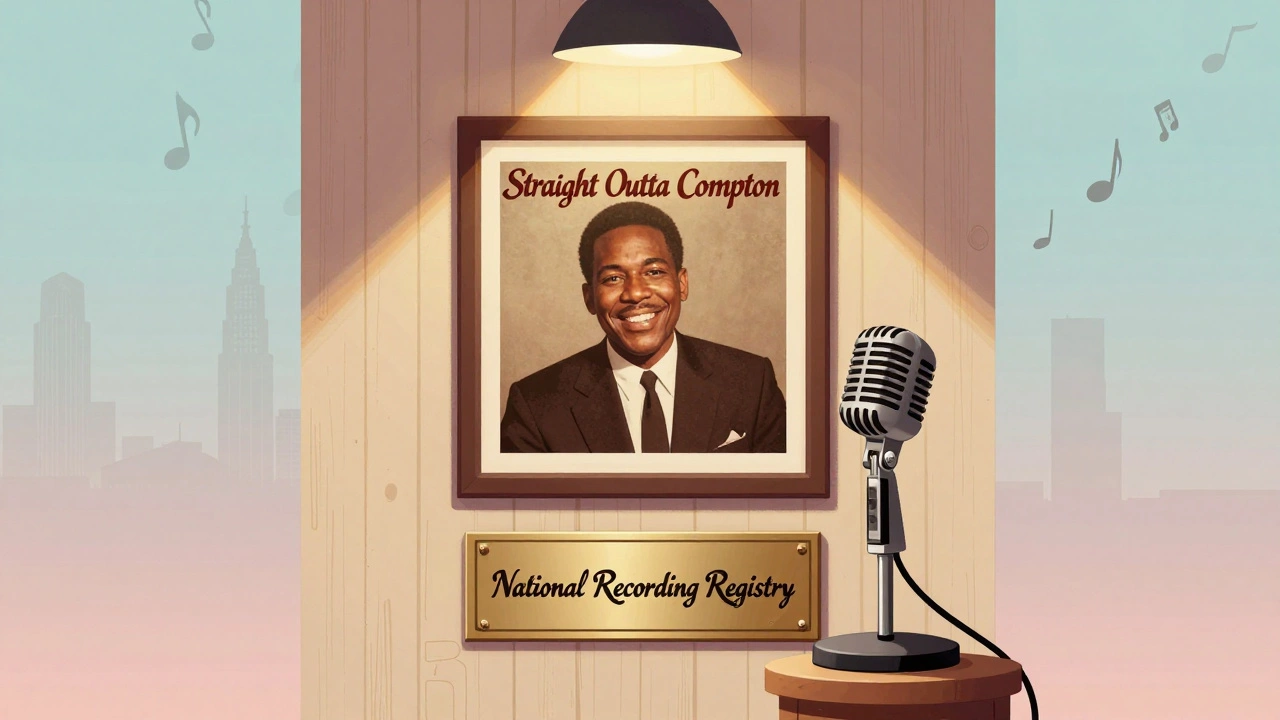
Today, the album is viewed not just as a pop culture artifact but as a historical document. In 2016, it was inducted into the Grammy Hall of Fame, becoming the first rap album ever to receive that honor. In 2017, the United States Library of Congress added it to the National Recording Registry, citing its cultural, historical, and aesthetic significance. These honors place N.W.A.’s debut alongside other foundational American recordings.
Critics often contrast N.W.A. with contemporaries like Public Enemy. While Public Enemy pursued a rational, organized political approach with "Fight the Power," N.W.A. was brazen and angrily confrontational. They stuck up a middle finger while waving an AK-47 in the other hand. This sharper rhetorical edge, combined with the platform of MTV’s *Yo! MTV Raps*, made *Straight Outta Compton* the standard-bearer of gangsta rap. It prefigured the smoother G-funk era led by Dr. Dre’s *The Chronic* and Snoop Dogg’s *Doggystyle*, but it laid the groundwork with raw aggression and undeniable authenticity.
Why It Still Matters
Decades later, the album remains a reference point for discussions on authenticity, political engagement, and commercial success in music. It documented the realities of late-1980s Los Angeles before mainstream media would touch them. It propelled the careers of Ice Cube, Dr. Dre, and Eazy-E, leading to multi-platinum solo albums and billion-dollar business ventures. While some lyrical elements are criticized for misogyny or glorification of violence, the record’s role in exposing police brutality and giving a voice to ignored communities is undeniable. It changed the game, forcing the industry to listen to the streets.
When was Straight Outta Compton released?
There is some debate among sources, but the most widely accepted date for the full album release is August 8, 1988. Some records cite January 25, 1989, which may refer to a wider national rollout or a specific maxi-single release featuring key tracks.
Who produced Straight Outta Compton?
The album was primarily produced by Dr. Dre and DJ Yella, with contributions from Arabian Prince. Dr. Dre’s production style, characterized by heavy drums and funk samples, became the blueprint for West Coast hip-hop.
Did the FBI really send a letter to N.W.A.?
Yes. The FBI sent an official warning letter to the group regarding the song "Fuck tha Police." The letter expressed concern that the song incited violence against law enforcement. This incident significantly boosted the group's profile and notoriety.
Was Straight Outta Compton successful on the radio?
No. The album achieved massive commercial success, reaching platinum and then double-platinum status, largely without radio support. Many stations banned the tracks due to their explicit lyrics and controversial themes.
How did Straight Outta Compton influence hip-hop?
It shifted the center of hip-hop from New York to Los Angeles and popularized the "gangsta rap" genre. It proved that explicit, street-oriented narratives could be commercially viable, paving the way for artists like Dr. Dre, Snoop Dogg, and Tupac Shakur.


