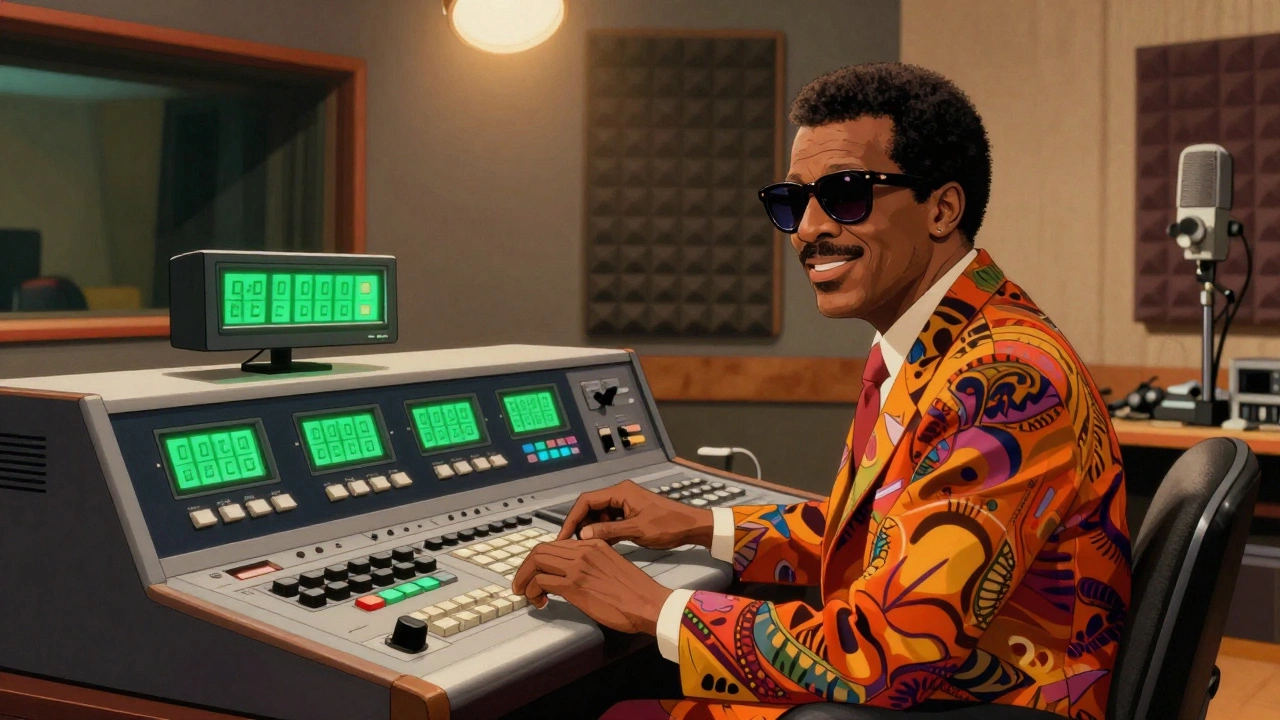

When you listen to the crisp digital piano on "Part-Time Lover" or the tight, quantized groove of "Skeletons," you are hearing more than just a hit record. You are hearing a revolution in how music was made. Between 1980 and 1989, Stevie Wonder is an American singer-songwriter who transitioned from analog synth experimentation to cutting-edge digital production. He moved away from the massive, patch-cable-heavy rigs of the 1970s and embraced a new world of digital synthesis, sampling, and sequencing.
This shift wasn't just about chasing trends. For a blind musician, this technology offered independence. It allowed him to compose, arrange, and produce entire albums largely by himself at his own Wonderland Studios. But here is the twist: while his sound became colder and more precise, his message remained hot and human. He used these expensive machines to fight for civil rights, campaign for holidays, and address urban inequality. Let's look at the specific tools that built this unique era of soul music.
The King of Digital Workstations: The Synclavier II
If there is one instrument that defines Stevie Wonder’s 1980s sound, it is the New England Digital Synclavier II is a high-end digital synthesizer and sampler workstation used by top-tier artists like Stevie Wonder and Michael Jackson.
In the early 1980s, this machine was the Rolls-Royce of studio gear. While most musicians were struggling with cassette tape loops, Wonder had access to a system that cost upwards of $250,000. That price tag bought him something rare: total control. The Synclavier combined FM synthesis (licensed from Stanford University) with direct-to-disk sampling. It could store entire songs as sequences with tempo maps and recall complex patches instantly.
For Wonder, the tactile layout of the Synclavier-its button grids and numeric keypads-was a game-changer. He didn't need to read sheet music or visually inspect a tangled mess of wires. He could "see" the arrangement through touch and ear. This allowed him to work late into the night, tweaking arrangements without needing an engineer to hold the phone lines open. Tracks on In Square Circle (1985) showcase this capability, with layered harmonies and precise rhythmic programming that would have been nearly impossible to achieve with live bands alone.
The Sound of the Decade: Yamaha DX7
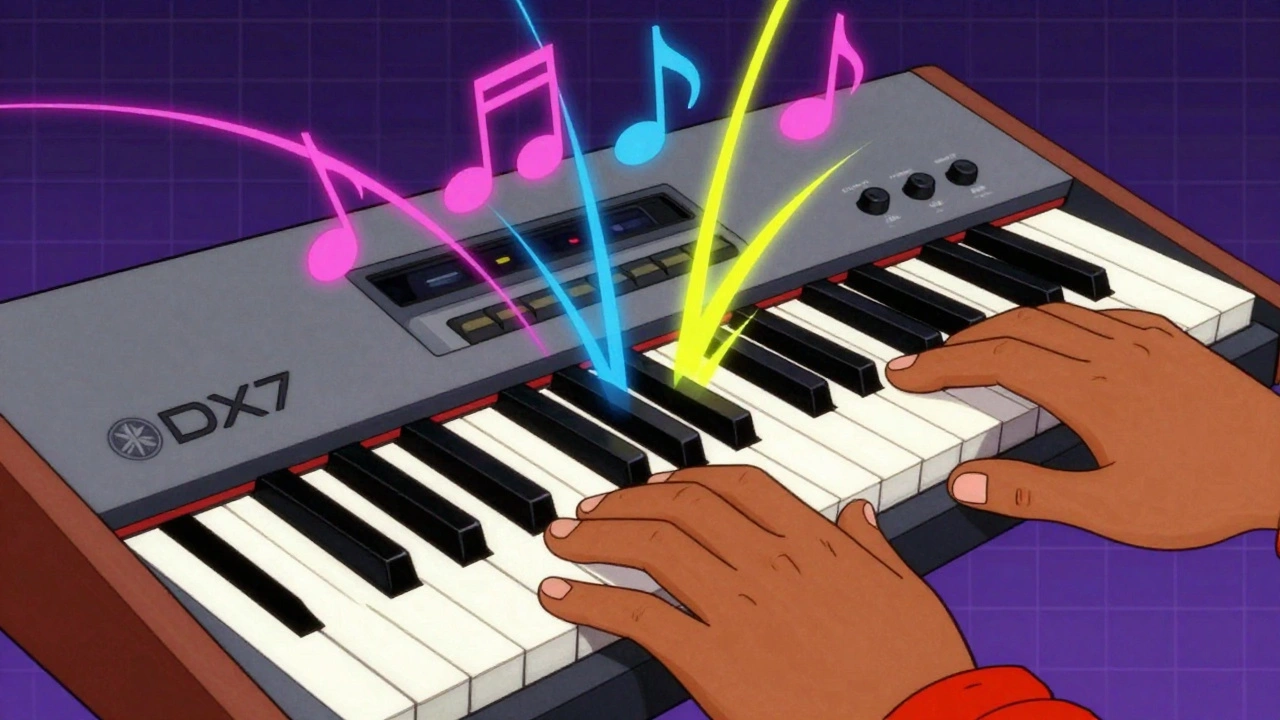
While the Synclavier handled the heavy lifting in the studio, the Yamaha DX7 is the best-selling professional synthesizer of the 1980s known for its bright FM electric piano sounds defined the texture of his hits. Released in 1983, the DX7 was affordable compared to the Synclavier, costing around $1,995. It sold over 200,000 units worldwide because it sounded like nothing else.
Wonder used the DX7 extensively on albums like The Woman in Red (1984) and Characters (1987). Listen closely to "I Just Called to Say I Love You." That iconic, glassy electric piano intro? That is classic DX7 territory. The synth’s 6-operator FM engine created clean, bright tones that cut through the mix perfectly. Unlike the warm, fuzzy analog synths of the 70s, the DX7 was sharp and modern. It gave Wonder’s ballads a contemporary sheen that appealed to pop radio audiences while maintaining his signature melodic sensibility.
Analog Warmth Meets Digital Precision
Don’t think Wonder abandoned analog entirely. He blended the new digital tools with classic polyphonic synths to keep some warmth in the mix. He owned early Oberheim models, including the Four-Voice and later the OB-Xa and OB-8. These instruments provided thick brass stabs and lush pads that complemented the thinner digital sounds.
He also experimented with the PPG Wave 2.2 is a hybrid digital wavetable synthesizer introduced in 1982 that produced shimmering, evolving pad textures. Photographs from 1983 show Wonder playing this German-made keyboard. Its wavetable technology created sounds that evolved over time, adding movement to tracks that might otherwise feel static due to rigid digital sequencing. This blend of analog character and digital precision is what makes albums like Hotter than July (1980) bridge the gap between his two eras.
Drum Machines and the Quantized Groove
The rhythm section changed dramatically in the 80s. Wonder moved away from relying solely on live drummers like Harvey Mason or Ndugu Chancler for every beat. Instead, he embraced programmable drum machines. The Linn LM-1 is the first drum machine to use real sampled drum sounds, released in 1980 and widely used in 1980s pop and R&B and its successor, the LinnDrum, likely provided the crisp, punchy kicks and snares heard on mid-80s tracks.
Why make this switch? Consistency. Drum machines allowed for perfect timing. On socially conscious tracks like "Skeletons" (1987), the groove is tight and driving. This quantized precision matched the urgent tone of the lyrics. It also allowed Wonder to layer percussion parts with surgical accuracy, creating dense rhythmic textures that supported his vocals without cluttering the mix.
Tech as a Tool for Social Change
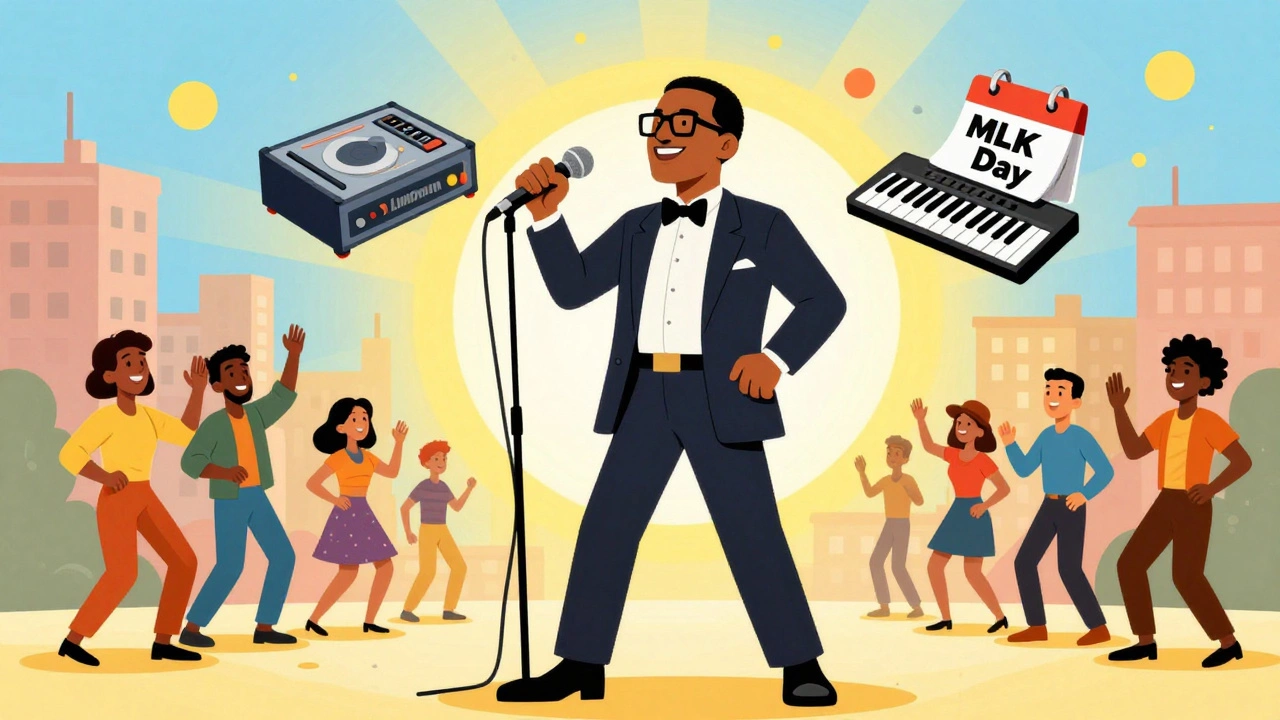
This is where the story gets interesting. Usually, when artists adopt new, expensive technology, they focus on sonic novelty. Wonder used it to amplify his voice on political issues. Consider "Happy Birthday" from Hotter than July. The song was an anthem for his campaign to establish Martin Luther King Jr. Day as a federal holiday.
The arrangement combines live hand percussion with bright, layered keyboards. By using contemporary digital sounds, Wonder ensured the song felt current and radio-friendly. It wasn't a dusty protest folk song; it was a funky, modern pop track that demanded attention. The technology helped the message reach a mainstream audience that might have ignored a more traditional production style. The campaign succeeded, with President Ronald Reagan signing the bill in 1983.
Similarly, "Master Blaster (Jammin')" pays tribute to Bob Marley but reinterprets reggae rhythms through electric pianos and synths rather than guitars. It references global liberation movements, including struggles in Zimbabwe. Wonder used his tech-savvy approach to connect local American soul with global political consciousness.
| Instrument | Type | Role in Production | Approx. Cost (1980s) |
|---|---|---|---|
| New England Digital Synclavier II | Digital Workstation | Sequencing, Sampling, Complex Arrangements | $75,000 - $250,000+ |
| Yamaha DX7 | FM Synthesizer | Electric Pianos, Bells, Bright Leads | $1,995 |
| Oberheim OB-Xa/OB-8 | Analog Polyphonic Synth | Brass Stabs, Lush Pads | $3,000 - $5,000 |
| Linn LM-1 / LinnDrum | Sampled Drum Machine | Precise, Punchy Rhythms | $2,995 - $4,995 |
| PPG Wave 2.2 | Wavetable Synth | Evolving Textures, Shimmering Atmospheres | $4,000+ |
Legacy and Modern Emulation
Today, you don't need a six-figure budget to recreate this sound. Software emulations like Arturia’s V Collection include the Synclavier V and DX7 V, allowing producers to access these historic tones. However, understanding the context matters. Wonder didn't just press buttons; he used these tools to solve creative problems. He needed independence, precision, and a way to communicate complex ideas efficiently.
Critics sometimes argue that the 1980s records lack the "soul" of his 1970s masterpieces like Innervisions. They point to the coldness of digital drums and the brightness of FM synthesis. But this view misses the point. The "soul" wasn't lost; it was translated. Wonder proved that technology doesn't have to sterilize emotion. In fact, for him, it liberated it. By removing the barriers of visual notation and large ensembles, he could speak directly to the listener, whether he was singing about love or demanding justice.
What synthesizer did Stevie Wonder use in the 1980s?
Stevie Wonder primarily used the New England Digital Synclavier II for complex arrangements and sequencing. He also heavily utilized the Yamaha DX7 for its iconic electric piano sounds, along with Oberheim polysynths like the OB-Xa and the PPG Wave 2.2 for textured pads and leads.
How did Stevie Wonder use technology for social causes?
Wonder used modern, radio-friendly digital production to make socially conscious songs like "Happy Birthday" and "Master Blaster" appealing to mainstream audiences. This helped amplify his campaign for the Martin Luther King Jr. holiday and highlighted global political issues, proving that pop music could carry serious messages without sacrificing commercial viability.
Did Stevie Wonder stop using analog synthesizers in the 1980s?
No, he blended analog and digital gear. While he adopted digital workstations like the Synclavier, he continued to use analog polysynths such as the Oberheim OB-Xa and OB-8 to add warmth and thickness to his mixes, creating a hybrid sound that defined his 1980s output.
What drum machines influenced Stevie Wonder's 1980s sound?
The Linn LM-1 and its successor, the LinnDrum, were significant influences. These machines used real sampled drum sounds, providing the crisp, punchy, and precisely timed grooves heard on hits like "Part-Time Lover" and "Skeletons." He also programmed drums directly within the Synclavier system.
Why was the Synclavier important for Stevie Wonder?
The Synclavier allowed Wonder to compose, arrange, and produce music independently. Its tactile interface and memory capabilities meant he could recall complex setups without visual aids, giving him the freedom to work alone at his Wonderland Studios and maintain full artistic control over his recordings.