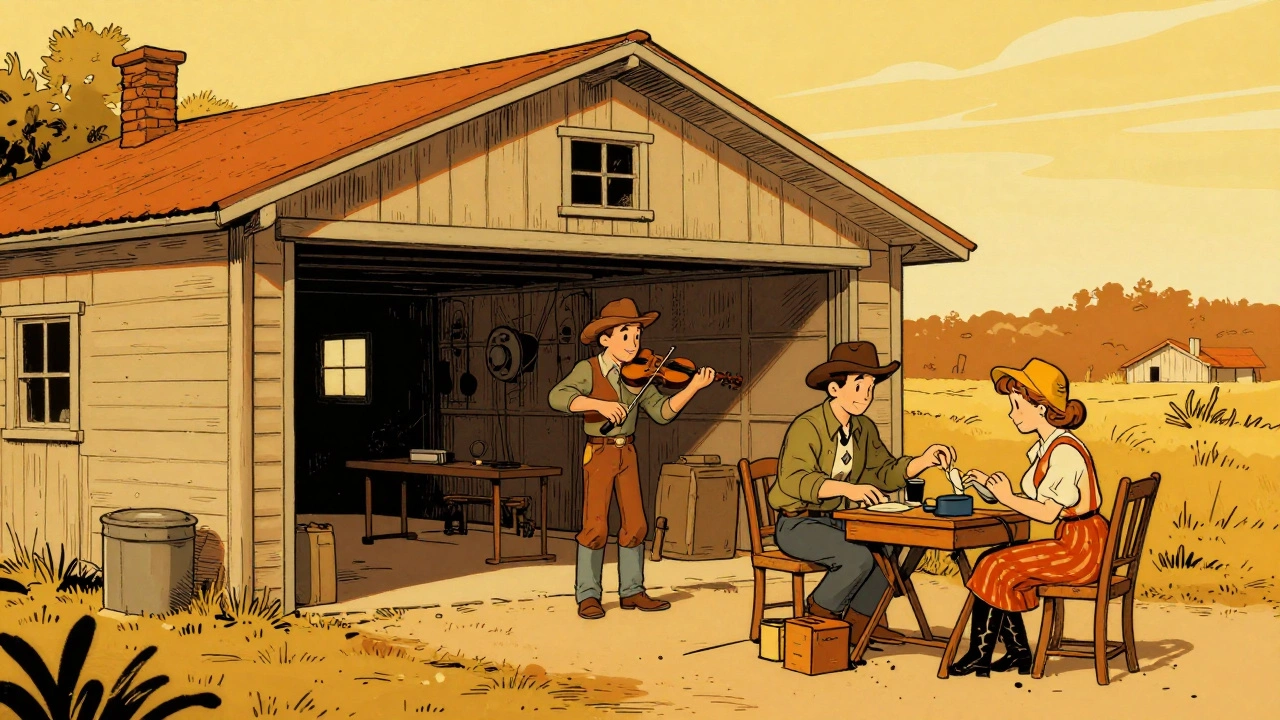

The Garage Roots and the Birth of a Brand
Before it was a global powerhouse, Stax was known as Satellite Records. Jim Stewart started the operation in his garage in Brunswick, Tennessee. It was a lean, family-run affair. By 1959, Jim and his sister, Estelle Axton, moved the operation to Memphis, taking over the old Capitol Theatre at 926 East McLemore Avenue. If you visit that spot today, you'll find a museum, but back then, it was just a place where magic happened by accident.
The name change to Stax in 1961 wasn't some fancy marketing move. It was a simple portmanteau: Stewart and Axton. This partnership created a unique environment where the music came first. Their big break happened with a single called "Cause I Love You," a duet by Rufus and Carla Thomas. When 40,000 copies flew off the shelves locally, it caught the eye of Jerry Wexler from Atlantic Records. That distribution deal was the fuel Stax needed to push their sound from a Memphis neighborhood to the rest of the world.
The Memphis Sound: Funk vs. Sweet
If you want to understand why Stax mattered, you have to compare it to Motown. Motown was the "Sound of Young America"-polished, choreographed, and designed for the pop charts. Stax was different. As Rufus Thomas famously put it, "Motown had the sweet. But Stax had the funk." This was the essence of Southern Soul, a style that leaned heavily into the blues and gospel roots of the South.
The secret weapon of the label was their house band, Booker T. & the MGs. These musicians weren't just employees; they were the heartbeat of every track. They provided a tight, lean groove that allowed singers to pour their souls into the microphone without too much orchestral clutter. The result was the "Memphis Sound"-stripped down, punchy, and deeply authentic.
| Feature | Stax Records | Motown Records |
|---|---|---|
| Musical Vibe | Gritty, funky, raw | Polished, pop-oriented, melodic |
| Key Influence | Southern Gospel and Blues | R&B and Pop |
| Production Style | Minimalist, house-band driven | Layered, orchestral arrangements |
| City Base | Memphis, Tennessee | Detroit, Michigan |

A Sanctuary of Integration in a Divided South
What makes Stax truly remarkable wasn't just the music, but who was making it. In the 1960s, Memphis was a powder keg of racial tension. Yet, inside the walls of the studio, race seemed to take a backseat to talent. Stax operated as a racially integrated business long before it was socially acceptable-or legal-in many parts of the South.
You had Black and white musicians, engineers, and executives working side-by-side. The house band was a prime example of this synergy. Even the decision-making process was democratic; the musicians often voted with Jim Stewart on which tracks should actually be released. This wasn't just about being "progressive"; it was about the music. When you're chasing a perfect groove, it doesn't matter what color the person playing the bass is.
The Titans of Soul
You can't talk about Stax Records without mentioning Otis Redding. He was the label's undisputed crown jewel. His voice had a raw power that defined the era, and his death in 1967 was a devastating blow to the company. But the roster went far beyond one man. The label launched the careers of Sam & Dave, whose high-energy duets became anthems of the time, and Isaac Hayes, who pushed soul into the realm of cinematic orchestration.
They also gave a home to the Staple Singers, blending gospel conviction with soul, and Albert King, who brought the electric blues into the fold. Throughout its peak, the label released over 800 singles and nearly 300 LPs. They weren't just making songs; they were building a catalog of American standards that still influence producers and artists today.

The Soul Explosion and the Fall
After the loss of Otis Redding and a messy split from Atlantic Records in 1968, Stax had to pivot. Enter Al Bell, a Memphis DJ who became a co-owner and the driving force behind the label's next phase. Bell was ambitious. In 1969, he launched the "Soul Explosion," a massive marketing blitz that flooded the market with nearly 30 albums at once. He wanted to turn Stax into a corporate giant that could go toe-to-toe with Motown.
While the expansion brought short-term visibility, it created long-term instability. The label moved away from its lean, garage-style roots and toward a more corporate structure. By the mid-1970s, a disastrous distribution deal with CBS Records pushed the company toward insolvency. The very ambition that drove Al Bell to expand the brand eventually contributed to its downfall, and the label was forced to close its doors in late 1975.
Cultural Legacy and Social Impact
Stax's impact didn't end when the music stopped. The label proved that an integrated business model could thrive in the heart of the South, providing a blueprint for social change. They also engaged directly with social movements. A prime example was Wattstax, a massive concert organized to commemorate the seventh anniversary of the Watts rebellion in Los Angeles. It wasn't just a gig; it was a political statement and a celebration of Black community and resilience.
Today, the legacy lives on at the Stax Museum of American Soul Music. It serves as a reminder that the most influential music often comes from the most unlikely places-like an old movie theater in South Memphis. Whether you're listening to a gritty horn line or a soulful vocal run, you're hearing the echoes of a place where the music was allowed to be as honest and raw as the people who made it.
What is the difference between the Memphis Sound and the Motown Sound?
The Motown Sound was polished, melodic, and designed for a broad pop audience, often featuring complex orchestral arrangements. The Memphis Sound, championed by Stax, was rawer, grittier, and more focused on the "funk." It relied on a tight house band and a minimalist production style that emphasized the emotional delivery of the singer.
Who were Booker T. & the MGs?
Booker T. & the MGs served as the house band for Stax Records. They were an ethnically integrated group that provided the instrumentation for almost every major Stax hit. Their ability to create a tight, soulful groove became the foundation of the Southern Soul genre.
Why did Stax Records close in 1975?
The closure was the result of several factors, including the loss of key artists like Otis Redding, the loss of their initial distribution deal with Atlantic, and a subsequent problematic distribution agreement with CBS Records. These financial struggles eventually led to insolvency.
What was the "Soul Explosion"?
The "Soul Explosion" was a 1969 marketing strategy led by Al Bell. To revitalize the brand and compete with Motown, the label released nearly 30 albums in a short window, flooding the market to maximize their presence and visibility.
What was the significance of the Wattstax concert?
Wattstax was a massive cultural event organized by Stax to mark the seventh anniversary of the Watts rebellion. It highlighted the label's commitment to social issues and served as a powerful gathering of Black musical talent and community pride.


