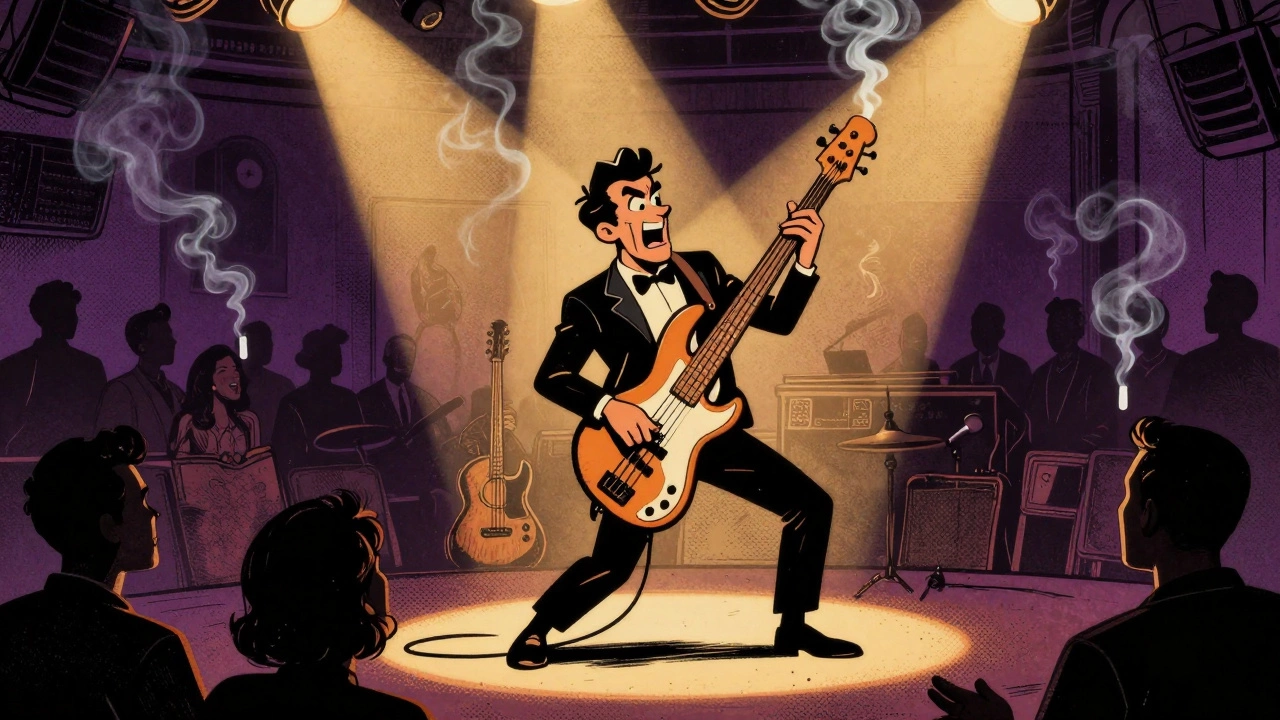

Imagine walking into a club in 1974. The lights are low, the air is thick with smoke, and the rhythm section is locked in. But something feels different. The bass isn’t just keeping time anymore. It’s leading the charge. It’s screaming solos, laying down funky grooves that make you move, and weaving complex melodic lines over chaotic drum patterns. This wasn’t just music; it was a revolution. And at the center of this storm stood Stanley Clarke, an American bassist who didn’t just play the instrument-he redefined what it could do.
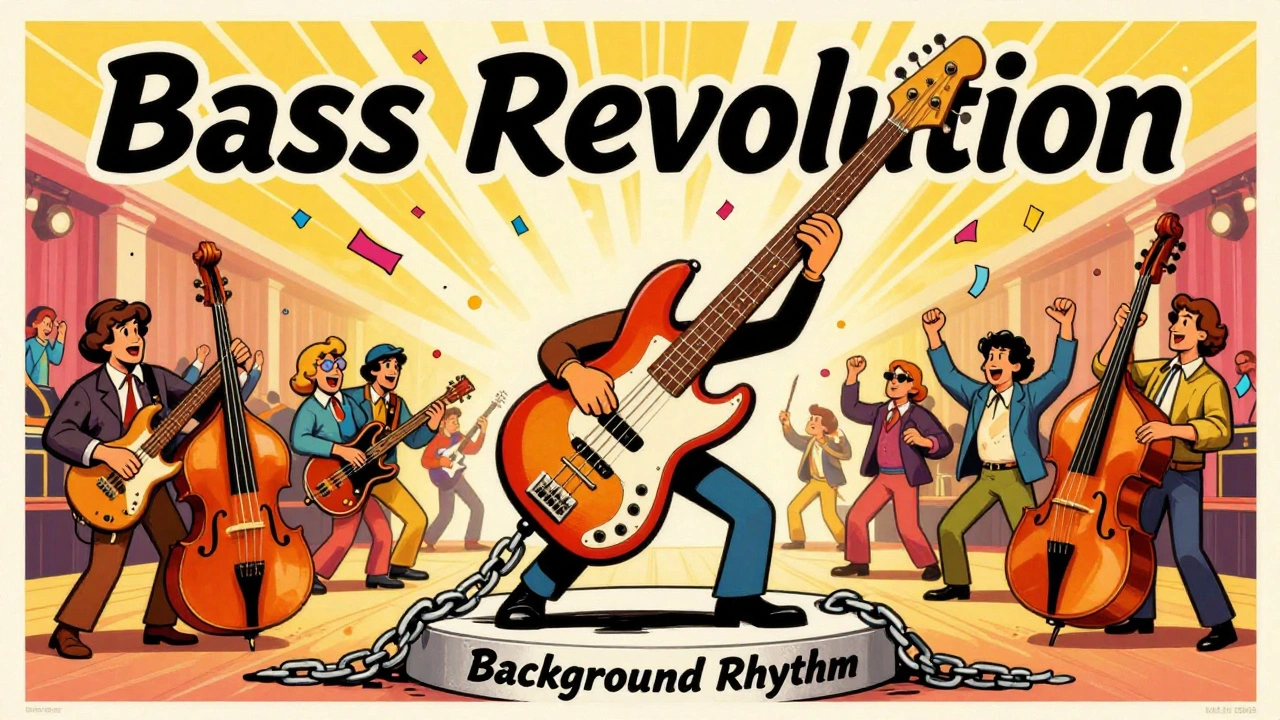
The 1970s were a golden age for the electric bass. Before this decade, the bass was mostly a background player, anchoring the harmony while guitarists and saxophonists took the spotlight. Then came jazz fusion. This genre, blending the improvisational freedom of jazz with the driving rhythms of rock and funk, gave bassists a new stage. Stanley Clarke became the face of this movement, but he wasn’t alone. He was part of a wave of virtuosos who turned the bass from a supporting role into a lead instrument. Let’s look at how these players changed music forever.
Stanley Clarke: The Architect of Modern Bass
To understand the shift, you have to start with Stanley Clarke. Born on June 30, 1951, Clarke grew up in Philadelphia, surrounded by the sounds of jazz legends like John Coltrane and Miles Davis. But his real breakthrough happened when he joined forces with keyboardist Chick Corea to form Return to Forever, one of the first and most influential jazz fusion bands.
Clarke’s approach was unique. He mastered both the acoustic double bass and the electric bass, switching between them seamlessly in live performances. On albums like Light as a Feather (1973) and No Mystery (1975), Clarke showed that the bass could be percussive, melodic, and harmonic all at once. His technique was precise, his tone deep and resonant, and his improvisations bold.
But Clarke didn’t stop at technical prowess. He wanted the bass to be heard. In interviews, he often spoke about liberating the bass from the "back of the stage." He used amplifiers and effects pedals to create a sound that cut through the mix, allowing him to take solos that rivaled any guitarist or horn player. This confidence changed how audiences perceived the instrument. Suddenly, people were watching the bassist as closely as they watched the singer.
One of Clarke’s most significant achievements was becoming the first jazz-fusion bassist to headline tours and have his albums certified gold. This wasn’t just a musical milestone; it was a commercial one. It proved that instrumental music could sell records and fill arenas, paving the way for future generations of bassists.
The Return to Forever Era: Redefining Ensemble Dynamics
Return to Forever was more than just a band; it was a laboratory for musical innovation. With Clarke on bass, Corea on keyboards, Al Di Meola on guitar, and Lenny White on drums, the group created a sound that was both intricate and powerful. Clarke’s role in this ensemble was crucial. He provided the rhythmic foundation while also contributing melodic ideas that drove the compositions forward.
Listen to tracks like "No Muley" or "Romanza," and you’ll hear Clarke’s influence. His bass lines are not just supportive; they are conversational. He interacts with the other instruments, responding to their phrases and building tension before resolving it. This interplay is a hallmark of jazz fusion, and Clarke was a master of it.
Clarke’s work with Return to Forever also highlighted the importance of composition in fusion music. Unlike traditional jazz, which often relied on standard chord progressions, fusion pieces were original compositions with complex structures. Clarke contributed several compositions to the band’s repertoire, showcasing his ability to write music that challenged both the performers and the listeners.
Beyond Return to Forever: Collaborations and Solo Work
After leaving Return to Forever, Clarke continued to push boundaries through collaborations and solo projects. One of his most notable partnerships was with keyboardist George Duke. Together, they formed a duo that blended funk, soul, and jazz into a seamless whole. Their album Heavy Makes Perfect (1980) featured hits like "Sweet Baby, I Just Want to Love You," which demonstrated Clarke’s ability to lay down infectious grooves while still maintaining his jazz sensibilities.
This collaboration was significant because it introduced jazz fusion to a wider audience. George Duke’s soulful vocals and pop-friendly melodies made the music accessible to listeners who might not have been familiar with complex jazz harmonies. Clarke’s bass playing remained sophisticated, but it was grounded in a groove that anyone could feel. This balance between complexity and accessibility is key to understanding why Clarke’s music has endured.
Clarke also ventured into film scoring, composing music for movies like Blue City and Heartbreakers. His ability to translate his musical language to visual media further expanded his legacy. Film scoring required a different kind of precision-music had to match the mood and pacing of scenes-but Clarke’s deep understanding of rhythm and melody served him well.
Jaco Pastorius: The Funky Counterpart
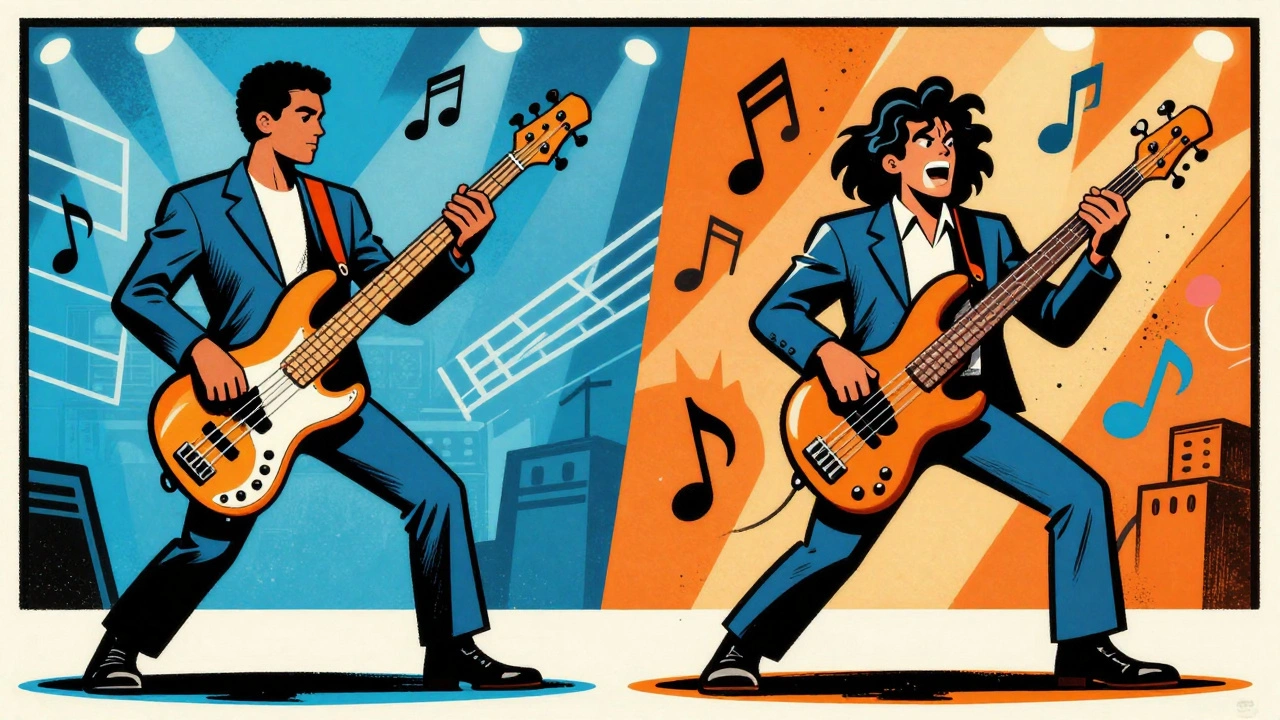
You can’t talk about 1970s bass virtuosos without mentioning Jaco Pastorius. While Clarke was refining the jazz fusion sound, Pastorius was exploding it with funk. Joining Weather Report in 1976, Pastorius brought a raw, energetic style that contrasted sharply with Clarke’s polished approach.
Pastorius played a fretless bass, which allowed him to slide between notes and create vocal-like expressions. His tone was bright and cutting, often mimicking the sound of a trumpet or saxophone. Tracks like "Teen Town" and "Havona" showcase his incredible technique and creativity. Unlike Clarke, who often used the bass to support the ensemble, Pastorius frequently took the lead, delivering solos that were both technically dazzling and emotionally charged.
The difference between Clarke and Pastorius is instructive. Clarke represented the intellectual side of fusion, focusing on structure and harmony. Pastorius represented the visceral side, emphasizing groove and emotion. Both approaches were valid, and together they defined the range of possibilities for the electric bass in the 1970s.
| Attribute | Stanley Clarke | Jaco Pastorius |
|---|---|---|
| Primary Genre | Jazz Fusion | Funk/Jazz Fusion |
| Instrument Style | Fretted Electric & Acoustic Bass | Fretless Electric Bass |
| Key Band | Return to Forever | Weather Report |
| Musical Approach | Structured, Harmonic, Melodic | Improvisational, Groove-Oriented, Expressive |
| Influence | Commercial viability of instrumental music | Technical innovation and tonal experimentation |
Other Notable Bassists of the Era
While Clarke and Pastorius are the most famous names, they weren’t the only ones pushing the envelope. Jack Bruce, the bassist for Cream, had already established the bass as a lead instrument in the 1960s, but his influence carried over into the 1970s. His vocal-led style and bluesy phrasing inspired many fusion players to think of the bass as a singing instrument.
John Entwistle of The Who also deserves mention. Though primarily known for rock music, Entwistle’s technical skill and innovative use of the bass influenced jazz musicians. His ability to play fast, complex lines with clarity showed that the bass could handle high-speed passages without losing its punch.
Then there’s Marcus Miller, who emerged in the late 1970s and early 1980s. Working with artists like Chick Corea and Miles Davis, Miller combined funk grooves with jazz sophistication. His slap bass technique became iconic, adding a percussive element that complemented the rhythmic intensity of fusion music.
The Legacy of 1970s Bass Virtuosity
The impact of these bassists extends far beyond the 1970s. Today, every bass player owes a debt to Stanley Clarke, Jaco Pastorius, and their contemporaries. They proved that the bass could be a solo instrument, capable of expressing complex emotions and ideas. They broke down barriers between genres, showing that jazz, rock, and funk could coexist in a single performance.
Modern bassists continue to draw inspiration from this era. Players like Victor Wooten and Esperanza Spalding cite Clarke and Pastorius as major influences. The techniques developed in the 1970s-slap bass, fretless playing, harmonic exploration-are still taught in music schools around the world.
Moreover, the commercial success of jazz fusion in the 1970s opened doors for instrumental music in the mainstream market. Artists like Snarky Puppy and The Bad Plus carry on this tradition, proving that complex, improvisational music can still find an audience today.
Why This Matters Now
In an age where music is often produced digitally, the human element of bass playing remains vital. The 1970s virtuosos reminded us that music is about connection-between the player and the instrument, between the musician and the audience, and between different genres and styles. Their legacy is not just in the notes they played, but in the freedom they gave future musicians to explore their own voices.
If you’re a bassist, listening to Stanley Clarke and Jaco Pastorius is essential. If you’re a listener, appreciating their work enriches your understanding of modern music. Either way, the 1970s bass revolution is a story worth telling.
Who was the most influential bassist of the 1970s?
Stanley Clarke is widely considered the most influential bassist of the 1970s due to his role in founding Return to Forever and popularizing jazz fusion. However, Jaco Pastorius is also highly regarded for his innovative use of the fretless bass and his impact on funk and jazz.
What makes Stanley Clarke’s playing style unique?
Stanley Clarke is known for his mastery of both acoustic and electric bass, his precise technique, and his ability to blend jazz improvisation with funk grooves. He was one of the first bassists to treat the instrument as a lead voice in an ensemble.
How did jazz fusion change the role of the bass guitar?
Jazz fusion elevated the bass from a supporting role to a lead instrument. Bassists began taking solos, using effects pedals, and exploring complex melodic lines. This shift was driven by players like Stanley Clarke and Jaco Pastorius, who demonstrated the instrument’s versatility.
What is the difference between Stanley Clarke and Jaco Pastorius?
Stanley Clarke focused on structured, harmonic-rich jazz fusion, often using a fretted bass. Jaco Pastorius emphasized groove and expression, playing a fretless bass with a brighter, more vocal-like tone. Clarke was more commercially successful, while Pastorius was more technically experimental.
Which albums should I listen to if I’m interested in 1970s jazz fusion bass?
Start with Stanley Clarke’s School Days and Return to Forever’s Light as a Feather. For Jaco Pastorius, check out his self-titled debut album and Weather Report’s Heavy Weather. These albums showcase the best of 1970s bass virtuosity.