
It’s easy to forget that Bon Jovi is an American rock band formed in Sayreville, New Jersey, in 1983 was once just another act trying to break through in a crowded market. Then came August 18, 1986. That’s when Slippery When Wet is the third studio album by Bon Jovi, released by Mercury Records and Vertigo Records hit store shelves. It didn’t just sell; it exploded. This record spent eight consecutive weeks at number one on the Billboard 200 and became the top-selling album of 1987 in the United States. It wasn't just a hit for the band-it was the commercial peak of the entire glam metal genre a subgenre of hard rock characterized by catchy hooks, theatrical visuals, and pop-oriented songwriting popular in the 1980s.
You might think "biggest" means "heaviest," but that’s not how this story goes. Slippery When Wet proved you could wear big hair and leather pants while writing songs that appealed to your mom, your dad, and everyone in between. Let’s look at why this specific album stands alone as the titan of 1980s rock.
The Vancouver Sound: Production That Changed Everything
Before we talk about sales figures, we need to talk about how the thing actually sounds. The band recorded Slippery When Wet between January and July 1986 at Little Mountain Sound Studios in Vancouver, Canada. They brought in Bruce Fairbairn is a Canadian music producer known for his work with Bon Jovi, Aerosmith, and Def Leppard. Fairbairn had a reputation for making things loud, clean, and incredibly polished. He didn’t want raw garage noise; he wanted arena-ready perfection.
Fairbairn pushed the band to layer their instruments until they sounded massive. Take the drums from Tico Torres is the drummer for Bon Jovi since 1983, known for his powerful, reverberant drum sound. Instead of a tight, dry kit, Fairbairn gave them huge reverb tails that filled up stadiums. Then there’s Richie Sambora is Bon Jovi's lead guitarist and co-songwriter, known for blending bluesy riffs with 1980s synthesizer tones. His guitar solos weren't just shredding; they were melodic hooks that stayed in your head. And let’s not forget David Bryan is Bon Jovi's keyboardist, who added prominent synth textures to the band's hard rock sound. Keyboards usually sit in the background in metal, but here, they are front and center, adding texture and depth.
This production style merged hard rock energy with pop sensibilities. It created a radio-friendly sound that became the blueprint for glam metal’s biggest successes. If you listen to tracks like "You Give Love a Bad Name," you hear that balance perfectly. It’s aggressive enough for rock fans but catchy enough for Top 40 radio.
Three Top-10 Hits: A First for the Genre
Here is where the numbers get crazy. Most glam metal albums might spawn one or two singles. Slippery When Wet spawned three top-10 hits on the Billboard Hot 100. That never happened before in the genre.
- "You Give Love a Bad Name": Released first, it hit number five. It set the tone with its driving rhythm and anthemic chorus.
- "Livin' on a Prayer": This is the big one. It reached number one. It’s not just a rock song; it’s a global anthem about perseverance. The lyrics about Tommy and Gina resonated with working-class listeners everywhere, moving beyond typical hedonistic rock themes.
- "Wanted Dead or Alive": Hitting number three, this track blended country influences with hard rock, appealing to a wider audience across different genres.
These songs dominated MTV. In the mid-80s, music videos were essential for breaking an act. Bon Jovi had the looks, the energy, and the visuals to keep viewers glued to their screens. This constant rotation drove people to buy the full album, creating a feedback loop of success that few other bands could match.
The Cover Art Controversy: From Wet T-Shirt to Garbage Bag
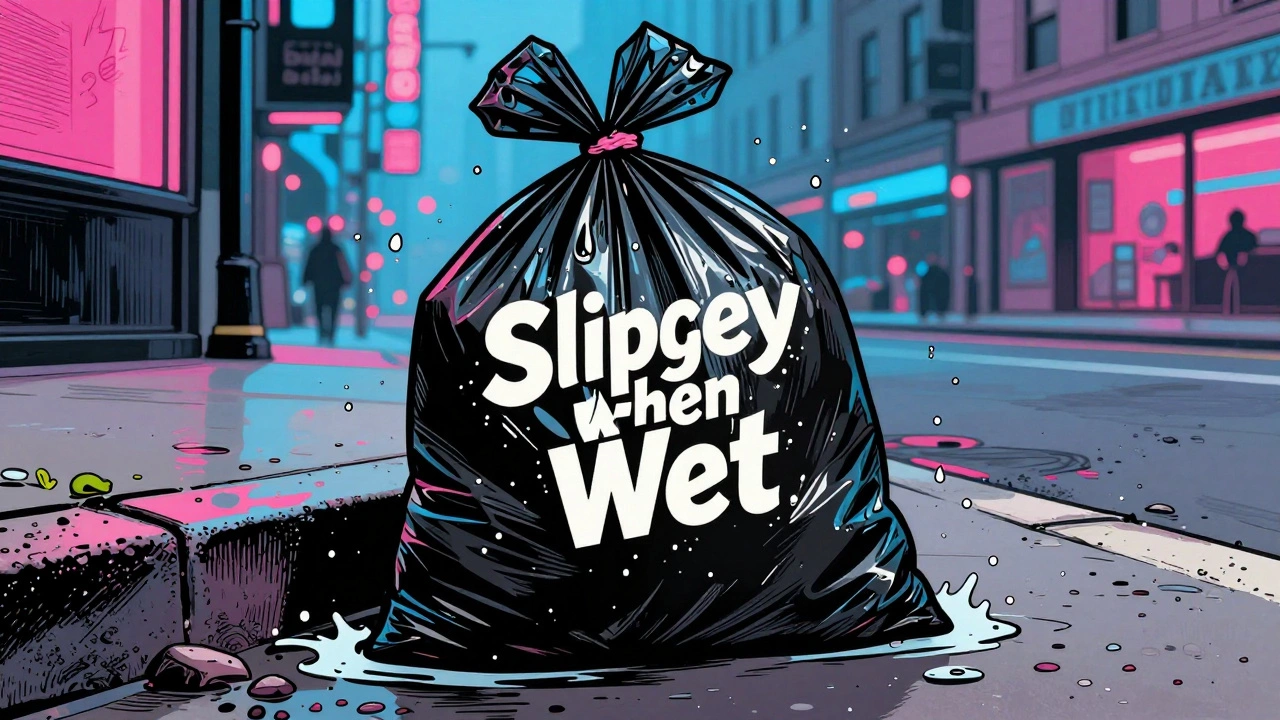
You’ve seen the cover. It’s a black plastic bag soaked with water, with the title written in streaked letters. But that wasn’t the original plan. The band initially shot a photo featuring a model in a wet T-shirt, framed by a neon-pink border. It was cheeky, sexy, and very much in line with the glam metal aesthetic of the time.
Then reality hit. Label executives worried that major retailers would refuse to stock the album if the cover was too sexually explicit. So, they swapped it out. The final image-the wet garbage bag-was abstract enough to pass censorship but still conveyed the "slippery" concept. It also fit the streetwise, blue-collar vibe Jon Bon Jovi was cultivating. Today, that garbage bag is iconic. It’s instantly recognizable and has become the definitive visual identity for the album, appearing on all modern reissues and merchandise.
Sales Figures That Define an Era
Let’s talk about the bottom line. Slippery When Wet is certified multi-platinum by the Recording Industry Association of America (RIAA). Depending on the source, the certification ranges from 12× to 18× Platinum. Worldwide sales estimates hover around 28 million copies. To put that in perspective, that makes it one of the best-selling albums of all time, not just in rock history.
| Metric | Value | Context |
|---|---|---|
| Billboard 200 Peak | No. 1 | Spent 8 consecutive weeks at the top |
| Year-End Rank (US) | No. 1 | Top-selling album of 1987 in the US |
| Worldwide Sales | ~28 Million | Estimated total units sold globally |
| RIAA Certification | 12× - 18× Platinum | Varies by reporting source and year |
| Top 10 Singles | 3 | First glam metal album to achieve this |
Compare that to other glam metal giants of the era. Mötley Crüe’s Dr. Feelgood was huge, but it didn’t have the same sustained chart dominance or the triple-top-10 single run. Guns N’ Roses’ Appetite for Destruction eventually outsold it, but that took years of touring and word-of-mouth growth. Slippery When Wet exploded immediately and stayed there. It was the first glam metal album to truly cross over into the mainstream pop consciousness without losing its rock credibility.

Track-by-Track Breakdown: No Fillers
The album runs about 44 minutes and contains 10 tracks. There’s no bloat. Every song serves a purpose. Here’s how the standard LP side structure breaks down:
Side A:
- "Let It Rock" - An upbeat opener that sets the energetic tone.
- "You Give Love a Bad Name" - The first major hit, driving hard rock with pop melody.
- "Livin' on a Prayer" - The centerpiece anthem, featuring gang vocals and emotional resonance.
- "Social Disease" - A darker, grittier track showing the band’s heavier side.
- "Wanted Dead or Alive" - A unique blend of country-rock and stadium anthems.
Side B:
- "Raise Your Hands" - A high-energy rocker designed for live crowds.
- "Without Love" - A mid-tempo groove that showcases the band’s versatility.
- "I'd Die For You" - A smooth, synth-heavy ballad that appeals to adult contemporary radio.
- "Never Say Goodbye" - A classic power ballad, reinforcing the emotional connection with listeners.
- "Wild in the Streets" - A closing track that hints at the band’s evolution toward more political and social themes in later years.
Notice the variety? You’ve got hard rock, power ballads, country-infused tracks, and synth-pop elements. This diversity allowed the album to appeal to multiple demographics simultaneously. It wasn’t just for headbangers; it was for anyone who liked a good hook.
Why It Remains Relevant Today
Decades later, Slippery When Wet still sells. The band’s official shop continues to release vinyl pressings, updated as recently as late 2024. Why? Because new generations discover it. Parents play it for their kids. Karaoke bars still feature "Livin' on a Prayer." It’s accessible. You don’t need to be a music theorist to appreciate it. The emotions are universal: love, struggle, hope, and resilience.
In 2025, the Bon Jovi Backstage exhibit highlighted this album as the moment the band skyrocketed to global stardom. Critics and fans alike agree: this was the pivot point. Before Slippery When Wet, Bon Jovi was a successful rock band. After it, they were superstars. It defined the sound of mid-80s rock and set a commercial benchmark that few albums have matched since.
If you’re looking to understand what made glam metal so dominant in the 1980s, start here. It’s polished, it’s powerful, and it’s undeniably the biggest album of its kind.
Is Slippery When Wet considered a heavy metal album?
No, it is classified as hard rock and glam metal. While it features distorted guitars and strong rhythms, its song structures are heavily influenced by pop music, making it more accessible than traditional heavy metal. The focus is on catchy hooks and melodic choruses rather than technical complexity or aggression.
Who produced Slippery When Wet?
The album was produced by Bruce Fairbairn. He is known for his work with several major rock acts in the 1980s, including Aerosmith and Def Leppard. His production style emphasized clarity, volume, and layered instrumentation, which helped define the sound of the album.
How many copies of Slippery When Wet have been sold?
Estimates suggest worldwide sales of approximately 28 million copies. In the United States, it is certified between 12× and 18× Platinum by the RIAA, depending on the reporting source. It remains Bon Jovi’s best-selling album to date.
Why was the cover art changed?
The original cover featured a model in a wet T-shirt, which label executives feared would be rejected by conservative retailers. They replaced it with an image of a wet black garbage bag to maintain the "slippery" theme while avoiding controversy. This change allowed the album to be stocked widely in mainstream stores.
What makes Slippery When Wet different from other glam metal albums?
It was the first glam metal album to generate three separate top-10 hits on the Billboard Hot 100. Its combination of hard rock energy, pop melodies, and relatable lyrical themes about working-class life broadened its appeal beyond typical metal audiences, leading to unprecedented commercial success.