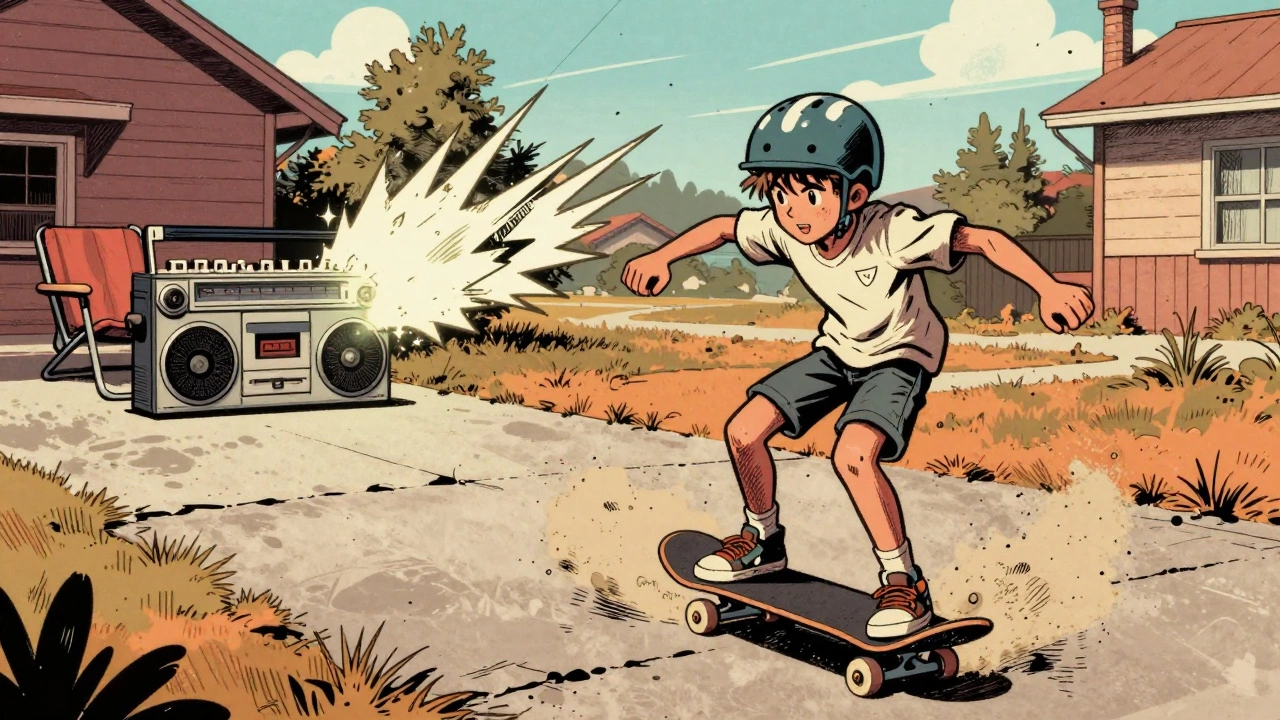

Imagine rolling down a cracked suburban driveway in 1983. The sun is beating down on your helmet, your wheels are grinding against rough concrete, and blasting from a battered boombox nearby is a wall of distorted guitars and frantic drumming. This wasn't just background noise; it was the heartbeat of a movement. In the 1980s, skateboarding and punk rock didn't just coexist-they collided to create skate punk, a genre that defined an entire generation of outcasts.
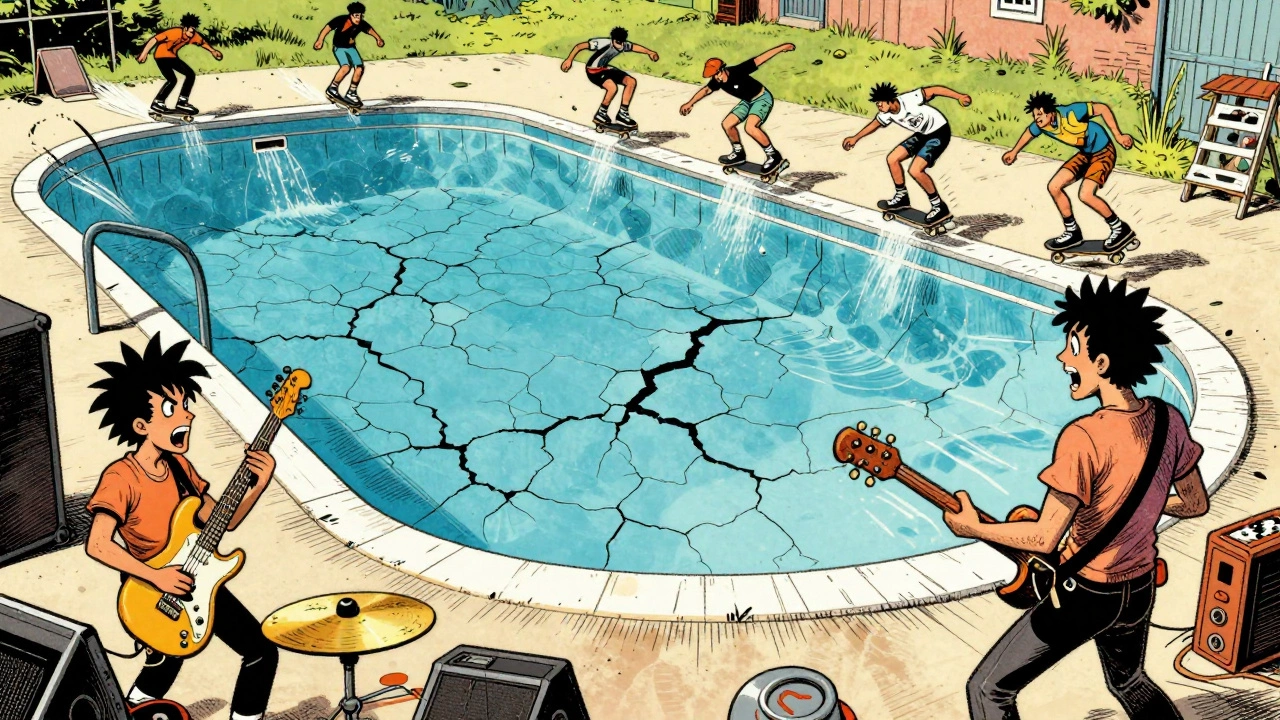
This era marked the moment when music stopped being something you listened to at home and became something you lived through while dropping into empty swimming pools. The fusion of high-speed skating with aggressive hardcore punk created a cultural feedback loop that changed both industries forever. If you want to understand why modern skate videos still use punk anthems, or why bands like NOFX and Bad Religion exist today, you have to look back at these gritty, dangerous years.
The Birth of Skatecore: More Than Just Fast Music
Skate punk, also known as skatecore or skate rock, emerged in the early 1980s as a distinct subgenre of hardcore punk. It wasn't an accident. As skateboarders sought faster, more intense ways to express their adrenaline-fueled lifestyle, they found kindred spirits in punk musicians who were pushing tempos beyond what mainstream rock allowed.
The connection was organic. Both skaters and punks were viewed as delinquents by society. They shared a disdain for authority, a love for DIY ethics, and a habit of hanging out in places adults told them to leave-drainage ditches, abandoned lots, and schoolyards after hours. When these groups merged, the result was music that matched the kinetic energy of street skating.
Bands like Suicidal Tendencies from Venice, California, and JFA (Jodie Foster’s Army) from Phoenix, Arizona, weren't just playing songs about skating; they *were* skaters. Their lyrics referenced specific tricks, local spots, and the constant harassment from police and security guards. This authenticity gave the music a raw power that polished studio recordings couldn't replicate. The sound was characterized by blistering speeds, short song lengths, and abrasive guitar tones that mirrored the friction of urethane wheels on asphalt.
Key Bands That Defined the Era
To understand the landscape of 1980s skate culture, you need to know the architects of its soundtrack. These weren't just popular bands; they were community pillars whose members often appeared in skate videos or organized shows at local rinks.
- Suicidal Tendencies: Formed around 1980 in Venice Beach, this band blended hardcore punk with metal influences and gang aesthetics. Their track "Institutionalized" became an anthem for the scene, capturing the feeling of being trapped in suburban boredom.
- JFA (Jodie Foster’s Army): Emerging from the pool-skating scene in Arizona, JFA brought a unique blend of humor and aggression. Songs like "Beach Blanket Bongout" remain staples in any serious 80s skate playlist.
- T.S.O.L. (True Sounds of Liberty): Representing the Southern California punk milieu, particularly around Huntington Beach, T.S.O.L. helped bridge the gap between traditional punk and the emerging skate crowd.
- SNFU: From Edmonton, Canada, SNFU proved this wasn't just a US phenomenon. They linked prairie skate culture with high-energy hardcore, showing the global reach of the movement.
- Big Boys: Hailing from Austin, Texas, they combined funk rhythms with hardcore intensity, reflecting the diverse musical tastes of the Sunbelt skate spots.
These bands didn't operate in isolation. They formed a network that spanned from Western Canada to the American Southwest, united by a shared visual style and musical ethos. Magazines like Thrasher began spotlighting these acts, further cementing their status as icons of the youth underground.
Thrasher Magazine and the "Skate Rock" Compilations
If there was one institution that formalized the link between skateboarding and punk, it was Thrasher Magazine. Starting in 1983, Thrasher released a series of compilation tapes and records titled Skate Rock. These weren't random collections; they were curated soundtracks designed specifically for skaters.
For many kids in the mid-80s, buying a copy of Thrasher meant getting access to new music before it hit mainstream radio. The Skate Rock compilations featured bands that were popular within the skate community or directly involved in the scene. Skaters would play these tapes on boom boxes at street spots, creating a shared auditory experience that bonded geographically dispersed crews.
| Feature | Impact on Culture |
|---|---|
| Distribution Channel | Made niche punk accessible via skate shops nationwide |
| Curation Strategy | Prioritized bands with active skate connections over pure popularity |
| Community Building | Created a unified sonic identity for scattered skate crews |
| Artist Exposure | Launched careers for regional acts like JFA and Suicidal Tendencies |
This strategy worked because it respected the audience's intelligence. Thrasher knew that skaters valued authenticity above all else. By packaging music with skate photography and interviews, they reinforced the idea that punk wasn't just a genre-it was a lifestyle compatible with riding a board.
From Pools to Pavement: The Evolution of Style
In the late 1970s, skate music was largely derivative, borrowing from surf rock or featuring novelty songs about skating. But the 1980s saw a shift toward seriousness and intensity. As skating moved away from vert ramps and into the streets-navigating stairs, handrails, and ledges-the music had to match that urban grit.
Hardcore punk provided the perfect template. Its fast tempos mimicked the rapid footwork required for technical street skating. Its aggressive tone reflected the danger inherent in performing tricks without protective gear. And its lyrical themes of alienation resonated deeply with teenagers who felt disconnected from mainstream society.
Some bands pushed boundaries even further. Suicidal Tendencies, for example, incorporated metallic guitar riffs and double-time drumming, paving the way for crossover thrash. This hybrid style appealed to skaters who enjoyed heavier sounds, expanding the musical palette of the culture. Meanwhile, other acts kept things raw and lo-fi, embracing the DIY aesthetic that defined much of the era's production quality.
Why This Matters Today
You might wonder why we still talk about 1980s skate punk. The answer lies in its lasting influence. Modern skate videos continue to license punk tracks because they evoke the same sense of freedom and rebellion. Games like Tony Hawk’s Pro Skater introduced this music to millions of players who never stepped on a real skateboard, ensuring its survival across generations.
Furthermore, the business model pioneered by Thrasher-integrating music, fashion, and media-became the blueprint for contemporary skate brands. Companies like Vans now host massive tours featuring punk bands, acknowledging the symbiotic relationship that began decades ago. Understanding this history helps us appreciate how deeply embedded music is in skate culture, not as an accessory, but as a core component of its identity.
Frequently Asked Questions
What is the difference between skate punk and regular punk?
While both share roots in hardcore punk, skate punk is specifically tied to the skateboarding subculture. Lyrically, it focuses more on skating experiences, suburban life, and anti-authoritarianism related to street activities, whereas general punk often addresses broader political or social issues. Musically, skate punk tends to emphasize speed and rhythmic drive suitable for skating sessions.
Who started the first wave of skate punk?
The first wave includes bands like Suicidal Tendencies, JFA, Big Boys, T.S.O.L., and SNFU. These groups formed in the early 1980s and were composed largely of active skateboarders who used their music to reflect their daily lives and struggles within the skate community.
How did Thrasher Magazine contribute to skate music?
Thrasher launched the "Skate Rock" compilation series in 1983, which packaged punk music directly for skaters. This initiative helped standardize the genre, promoted lesser-known bands to a wider audience, and solidified the connection between skate media and punk music distribution.
Is skate punk still popular today?
Yes, though it has evolved. While the raw hardcore sound of the 80s has given way to more melodic styles like pop-punk and melodic hardcore, the foundational elements remain influential. Many modern skate videos and games still feature classic skate punk tracks, keeping the legacy alive for new generations.
What are some essential 80s skate punk songs?
Essential tracks include "Institutionalized" by Suicidal Tendencies, "Beach Blanket Bongout" by JFA, "Skate To Hell" by Gang Green, and "Locals Only" by Agression. These songs capture the spirit of the era and are frequently cited by fans as definitive examples of the genre.