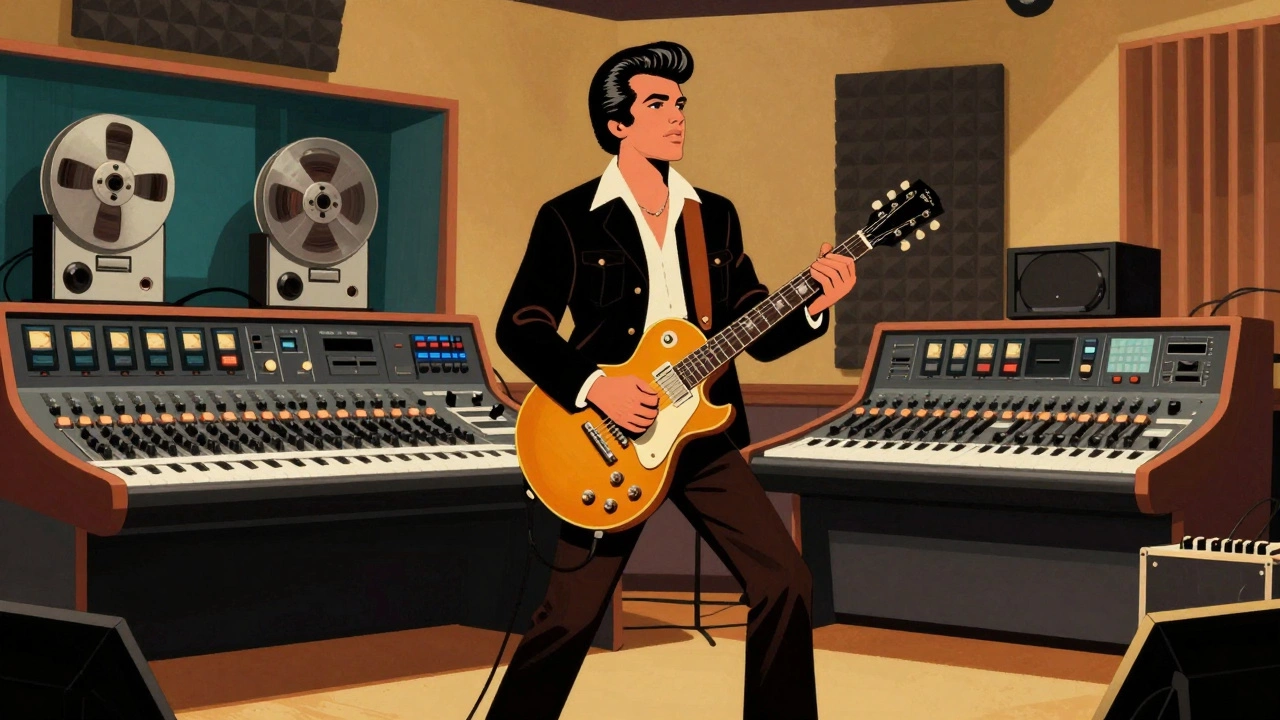

Have you ever heard a track that just sounds *right*? You know the one. It’s smooth, sophisticated, but still has enough grit to keep your head nodding. Chances are, Larry Carlton or Lee Ritenour played on it. These two men didn’t just play guitar; they defined the sound of Los Angeles studios from the 1970s through the 1990s. They were the go-to guys for everyone from Steely Dan to Aretha Franklin. But what exactly made their playing so special? It wasn’t just speed. It was something called “flavor tones.”
The Art of the Flavor Tone
In the studio, you don’t have time to experiment. The producer needs a part that fits perfectly into the mix, complements the vocals, and adds emotion without stealing the show. This is where “flavor” comes in. A flavor tone isn’t just about turning up an amp. It’s a specific combination of gear, technique, and musical choice that creates a recognizable sonic fingerprint.
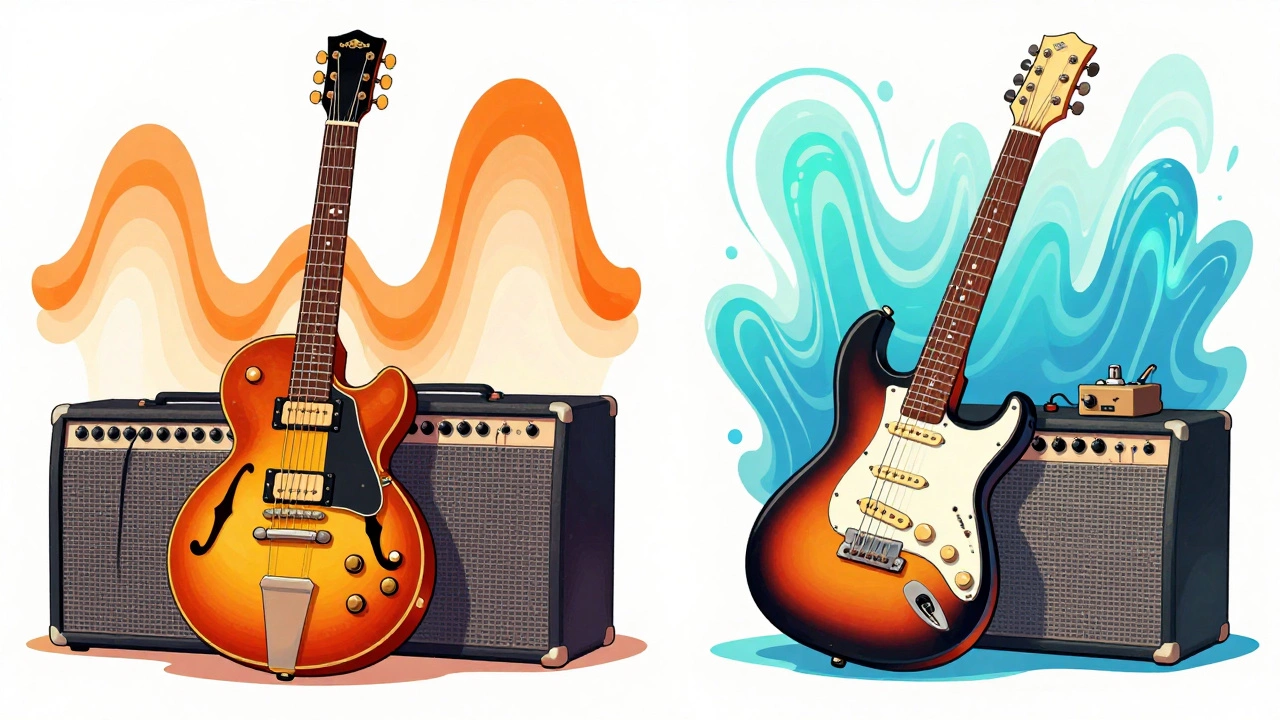
For Carlton and Ritenour, this meant mastering semi-hollow guitars, tube amplifiers, and subtle effects like chorus and compression. They knew how to make a guitar sing with warmth and clarity. Their tones were versatile enough to fit on a pop record, a jazz album, or a TV theme song. That versatility is why they logged thousands of sessions. Let’s break down how each of them crafted their unique sound.
Larry Carlton: Mr. 335
Larry Carlton, born in Torrance, California in 1948, earned the nickname “Mr. 335” for good reason. His primary weapon was the Gibson ES-335. He started playing at age six and switched from rock and country to jazz after hearing Joe Pass on the radio. By the mid-1970s, he was working 15 to 20 sessions a week.
Carlton’s tone is often described as vocal and warm. He achieved this by pairing his ES-335 with a Dumble Overdrive Special amplifier. This setup gave him a light overdrive with pronounced midrange frequencies (around 800-1,200 Hz). He used a volume pedal to control the gain, allowing him to switch from clean chords to singing leads seamlessly.
His approach to harmony was deeply rooted in jazz theory. He frequently used voice-leading techniques, connecting chord changes with thirds and sevenths. If you listen to his solo on Steely Dan’s “Kid Charlemagne,” you’ll hear double-stop sixths and chromatic approach notes that outline the underlying harmony perfectly. Critics often cite this lick as one of the best in rock history. It’s concise, melodic, and instantly memorable.
Carlton also built his own home studio, Room 335, in the mid-1970s. This allowed him to take on arranging and producing work for artists like Barbra Streisand and Joan Baez. Even after a shooting incident in 1988 damaged his vocal cords and partially paralyzed his left arm, he recovered and returned to playing with an even more economical, lyrical style. He won Grammys for his instrumental work, including a win for his cover of the Doobie Brothers’ “Minute by Minute.”
Lee Ritenour: Captain Fingers
Lee Ritenour, born in Los Angeles in 1952, followed a parallel path but developed a distinct sound. Known as “Captain Fingers,” he logged over 3,000 sessions during the 1970s and 1980s. While Carlton stuck mostly to the ES-335, Ritenour experimented with a wider variety of instruments. Early on, he used Gibson archtops, but by the late 1970s, he was playing solid-body guitars and his signature Ibanez LR10 semi-hollow model.
Ritenour’s tone is brighter and more polished than Carlton’s. He relied heavily on chorus and delay effects, often using Roland JC-120 amps or Boss CE-1 pedals. This created a “hi-fi” sound that cut through dense mixes without sounding harsh. His playing blended straight-ahead jazz with Brazilian rhythms and blues phrasing. Albums like “Wes Bound” (a tribute to Wes Montgomery) showcase his ability to use octaves and chord solos effectively.
One of Ritenour’s biggest breakthroughs was joining the supergroup Fourplay in 1991. Alongside pianist Bob James, bassist Nathan East, and drummer Harvey Mason, he helped define the smooth jazz genre. The group’s debut album topped the Billboard Contemporary Jazz chart. Interestingly, when Ritenour left Fourplay around 1997, Larry Carlton replaced him. It was a rare moment where one session great literally followed another in the same band.
Ritenour has received 17 Grammy nominations and one win for his album “Harlequin” with Dave Grusin. He continues to be active in education, launching the Six String Theory competition to help young guitarists develop their skills.
| Feature | Larry Carlton | Lee Ritenour |
|---|---|---|
| Nickname | Mr. 335 | Captain Fingers |
| Primary Guitar | Gibson ES-335 | Ibanez LR10, Yamaha, PRS |
| Amp Preference | Dumble Overdrive Special | Roland JC-120, Fender-style |
| Tone Character | Warm, mid-heavy, dry | Bright, chorused, hi-fi |
| Musical Influence | Jazz, Blues, Rock | Jazz, Brazilian, Pop/R&B |
| Notable Band | The Crusaders, Fourplay | Fourplay |

Emulating the Sound on a Budget
You don’t need a vintage Dumble amp or a $40,000 Gibson ES-335 to get these tones. Modern technology and affordable instruments have made it easier than ever to approximate these classic sounds.
For Carlton’s tone, look for any quality semi-hollow guitar. The Sire Larry Carlton H7 series offers a great starting point, retailing for around $600-$900. Pair it with a tube amp set to moderate gain, or use a high-quality amp modeler. Add a light compressor and some plate reverb. Keep the gain low enough to maintain clarity when playing four-note jazz chords.
For Ritenour’s sound, start with a clean solid-state platform like a Roland JC-120 or a clean Fender-style amp. Add stereo chorus and digital delay. A touch of compression helps sustain your notes while retaining articulation. This setup recreates the early-1980s tones found on albums like “Rit.”
Remember, gear is only half the equation. Both Carlton and Ritenour emphasize that touch, dynamics, and note choice matter most. Practice focusing on economy of motion and melodic phrasing. Try transcribing their solos to understand their harmonic choices. Listen closely to how they resolve tension and create space in their lines.
The Legacy of LA Session Guitar
Carlton and Ritenour emerged during the golden age of the Los Angeles studio scene. In the 1960s and 1970s, major labels booked large ensembles for live tracking sessions. Players like Tommy Tedesco led the way, but as they slowed down, younger musicians filled the gap. Carlton and Ritenour brought elite jazz harmony knowledge, flawless time, and sight-reading abilities to the table.
By the late 1980s, the industry changed. MIDI, drum machines, and project studios reduced the volume of large-session dates. Both guitarists adapted by focusing on solo careers, touring, and teaching. Today, they remain active well past traditional retirement age, influencing new generations of players through clinics, competitions, and signature instrument lines.
Their impact extends beyond just recording credits. They proved that technical proficiency could coexist with emotional expression. They showed that a guitarist could be both a virtuoso and a team player. For anyone interested in music history, understanding their contributions provides insight into how modern pop, jazz, and fusion evolved.
What is a "flavor tone" in guitar playing?
A flavor tone refers to a distinctive tonal palette crafted by a guitarist using specific gear, techniques, and musical choices. It allows the player to adapt to different genres and songs while maintaining a recognizable personal sound. For session players like Carlton and Ritenour, it meant balancing warmth, clarity, and versatility.
Which guitar did Larry Carlton primarily use?
Larry Carlton is famously associated with the Gibson ES-335, earning him the nickname "Mr. 335." He used a 1969 model for many years, pairing it with a Dumble Overdrive Special amplifier to achieve his signature warm, mid-heavy tone.
How can I get Lee Ritenour's chorus tone?
To emulate Lee Ritenour's tone, start with a clean solid-state amp like a Roland JC-120 or a clean Fender-style amp. Add a stereo chorus pedal (like the Boss CE-1) and some digital delay. Use a light compressor to enhance sustain while keeping articulation clear. This setup replicates his bright, hi-fi sound from the 1980s.
Did Larry Carlton and Lee Ritenour ever play together?
Yes, they both played in the supergroup Fourplay, though not at the same time. Lee Ritenour was a founding member from 1991 to 1997. Larry Carlton replaced him from 1997 onwards. They also collaborated on various studio projects and live performances throughout their careers.
What makes the Sire Larry Carlton series special?
The Sire Larry Carlton series offers affordable access to the tonal characteristics of Carlton's vintage Gibson ES-335. Models like the H7 provide similar construction and pickup configurations at a fraction of the cost, making it easier for modern players to achieve his warm, vocal-like tone.


