
Remember the golden era of festivals? The late 1990s promised a return to the peace and love of the original Woodstock. Instead, we got chaos, violence, and tragedy. This decade wasn't just about grunge or techno; it was a dark case study in what happens when you prioritize ideology over safety. Organizers tried to cut costs, avoid police presence, or simply ignored basic logistics. The result was a series of catastrophic failures that changed how every major event is managed today.
We need to look closely at these events not just as historical footnotes, but as warning signs. From the riots at Woodstock '99 to the stampedes at other venues, the 1990s showed us that ignoring professional security doesn't create freedom-it creates danger. Let's break down exactly where things went wrong and why those mistakes still matter.
The Woodstock '99 Disaster: A Perfect Storm of Negligence
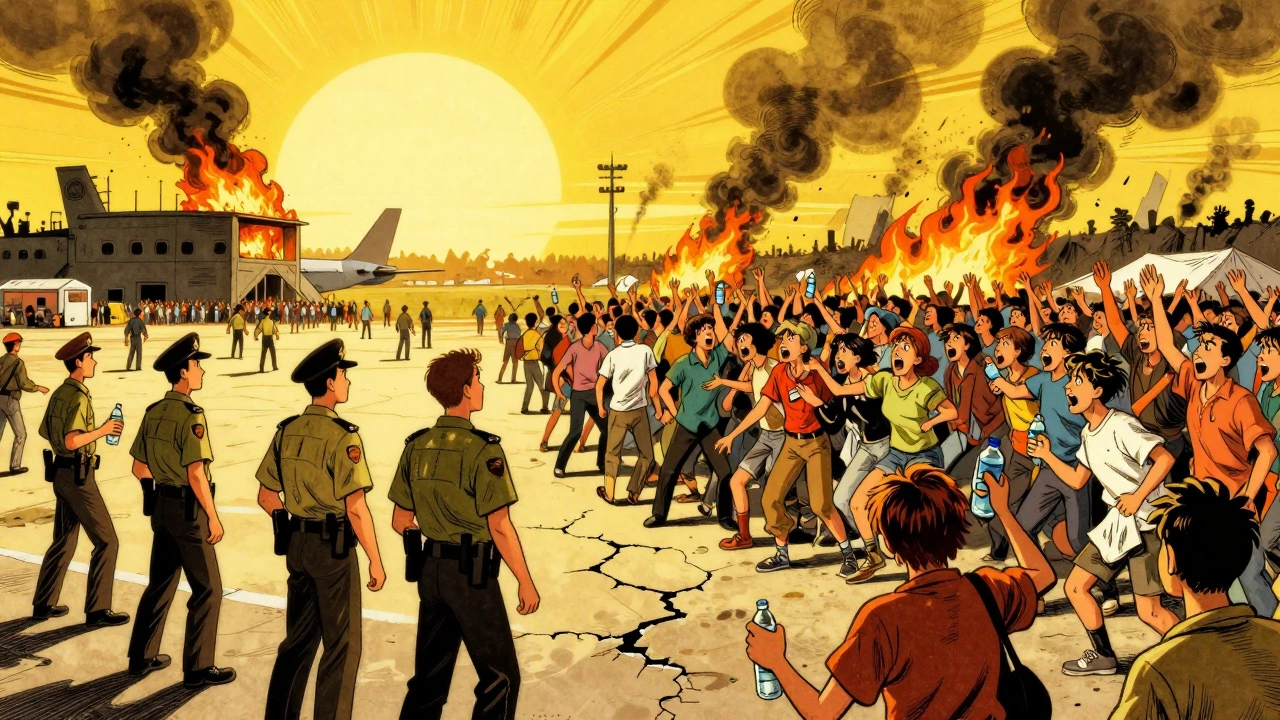
Woodstock '99 stands out as the most documented failure of the decade. Held at a former military airfield in Bethel, New York, the festival attracted between 200,000 and 300,000 people. The organizers made a fateful decision: they hired an inexperienced group called the "Peace Patrol" instead of trained law enforcement or professional security firms. They wanted to avoid the "police state" vibe, according to organizer Lang. It was a disastrous miscalculation.
The Peace Patrol members were largely adolescents with no prior experience. Many quit on the first night because they couldn't handle the job. Those who stayed didn't enforce rules; they exploited them. Reports indicate guards sold their spare shirts to attendees for cash, demanded sexual favors from women, and stole personal items. When security is corrupt and incompetent, order collapses. By Saturday night, the situation had spiraled into full-blown rioting.
The environmental conditions made everything worse. The tarmac surface radiated heat, creating sweltering temperatures. Water was scarce and overpriced. Attendees broke pipes just to get a drink. With poor sanitation, excessive drug use, and angry crowds, the stage became a target. Bands like Limp Bizkit and Fatboy Slim performed amidst burning structures and flying bottles. The climax came when looters tipped over ATMs, stealing roughly $22,000, and set fire to vendor booths. Three people died, and over 250 required hospitalization. It was a direct result of cutting corners on safety.
| Factor | Impact | Outcome |
|---|---|---|
| Inexperienced Security (Peace Patrol) | No crowd control ability | Riots, theft, sexual assault |
| Lack of Police Coordination | No emergency response plan | Delayed medical aid |
| Poor Infrastructure | Water shortages, heat exposure | Crowd aggression, dehydration |
| Cost-Cutting Measures | Inadequate sanitation | Disease risk, anger |
Glastonbury 1990: The Battle of Yeoman's Bridge
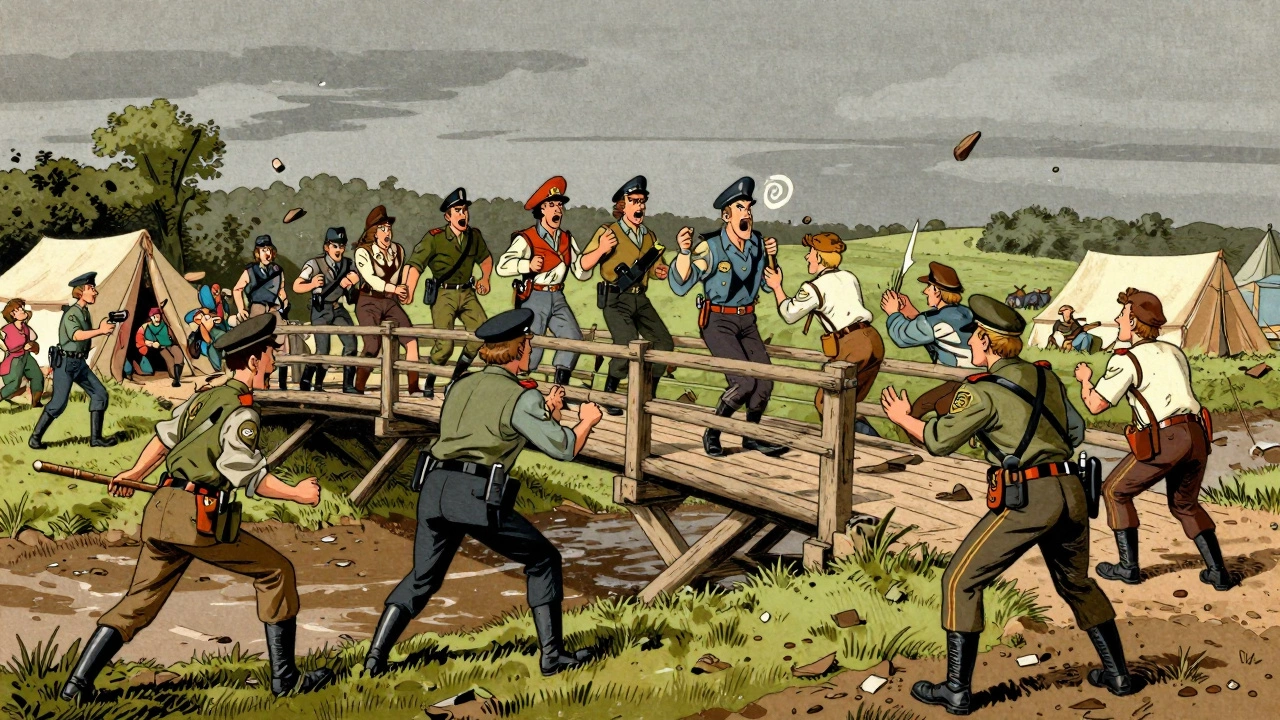
While Woodstock '99 gets most of the attention, the UK had its own wake-up call. The Glastonbury Festival in 1990 started peacefully but ended in chaos known as the "Battle of Yeoman's Bridge." A group of New Age Travellers, who had permission to camp in an adjacent field, clashed with festival security. The conflict escalated quickly, resulting in significant property damage and 235 arrests.
This incident highlighted a different kind of failure: boundary management. The festival was cancelled the following year in 1991 due to the fallout. However, it returned in 1992 with heightened security measures and brilliant success. This shows that acknowledging security risks and implementing professional protocols can save an event. Unlike the ideological resistance seen in Woodstock '99, Glastonbury adapted. It proved that strict boundaries and professional oversight aren't enemies of the festival spirit-they are its protectors.
Electric Daisy Carnival: The Danger of Secrecy
The rise of electronic dance music brought new challenges. Electric Daisy Carnival (EDC) grew rapidly in the 1990s, starting as warehouse parties in cities like Austin and Los Angeles. To avoid police interference, organizers used secretive venue announcements via handouts. While this kept the parties underground initially, it created massive safety vulnerabilities once the events scaled up.
Selling 185,000 tickets requires robust security planning. EDC failed here. Negligent ID checking allowed hundreds of minors into the main arena. Without proper age verification or crowd management, injuries were reported. The reliance on secrecy meant there was no infrastructure for emergencies. You can't have a mass gathering without a plan for exits, medical aid, and crowd density. Mixing unsupervised minors with adults in a chaotic environment is a recipe for disaster. This lesson taught the industry that transparency and regulation are essential for large-scale events.
The Shadow of Altamont: Why Security Choices Matter
To understand the 1990s mindset, we must look back at Altamont Speedway in 1969. Organizers hired the Hells Angels motorcycle club for security. The result was brutal: bikers beat attendees with chains and pool cues, leading to deaths and countless injuries. This historical trauma influenced 1990s organizers. They feared traditional police would crush the vibe, so they looked for alternatives. Unfortunately, their alternatives-like the untrained Peace Patrol-were often worse than the problem they tried to solve.
The lesson is clear: hiring non-professionals, whether outlaw clubs or teenage volunteers, puts lives at risk. Professional security forces exist to manage crowds, not to oppress them. The failure to recognize this distinction led to unnecessary harm across multiple festivals.
Mawazine Festival: The Cost of Poor Exit Planning
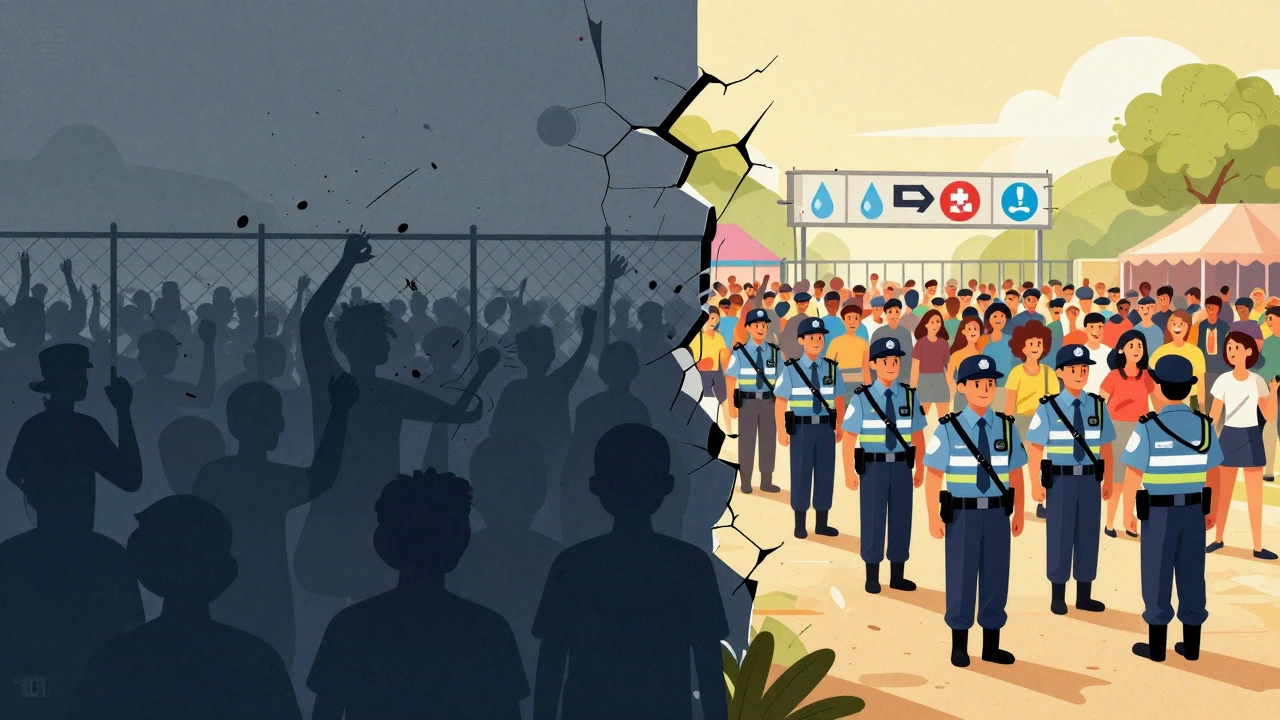
Not all failures happen during performances. The Mawazine Festival experienced a deadly stampede caused by inadequate exit management. As 70,000 attendees left the stadium, some attempted to use unauthorized exits. Metal fences were overturned, trapping people underneath. Police did not intervene effectively during the chaos. Eleven people died.
This tragedy underscores the importance of infrastructure planning. Security isn't just about guarding the gates; it's about managing flow. When thousands of people move at once, bottlenecks can become lethal. Proper signage, sufficient exit points, and coordinated police presence are non-negotiable. The lack of these elements at Mawazine turned a routine departure into a catastrophe.
Lessons Learned: How the Industry Changed
The 1990s forced the music industry to grow up. We learned that "peace and love" cannot replace professional security. Today's festivals operate with:
- Trained security personnel with clear chains of command.
- Strict coordination with local law enforcement and emergency services.
- Adequate water, sanitation, and shade infrastructure.
- Rigorous ID checks and age verification processes.
- Detailed crowd management plans for entry and exit.
These changes saved lives. The shift from ideological avoidance to professional responsibility is the greatest legacy of these failures. We honor the victims by ensuring such mistakes are never repeated.
Why did Woodstock '99 fail so badly?
Woodstock '99 failed due to a combination of factors: hiring inexperienced security (the Peace Patrol), lack of police coordination, severe water shortages, poor sanitation, and extreme heat. These issues led to riots, sexual assaults, and three deaths.
What happened at Glastonbury 1990?
The Glastonbury Festival 1990 ended in the "Battle of Yeoman's Bridge," a clash between security and New Age Travellers. It resulted in 235 arrests and significant damage, leading to the festival's cancellation in 1991 before returning with better security in 1992.
How did Electric Daisy Carnival (EDC) handle security in the 90s?
EDC struggled with overcrowding and negligent ID checks, allowing hundreds of minors into adult-only areas. Their secretive venue announcements hindered proper security planning and emergency response.
Did the Altamont Speedway festival influence 1990s security decisions?
Yes. The 1969 Altamont disaster, where Hells Angels acted as violent security, made 1990s organizers wary of police. However, their alternative choices, like untrained volunteers, often proved equally dangerous.
What are the key lessons from 1990s festival failures?
Key lessons include the necessity of professional security training, adequate infrastructure (water, sanitation), strict ID verification, and coordination with law enforcement. Ideological resistance to safety protocols directly endangers attendees.