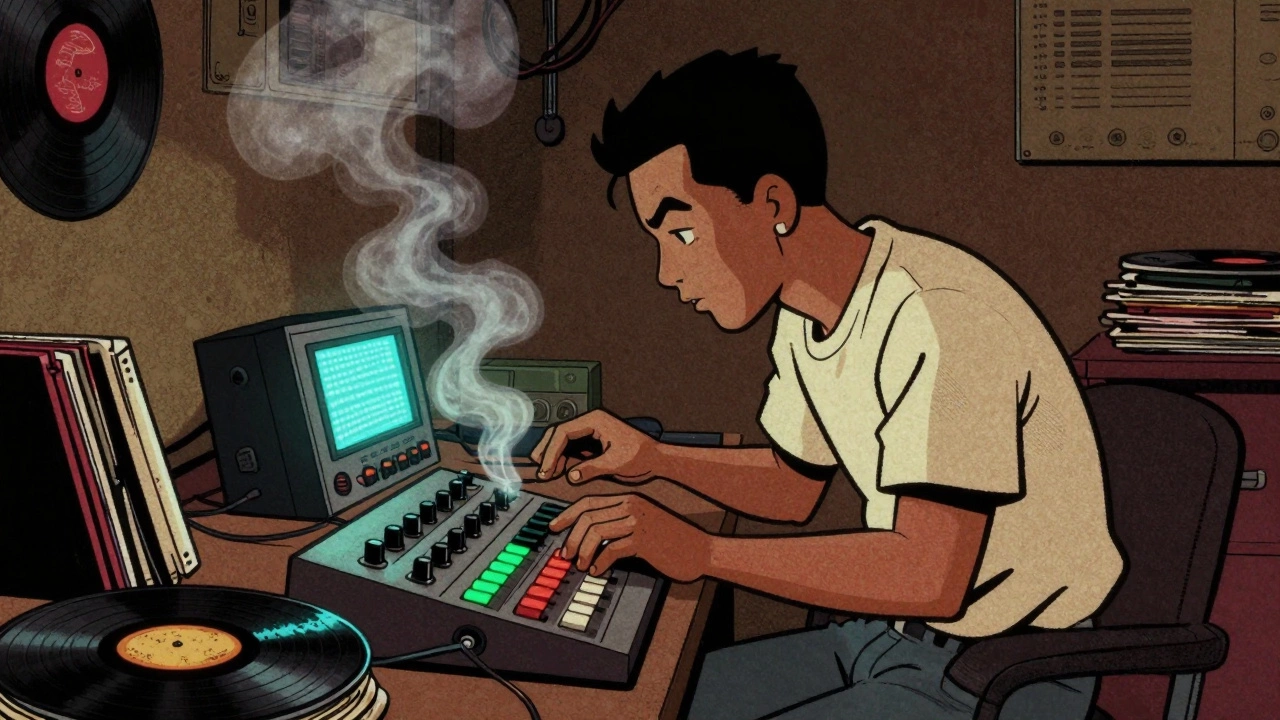

Picture a basement in Queens or the Bronx around 1987. The air is thick with smoke and the hum of cooling fans. A producer sits hunched over a bulky machine with a small LCD screen and a grid of pads. He isn't playing an instrument in the traditional sense. Instead, he is sculpting sound from fragments of old vinyl records-snippets of James Brown drums, a horn stab from a jazz album, a vocal cry from a soul record. This was the heartbeat of sampling culture, the creative practice of lifting short segments of existing recordings to build entirely new tracks. It wasn't just about copying; it was about alchemy. These producers took the past and forged it into something radically new, defining the sonic identity of hip-hop forever.
The Hardware That Defined the Sound
To understand how 1980s hip-hop sounded, you have to look at the tools that made it possible. Before the all-in-one software suites we use today, producers relied on standalone hardware samplers. These machines were expensive, limited, and often frustrating to use. But those limitations are exactly what created the genre's signature grit.
The two titans of this era were the E-mu SP-1200 a legendary 12-bit sampler known for its warm, gritty drum sounds and limited memory and the Akai MPC60 a programmable music production controller and sampler famous for its grid-based workflow and swing engine. The SP-1200, released in 1987, sampled audio at 26.04 kHz. By modern standards, that’s low fidelity. But that lower resolution gave kicks and snares a punchy, saturated character that digital plugins struggle to replicate perfectly even now. The trade-off? Memory. You could only hold about one second of audio per pad at full quality. If you wanted more time, you had to drop the pitch, which changed the speed of the sample.
This constraint forced creativity. Producers couldn't just loop a whole verse. They had to chop beats into tiny fragments-individual snare hits, kick drums, and hi-hats-and reconstruct them manually. This process, known as "chopping," turned the sampler into a musical instrument. You didn't just press play; you played the beat note by note, adding human timing variations that rigid sequencers couldn't match.
| Feature | E-mu SP-1200 | Akai MPC60 |
|---|---|---|
| Bit Depth | 12-bit | 12-bit |
| Sample Rate | 26.04 kHz (fixed) | Variable (up to 50 kHz) |
| Memory Limit | ~1 second per pad (at max quality) | ~3 seconds per pad (expandable) |
| Interface | Keypad and small LCD | Grid of rubber pads |
| Sonic Character | Warm, compressed, punchy drums | Cleaner, wider frequency range |
The Art of Crate Digging
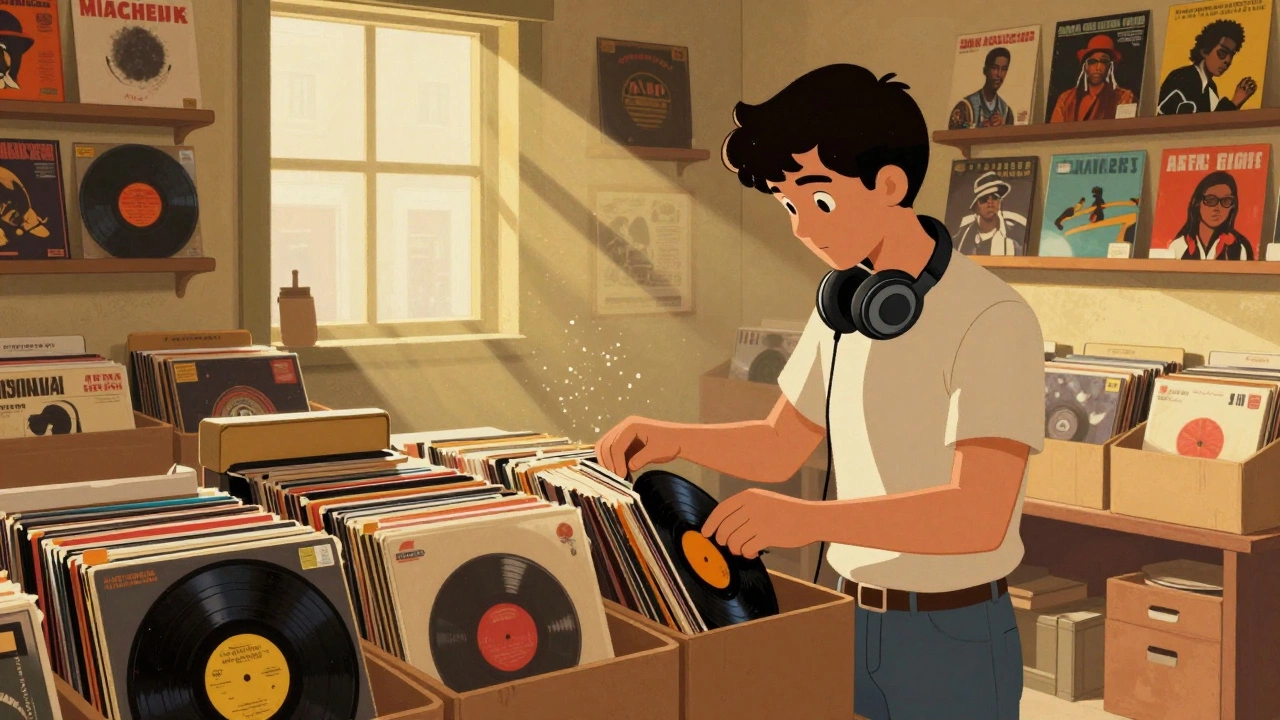
You can't talk about sampling without talking about where the samples came from. In the 1980s, there were no Spotify playlists or AI-driven sample libraries. There was only the record store. This practice, known as crate digging the physical search through vinyl records in stores and bins to find obscure musical excerpts, was a labor of love and necessity. Producers spent hours sifting through crates of funk, soul, jazz, and disco records, looking for hidden gems.
What were they looking for? Usually, it was the "break." A break is the section of a song where the melody drops out, leaving only the rhythm section-drums and bass. DJs like Kool Herc in the late 1970s extended these breaks by using two turntables to loop them live. As sampling technology arrived, producers digitized these breaks. They sought out rare B-sides and obscure international releases because popular songs were already being sampled by everyone else. Finding a unique break meant having a unique sound. It was a competitive hunt, and the best diggers became legends within the community.
This process also required deep musical knowledge. To find a good sample, you needed to understand music theory, rhythm, and history. You had to know why a specific drum hit from a 1970s James Brown track would work better than one from a 1980s pop song. It was an educational journey disguised as a treasure hunt.
Marley Marl and the Birth of a Technique
If sampling is the engine of 1980s hip-hop, Marley Marl a pioneering hip-hop producer who revolutionized sampling techniques in the late 1980s is one of its chief architects. Working with the Juice Crew, Marl didn't just sample loops; he deconstructed them. He realized that instead of looping a four-bar drum break, he could isolate individual drum hits-the kick, the snare, the hi-hat-and program them into his own custom patterns.
This technique allowed for unprecedented rhythmic complexity. No longer bound by the original tempo or structure of the source record, producers could create entirely new grooves. Marl also pioneered the art of resampling. Because early samplers had limited memory, he would record the output of his sampler back into itself. This layered compression added warmth and glue to the mix, but it also degraded the quality slightly, contributing to that lo-fi aesthetic that defined the era. His work on tracks like "The Bridge Is Over" demonstrated that sampling wasn't just borrowing; it was composing.
Workflow Constraints as Creative Catalysts
Modern producers often lament the limits of older technology, but in the 1980s, constraints were features, not bugs. The lack of infinite tracks on a multitrack tape recorder or unlimited RAM in a sampler forced decision-making. You had to commit. Once you bounced your drums and bass onto tape, you couldn't easily change them later. This commitment resulted in mixes that were dense, focused, and impactful.
Producers developed tricks to maximize their gear. One common method was speeding up the source vinyl before sampling. By playing a record at 45 RPM instead of 33 RPM, the audio became higher in pitch and shorter in duration. When sampled at this higher speed, it fit into the sampler's limited memory. Then, the producer would pitch it back down to the desired key. This process stretched the audio, creating a crunchy, textured sound that became synonymous with golden-era hip-hop. It was a hack born of necessity that became an aesthetic choice.
Another aspect was the integration of analog gear. Samplers weren't used in isolation. Their outputs were routed through mixing consoles, compressors, and equalizers. The signal chain included tape saturation from the recording medium itself. This analog warmth contrasted with the digital sharpness of the samples, creating a balanced, organic feel despite the synthetic origins of the beats.
Legal Gray Areas and Cultural Impact
In the 1980s, the legal landscape for sampling was largely uncharted territory. While copyright law existed, the concept of clearing short, manipulated samples was not standardized. Many producers operated under the assumption that if they changed the pitch, speed, or context enough, it was fair game. This led to a period of wild experimentation and prolific output. Albums were packed with dozens of samples, creating rich, intertextual collages that referenced decades of Black musical history.
However, this freedom was short-lived. As hip-hop grew commercially, record labels began to enforce copyright laws more strictly. High-profile lawsuits in the early 1990s, such as Grand Upright Music v. Warner Bros., established that sampling without clearance was infringement, regardless of transformation. This shift fundamentally changed production. Producers had to either clear samples-which was expensive and often denied-or move toward original instrumentation and royalty-free libraries. The sprawling, sample-heavy sound of the late 80s became harder to sustain legally and economically.
Despite these challenges, the cultural impact of 1980s sampling remains undeniable. It democratized music production. You didn't need to be a virtuoso guitarist or pianist to make complex music; you needed ears, taste, and a sampler. It bridged generations, introducing young audiences to funk, soul, and jazz artists they might never have discovered otherwise. It transformed the studio from a place of documentation into a place of composition, a legacy that continues to influence electronic music, pop, and beyond.
What is the difference between the E-mu SP-1200 and the Akai MPC60?
The main differences lie in their interfaces and sonic characteristics. The SP-1200 uses a keypad and LCD screen for programming and has a fixed 26.04 kHz sample rate, giving it a warmer, more compressed sound ideal for drums. The MPC60 features a grid of rubber pads for intuitive beat programming and offers variable sample rates, resulting in a cleaner, wider frequency response. Both were 12-bit machines, but the SP-1200 is often preferred for its distinctive drum texture, while the MPC60 is favored for its workflow and versatility.
Why did 1980s producers speed up records before sampling?
Early samplers had very limited memory. By speeding up a vinyl record to 45 RPM, the audio became shorter and higher in pitch, allowing more information to fit into the sampler's RAM. After sampling, the producer would pitch the sample back down to the correct key. This process stretched the audio waves, creating a gritty, crunchy texture that became a hallmark of the era's sound.
Who is Marley Marl and why is he important?
Marley Marl is a pioneering hip-hop producer who revolutionized sampling in the late 1980s. He moved beyond simply looping drum breaks by isolating individual drum hits and programming them into new patterns. He also popularized resampling, bouncing audio back into the sampler to add warmth and compression. His techniques laid the groundwork for modern beat-making and influenced countless producers.
What is "crate digging"?
Crate digging is the practice of physically searching through boxes of vinyl records in record stores, thrift shops, and private collections to find obscure musical excerpts. In the 1980s, this was essential for finding unique drum breaks, basslines, and melodies to sample, as digital libraries did not exist. It required deep musical knowledge and patience.
How did legal issues change sampling culture after the 1980s?
In the 1980s, sampling operated in a legal gray area with few enforced restrictions. However, high-profile lawsuits in the early 1990s established that unauthorized sampling constituted copyright infringement. This forced producers to either pay for clearance rights, which was costly and difficult, or switch to original instrumentation and royalty-free samples. Consequently, the densely layered, multi-sample style of the late 80s became less common in mainstream commercial releases.


