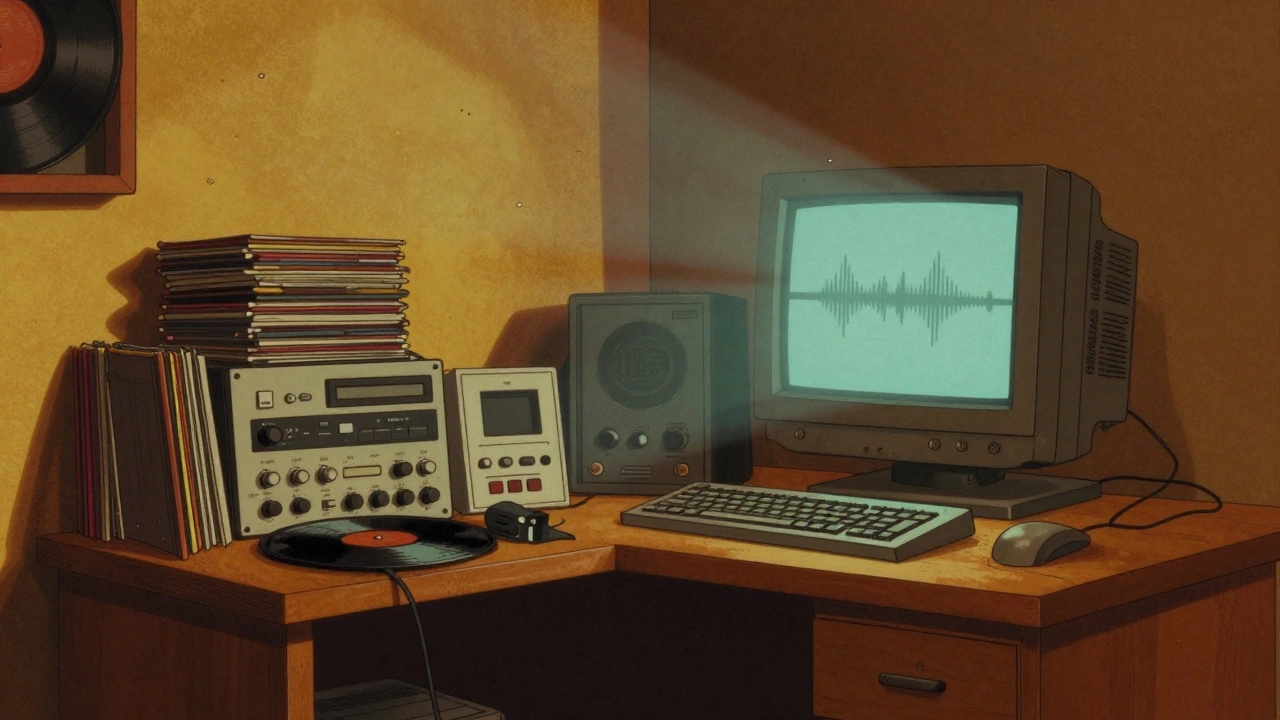

The crackle of a vinyl breakbeat played through a cheap digital-analog converter changed everything. Before the mid-1980s, if you wanted to make records, you booked a studio and hired a session band. But then came three machines that put power into the hands of bedroom producers. They didn't just record sound; they sculpted it. The E-mu SP-1200 was a box that defined the grit of New York hip-hop. The Akai S900 brought higher fidelity to those who needed clarity. And the Fairlight CMI sat at the top of the food chain, changing pop forever.
Understanding these tools isn't just nostalgia. In 2026, we see their ghost in every software plugin. Producers chase the analog warmth of the SP-1200 because modern plugins lack that specific distortion. Knowing how these machines worked explains why certain drum sounds punch harder than others today. We aren't just looking at dustboxes; we're looking at the foundation of modern electronic music.
The High-Fidelity Dream: Fairlight CMI Workflows
You can trace the lineage of digital audio back to this machine. Released in the early 1980s, the Fairlight CMI wasn't affordable. It was a workstation that cost as much as a house. Yet, its influence cannot be overstated. It introduced the concept of drawing waveforms, allowing users to manipulate the shape of the sound visually before playing it.
Technically, the system offered two modes that dictated its sonic fingerprint. In 8-bit mode, it sampled at a low 16 kHz. This limited the high-frequency response, giving recordings a muddy, lo-fi quality that became a signature of early synth-pop. However, switch to 16-bit mode, and the sample rate jumped to 100 kHz. This massive leap allowed for crystal-clear audio reproduction, something unheard of in portable gear until decades later.
Workflow on the Fairlight was different from the beat-makers. It functioned like a complete sequencer with extensive libraries. A producer could compose an entire arrangement without touching external gear. This capability appealed to keyboard players and film composers who needed orchestral textures. It established the standard for what a sampling computer could do, even if the price kept it locked in elite studios alongside competitors like the Synclavier and the Emulator series.
Affordable Power: The Akai S900 Strategy
If the Fairlight was the ivory tower, the Akai S900 released in 1986 was the door knocking down that wall. Akai marketed this unit as one of the first truly affordable samplers. It offered a middle ground between the pristine quality of the high-end units and the raw accessibility of budget gear. By offering 750 KB of RAM, it gave creators more breathing room than previous generations.
The core workflow trade-off here revolved around time versus quality. The S900 could handle up to 63 seconds of sample time. For a musician wanting to loop a long guitar phrase or record a spoken-word intro, this was revolutionary. However, filling that memory meant accepting lower resolution at certain settings. Users had to balance bandwidth against duration constantly.
Sound-wise, it pushed the limits of 12-bit depth combined with a 40 kHz sampling rate. This made it significantly more professional and hi-fi compared to samplers from Yamaha or Casio at the time. It provided eight outputs, expanding compositional possibilities for mix engineers. Many dance music producers adopted the S900 because it offered enough cleanliness for radio play while remaining flexible enough for experimentation.
The Gritty Icon: E-mu SP-1200 Legacy
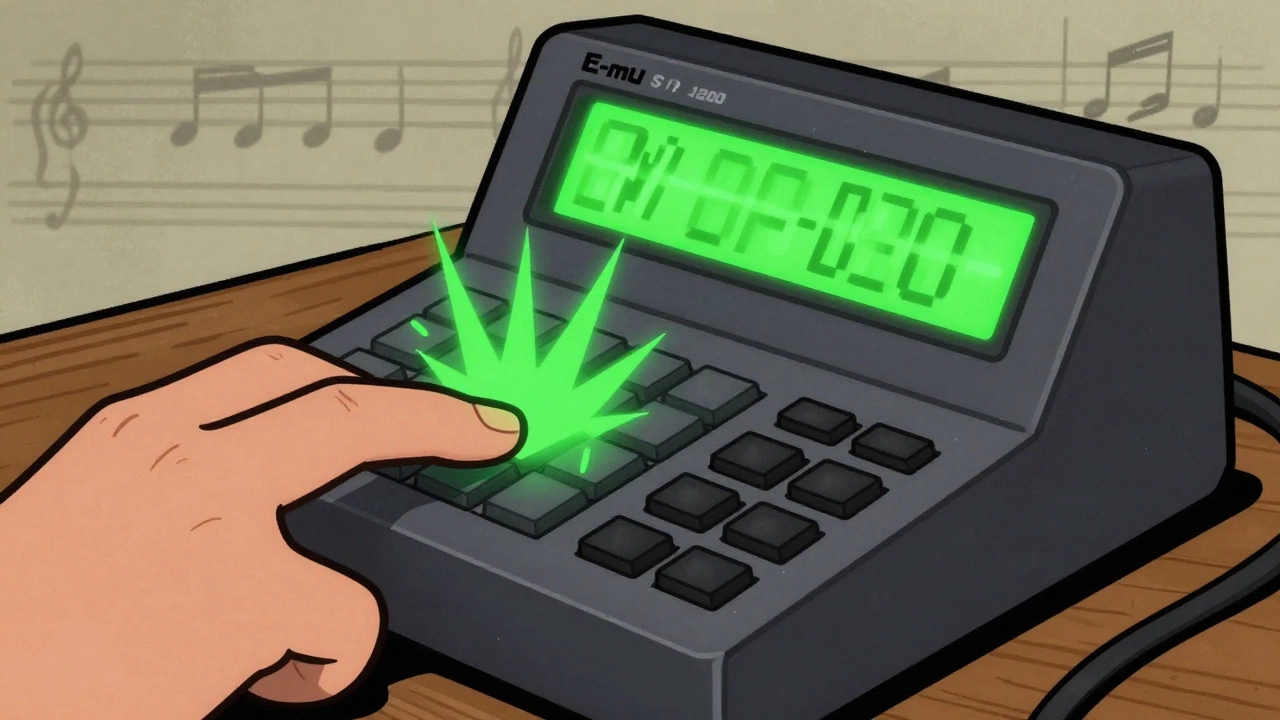
August 1987 marked a pivot point when Dave Rossum unveiled the SP-1200. While its older sibling, the SP-12, offered only 1.2 seconds of sample time, the Turbo version extended that slightly. But the SP-1200 exploded onto the scene with a "whopping 10 seconds" of sampling time. That tiny margin of extra memory allowed drum breaks to breathe naturally without looping artifacts.
The magic wasn't just in the memory, though. The engineering choices were deliberate compromises. The unit ran at a fixed 26.04 kHz sample rate. Why this number? It was chosen years earlier for the Drumulator as a balance between bandwidth and sampling time. When you omit a reconstruction filter, you get aliasing artifacts. Sounds above the Nyquist frequency bleed through, creating a brighter, harsher edge.
This technical flaw created the legendary warmth. The drop-sample pitch-shifting method simply dropped or replayed data to change speed. Unlike advanced linear interpolation algorithms used today, this technique added audible distortion and grit. The Village Voice noted that the crunchy digitized drums and murky filtered basslines of vintage New York sound were mechanisms of the machine. It wasn't accidental; it was physics.
Culturally, the SP-1200 became the engine of the golden age of hip-hop. You can hear it on tracks from the Beastie Boys. Beyond rap, it touched dance floors. Todd Terry used it early in his career, paving the way for later icons like Daft Punk, Moodymann, Theo Parrish, and The Prodigy. Even thirty-five years later, demand stays high despite superior digital audio workstations. The machine enabled musicians to construct the bulk of a song within one piece of portable gear, a first for the industry.
Comparing the Three Giants
Looking at these side-by-side reveals distinct philosophies. The Fairlight prioritized precision and composition tools for keyboardists. The SP-1200 sacrificed frequency range for rhythm and portability. The S900 tried to do both well but found itself often competing on budget constraints.
| Feature | Fairlight CMI | Akai S900 | E-mu SP-1200 |
|---|---|---|---|
| Sample Rate (Max) | 100 kHz (16-bit mode) | 40 kHz | 26.04 kHz |
| Bit Depth | 8-bit / 16-bit | 12-bit | 12-bit |
| Memory Capacity | Variable Library | 750 KB | 10 Seconds Max |
| Pitch Shifting | Standard Algorithm | Standard Algorithm | Drop Sample |
| Filter Chips | Digital Processing | Digital Processing | Analog SSM2044 |
The most popular type of samplers in the 80s were the sequencer-based models. Roland TR-808 and E-mu SP-1200 units allowed producers to create the backbone of a song with a single piece of hardware. As the decade progressed, the amount of time the samplers could use increased. More and more artists began recording their own sounds and playing them back, rather than relying solely on factory presets.
Why These Machines Still Matter Today
In 2026, software has surpassed the capabilities of 1980s hardware. Modern samplers offer infinite memory and zero compression. Yet, the SP-1200 remains relevant because technical specifications do not determine creative value. The sonic character is embedded in the culture. When a producer uses a plugin emulating the S900, they aren't buying quality; they are buying a specific texture of noise and saturation.
The enduring legacy shows that limitations breed creativity. The inability to record for long forced musicians to chop loops tighter. The inability to edit cleanly forced reliance on manual tape editing or direct input. Workflow efficiency won out over feature lists. Simplicity gave the SP-1200 unique appeal despite being nowhere near as powerful as rivals like the MPC60.
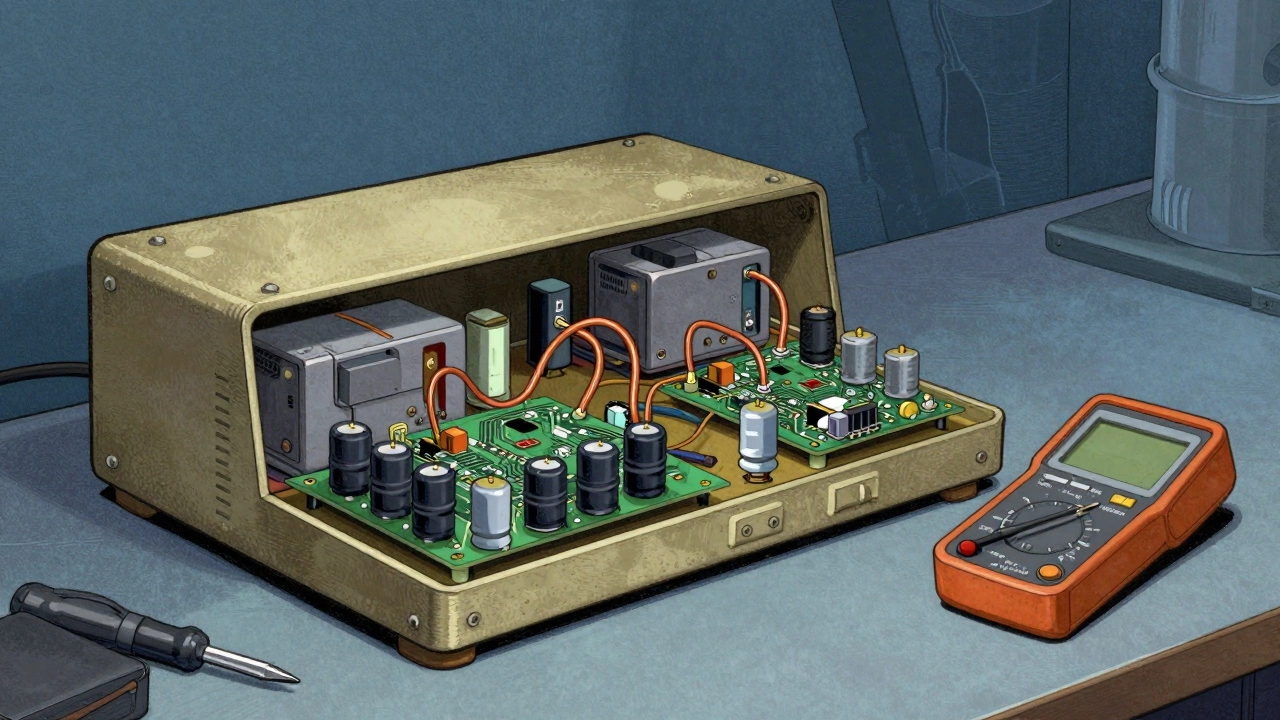
Maintenance is another factor keeping these alive. Original units require repair. Capacitors leak. Floppy disks rot. Collectors and musicians alike spend significant resources preserving the physical integrity of these devices. This dedication highlights how deeply these instruments impacted the musical canon. They are artifacts of a technological transition where music shifted from live performance to sample manipulation.
Frequently Asked Questions
Why does the SP-1200 sound warmer than modern samplers?
The warmth comes from its 12-bit sampling resolution and 26.04 kHz sample rate. These technical limitations introduce specific harmonic distortions and imaging artifacts that digital systems usually filter out. Additionally, the analog SSM2044 filter chips add organic resonance that pure software lacks.
Can I find modern replacements for these vintage machines?
Yes, several companies produce hardware and software clones. Native Instruments and Arturia offer software plugins that emulate the logic of these units. Physical reissues exist for the SP-1200, though prices vary wildly based on condition and availability.
What is the main difference between the S900 and the SP-1200?
The Akai S900 offered higher fidelity and longer sample times (up to 63 seconds), making it suitable for melodic work. The E-mu SP-1200 focused heavily on rhythmic sequencing with a shorter sample window (10 seconds) and distinctively gritty sound design better suited for beats.
Was the Fairlight CMI too expensive for normal studios?
Absolutely. It existed in a category all by itself due to incredible power and price. It dominated the highest level of 1980s pop production but was unreachable for independent artists until technology brought prices down in the late 80s.
How do I maintain a vintage sampler if I buy one?
Regular maintenance is critical. Replace electrolytic capacitors in the power supply to prevent leakage. Store floppy media backups carefully, as magnetic degradation destroys samples. Check internal batteries on the motherboard, as failure there can brick the device.
The story of these samplers proves that tools shape art. Whether you are tracking down a mint-condition unit or running an emulation on your laptop, the DNA remains the same. Creativity thrives when you impose boundaries, and these boxes set the perfect limits for a generation of artists.


